
How to Install a Commercial Touchless Faucet, Understand Sensor Faucet Wiring, Compare AC vs DC Power, Meet Plumbing Requirements, and Troubleshoot Automatic Soap Dispensers
For architects, MEP engineers, plumbing contractors, facilities teams, and commercial restroom specifiers, the value of a touchless faucet is not just the sensor at the spout. Performance depends on correct rough-in planning, code-aware water connections, dependable power routing, coordinated soap system placement, and a commissioning sequence that verifies sensor response, solenoid control, flow stability, and leak-free operation.
This HTML article is built as a practical project guide for real commercial installations. It covers the full installation workflow, a clear sensor faucet wiring diagram, a realistic comparison of AC vs DC touchless faucet systems, plumbing requirements for sensor faucets, and a field-tested checklist for troubleshooting automatic soap dispensers in high-traffic washrooms.
Sensor Faucet Wiring
AEC Spec Planning
AC / DC Power
Soap Dispenser Service
What this guide helps you solve
- Select the right faucet and dispenser layout before walls and counters are finalized.
- Coordinate power, transformer access, battery backup, and service clearances.
- Install sensor faucets without crossing hot/cold feeds, damaging sensor cables, or undersizing shutoffs.
- Reduce call-backs caused by false triggering, no-flow conditions, poor soap priming, or low-battery events.
- Connect related FontanaShowers resources, touchless categories, and AEC-friendly hubs from one page.
Table of Contents
- Commercial touchless faucet system overview
- How to install a touchless faucet in a commercial restroom
- Sensor faucet wiring diagram explained
- AC vs DC touchless faucet selection
- Plumbing requirements for sensor faucets
- Troubleshooting automatic soap dispenser systems
- Commissioning and handover checklist
- Related FontanaShowers links and category hubs
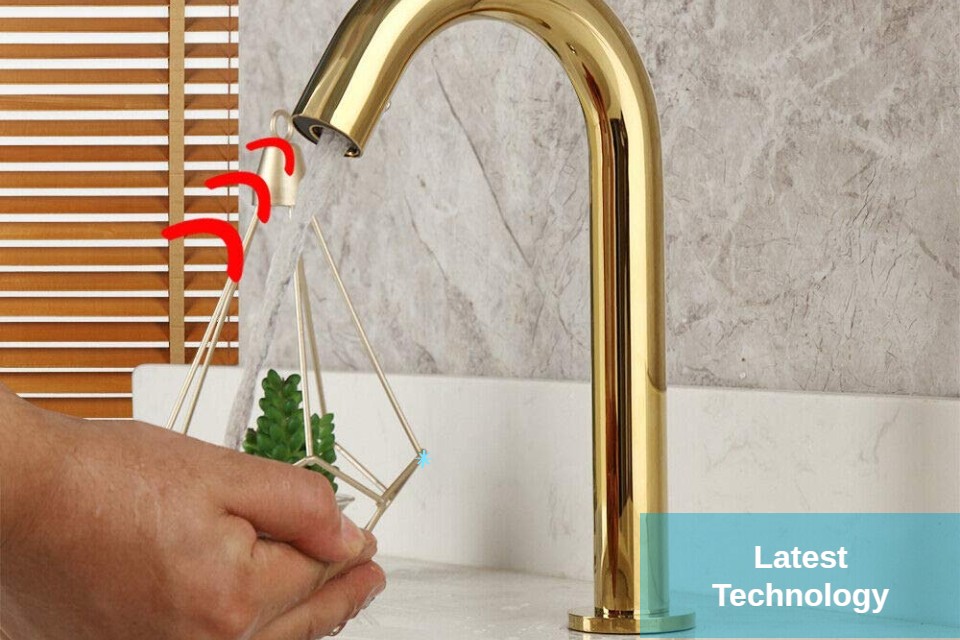


1) Commercial Touchless Faucet System Overview
A commercial touchless faucet system is usually made up of six working layers: the spout body, sensor window, solenoid-controlled water path, power source, control electronics, and shutoff/mixing plumbing below the counter or behind the wall. In coordinated restroom installations, a soap dispenser may be added as a separate deck-mounted unit or as part of a combined faucet-and-soap station. Each layer has to be planned with access in mind.
From an AEC perspective, the installation process should always start with the question of system architecture. Is the project using a deck-mount sensor faucet, a wall-mount model, or a combined faucet/soap solution? Will the project power the fixture with batteries, dedicated low-voltage DC, or hardwired AC through a transformer or power adapter? Is the design team trying to centralize maintenance, reduce cartridge changes, simplify fit-out, or optimize hygiene in a high-traffic environment such as transportation hubs, healthcare buildings, educational facilities, or office towers?
The reason those questions matter is simple: most installation failures are not caused by the faucet itself. They happen because the control box is mounted where it cannot be serviced, the power connection is treated as an afterthought, the sensor cable is strained during countertop installation, or the soap bottle and tubing are squeezed into a space already occupied by angle stops, traps, and drain assemblies. Commercial sensor fixtures need planning discipline.
2) How to Install a Touchless Faucet Commercial System
- Review the submittal package before opening the carton. Confirm mount type, faucet height and reach, required hole size, power method, control box location, hose lengths, and whether the unit is cold-only, premixed, or hot/cold with a mixer. Verify that the sink, deck thickness, and backsplash conditions match the selected model.
- Shut down and isolate the branch supplies. Close hot and cold water stops, relieve pressure, and protect adjacent finishes. Commercial installations should always keep local shutoffs accessible after the fixture is installed.
- Prepare the mounting surface. Clean the deck or wall opening, deburr the hole, and confirm that the sealing surface is flat. An uneven deck can distort the faucet body, compromise the gasket, and create an intermittent leak path.
- Install the spout and gasket assembly. Feed the faucet shank and sensor cable carefully through the deck opening. Hand-thread the mounting hardware first, then tighten evenly from below without over-compressing the gasket.
- Mount the control box and solenoid assembly. Keep it clear of standing water zones, direct splash, and trap swing. Leave enough service space so technicians can disconnect the power lead, flush the filter, and inspect the solenoid without removing the whole sink.
- Connect water supplies. Use the correct hot and cold hoses or premixed connection per the manufacturer configuration. Avoid sharp bends, cross-threading, or using supply lines as structural support. Flush branch lines before final connection when possible.
- Route the sensor cable and power cable separately. Keep low-voltage leads protected from abrasion, pinch points, and moving hardware. Use gentle bends rather than tight loops. Neat cable management is not cosmetic; it prevents future signal problems.
- Connect the power source. For DC or battery-based systems, install the battery pack or low-voltage adapter according to the service orientation shown in the instructions. For AC systems, provide the intended feed, adapter, or transformer arrangement in compliance with project electrical coordination.
- Open stops and check for leaks. Restore water slowly. Inspect every threaded and compression joint. Leave tissue or a dry cloth under suspect connections during the first minutes of operation so micro-leaks are easier to detect.
- Commission the faucet. Verify sensor response, shutoff timing, stream quality, temperature delivery, and false-trigger resistance. If a soap dispenser is paired with the faucet, test the two as an operating station, not as isolated devices.
In commercial work, the installation should end with labeling and documentation. Note the power type, any hidden access panel locations, replacement battery type if used, transformer location if used, and any adjustable settings that were modified during commissioning. That single step makes maintenance dramatically easier six months later when a different technician shows up for service.
3) Sensor Faucet Wiring Diagram
Most touchless faucets follow the same basic control logic even when the housings and finishes differ. The sensor reads hand presence, sends a signal to the control module, and the control module energizes the solenoid valve so water can flow. Power can come from batteries, a DC adapter, or an AC-fed adapter/transformer depending on the model. If a mixer is included, the water temperature is blended mechanically or through a separate mixing component, but the open/close command is still handled by the control side.
Green = power feed
Amber = plumbing feed
Reading the diagram: the sensor communicates with the control module; the control module uses the available power source to actuate the solenoid; the solenoid permits water from the supply/mixing side to reach the outlet. When troubleshooting, always separate sensor problems, power problems, and hydraulic problems rather than treating them as one issue.
4) AC vs DC Touchless Faucet
Choosing between AC and DC is less about preference and more about building strategy. In many commercial projects, AC-powered systems are selected where power access is stable, service access is controlled, and maintenance teams want to avoid repeated battery replacement. AC-fed systems often support consistent operation over long service intervals and are especially attractive in airports, office towers, and institutional restrooms with large fixture counts.
DC and battery-backed systems offer flexibility where electrical rough-in is limited, retrofit work is sensitive, or the design team wants a simpler installation path at the sink cabinet. Battery or low-voltage DC options are also useful where local adaptation is needed without opening walls or coordinating dedicated branch power at every lavatory. Some touchless products also support hybrid or dual-mode arrangements, which can add resilience during short power disruptions.
The correct question for specifiers is not “Which is better?” but “Which power strategy best matches the facility’s maintenance labor, access conditions, and uptime expectations?” A premium commercial restroom can succeed with either approach when the service plan is aligned with the technology.
Quick selection logic
- Choose AC when long-term operational continuity, reduced battery management, and centralized power planning are project priorities.
- Choose DC / battery when retrofit simplicity, fewer electrical changes, and fast deployment are more important.
- Choose hybrid-capable solutions when the project wants primary wired power with a practical backup path.
- Check service access before finalizing the power method; inaccessible adapters and hidden battery packs create maintenance headaches.
- Coordinate with millwork so the service team can replace batteries, inspect connectors, and reset modules without dismantling the vanity.
AC vs DC Touchless Faucet Comparison Table
| Decision Point | AC Powered | DC / Battery Powered |
|---|---|---|
| Best use case | Large commercial projects, consistent use, centralized maintenance expectations | Retrofits, limited electrical access, phased upgrades, flexible deployment |
| Installation impact | Needs electrical coordination for adapter or transformer location | Often simpler at the point of install, fewer upstream electrical changes |
| Maintenance profile | Less battery handling but requires accessible power hardware | Battery replacement schedule must be managed proactively |
| Failure risk to watch | Adapter disconnection, poor transformer access, damaged low-voltage lead | Low battery, exhausted pack, forgotten replacement cycle |
| AEC coordination priority | Electrical + plumbing + cabinet access | Facilities workflow + access + replacement logistics |
5) Plumbing Requirements for Sensor Faucets
Commercial sensor faucets still rely on disciplined plumbing fundamentals. The sensor and control electronics may be new, but the water side of the system still needs correct shutoffs, stable pressure, clean supply conditions, and a layout that does not interfere with service. Designers should preserve clear access to local stops, the trap, any mixing component, the solenoid/filter zone, and soap bottle space where a dispenser is installed nearby.
The first requirement is proper rough-in alignment. If the spout is offset too far back, the sensor may read splash instead of hands. If it is too far forward, water can miss the bowl centerline and create nuisance splashing that maintenance teams later blame on the sensor. Spout reach, basin geometry, and deck hole position must be treated as one design problem.
The second requirement is serviceable shutoff placement. Every commercial sensor faucet should have accessible stops. Do not bury them behind fixed millwork or crowd them behind the soap bottle. The third requirement is line cleanliness. Debris left in newly installed supply lines can foul filters and solenoid seats, producing weak flow or continuous running. Flushing supply lines before final activation is a simple habit that prevents avoidable trouble.
The fourth requirement is temperature strategy. Some projects use cold-only delivery; others use premixed tempered water; others require hot and cold feeds to a local mixer. Whatever strategy is selected, it should be documented clearly so the commissioning team knows what “correct” outlet temperature means for that room.
The fifth requirement is trap and accessory coordination. Soap dispensers, instant heaters, mixing valves, and filtration components all compete for under-deck space. The lavatory zone should be laid out like a service cabinet, not filled opportunistically.
Recommended plumbing checklist
- Accessible hot and cold or premixed shutoffs under every lavatory.
- Clear access to the trap without disturbing power or sensor cables.
- Flushed supply lines before final connection to control components.
- Enough vertical and horizontal clearance for the control box and service hands.
- Deck hole size and deck thickness confirmed against the product submittal.
- Splash geometry reviewed so the stream lands correctly inside the sink bowl.
- Soap bottle and refill route checked before final positioning of stops and drains.
6) Troubleshooting Automatic Soap Dispenser Systems
Automatic soap dispensers fail in predictable ways. Most service calls fall into five categories: no soap output, delayed output, weak or inconsistent dosing, continuous drip, or sensor light indications linked to low power. The best troubleshooting method is sequential. Start with soap type and bottle condition, then the tube path, then power, then sensor response, then pump behavior.
Common field issues and fixes
No soap dispenses: Check that the reservoir has product, the tube is fully seated, and the line has been primed. Confirm the sensor window is clean. Verify the battery pack or power connection. If the dispenser has recently changed soap type, flush the system before assuming component failure.
Soap dispenses slowly after refill: This is often a priming issue, not a defective pump. After replacing or refilling the bottle, the line may contain air. Re-prime according to the product instructions and confirm the tube does not rise into a high loop that traps air.
Intermittent output: Look for low battery conditions, loose electrical connectors, a pinched soap tube, or viscous soap outside the intended range. Intermittent behavior is often installation-related.
Continuous drip or over-dispensing: Inspect the outlet tip, tubing, and pump action. Thick residue can hold product at the nozzle and create the appearance of a control failure. Clean the outlet before replacing parts.
Sensor sees hands poorly: Clean the sensor lens, reduce reflective clutter near the nozzle zone, and confirm the unit is mounted at the intended orientation. Some false fault reports are caused by mirror reflections, polished backsplash conditions, or obstructed deck accessories.
7) Commissioning and Handover Checklist
- Confirm all mounting nuts, brackets, and gaskets are secure without distortion.
- Verify no leaks at stops, braided hoses, solenoid connections, or mixer fittings.
- Test sensor activation with multiple users and hand positions.
- Check auto shutoff timing and ensure there is no nuisance continuous flow.
- Record the power type for each station: AC, DC, battery, or hybrid-supported configuration.
- Label hidden adapters, battery packs, control boxes, or access panels for facilities staff.
- Prime each soap dispenser and verify the dispensed amount is acceptable for the occupancy type.
- Provide the owner with installation sheets, spec references, and a maintenance routine for cleaning sensors, replacing batteries where applicable, and checking supply filters.
A finished commercial touchless installation should be easy to understand, easy to maintain, and easy to service. That is the real benchmark of a successful AEC restroom installation.
Facility Management Issues Caused by Poor Sensor Fixture Planning
Poorly selected sensor faucets and dispensers can create recurring facility
management issues such as service delays, parts replacement, water waste,
user complaints, and hygiene breakdowns.
Deck Mount Sensor Faucets for Installation Planning Issues
Helps facility teams solve deck spacing, sensor alignment, sink compatibility, and installation planning problems.
Best Automatic Soap Dispensers for Pump Failure Issues
Useful for reducing pump clogging, soap waste, inconsistent portions, and recurring dispenser service calls.
Automatic Hand Soap Dispenser Selection Issues
Helps avoid poor-capacity dispensers, weak sensors, frequent refills, and inconsistent handwashing support.
Best Auto Soap Dispensers for Soap Waste Issues
Addresses facility management concerns around over-dispensing, refill cost, and messy sink counters.
Black Wall Mount Sensor Faucet for Counter Space Issues
Solves facility layout issues where deck space, cleaning access, and modern appearance matter.
Cintas Auto Soap Instructions for Setup Issues
Helps facility staff resolve dispenser setup confusion, maintenance errors, and activation problems.
Black Automatic Soap Dispenser for Cleaning and Finish Issues
Supports facility management teams dealing with fingerprints, visible wear, and design consistency problems.
Pros and Cons of Automatic Soap Dispensers for Facility Issues
Reviews common facility concerns including cost, maintenance, refill logistics, hygiene value, and dispenser reliability.
Commonly Asked Questions
Elastomer Compatibility, Dye Migration & Soap Changeover
AEC guidance for fragrance-oil absorption, polymer compatibility, preservative interactions, dye migration and chemical changes during soap-formulation transitions in centralized distribution systems.
How do different elastomers absorb fragrance oils from commercial soaps?
Fragrance oils can diffuse into elastomers, causing swelling, softening, or extraction; compatibility depends on polymer chemistry and exposure time.
Can fragrance absorption permanently alter tubing flexibility or dimensions?
Yes; absorbed oils can plasticize tubing, changing flexibility, dimensions, permeability, and recovery. Verify aged samples before long-term specification.
Which preservatives used in hand soaps are incompatible with common tubing polymers?
No universal preservative blacklist applies; require soap-specific compatibility testing against the selected tubing, seals, pump, and fittings.
Can soap dyes migrate into polymer tubing and affect subsequent soap formulations?
Yes; some dyes can sorb into polymers and later leach, potentially discoloring subsequent formulations during product changeover.
What happens chemically when two incompatible soap formulations meet inside a distribution line during product changeover?
Incompatible soaps may precipitate, gel, separate, foam, or change viscosity; fully flush and clean lines before introducing replacements.


