
Battery vs Hardwired Urinal Auto Flush Systems: Lifecycle Cost & Performance Comparison
Selecting the correct power supply for commercial urinal auto flush systems directly affects maintenance cycles, installation cost, uptime reliability, and long-term operational budgets. Facility engineers must evaluate DC (battery-powered) systems versus AC (hardwired) systems based on environment type and traffic intensity.
System Overview
- Battery (DC) Systems: Self-contained, no electrical rough-in required.
- Hardwired (AC) Systems: Connected to building electrical system.
- Hybrid Systems: AC with battery backup capability.
Environment-Based Power Selection
✈ Airports & Transit Hubs
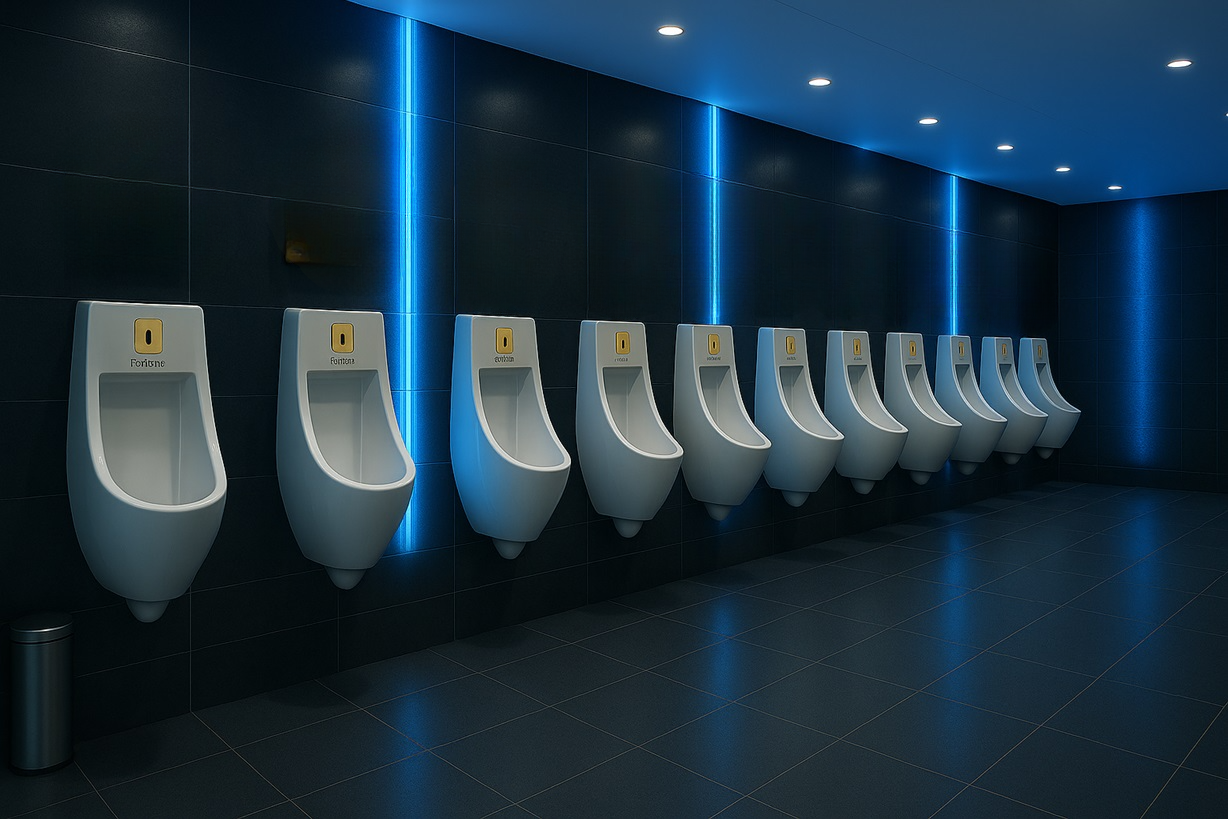
High-traffic airports benefit from hardwired systems to eliminate battery replacement downtime and ensure uninterrupted operation.
- Eliminates battery monitoring programs
- Best for 24/7 facilities
- Reduced maintenance interruptions
🏢 Office Buildings
Mid-traffic office buildings often choose battery systems due to installation simplicity and reduced electrical coordination.

- Lower upfront installation cost
- No conduit routing required
- Predictable battery replacement cycles
🚻 Public Restrooms & Schools
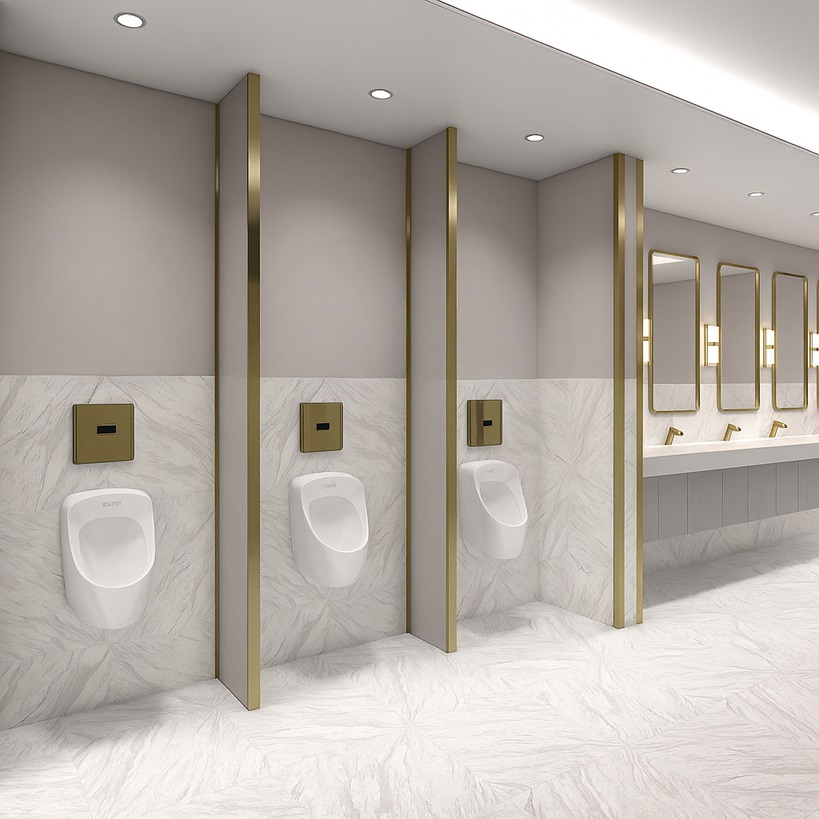
Battery systems are common but require structured replacement scheduling to prevent failure during peak hours.
- Requires maintenance calendar
- Risk of unexpected downtime if unmanaged
- Easy retrofit solution
🏨 Hospitality & Hotels
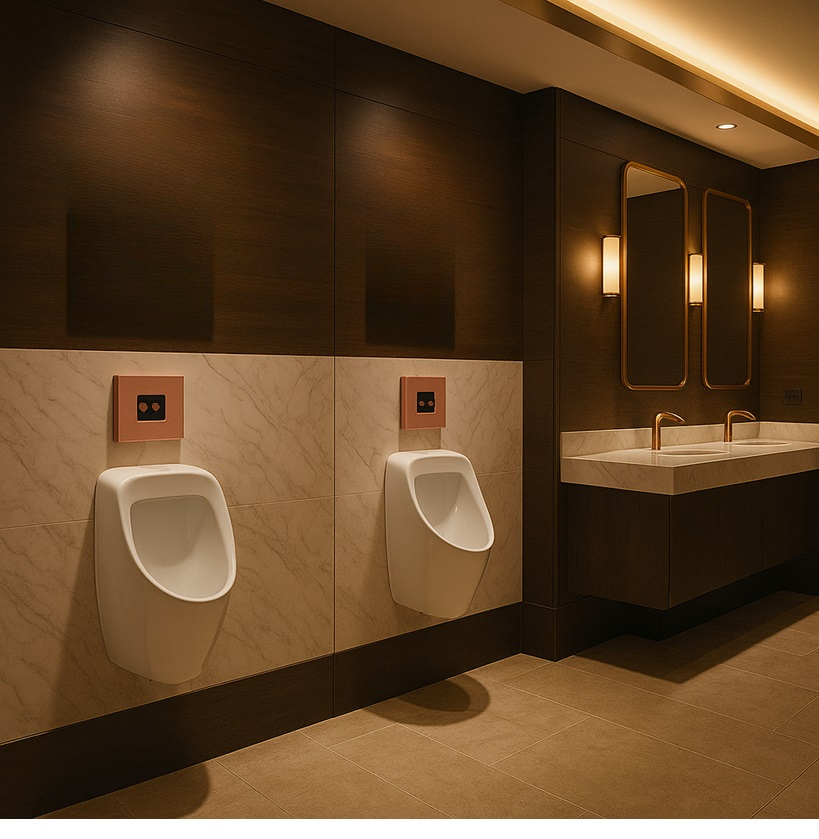
Hotels typically prefer hardwired or hybrid systems to maintain uninterrupted guest experience.
- No visible maintenance interruptions
- Supports luxury restroom expectations
- Lower lifecycle service risk
Lifecycle Cost Comparison
- Battery System: Lower installation cost, recurring battery expense, periodic labor cost.
- Hardwired System: Higher initial install cost, lower long-term maintenance cost.
- Hybrid System: Higher upfront cost, maximum uptime protection.
Performance Considerations
- Detection reliability unaffected by power type
- Hardwired systems offer stronger solenoid consistency
- Battery systems depend on voltage stability
- Hybrid protects against power outage
Explore
- Commercial Urinal Auto Flush Valves
- Fontana Auto Flush Series
- Automatic Flush Valve Collection
- Flush Valve FAQ
Power selection should be based on lifecycle analysis, traffic volume, and maintenance staffing — not solely initial installation cost.
Strengthen restroom operational resilience with commercial-grade, sensor-actuated flushing systems beginning with
touchless flush control technologies and
heavy-duty urinal flush mechanisms, unified under the
Auto-Flush Systems engineering program and quantified through a
long-term lifecycle and cost-performance evaluation assessing durability, sensor response stability, flush consistency, and preventative maintenance cycles. Design professionals can coordinate specifications using the
official submittal documentation package alongside tested
recessed flushometer hydraulic performance data and the full
Commercial Flush Systems catalog, including scalable performance tiers within the
FlushNet / ProConnect / CoreReact / FlowSyn platforms. Technical decision-making is supported by the
ADA & ASSE regulatory guide,
commercial water-use reduction analysis, and the
recessed vs exposed flush valve comparison study, with additional performance resources available
here,
here, and
here. Facilities teams can reduce service calls and extend component longevity by consulting practical resources on
installation best practices,
anti-vandal design strategies,
power-source lifecycle comparisons,
troubleshooting protocols,
sensor-driven automation technology, and
low-maintenance optimization guidance to maintain performance consistency in airports, transit hubs, stadiums, and institutional environments.