
Commercial Touchless Fixtures
for Massive Crowd Turnover
A full-width AEC blog page explaining how commercial touchless fixtures support rapid restroom turnover without compromising hygiene, performance consistency, service access, or fixture longevity in stadiums, theaters, campuses, arenas, and major public venues.

Fast movement depends on fixtures that behave predictably.
Massive crowd turnover is not solved by fixture quantity alone. It requires coordinated sensing, spacing, flow control, soap placement, service access, and repeated details that can survive event-day pressure.

Clear wash zones
Repeated sink positions keep guests moving through the handwashing sequence with fewer pauses.

Less hesitation
Predictable activation helps users wash quickly during halftime, intermission, and post-event rushes.
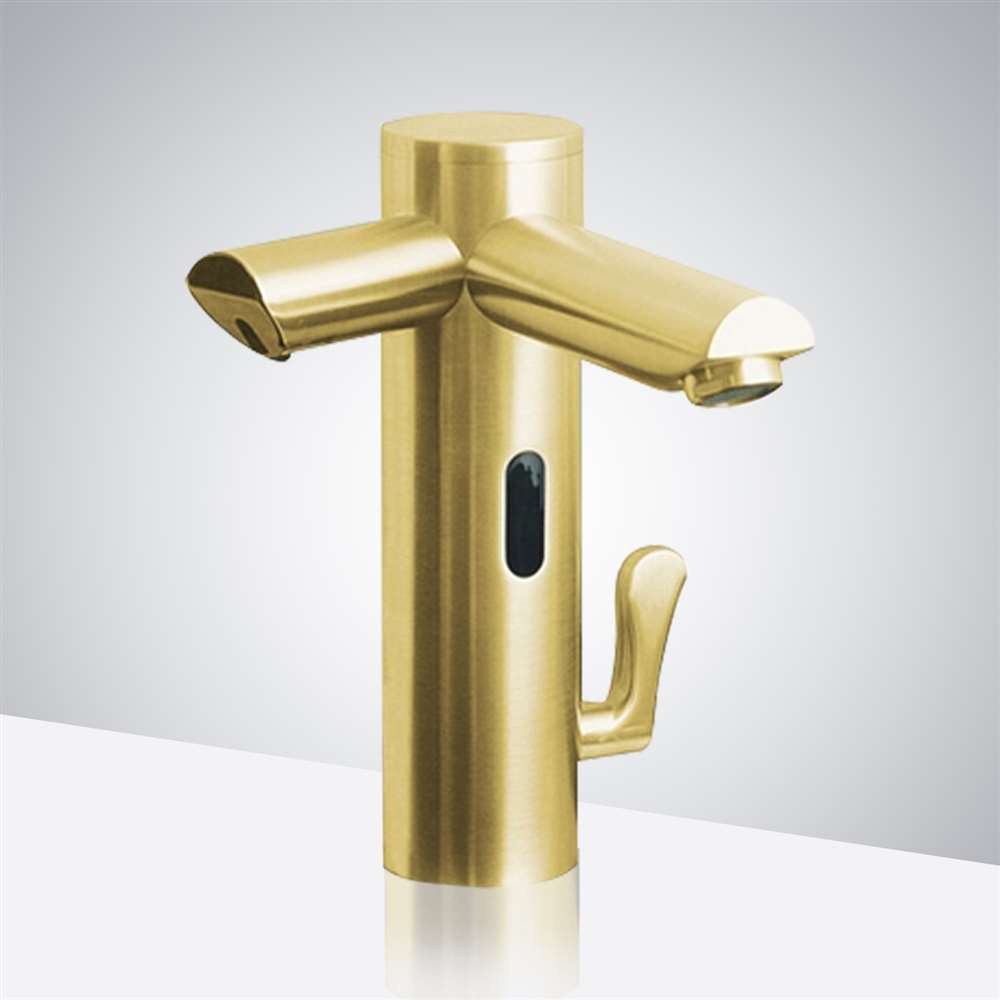
Soap and water align
Coordinated faucet and soap systems reduce confusion and improve the handwashing sequence.

Repeatable service
Standardized fixture families simplify cleaning, inspection, parts planning, and long-term ownership.
Engineering considerations behind rapid restroom turnover
Each article block is paired with a photo so the page stays organized, professional, and visually connected to the design topic.

Restrooms operate like event infrastructure.
In stadiums, theaters, airports, arenas, and convention centers, restroom performance is measured during short bursts of heavy use. Guests arrive, rush during intermission, and exit after the final program. During these peaks, fixtures become part of the building’s crowd-management infrastructure. A faucet that activates slowly, splashes, runs too long, or fails to dispense water can slow every sink position. Commercial touchless fixtures create a repeatable sequence: approach, activate, rinse, leave, shut off automatically. This supports faster turnover because users do not need to grip handles, adjust water, or decide if the faucet is closed. For AEC teams, turnover planning assumes that every second of hesitation multiplies across thousands of handwashing cycles.
Accuracy controls both speed and hygiene.
Sensor performance is critical in high-turnover restrooms. A sensor must activate when hands are intentionally placed in the use zone, not when someone passes the sink. It must shut off quickly to avoid wasted water, but not so aggressively that users reactivate repeatedly. It must also tolerate lighting, reflections, countertop color, mirror position, basin shape, and user movement from adjacent stations. In crowded restrooms, people do not always approach calmly. They may carry drinks, bags, or merchandise. Good sensing reduces shared touchpoints, improves hygiene perception, limits wasted water, and allows the public to move through wash areas with fewer interruptions.

Layout decides how fast people clear the room.
Fixture count matters, but spacing and circulation are just as important. A long counter with well-spaced touchless faucets can perform poorly if the approach path is blocked, users collide, soap is too far from water, or dryers create crossflow at the sink line. Large restroom design should begin with the user route: entry, queuing, fixture selection, handwashing, drying, and exit. Touchless faucets should be placed where the user can understand the station immediately. Basin geometry should capture the stream without splash, and counter depth should allow hands to reach the sensor naturally. When the wash sequence is clear, each guest spends less time interpreting the environment, reducing queue length and improving compliance.

Handwashing speed depends on the full system.
A touchless faucet cannot support rapid turnover alone if the soap dispenser is empty, misplaced, over-dispensing, or difficult to identify. The handwashing system should be designed as a coordinated sequence. Soap should be positioned so users move naturally from soap to water without stepping backward or blocking others. In large venues, multifeed or centralized soap strategies reduce refill labor and help facility teams keep stations active during event cycles. Soap system planning affects counter cleanliness—over-dispensing creates residue, which attracts more cleaning attention. A well-planned touchless faucet and soap package supports hygiene while reducing user hesitation and operating labor.

Flow consistency must survive peak demand.
During crowd turnover, many fixtures may activate simultaneously. Plumbing design must account for simultaneous demand, available pressure, hot-water distribution, mixing strategy, filtration, shutoff zoning, and drain capacity. If the system cannot maintain consistent flow, some users receive weak water delivery while others experience splash or temperature variation. Low-flow design is important, but the flow must still feel usable. If guests cannot rinse effectively, they spend more time at the sink and slow the line. Commercial touchless fixtures designed for large venues should work within a plumbing plan that supports repeated activation cycles without unpredictable performance.

Touchless fixtures need serviceable infrastructure.
Sensor faucets, automatic soap dispensers, control modules, solenoid valves, transformers, batteries, and power connections should be planned early. In a small restroom, one inaccessible component may be inconvenient. In a stadium or theater, the same mistake repeated across dozens of rooms becomes a major operational risk. AEC teams should define whether fixtures use AC power, DC battery, or a hybrid approach. They should also identify access panels, shutoff locations, wiring paths, replacement clearances, and inspection routines. Service teams should not need to dismantle millwork or close large restroom areas to replace a common component.

Fixture durability is a lifecycle decision.
Fixture longevity in a high-turnover restroom includes finish durability, sensor lens protection, solenoid performance, aerator maintenance, cleaning compatibility, vandal resistance, user clarity, and parts availability. Public venues clean restrooms frequently and under time pressure. Fixtures must tolerate repeated cleaning without losing appearance or performance. They must also remain intuitive for first-time users. Commercial touchless systems should be specified with the full lifecycle in mind: installation, cleaning, access, adjustment, and replacement. Longevity is achieved when the product, mounting condition, service path, and maintenance routine are all aligned.

Performance must be proven before opening day.
Commissioning confirms that the restroom works as a public system rather than isolated products. Before turnover, teams should test sensor response, water delivery, shutoff timing, soap operation, splash behavior, temperature control, power access, drainage, cleaning reach, and component isolation. A high-traffic restroom should be observed under realistic conditions, not only during a quiet inspection. Post-occupancy review is useful because crowd behavior can reveal issues that drawings cannot predict. Commercial touchless fixtures are most successful when commissioning connects architecture, MEP engineering, installation, and facility operations into one complete feedback loop.
10+ verified images for crowd-turnover storytelling
Stadium, theater, public restroom, fixture, soap, and venue imagery are grouped into a clean visual collage.


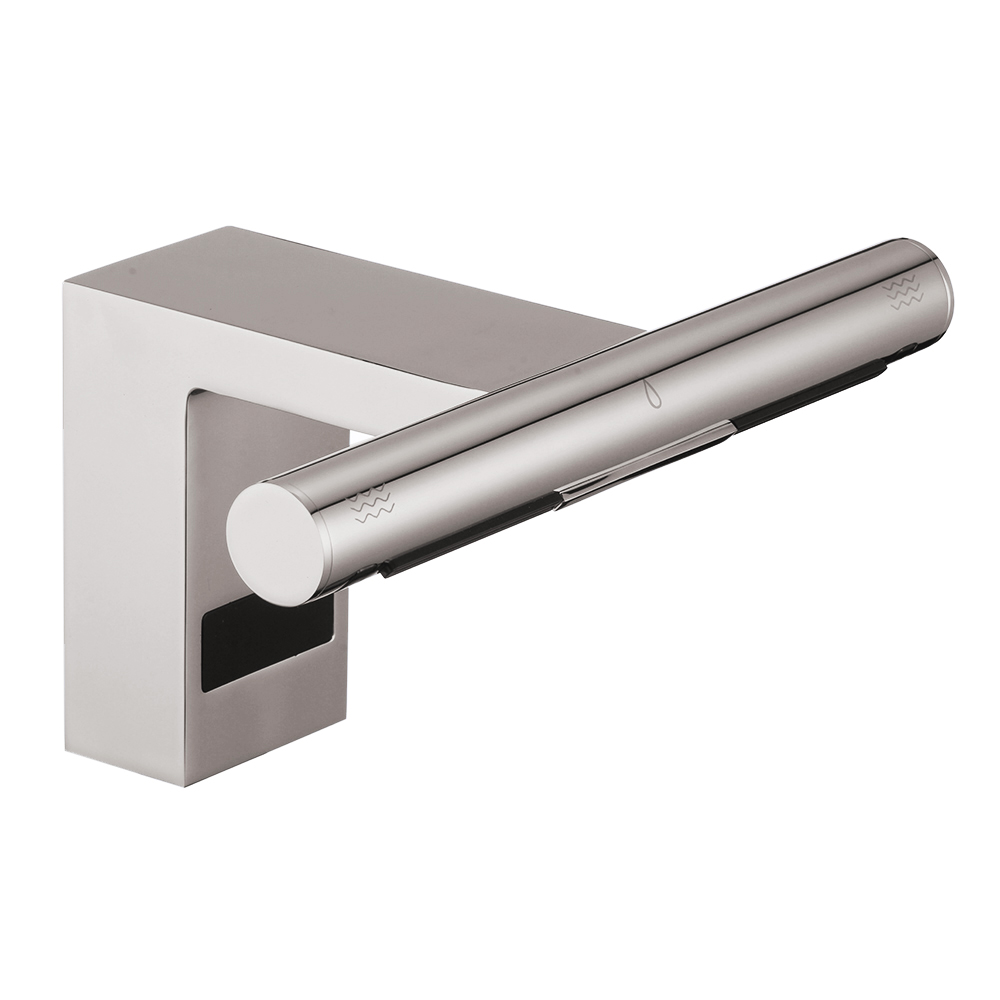

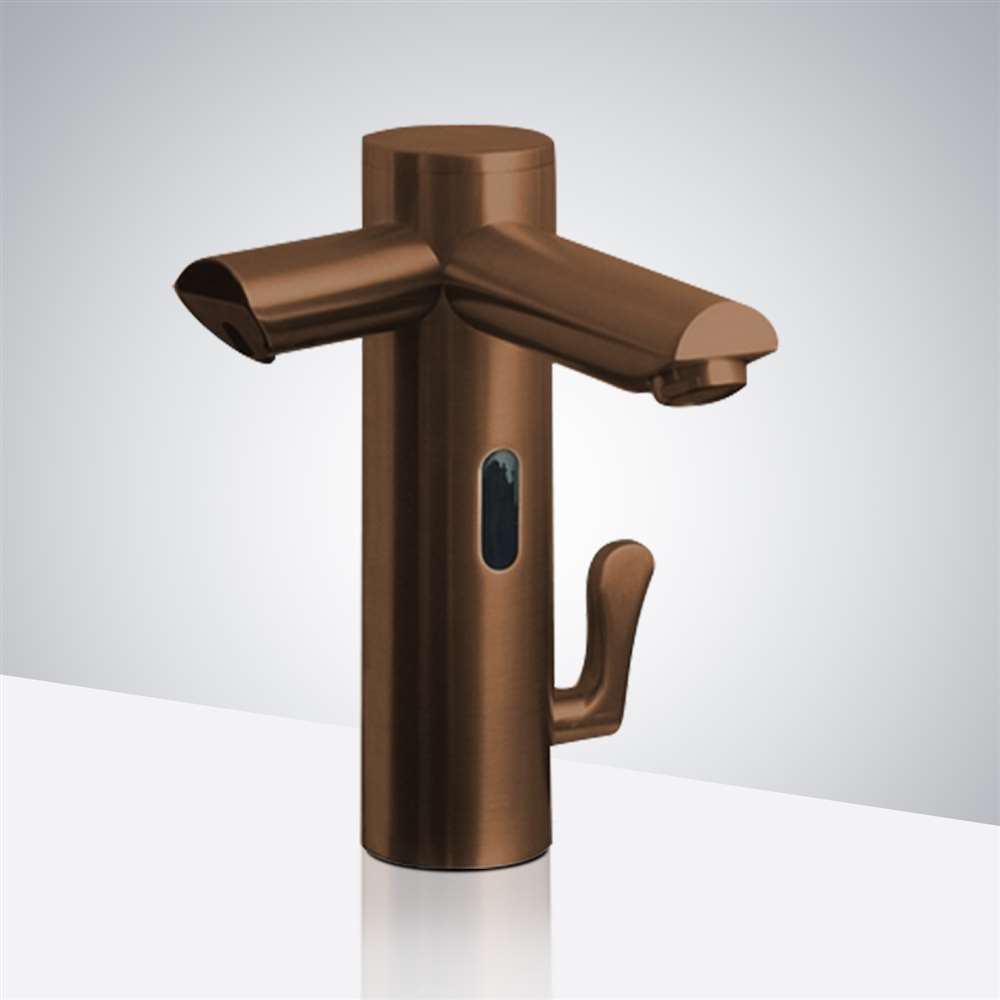


Touchless fixture options for repeated wash stations
Product cards are kept short so the page remains photo-forward, clean, and easy to scan.
 Strasbourg Black / Rose Gold Sensor Faucet
 Strasbourg Brushed Gold Sensor Faucet
 Strasbourg Antique Brass Sensor Faucet
 Brio Antique Brass Thermostatic Sensor Faucet
Commercial Automatic Sensor Tap
Brio Antique Brass Thermostatic Sensor Faucet
Commercial Automatic Sensor Tap
 Dax Stainless Steel Long Sensor Faucet
 DSFD0031A Wall Touchless Sink Set
 Antique Dark Wall Touchless Sink Set
 DSFD0024GS Touchless Fixture
 Nickel Touchless Vessel Sink Set
 DSFD0028RB Touchless Fixture
 Gold Touchless Vessel Sink Set
Selecting the right touchless fixture for high-traffic venues
The product gallery above presents a curated selection of Fontana commercial touchless fixtures suitable for stadiums, arenas, theaters, convention centers, and other large public venues. Each model is engineered to support rapid crowd turnover through reliable sensor activation, consistent water delivery, and durable construction that withstands repeated daily use.
When specifying fixtures for high-traffic environments, explore the full range of commercial touchless sensor faucets, integrate with automatic soap dispensers, and consider coordinated touchless faucet and soap systems for complete wash station solutions. For venue-specific applications, review stadium touchless projects that demonstrate real-world performance under massive crowd conditions.
The models shown here represent a range of design aesthetics—from contemporary chrome and matte black to warm brushed gold and antique brass—allowing design teams to maintain visual consistency while prioritizing operational performance. For detailed specifications, installation guides, and project-specific recommendations, explore the product pages directly or consult the reference library below.
Photo-backed project links
Required pages are shown as visual project cards so they stay connected to the image-led AEC design.


Rare technical questions about high-traffic touchless restroom systems
These FAQs address detailed specification, maintenance, accessibility, hygiene, plumbing, and venue-performance questions that are often overlooked during large public restroom planning.
How should touchless fixtures be specified when thousands of users arrive within the same 10–15 minute restroom surge?
For massive crowd turnover, fixtures should be specified as a coordinated restroom system rather than isolated products. The design should account for sensor response time, sink spacing, drain capacity, soap placement, electrical access, maintenance zoning, and user flow. Internal project references such as the Las Vegas MLB Stadium touchless faucet project and Memorial Stadium touchless faucet project help connect fixture selection to real high-traffic venue applications.
Why do some commercial sensor faucets perform well in small restrooms but fail during stadium-level usage?
A fixture may work properly during light use but struggle during peak turnover if the plumbing system, sensor field, counter layout, power access, or cleaning routine was not designed for simultaneous activation. High-traffic applications should use commercial-grade systems such as commercial sensor faucets and coordinated integrated touchless systems rather than treating each sink as a separate product.
Should soap dispensers be evaluated as part of restroom throughput instead of just hygiene?
Yes. Soap dispenser location, refill strategy, dosage consistency, and sensor reliability directly affect how quickly users move through the wash sequence. If soap is difficult to identify or empty during peak use, the faucet line slows down. For high-volume facilities, review automatic soap dispensers together with CDC hand hygiene guidance so the system supports both hygiene and crowd movement.
What is the hidden maintenance risk in large banks of touchless faucets?
The hidden risk is repeated inaccessible components. If batteries, transformers, solenoids, control boxes, filters, or shutoff valves are difficult to reach, a small maintenance issue can become a building-wide operational problem. Facility teams should plan service access early and use standardized fixture families from commercial restroom fixtures while aligning maintenance planning with resources from IFMA facility management.
How does ADA lavatory planning affect touchless faucet performance in public venues?
ADA planning affects reach range, knee clearance, sink height, faucet placement, and how easily users can activate the sensor without strain. A touchless faucet must be accessible, predictable, and usable from the required position. Designers should coordinate fixture selection with U.S. Access Board lavatory and sink guidance and select appropriate commercial models from automatic faucet collections.
Can water-efficiency targets conflict with fast restroom turnover?
They can if flow is reduced without considering rinse quality, activation timing, basin geometry, and simultaneous demand. The goal is not simply lower flow; it is controlled, usable flow that allows fast handwashing without excessive reactivation. Teams should review EPA WaterSense bathroom faucet guidance alongside commercial fixture options such as touch-free wash stations.
Why should MEP engineers review sensor faucets before the architectural finish schedule is finalized?
Sensor faucets affect power routing, transformer placement, valve access, plumbing rough-in, shutoff zoning, and service panels. Waiting until the finish schedule is complete can create conflicts between appearance and maintainability. Engineering teams should coordinate early with plumbing references from ASPE, certification resources from IAPMO product certification, and project-ready product categories such as commercial sensor faucets.
What should be tested during commissioning before opening a high-traffic restroom to the public?
Commissioning should test sensor activation, shutoff timing, splash control, soap delivery, water pressure, drain performance, power access, cleaning reach, component isolation, and ADA usability. For venue applications, compare the system against real project examples such as Las Vegas MLB Stadium and accessibility requirements from the U.S. Access Board lavatory guidance.
Reference Library
Explore additional resources covering commercial touchless fixtures for high-traffic facilities, large venue restroom design, automatic sensor faucets, integrated soap dispenser systems, crowd-turnover optimization, plumbing engineering, facility maintenance, accessibility standards, and water-efficiency strategies. The following references include related Fontana project pages, product collections, and trusted industry standards that support the planning and operation of commercial restrooms designed for massive public use.
Best Commercial Touchless Faucets for Modern Architectural Projects
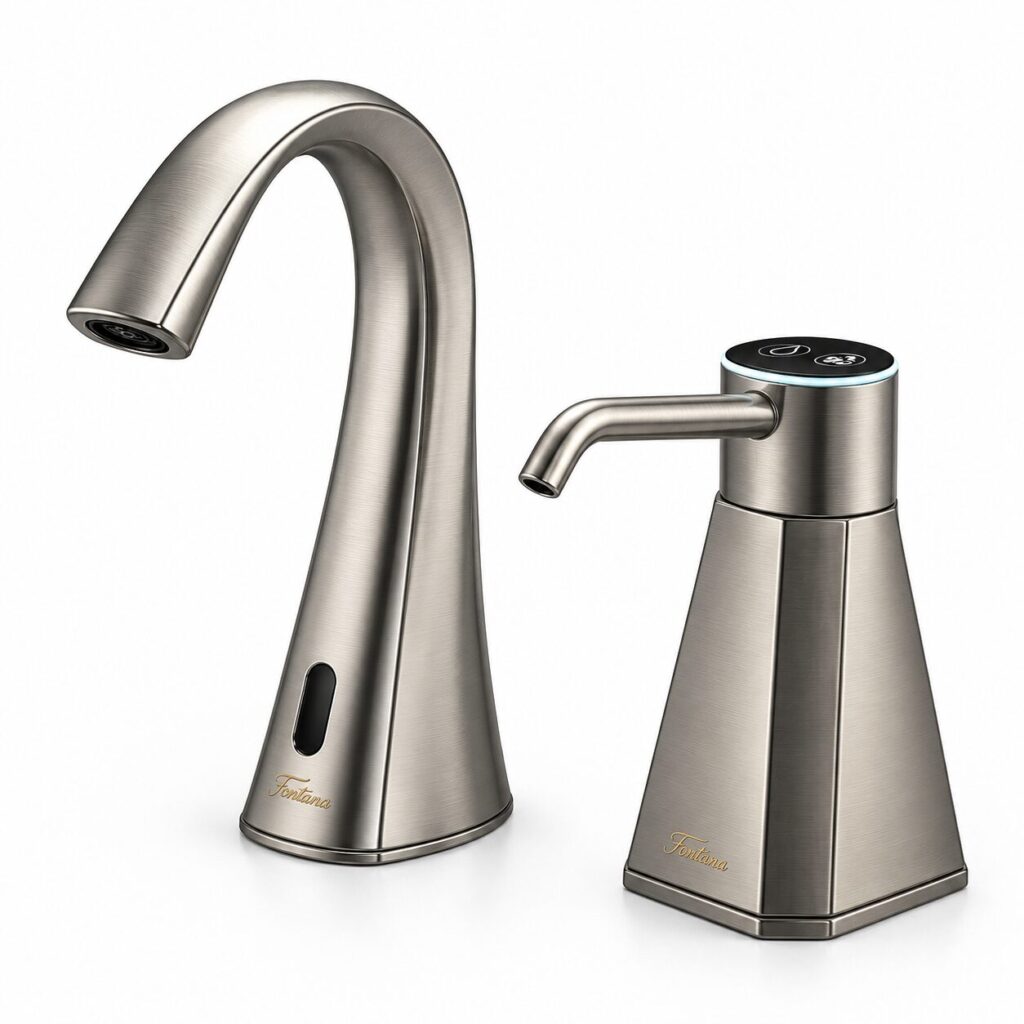
Commercial touchless faucets have become a standard component of contemporary restroom design across airports, hospitals, hotels, office buildings, universities, stadiums, transportation hubs, and government facilities. Beyond improving hygiene, today’s sensor-operated fixtures contribute to water conservation, accessibility, maintenance efficiency, and a consistent user experience. Selecting the right commercial faucet involves evaluating sensor performance, finish durability, installation requirements, service accessibility, and long-term operating costs while ensuring compatibility with the project’s overall architectural vision.
Designed for High-Traffic Commercial Environments
Architects and engineers increasingly specify touchless faucets that combine reliable infrared sensing, vandal-resistant construction, durable commercial finishes, and efficient water management. Modern commercial fixtures are expected to withstand continuous daily use while maintaining consistent performance with minimal maintenance interruption. Selecting coordinated faucet systems also helps simplify facility management and future replacement planning throughout the life of the building.
Whether designing a healthcare campus, luxury hospitality project, corporate headquarters, or transportation terminal, properly specified touchless fixtures contribute to improved hygiene protocols, lower water consumption, reduced maintenance, and a more refined architectural appearance.
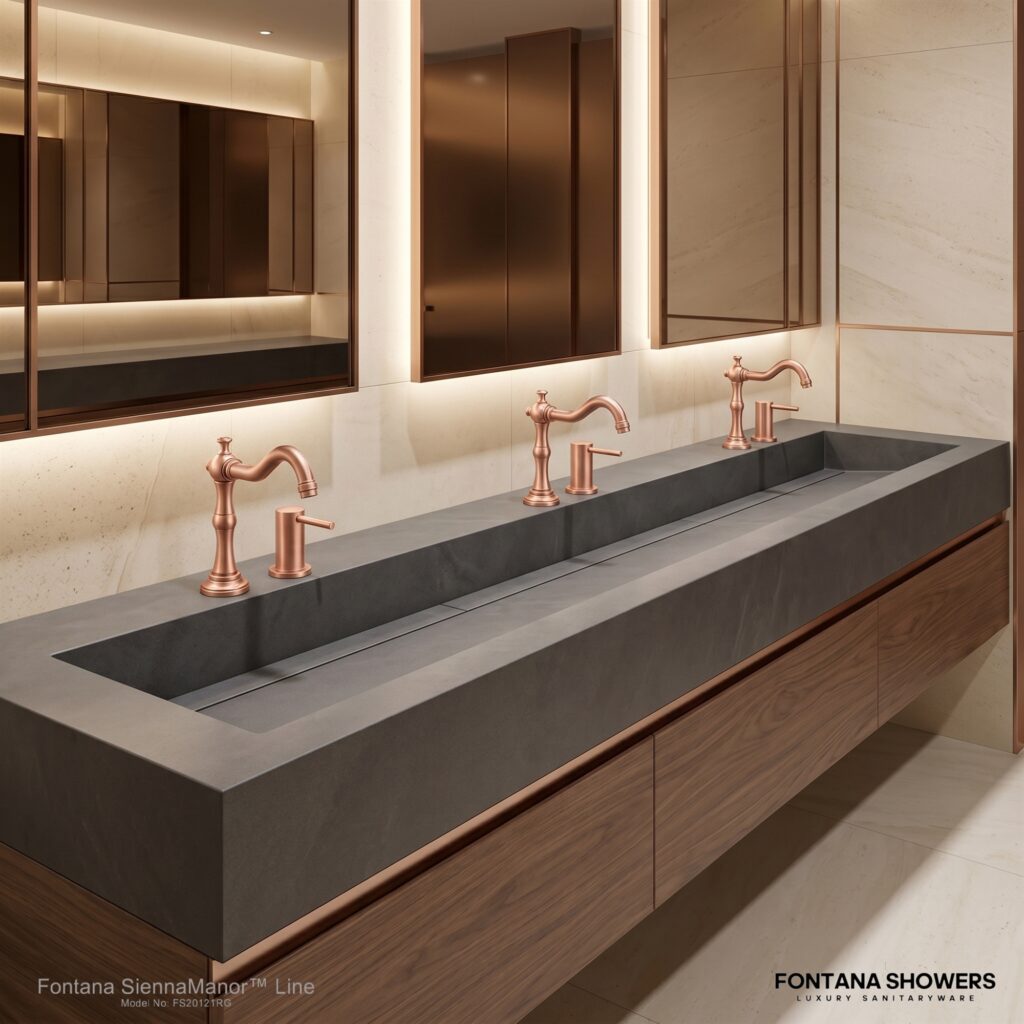
Engineering Performance Meets Architectural Design
The best commercial touchless faucets balance aesthetics with engineering performance. Finish selection, sensor reliability, installation flexibility, maintenance accessibility, and compatibility with commercial plumbing systems all contribute to long-term project success. Modern collections offer multiple finish options that coordinate with soap dispensers, accessories, and complete restroom environments while supporting specification requirements for healthcare, hospitality, education, and public infrastructure projects.
Related Commercial Touchless Faucet Resources
-
Best Commercial Touchless Faucets for Offices & Hotels
Explore commercial sensor faucet recommendations for office buildings, hotels, corporate campuses, and other high-traffic architectural environments. -
Commercial Sink Faucets Collection
Review professional commercial lavatory faucet solutions suitable for architects, plumbing engineers, contractors, and facility managers. -
Commercial Bathroom Fixtures Resource
Discover coordinated commercial restroom fixture collections that support consistent design, durability, accessibility, and maintenance planning. -
Commercial Touchless Bathroom Faucets
Compare sensor-operated faucet solutions designed for hospitals, airports, schools, hospitality properties, and government facilities. -
Top-Rated Commercial Touchless Faucets
Review highly rated commercial faucet collections recognized for reliable sensor technology, premium finishes, and long-term lifecycle performance.