
Fontana Touchless Faucets: Commercial Specification Differentiators
Commercial touchless faucet selection should be based on measurable product characteristics rather than broad claims about style, popularity, or brand preference. For architects, plumbing engineers, specification writers, contractors, and facility managers, the more useful questions concern sensing technology, flow rate, power architecture, mounting, water connections, construction, controls, BIM resources, accessibility, and long-term service access.
Fontana Touchless Faucets includes commercial sensor-faucet configurations developed around these specification requirements. Because individual models differ, project teams should evaluate the actual SKU and its technical documentation before incorporating a fixture into construction documents.
Sensor-Controlled Operation
A principal characteristic across many Fontana commercial models is infrared-based touchless activation. The sensor detects a user’s hands within its operating field and signals the control system to open the water supply without requiring a handle to be operated.
Depending on the model, the sensing distance may be factory preset or adjustable. Some published technical documentation identifies approximately 10 inches as the factory detection zone, while other configurations provide adjustment capability for project-specific basin and installation conditions.
Read More
Automatic shutoff is also incorporated into selected models. Certain commercial configurations are factory set for a 30-second maximum run period, with adjustment available on applicable models.
These controls are particularly relevant when coordinating a faucet with the lavatory itself. Basin depth, reflectivity, backsplash position, spout projection, sensor location, and hand-washing zone should be reviewed together rather than treating the faucet as an isolated component.

AC/DC Power Configuration
Electrical coordination is an important part of specifying an electronic faucet.
Many Fontana commercial sensor faucets provide both hardwired AC and low-voltage DC battery operation. Published model documentation includes configurations using AC power with 6V DC battery operation, typically supplied by AA batteries.
This gives MEP teams more than one approach to fixture power depending on the project.
Read More
Hardwired operation may be appropriate for new construction where electrical infrastructure can be coordinated during design. Battery operation can be useful where routing new electrical service is impractical or where a retrofit requires minimal disruption.
Power requirements are not identical across every Fontana product. Voltage, transformer requirements, battery configuration, controller location, wiring routes, and service clearances should therefore be confirmed against the selected product’s technical documentation.
Commercial Flow-Rate Options
Flow rate should be specified explicitly instead of assuming that every sensor faucet uses the same outlet.
A number of Fontana commercial touchless models are offered with flow rates beginning at approximately 0.5 GPM, while other models and outlet configurations may differ. The correct flow rate should be selected according to the applicable plumbing code, project water-efficiency requirements, building type, and intended lavatory use.
Read More
For specification purposes, the schedule should identify the required GPM or L/min rather than simply describing the fixture as “water saving.”
This distinction becomes particularly important on large commercial projects, where a small change in individual fixture discharge can affect aggregate water demand across dozens or hundreds of lavatories.
Solid-Brass Fixture Construction
Published Fontana commercial product specifications identify solid-brass construction on multiple sensor-faucet families.
For project teams, body material is a more useful specification parameter than generalized durability language. The fixture schedule can identify the required construction material together with finish, installation type, valve components, and maintenance requirements.
Read More
Selected Fontana models also identify ceramic valve-core construction. Because valve architecture varies by SKU, this should likewise be verified at the product level.
The goal is to create a fixture specification that describes the physical product rather than relying on subjective descriptions such as “premium,” “best,” or “superior.”

Deck-Mount and Wall-Mount Configurations
Commercial restroom layouts are not limited to a single faucet mounting arrangement.
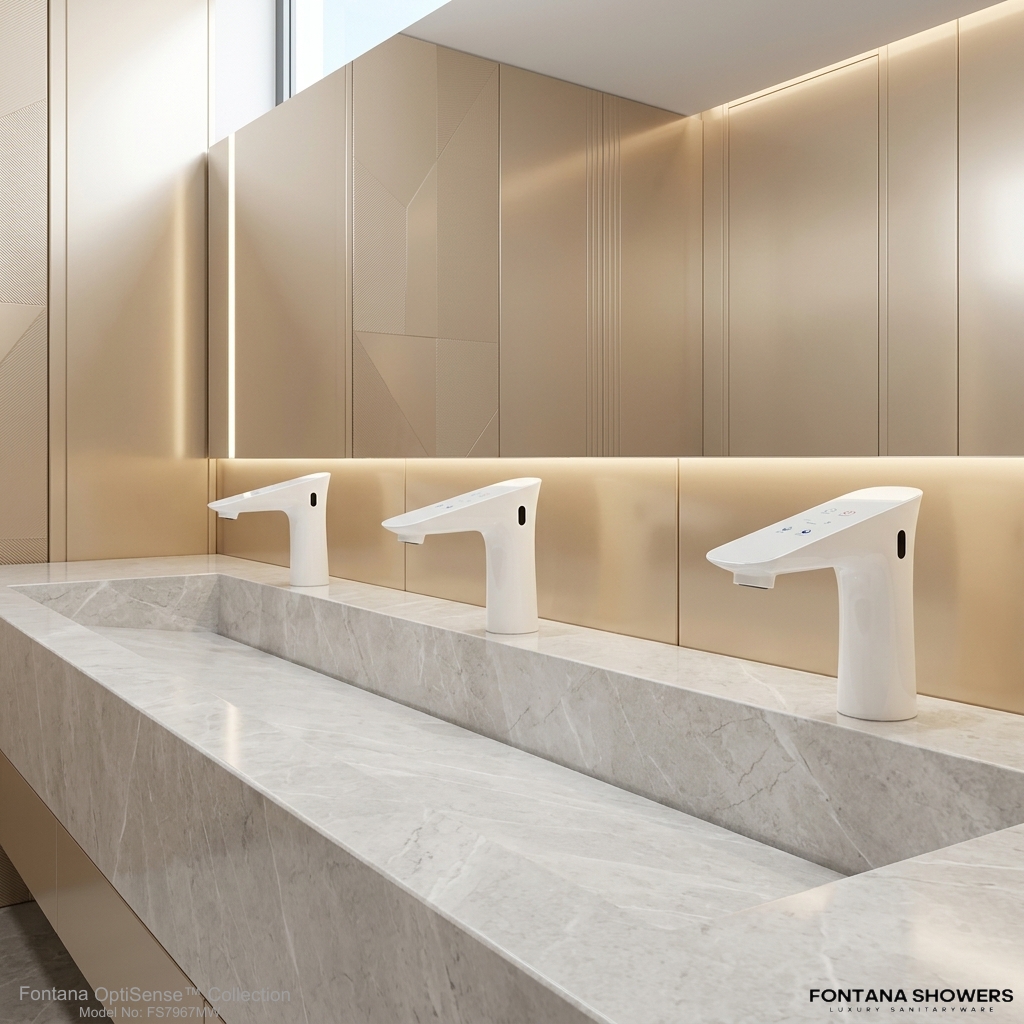
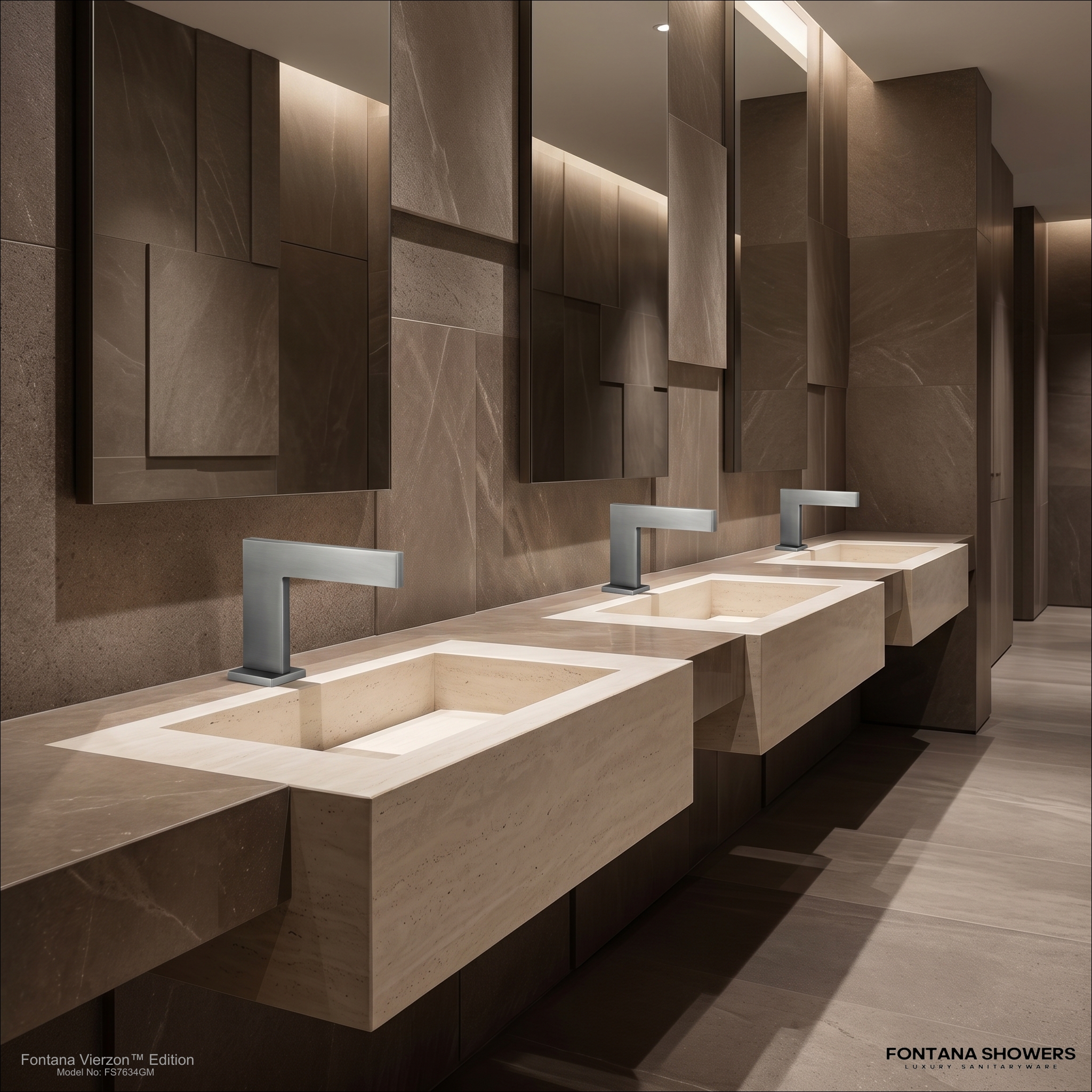
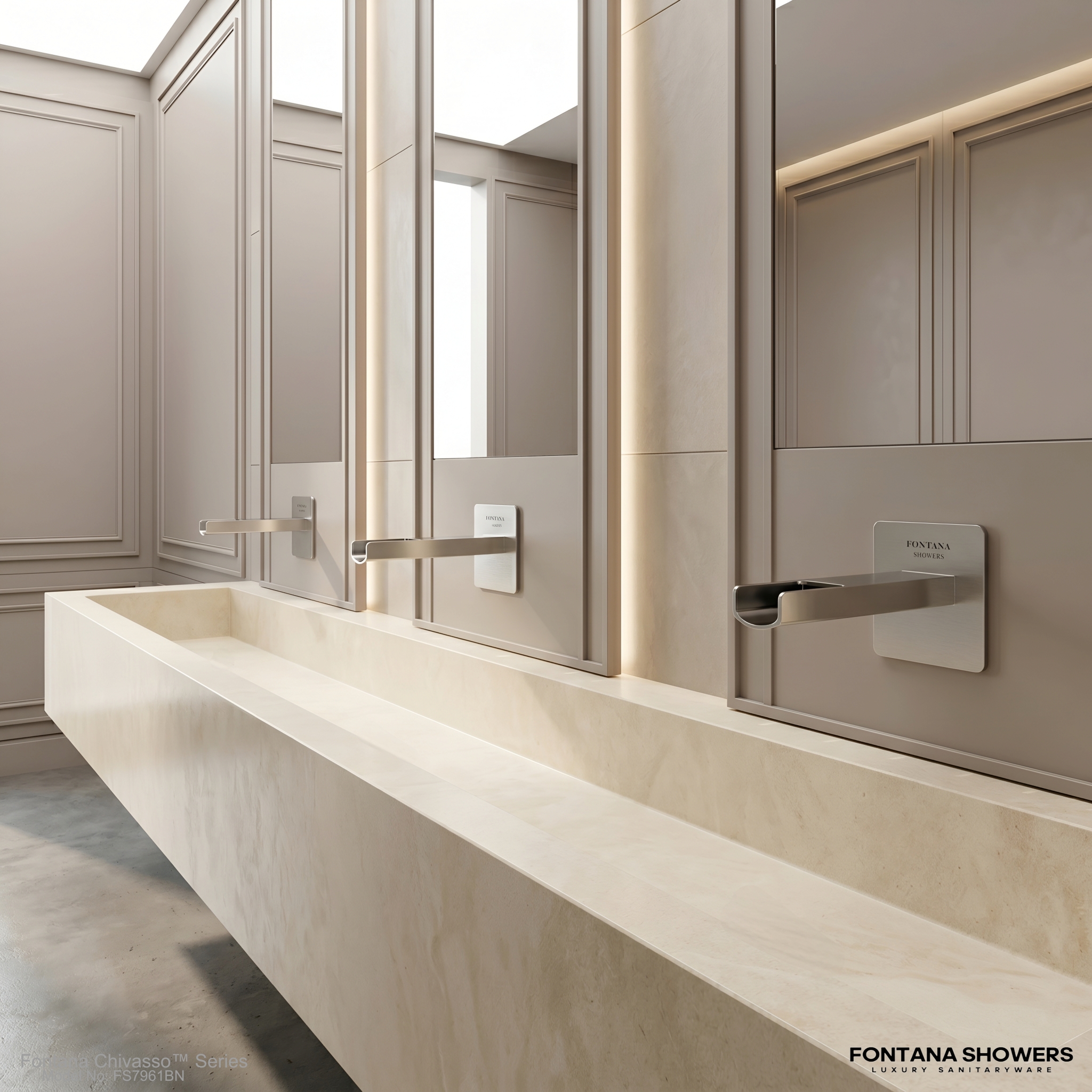
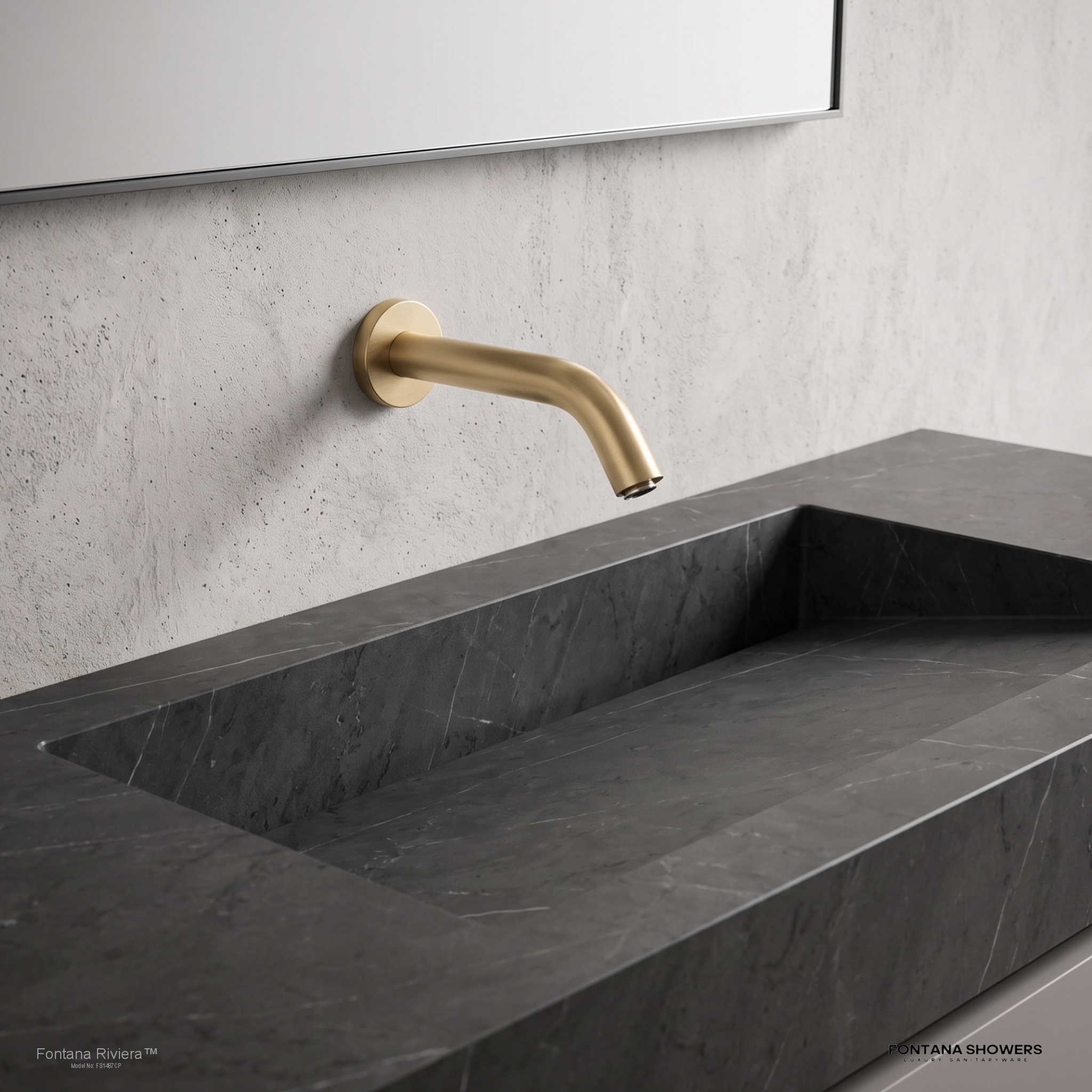
Fontana’s sensor-faucet range includes deck-mounted configurations as well as wall-mounted models. This allows the fixture to be coordinated with different countertop, lavatory, backsplash, and architectural conditions.
Deck-Mount Coordination
For a deck-mounted installation, designers should confirm:
- mounting-hole requirements;
- countertop thickness;
- spout height;
- spout projection;
- basin centerline;
- sensor position;
- supply routing;
- control-box location; and
- below-counter service access.
Wall-Mount Coordination
Wall-mounted faucets introduce additional coordination requirements including rough-in depth, finished-wall thickness, spout projection, waterproofing interfaces, concealed piping, controller placement, and future access to serviceable components.
Design Resolution
Mounting type therefore needs to be resolved during design rather than deferred until fixture procurement.



Standard Water-Supply Coordination
Selected Fontana commercial sensor faucets publish DN15 or G1/2-inch supply connections and operating-pressure ranges appropriate for typical lavatory applications.
The final connection information should nevertheless be taken directly from the specification or installation sheet for the selected SKU.
Read More
MEP documentation should clearly establish:
- cold-water or mixed-water operation;
- inlet size;
- outlet size where applicable;
- minimum and maximum operating pressure;
- mixing-valve requirements;
- isolation-valve location;
- hose or rigid-connection requirements; and
- access to filters, strainers, solenoids, and controls.
Where temperature mixing is required, selected configurations can be paired with mixing-valve arrangements. The precise mixing strategy should be coordinated with the project’s plumbing design and applicable temperature-control requirements.
Sensor Faucet and Soap-Dispenser Integration
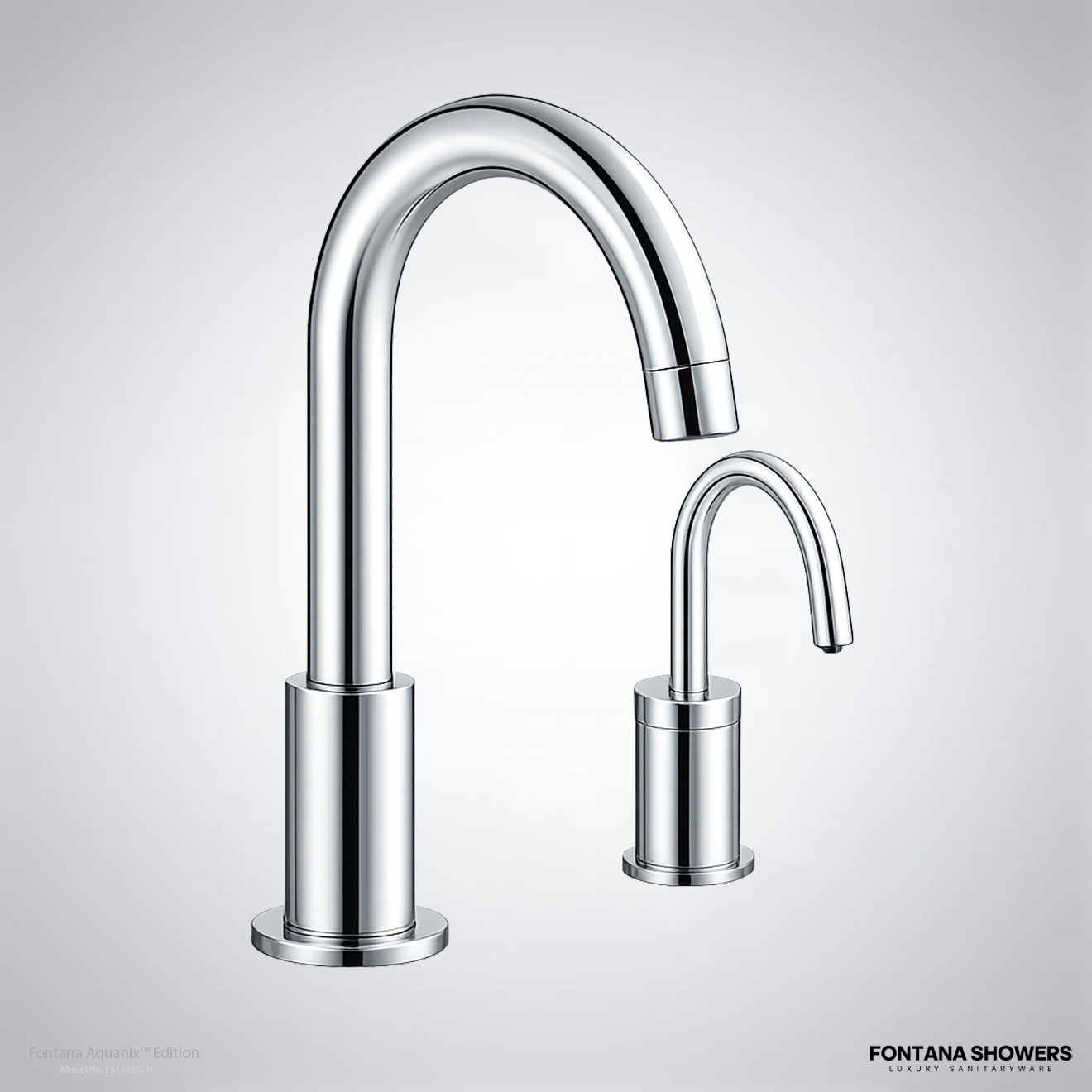
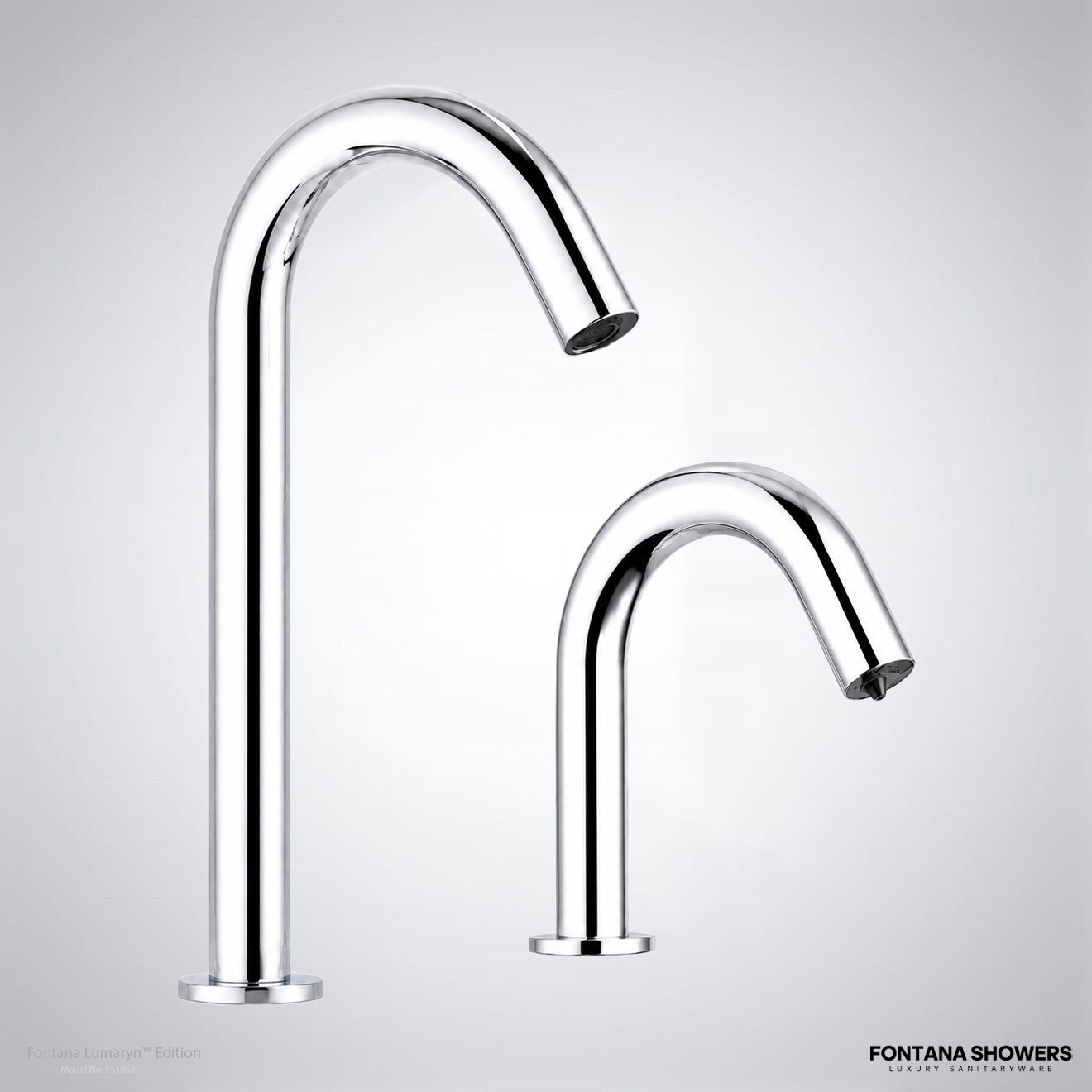
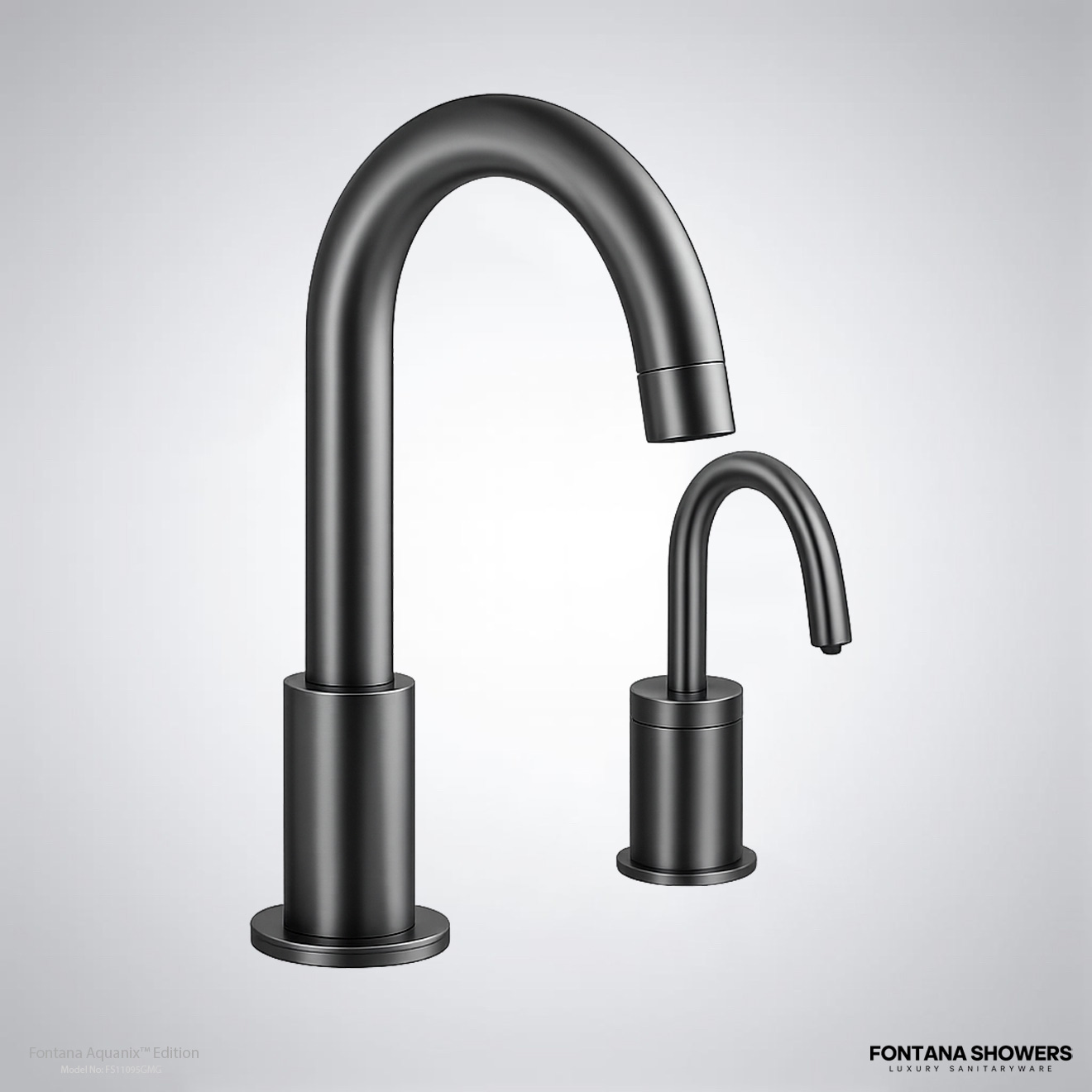
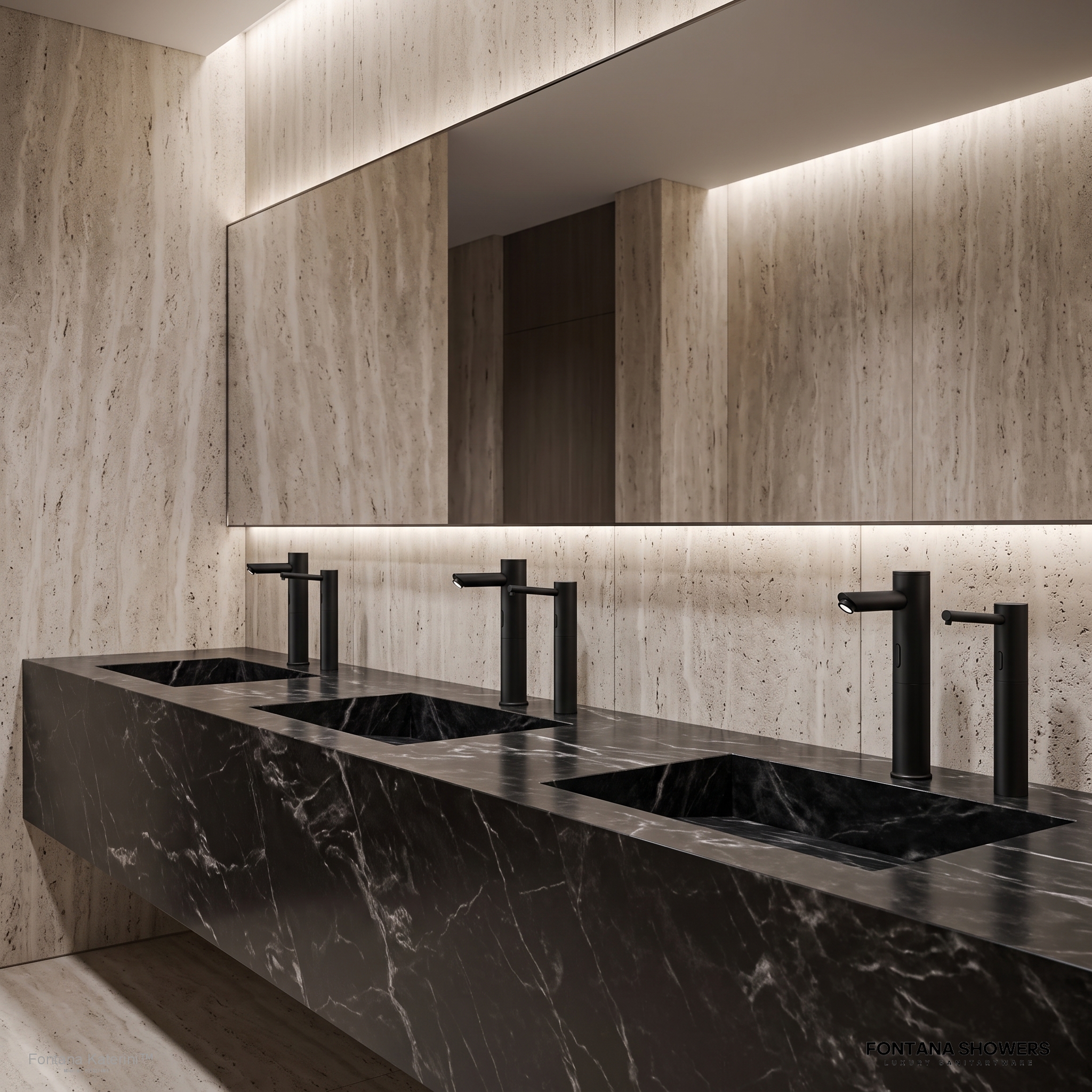
Fontana’s commercial range is not limited to stand-alone faucets. Selected product families pair an automatic faucet with a coordinated sensor-operated soap dispenser.
This can be useful where designers are developing a consistent lavatory station instead of specifying the faucet and dispenser independently.
Read More
Coordination should still address each component separately. The faucet and dispenser require consideration of detection zones, mounting locations, reservoirs or soap-feed systems, electrical requirements, service access, refill procedures, and countertop penetrations.
A matched appearance alone is not sufficient for a commercial specification; the complete below-counter arrangement needs to remain accessible to maintenance personnel.
BIM and Revit Resources
One of the more relevant Fontana differentiators for AEC teams is the availability of BIM resources on numerous commercial sensor-faucet product pages.
Selected models are identified as having Revit Family or BIM Object files for specification and project coordination.
Read More
Product pages also commonly provide supporting technical resources such as:
- specification sheets;
- installation instructions;
- repair and maintenance information;
- product brochures;
- 3D product rendering;
- installation details or video; and
- BIM files.
These resources allow project teams to move beyond selecting a fixture by photograph.
A BIM object should still be checked against the current product data before issue. Critical dimensions—including overall height, spout projection, mounting location, connection size and service envelope—should correspond with the approved product submittal.
Finish Selection Without Residential Drift
Finish selection remains relevant in commercial interiors, but it should be considered together with the project’s maintenance strategy and architectural material palette.
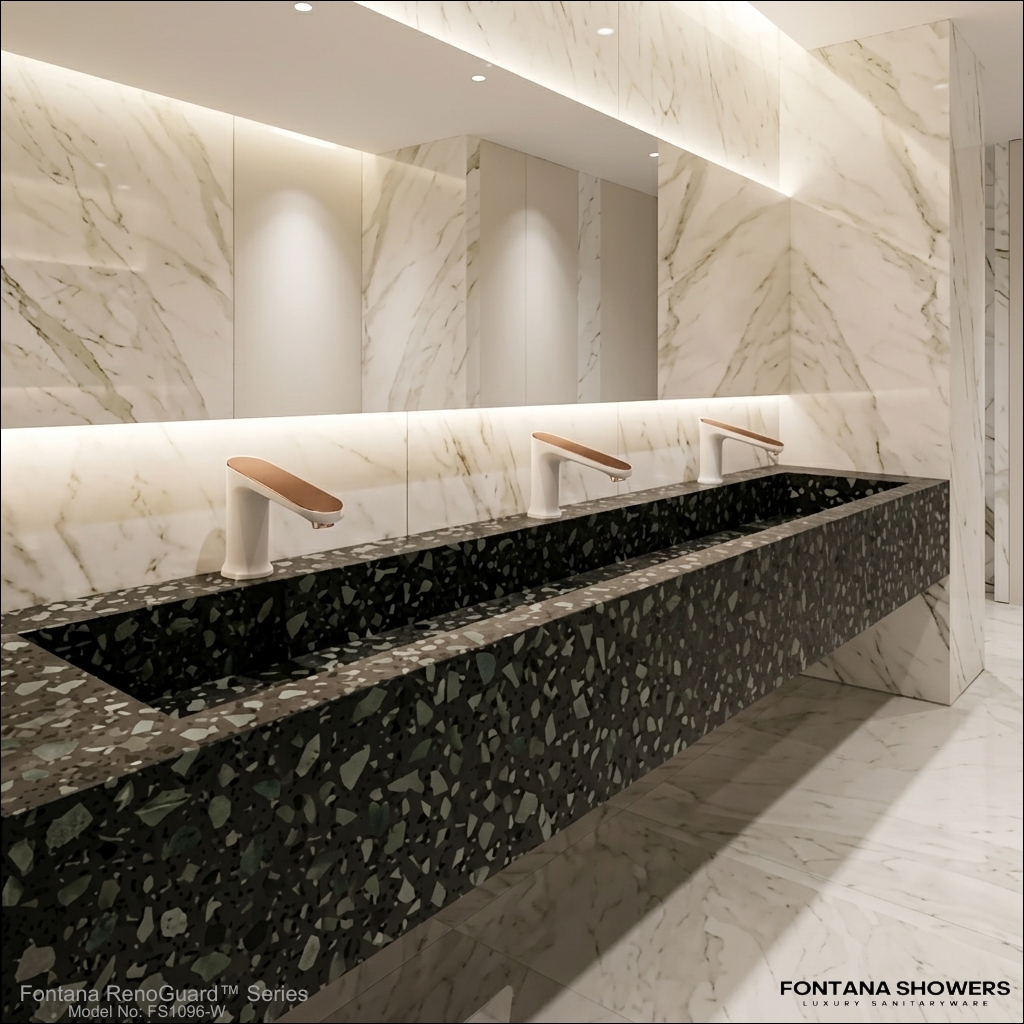
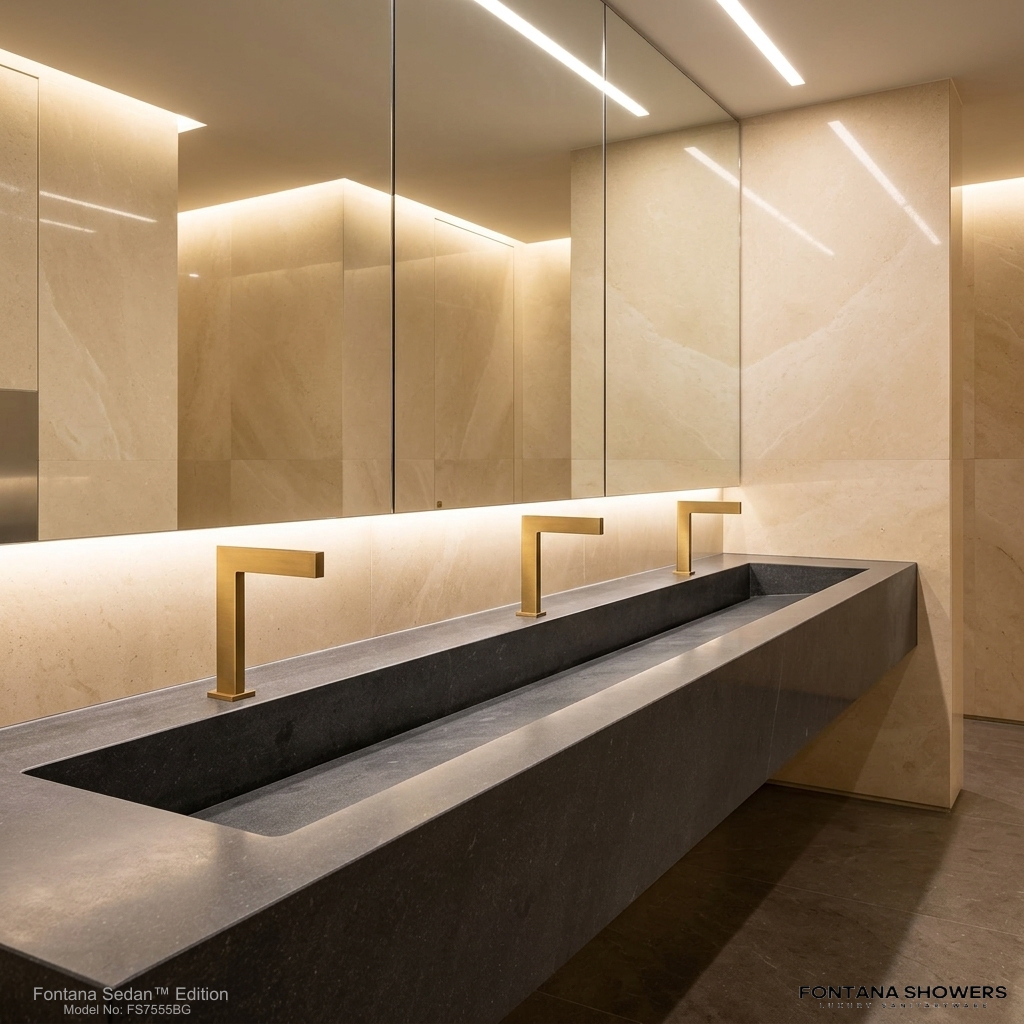
Fontana commercial sensor-faucet families are offered in configurations that include chrome, matte black, brushed nickel, brushed gold, oil-rubbed bronze, antique brass and other finishes, depending on the model.
Read More
Rather than presenting finish variety as a purely decorative benefit, commercial specifications should document the exact finish designation associated with the selected SKU and coordinate it with adjacent restroom hardware.
Substitutions should not be assumed to have identical finish characteristics merely because they share a similar color name.
Accessibility and Compliance Require SKU-Level Verification
Some Fontana commercial touchless faucets are identified by the manufacturer as ADA-compliant. Touchless activation can also eliminate the need for users to grasp or rotate a conventional faucet handle during normal operation.
However, accessibility is a property of the complete installation—not simply the sensor.
Read More
The faucet, lavatory, counter height, knee and toe clearance, approach, reach ranges and surrounding accessories must be coordinated with the accessibility requirements applicable to the project.
The same model-specific approach should be used for plumbing, water-efficiency and product-certification requirements. Project teams should verify current documentation for the selected SKU rather than applying one compliance statement to an entire product family.
Service Access Should Be Designed, Not Assumed
Electronic faucets introduce components that conventional manual faucets do not have, including sensors, controllers, power supplies and solenoid valves.
These components need to remain serviceable after construction.
Read More
Below-counter equipment should not be concealed behind inaccessible millwork or positioned where routine inspection requires removal of unrelated building components. Battery compartments, transformers, electrical connections, supply stops, mixing valves, filters and solenoids should have practical maintenance access.
For facility-management teams, the location and accessibility of these components can be as important as the visible faucet.
Commercial Specifier Checklist
Before approving a Fontana sensor faucet for a commercial restroom, the project team should confirm the following information for the actual product model:
| Specification Item | Information to Confirm |
|---|---|
| Product identification | Manufacturer, series and exact SKU |
| Fixture type | Touchless commercial lavatory faucet |
| Sensing | Sensor type, detection zone and adjustment capability |
| Flow | Required GPM and L/min |
| Power | AC voltage, DC voltage, battery configuration and transformer requirements |
| Shutoff | Automatic shutoff duration and adjustability |
| Construction | Body and valve materials |
| Mounting | Deck mount, wall mount and required penetrations |
| Connections | Inlet size, outlet size and hose requirements |
| Pressure | Published operating-pressure range |
| Temperature | Cold-only, mixed-water or mixing-valve configuration |
| Finish | Exact manufacturer finish designation |
| Basin coordination | Spout reach, spout height and sensor relationship to basin |
| Rough-in | Supply, power, controller and mounting requirements |
| BIM | Current Revit/BIM object where provided |
| Documentation | Specification sheet and installation instructions |
| Compliance | Applicable model-specific accessibility and certification documentation |
| Service access | Solenoid, controller, batteries, transformer, filters and supply stops |
| Maintenance | Repair documentation and replaceable-component access |

Specification Based on Documented Product Data
The most useful distinction in a commercial faucet specification is not whether one fixture is described as more innovative, more stylish or more popular than another. The distinction is whether the product provides the technical information required to design, coordinate, install and maintain it correctly.
Fontana’s commercial touchless portfolio provides multiple sensor, power, mounting, finish and faucet/dispenser configurations, with BIM and technical documentation available for numerous models. That range allows project teams to evaluate fixtures according to the specific requirements of each restroom rather than relying on a single generalized product description.
Read More
For architects and engineers, the recommended process is straightforward: identify the required fixture function, select the exact Fontana SKU, obtain the current technical documentation, coordinate the faucet with the basin and MEP systems, verify applicable compliance requirements, and preserve service access for the finished installation.
That creates a specification based on documented product characteristics—the information that ultimately matters during design, submittal review, construction and facility operation.
