
Commercial Restroom Specification Guide · 2026
Commercial Automatic Urinal Flush Valves: Specification, Installation and Selection
A project-ready guide for architects, plumbing engineers, contractors and facility teams comparing exposed and concealed sensor-operated urinal valves, power architecture, flush volume, pressure compatibility, commissioning and lifecycle service.
What Is a Commercial Automatic Urinal Flush Valve?
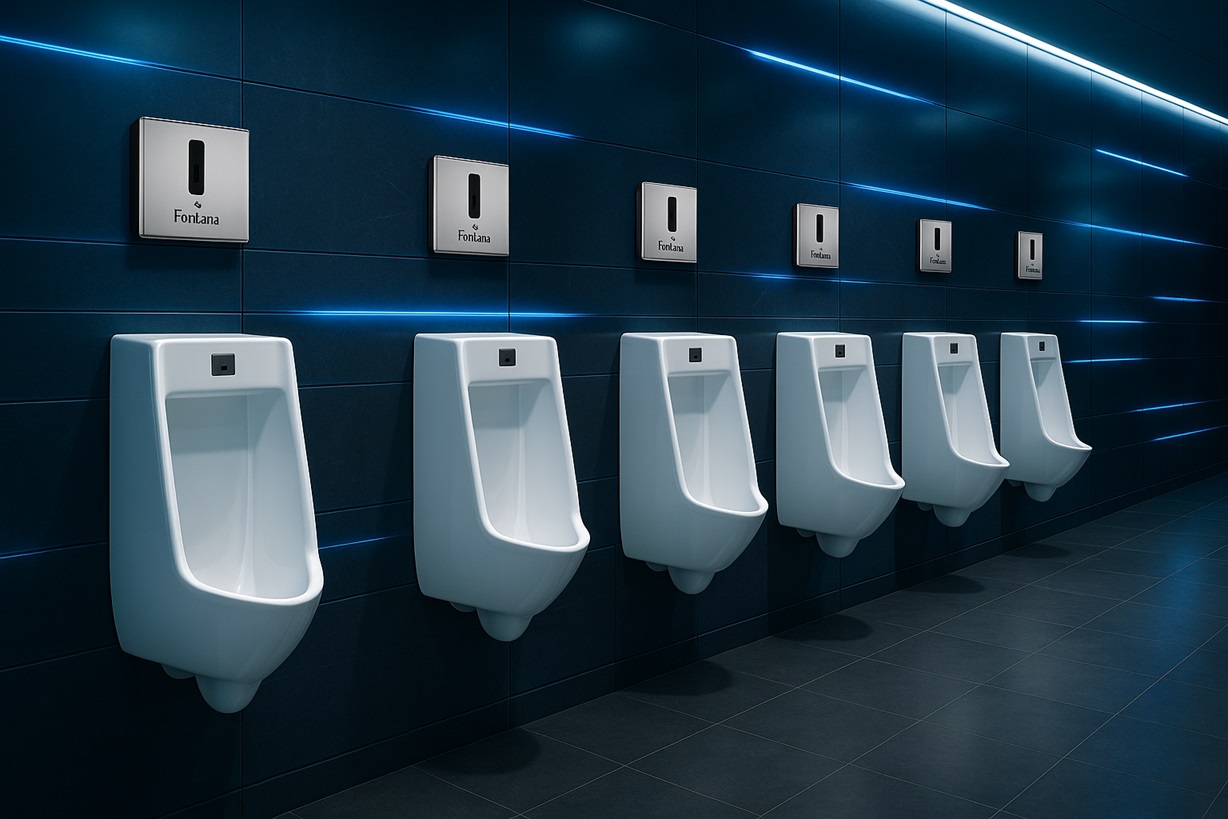
A commercial automatic urinal flush valve is a sensor-operated flushing device that delivers a measured water cycle without requiring the user to touch a handle. The valve, urinal fixture, water supply, power source and sensing geometry work as one system. Reliable selection therefore requires more than choosing a finish or sensor label: the design team must coordinate rated flush volume, inlet and spud geometry, dynamic pressure, electrical access, wall depth, service clearances and the compatible fixture.
This guide complements the technical comparison in Smart Sensor Urinal Flush Technology by concentrating on specification and field coordination.
Selection Framework
Start With the Building, Not the Finish
Occupancy, peak demand and maintenance capability determine the correct valve architecture. Airports and stadiums emphasize duty cycle, anti-vandal protection and rapid service. Offices prioritize predictable water use and quiet operation. Healthcare and education projects add cleaning protocols, access control and standardized replacement parts.
- Estimate peak simultaneous use and confirm available dynamic pressure.
- Choose exposed or concealed installation before final wall coordination.
- Confirm whether AC power, battery service or backup operation is required.
- Specify the fixture and valve as a compatible flushing system.
- Require model-specific cut sheets, rough-in drawings and maintenance instructions.
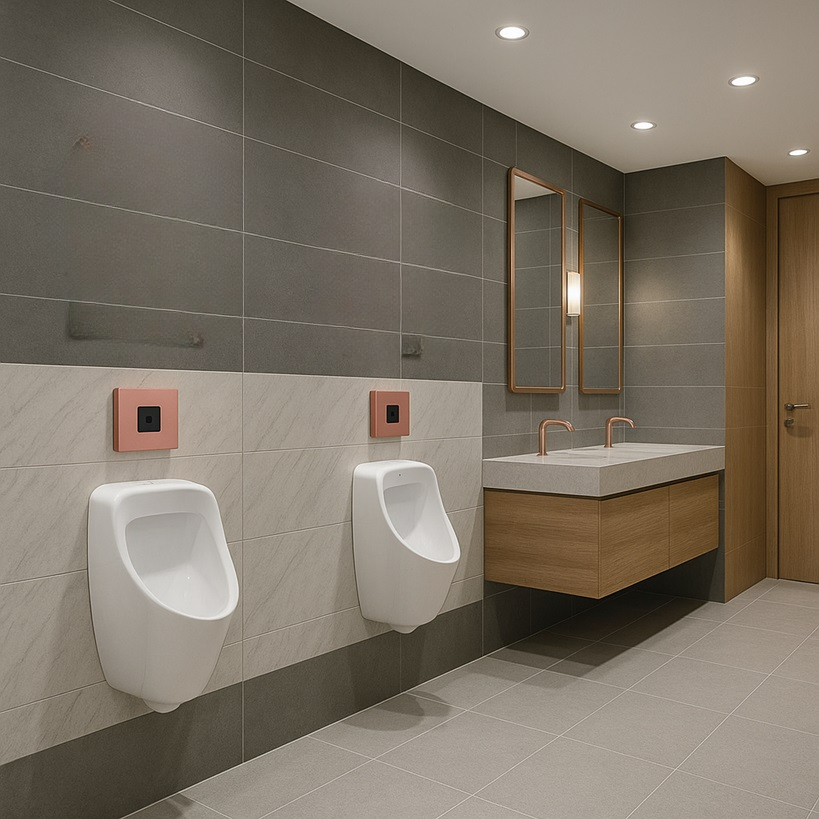
Exposed vs. Concealed Sensor Urinal Flush Valves
| Decision factor | Exposed valve | Concealed or recessed valve | Specification question |
|---|---|---|---|
| Service access | Components remain visible and generally easier to reach. | Requires a coordinated access panel or removable faceplate. | Can technicians isolate and service the valve without opening finished construction? |
| Vandal exposure | More hardware remains accessible in the room. | Valve body and routing can be protected behind the wall. | Does the occupancy require concealed fasteners and protected components? |
| Wall coordination | Lower in-wall coordination burden. | Requires wall depth, carrier, waterproofing and access coordination. | Is the rough-in approved before partitions close? |
| Aesthetic effect | Visible commercial flushometer expression. | Cleaner architectural wall plane. | Is the faceplate finish coordinated with faucets, dispensers and accessories? |
| Retrofit suitability | Often better where existing supply geometry can be reused. | May require wall opening and rerouting. | What existing inlet, spud and centerline conditions must remain? |
High-Traffic Applications
Design for Peak Use, Not Average Use
Transit, school and civic restrooms can experience concentrated demand. False activations waste water; missed activations create complaints; inaccessible batteries and control stops extend downtime. Sensor alignment, stable pressure and deliberate commissioning are therefore operational requirements, not optional refinements.
- Commission sensing distance after partitions, mirrors and finishes are installed.
- Test adjacent fixtures for cross-activation.
- Verify flush performance during simultaneous peak demand.
- Record control-stop position and final sensor settings.
- Stock the specified batteries, seals, filters and service components.
Verified Fontana Models
Six Commercial Sensor Urinal Flush Valve Configurations
The following summaries reproduce model-level information published on the linked FontanaShowers product pages. “Not published” is used where the page does not state a value; no missing dimensions or certified ratings are inferred.
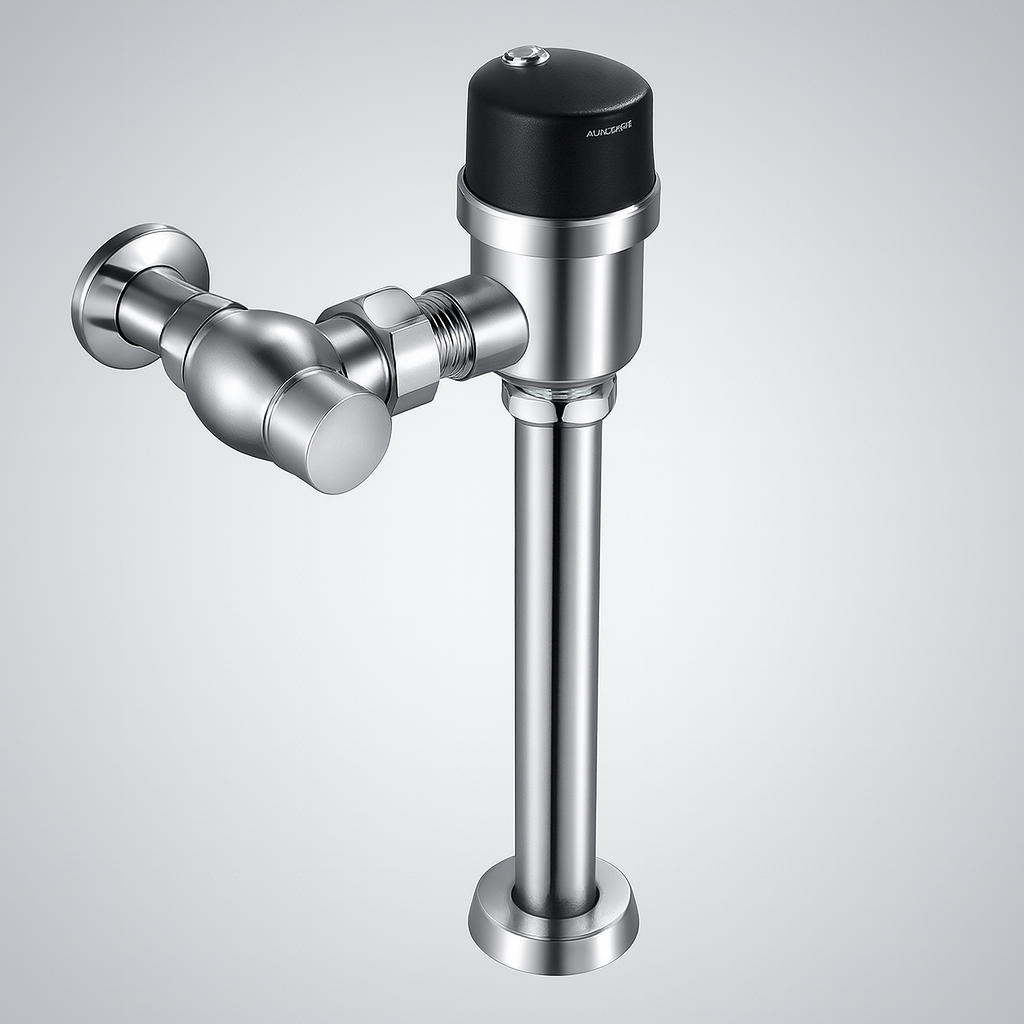
Fontana CleanMotion™ Chrome Exposed Automatic Sensor Urinal Flush Valve
Exposed brass construction with infrared activation and a manual operating option.

Fontana Halo™ Black Automatic Urinal Infrared Sensor Flush Valve
Minimalist faceplate with infrared activation and selectable AC or DC power.

Fontana Vela™ Series Light Grey Motion Sensor Urinal Flush Valve
Integrated wall faceplate supporting automatic activation and flexible power coordination.
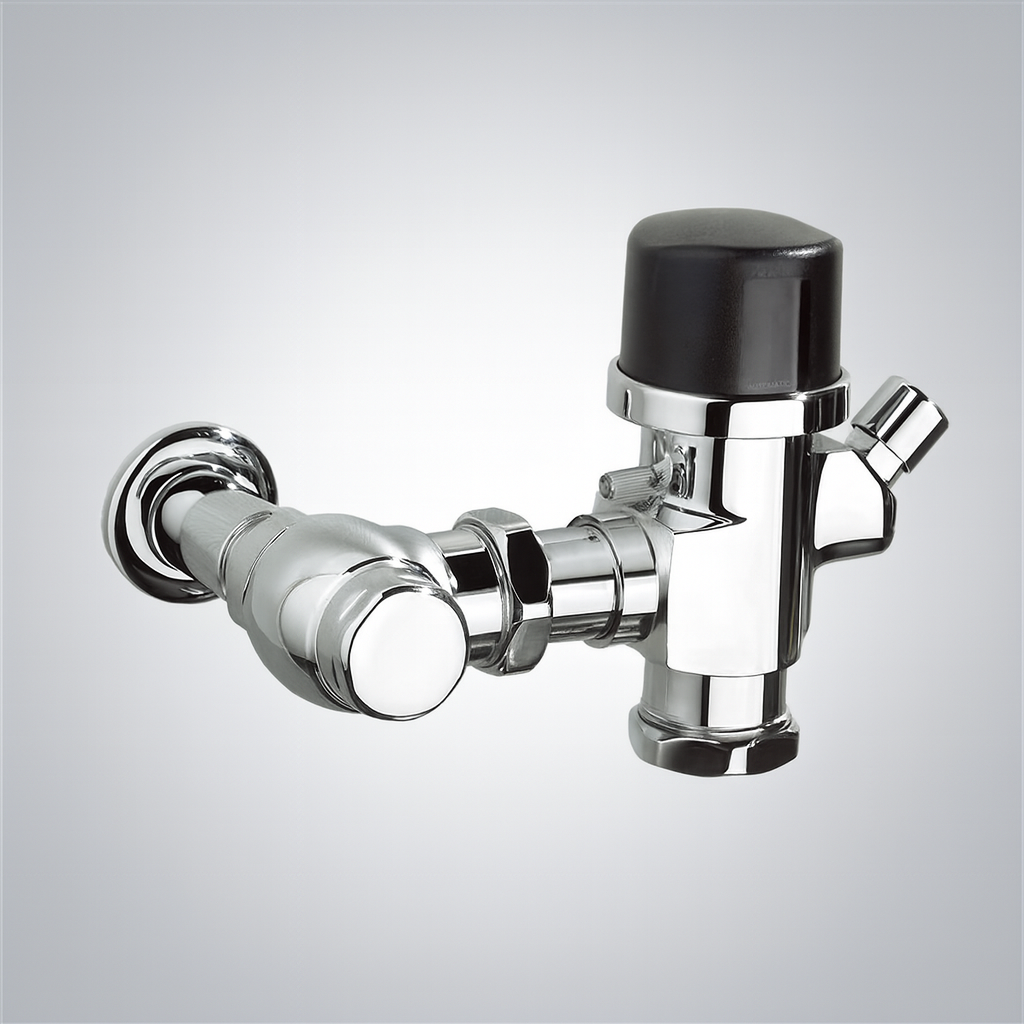
Fontana HydroMax Elite™ Chrome Sensor and Manual-Control Urinal Flush Valve
Automatic infrared activation plus manual operation for facilities seeking redundancy.
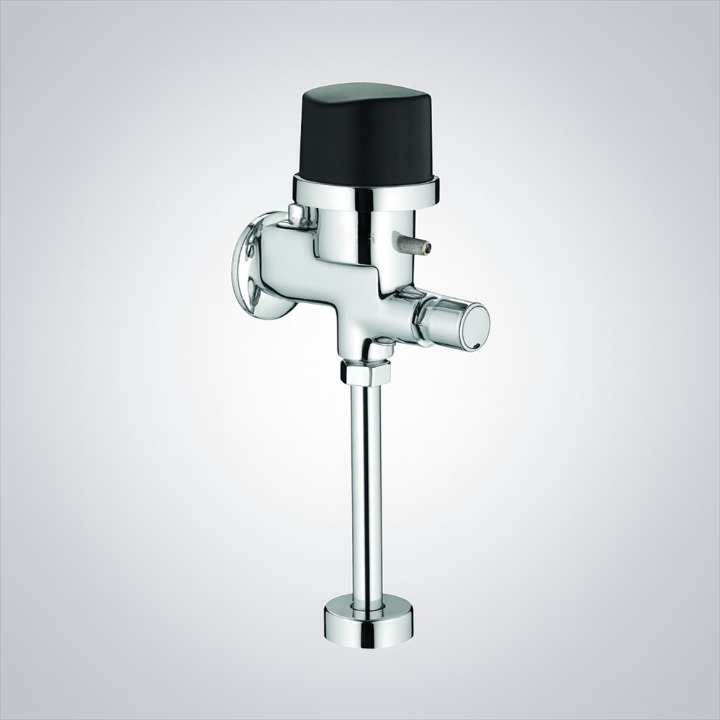
Fontana AquaForce Pro™ Chrome Light Sensor Urinal Flush Valve
Wall-mounted infrared model for commercial facilities using replaceable battery power.

Fontana OptiFlush™ Wall-Mounted Chrome Sensor Urinal Flush Valve
Low-profile 304 stainless-steel integrated panel with adjustable flush timing.
Hospitality and Design
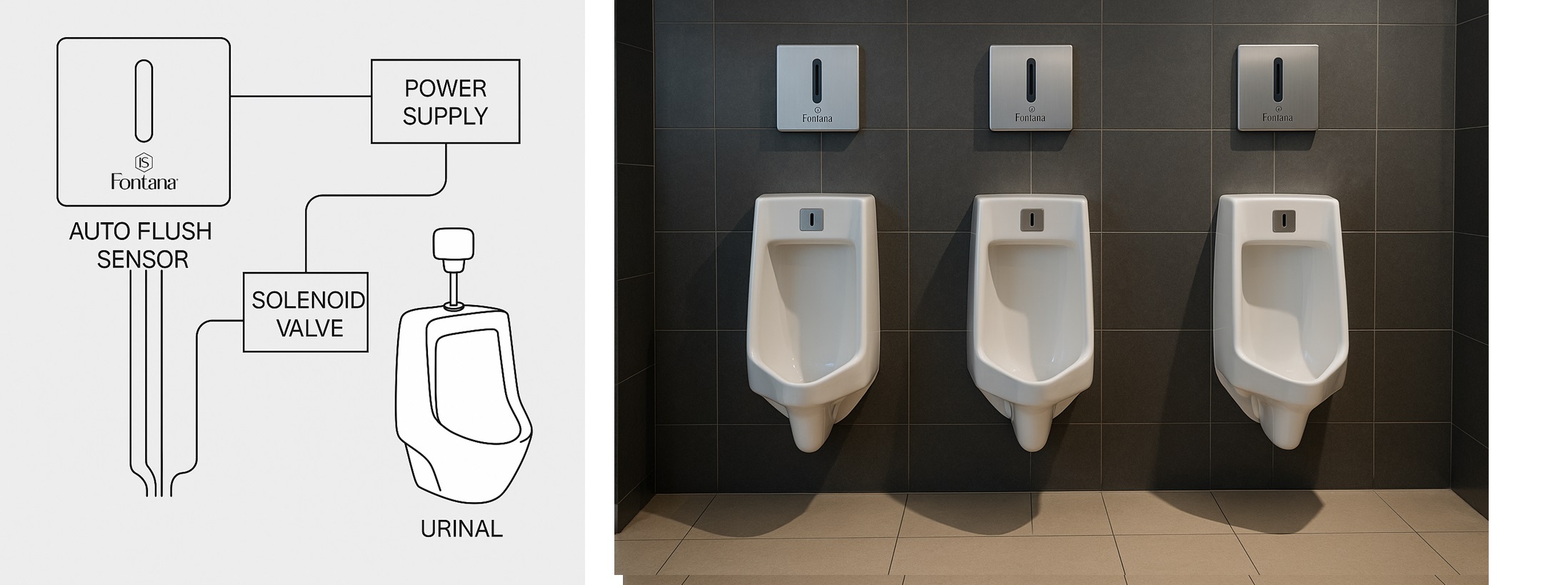
Concealed Systems Need Serviceable Architecture
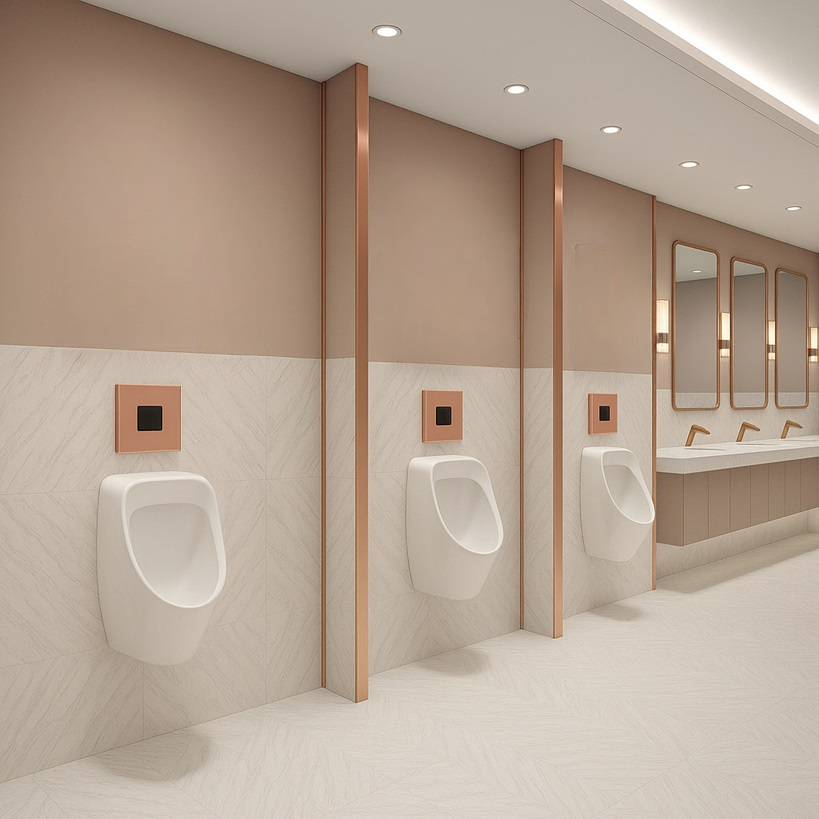
A refined faceplate does not remove the need for maintenance. The wall assembly must provide dependable access to the isolation point, power connection, sensor module, filter and replaceable valve components. Coordinate those requirements with tile modules, waterproofing, carriers, backing and partition depth before issuing construction documents.
- Dimension faceplate and access boundaries on enlarged restroom plans.
- Keep service access clear of partitions and adjacent accessories.
- Coordinate finish samples with the complete touchless fixture package.
- Document removal sequence and required service tools.
Water Efficiency, Pressure and Complete-System Compatibility
Do Not Infer GPF
Use the rated value on the exact model’s certified documentation. A timed cycle or liter range is not automatically equivalent to a certified gallons-per-flush rating.
Test Under Demand
Static pressure alone does not demonstrate performance. Confirm the available dynamic pressure while adjacent fixtures operate during the expected peak period.
Specify as a System
The urinal and flushing device must be compatible at the same rated volume. Lowering valve volume without verifying bowl performance can compromise washdown.
Power Architecture and Failure Planning
Battery or DC Models
- Confirm battery chemistry, quantity and expected replacement procedure.
- Provide tool-controlled but accessible battery service.
- Define low-battery indication and replacement responsibility.
- Standardize battery types across the restroom where practical.
AC or Hybrid Projects
- Coordinate transformer location, voltage and circuit access.
- Confirm whether battery operation is backup or an alternative configuration.
- Define behavior during power loss and after power restoration.
- Keep wiring and service points protected from water and vandalism.
Installation and Commissioning Checklist
Before Wall Closure
- Verify model number, urinal type, rated flush volume and supply connection.
- Confirm centerline, rough-in depth, inlet and spud alignment.
- Pressure-test concealed piping and photograph final conditions.
- Confirm electrical routing and service-panel clearance.
- Protect valve and sensor components during finish work.
Before Handover
- Flush debris from the supply before final valve commissioning.
- Set the control stop for reliable bowl performance.
- Test detection, departure logic, manual function and adjacent-fixture interference.
- Record settings, battery type and service-part numbers.
- Deliver model-specific instructions to the facility team.
Professional Standards and Independent References
Final compliance depends on the adopted code, authority having jurisdiction, exact listed product and complete installation. These primary references help project teams frame the review.
Commercial Automatic Urinal Flush Valve FAQ
Is an exposed or concealed sensor urinal flush valve better?
Neither is universally better. Exposed valves generally simplify access and retrofit work. Concealed valves protect components and create a cleaner wall plane but require coordinated wall depth and dependable service access.
Can a sensor urinal flush valve be selected by GPF alone?
No. Rated flush volume must be evaluated with fixture compatibility, dynamic pressure, inlet and spud geometry, sensor behavior, power, service access and applicable approvals.
Should a battery-powered valve be used in a high-traffic restroom?
It can be appropriate when battery access, replacement intervals, low-battery indication and maintenance responsibility are deliberately planned. Large portfolios may prefer coordinated AC power with documented backup behavior.
What must be commissioned after installation?
Confirm supply flushing, control-stop setting, bowl performance, sensing range, departure logic, adjacent-fixture interference, manual function where provided, power-loss behavior and service access.
Are all low-flow urinal valves WaterSense certified?
No. Water use alone does not establish certification. Verify the exact valve, fixture or complete system in the relevant certification documentation before making a WaterSense claim.
Build a Submittal-Ready Flush-Valve Package
Review Fontana’s exposed and recessed automatic flush-valve options, then request the exact model cut sheet, rough-in drawing, power requirements, rated flush volume, fixture compatibility and warranty documentation required for the project.