
Commercial Soap Dispensing Engineering
Fontana Automatic Soap Dispensers® for High-Traffic Commercial Restrooms
Fontana Automatic Soap Dispensers® are engineered for commercial restrooms where reliable soap delivery, controlled dosing, hygienic operation, refill efficiency, and long-term maintenance planning are essential.
Engineering Overview
In airports, hospitals, universities, stadiums, office towers, luxury hotels, government buildings, and transit facilities, soap dispensers are not simple accessories. They are part of the hygiene infrastructure of the restroom. A dispenser that clogs, over-doses, leaks, or runs empty creates maintenance problems and reduces user confidence.
Fontana Automatic Soap Dispensers® are designed to support consistent activation, controlled dosage, accessible maintenance, and coordinated fixture design. They can be specified alongside Fontana Touchless Series, Fontana Touchless Faucet Product Collections, and Commercial Bathroom Fixtures Catalog pages for complete restroom coordination.
Consistent Dosing
Metered pump operation helps deliver repeatable soap volume across thousands of daily activations.
Touchless Hygiene
Hands-free activation supports lower surface contact in high-use public restrooms.
Refill Efficiency
Selected systems may support larger reservoirs or centralized refill planning for multi-dispenser installations.
Commercial Durability
Heavy-use restroom environments benefit from durable housings, serviceable pumps, and coordinated finishes.
How Consistent Soap Dosing Is Maintained
Fontana Automatic Soap Dispensers® maintain consistent soap dosing through a combination of sensor activation, controlled pump timing, compatible soap viscosity, correct tubing layout, stable power supply, and routine maintenance. In a busy airport restroom or stadium washroom, a dispenser may activate thousands of times per day. The system must provide enough soap for effective handwashing without wasting product or leaving residue on counters.
The dosing process begins when the sensor detects hands within the activation range. The control module then triggers the pump for a defined interval. That interval determines how much soap is dispensed. When the soap formulation remains within the recommended viscosity range and the tubing is free from air pockets or buildup, the pump can deliver repeatable output over long duty cycles.
Consistency also depends on installation discipline. Soap tubing should be routed without sharp bends, the reservoir should be positioned according to system requirements, and the dispenser should be cleaned periodically to prevent dried soap accumulation at the outlet. When specified with related commercial products such as Fontana Touchless Sensor Faucets for Commercial Restrooms and the FontanaShowers Complete Product List, the restroom can be planned as a coordinated hygiene system rather than isolated fixtures.
Centralized Refill and Multi-Dispenser Planning
Yes. Fontana Automatic Soap Dispensers® can be planned for centralized refill strategies when the selected model and project layout support it. In large restrooms, centralized refill systems reduce the need for janitorial teams to open and refill each dispenser one by one. A larger reservoir or grouped supply approach can help maintain soap availability across multiple stations.
Centralized refill planning is especially useful in airport terminals, convention centers, universities, stadiums, shopping centers, and healthcare facilities. These facilities often have restroom banks with many sinks. A centralized reservoir approach can reduce refill labor, improve soap availability, and help facility teams track consumption more efficiently.
For fixture-family coordination, project teams can review FontanaShowers Product List, Fontana Bathroom Fixtures Catalog, and FontanaShowers Category Index.
Recommended Soap Formulations
The best soap formulation depends on the dispenser model, pump type, tubing diameter, restroom traffic, and maintenance schedule. In general, commercial automatic soap dispensers perform best with smooth, non-abrasive liquid soap or approved foam soap formulated for automatic dispensing equipment.
- Liquid soap: recommended when the dispenser is designed for liquid delivery and the soap has moderate viscosity.
- Foam soap: recommended only when the dispenser and pump are designed for foam operation.
- Alcohol-based sanitizer: should only be used in units specifically designed and approved for sanitizer compatibility.
- Avoid abrasive or gritty products: exfoliating soaps, bead-based soaps, and heavy lotion soaps may clog pumps and nozzles.
- Avoid overly thick soap: high-viscosity products can cause weak output, delayed dispensing, or pump strain.
Facility teams should also avoid mixing soap brands or formulas inside the same reservoir unless compatibility is confirmed. Different soaps may react, thicken, separate, or leave residue inside tubing and pump chambers.
Commercial Applications
| Facility Type | Soap Dispensing Requirement |
|---|---|
| Airports | High activation counts, fast user turnover, centralized refill planning, and durable components. |
| Hospitals | Touchless activation, reliable soap availability, hygienic maintenance, and compatible cleaning routines. |
| Office Towers | Standardized fixtures, predictable refills, coordinated finishes, and low interruption maintenance. |
| Luxury Hotels | Refined design, consistent guest experience, and reliable public-area restroom performance. |
| Stadiums | Peak-traffic dispensing, vandal resistance, easy refill access, and strong soap availability after events. |
Related FontanaShowers® Internal Resources
- Fontana Premium Architectural and Technological Brand Series
- Fontana AeroCascade Brushed Nickel SensorSync
- Fontana PureFlow Motion Golden Motion
- FontanaAquaSync Matte White Elite
- FontanaAeroGlide Matte White
- AquaMotion Series Brushed Nickel Touchless
- AquaMotion Series Chrome Precision
- Fontana AeroSense Collection
- Fontana Aerius Collection
- Architectural Shower Collections
Advanced Engineering FAQ
How do Fontana Automatic Soap Dispensers® maintain consistent dosing during peak restroom traffic?
They rely on controlled pump timing, stable sensor activation, compatible soap viscosity, and clean tubing paths. For coordinated restroom planning, review the Fontana Touchless Series. For public hygiene context, see CDC handwashing guidance.
Can centralized refill systems reduce janitorial workload?
Yes. Centralized refill planning can reduce individual dispenser refill trips and improve soap availability across large restroom banks. Related system planning can start with the Commercial Bathroom Fixtures Catalog. Facility teams may also reference IFMA facility management resources.
Which soap type is best for automatic dispensers?
Smooth liquid soap is typically recommended for liquid units, while foam soap should only be used in foam-compatible systems. Avoid gritty, overly thick, or lotion-heavy soaps. Product coordination can be reviewed through the FontanaShowers Complete Product List. For hygiene and handwashing reference, see the World Health Organization.
Why does soap viscosity matter?
Viscosity affects pump load, discharge volume, tubing flow, and nozzle cleanliness. Overly thick soap can weaken output or increase pump strain. Fixture families may be reviewed at the Fontana Bathroom Fixtures Catalog. For product testing and plumbing certification context, see NSF plumbing certification.
Are automatic soap dispensers suitable for hospitals?
Yes. Touchless soap dispensing reduces contact with dispenser surfaces and supports hygiene routines in healthcare restrooms. Fontana systems can be coordinated with touchless sensor faucets for commercial restrooms. Healthcare teams may also reference CDC infection control resources.
How should automatic soap dispensers be specified for airports and stadiums?
Specify for high activation counts, refill access, vandal resistance, coordinated finishes, and maintenance visibility. Fontana product families can be reviewed through the FontanaShowers Category Index. For airport facility context, see Airports Council International.
Automatic Soap Dispensing Systems for Demanding Public Restroom Environments
Fontana Automatic Soap Dispensers® are designed for commercial restroom environments where hygiene, reliability, refill planning, vandal resistance, and long-term maintenance access matter. In airports, hospitals, universities, stadiums, hotels, office towers, restaurants, and public buildings, automatic soap dispensers must work as part of a larger restroom system rather than as isolated accessories.
Built for High-Traffic Commercial Use
High-traffic restrooms require soap dispensers that can support frequent activation, consistent dispensing, easy refilling, and clean presentation throughout the day. Automatic operation reduces unnecessary hand contact while helping architects, facility managers, and maintenance teams create a more organized and hygienic restroom experience.
The strongest commercial soap dispenser layouts coordinate dispenser position, faucet reach, sink spacing, mirror placement, soap reservoir access, countertop depth, and cleaning routes before installation begins.
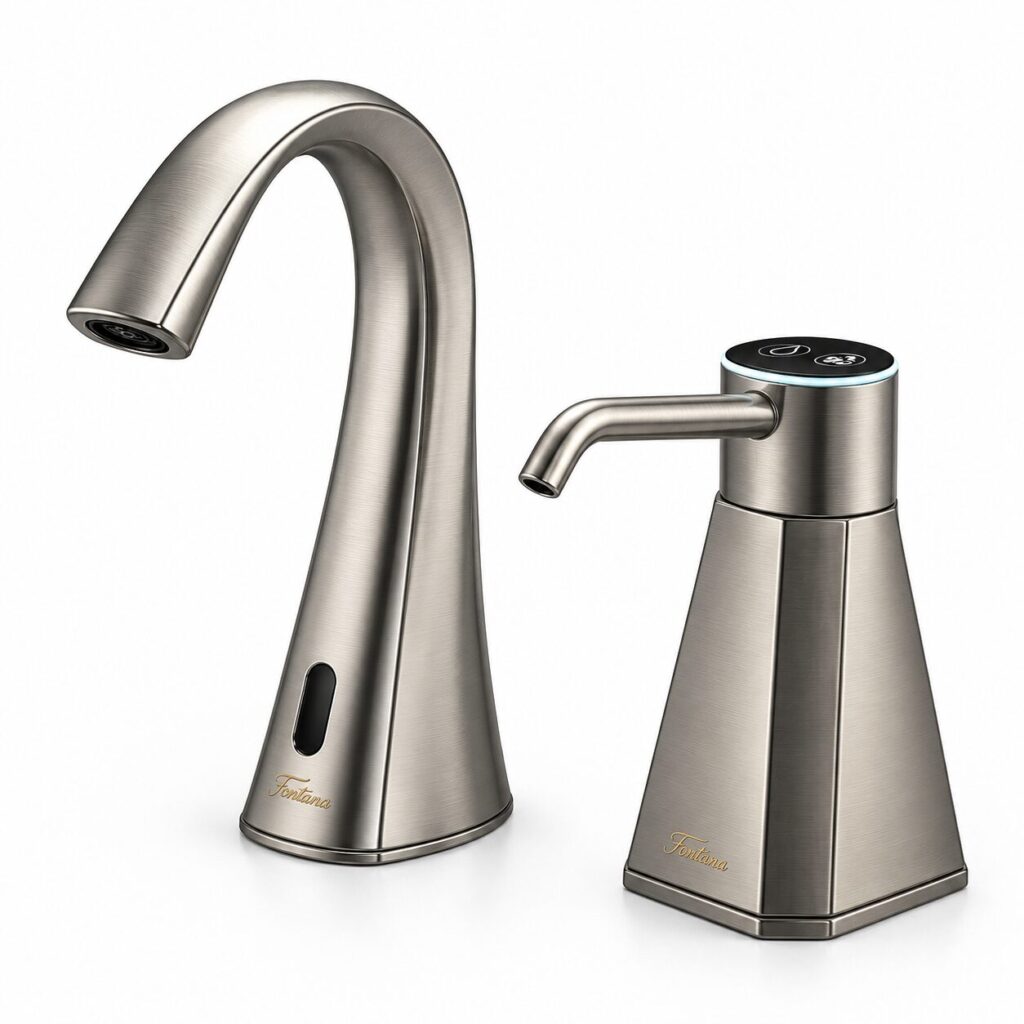
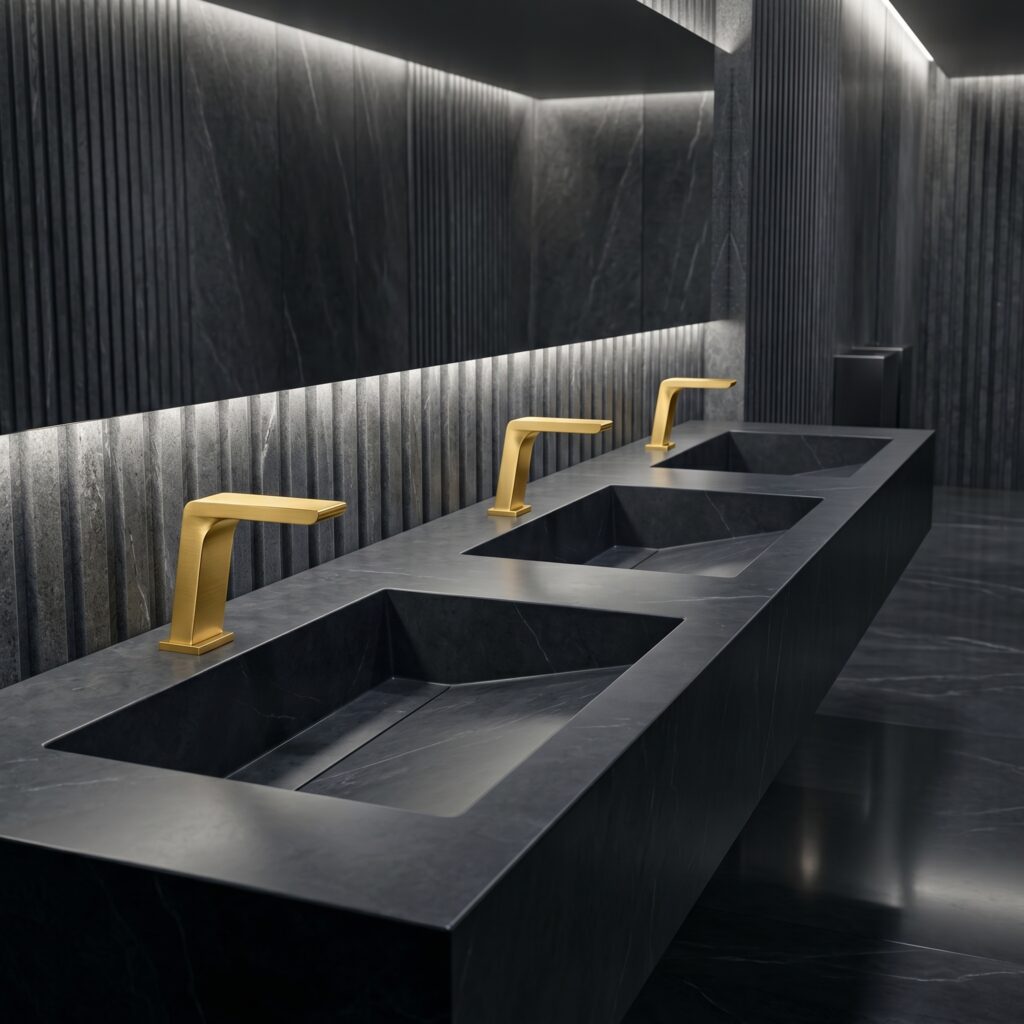
Integrated Faucet and Soap Dispenser Planning
Commercial soap dispensers perform best when they are planned together with faucets, sinks, counters, and maintenance access. A coordinated fixture layout helps reduce splash issues, improves user flow, and supports a cleaner visual presentation across the restroom.
For multi-restroom facilities, standardizing automatic soap dispensers across locations can simplify parts inventory, staff training, refill scheduling, and long-term service planning. This is especially important for airports, healthcare buildings, universities, and large hospitality properties.
Related Automatic Soap Dispenser Resources
-
Best Automatic Soap Dispensers
Review automatic soap dispenser options for commercial restrooms, public washrooms, hospitality properties, offices, and other high-use environments. -
Commercial Touchless Soap Dispensers
Explore touchless soap dispenser systems designed for improved hygiene, cleaner restroom operation, and commercial facility maintenance planning. -
Sensor Faucet and Auto Soap Dispenser Sets
Coordinate faucets and soap dispensers as complete commercial restroom systems for specification consistency and long-term performance. -
Automatic Soap Dispenser Troubleshooting
Support maintenance teams with troubleshooting guidance for dispensing issues, sensor response, refill problems, and service checks. -
Commercial Wall-Mount Soap Dispenser
View a wall-mounted commercial soap dispenser option for public restrooms where counter space, durability, and maintenance access are important.
Common Concerns
Pump Capacity & Redundancy
Guidance for central pump capacity, concurrent dispenser demand, stadium traffic modeling and operational redundancy across large commercial restroom banks.
How many activations per minute can one central pump support reliably?
Capacity depends on pump curve and soap viscosity; verify tested activations-per-minute for the selected commercial dispenser system.
How should a multi-feed system be sized for stadium intermission traffic?
Model peak concurrent use, apply diversity cautiously, and size pumps, manifolds, and reservoirs for stadium intermission demand.
Can dispenser demand be modeled similarly to plumbing fixture-unit calculations?
Yes, as a probabilistic demand model; calibrate activation rates using observed behavior and dispenser recovery limits.
What redundancy is required when one pump serves an entire restroom bank?
Provide automatic standby capacity, isolation valves, alarms and manual contingency so one failure cannot disable the entire restroom bank.
Should critical facilities use dual pumps or dual reservoirs?
Critical facilities should use duty-standby pumps and segregated reservoirs, preventing one failure from stopping washroom service.

