
High-Traffic Restroom Flush Systems: Reduce Water Waste, False Activations & Downtime
A practical operating framework for airports, schools, healthcare facilities, stadiums, offices and hospitality properties where one poorly commissioned valve can create repeated complaints, wasted water and avoidable service calls.
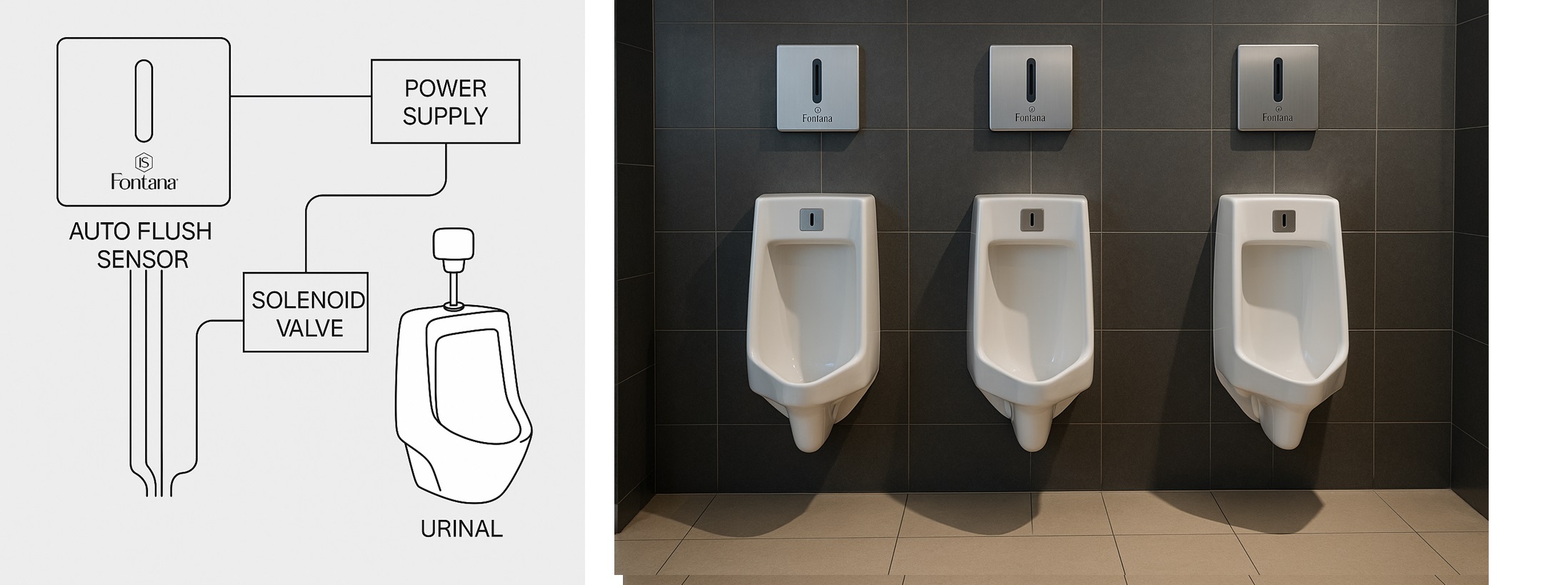
How do facilities reduce automatic-flush waste and downtime?
Start by confirming dynamic water pressure and fixture compatibility, then commission sensor range and flush timing in the finished room. Standardize power and valve platforms, preserve front service access, record settings, and inspect the small number of conditions that cause most repeat calls.
Replacing hardware without correcting pressure, reflections, wiring or access problems often relocates the failure instead of solving it.
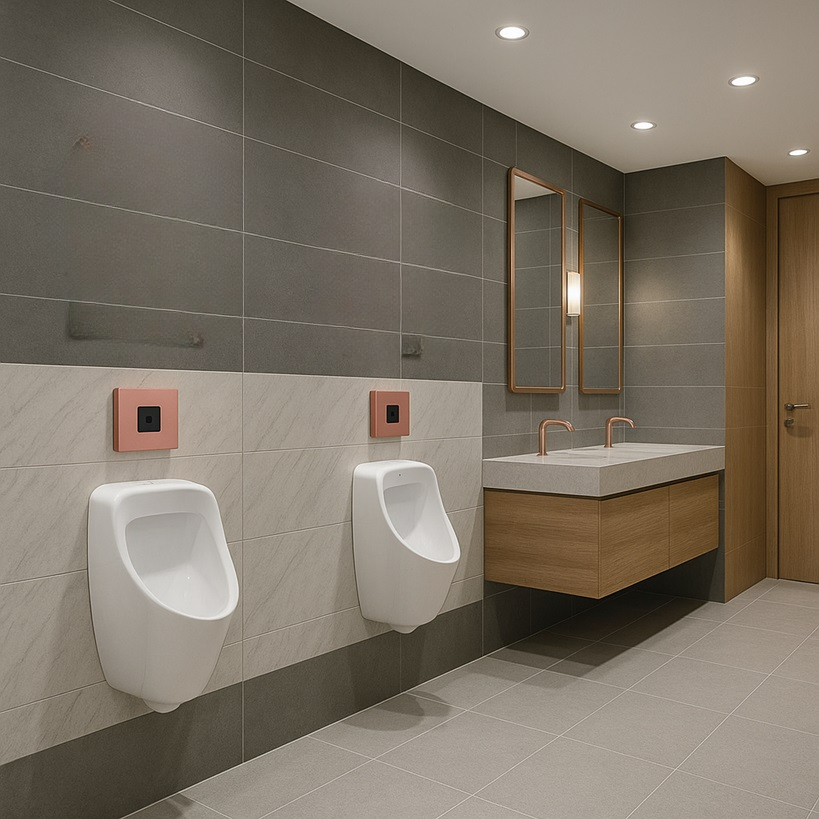
Diagnose the symptom before replacing the valve
Automatic flush problems are often system problems. Use observed behavior to narrow the cause, then confirm the manufacturer’s procedure for the exact model.
| Observed symptom | Likely checks | Corrective direction | Do not assume |
|---|---|---|---|
| Phantom or repeated flush | Reflective partitions, mirror angle, moving doors, sensor range, unstable power | Recommission detection in the finished room; correct reflections or range per instructions | That a shorter flush duration fixes unwanted activation |
| Missed flush | Sensor obstruction, range, low supply, weak battery, connector seating | Verify detection first, then dynamic pressure and actuation power | That the solenoid is automatically defective |
| Weak bowl clearance | Dynamic pressure, stop position, debris, fixture/valve flush-volume match | Restore supply performance and confirm compatible fixture requirements | That increasing sensor range increases flushing force |
| Continuous water flow | Debris, damaged seal, stuck mechanism, incorrect assembly | Isolate water and service the model using its maintenance guide | That an electronic reset can correct every mechanical leak |
| Frequent battery calls | Traffic, battery quality, false activations, moisture, installation date | Correct nuisance cycles; standardize batteries and replacement intervals | That all restrooms have the same duty cycle |
| Long repair time | Blocked faceplate, undocumented settings, mixed parts, inaccessible stop | Standardize the platform, label settings and protect service clearance | That concealment and serviceability are incompatible |
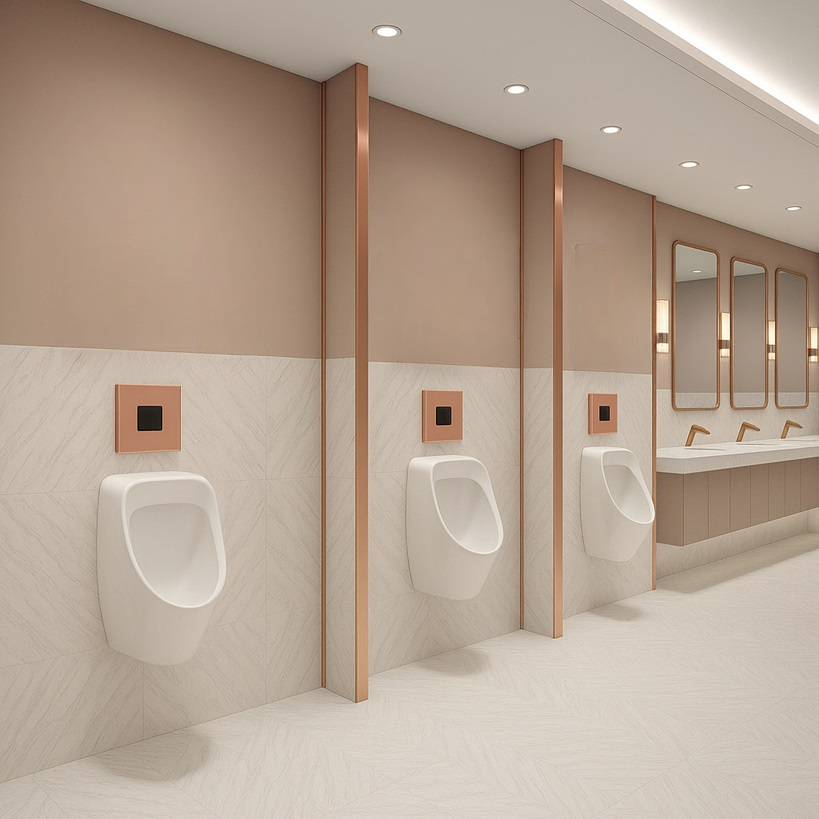
Sensor logic prevents waste only when the hydraulic system is stable
A touchless valve can eliminate user-dependent lever operation, but it cannot compensate for every plumbing condition. Water performance begins with a compatible fixture and valve, sufficient dynamic pressure, a correctly adjusted control stop, clean strainers and a flush duration appropriate to the fixture.
Where demand is concentrated—intermission, class change, flight arrival or shift change—test several fixtures together. Static pressure observed during quiet hours does not reveal the pressure available during simultaneous operation.
For valve-selection fundamentals, reference the sensor urinal flush technology guide and recessed flushometer performance resource.
Six checks before the restroom opens
Commissioning should happen after permanent lighting, partitions, mirrors and doors are installed. Record the accepted settings so later maintenance can distinguish drift from the original configuration.
Confirm compatibility
Verify fixture, inlet, outlet, spud, flush volume and manufacturer documentation.
Measure pressure
Check dynamic pressure while representative fixtures operate simultaneously.
Verify power
Confirm polarity, transformer loading, battery condition and protected connections.
Tune detection
Test realistic approach, dwell and departure patterns in the completed stall.
Set the cycle
Use only permitted timing and volume settings for the paired fixture.
Document results
Record model, location, settings, battery date and corrective observations.
Automatic flush valves for different operating strategies
The following models come from current FontanaShowers pages reached from the supplied workbook. Legacy URLs that redirect were replaced with their live destinations. Always confirm the current cut sheet before specification or procurement.

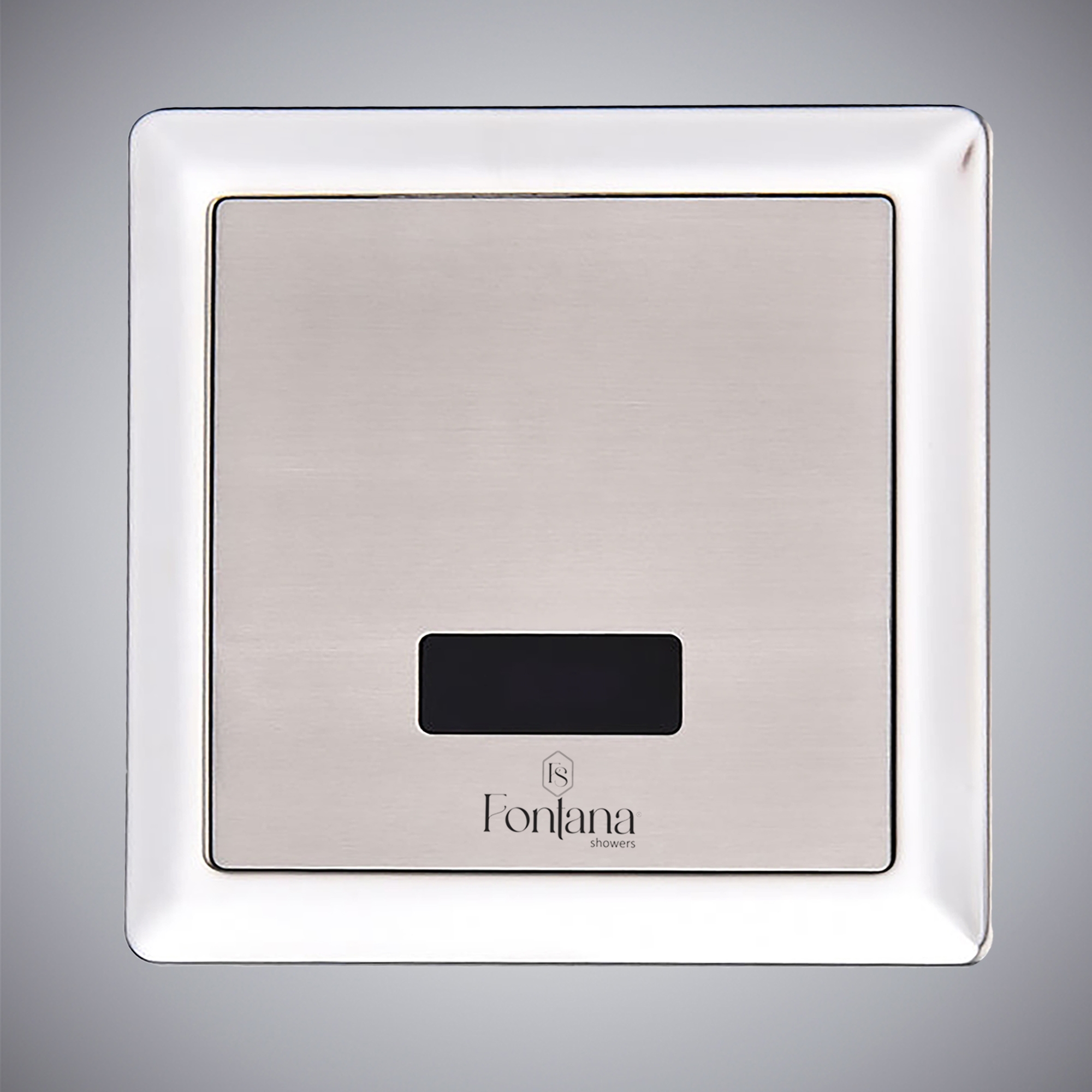
Fontana AutoCore™ Connect Satin Nickel Touchless Urinal Flush Valve
A 304 stainless steel concealed wall-mounted valve with automatic sensing, adjustable flush timing and selectable battery or mains-power configurations.
Fontana IQLink™ Satin Nickel Automatic Urinal Flush Valve
A concealed 304 stainless steel panel system with adjustable flush timing and either DC battery or AC electrical induction.

Fontana FlushNet™ Satin Frost Automatic Sensor Urinal Flush Valve
A wall-mounted sensor valve with four-AA battery power and adjustable flush timing, positioned for high-traffic and coordinated facility applications.

Fontana IntelliFlush™ Amethyst Mist Sensor Urinal Flush Valve
A stainless steel automatic valve using DC battery power and adjustable flush duration for projects where new electrical wiring is undesirable.

Fontana SmartFlush FX™ Graphite Grey Sensor Urinal Flush Valve
A graphite-grey automatic flush-valve option for commercial projects coordinating sensor performance with darker architectural hardware.
Match service access and power to the operating plan
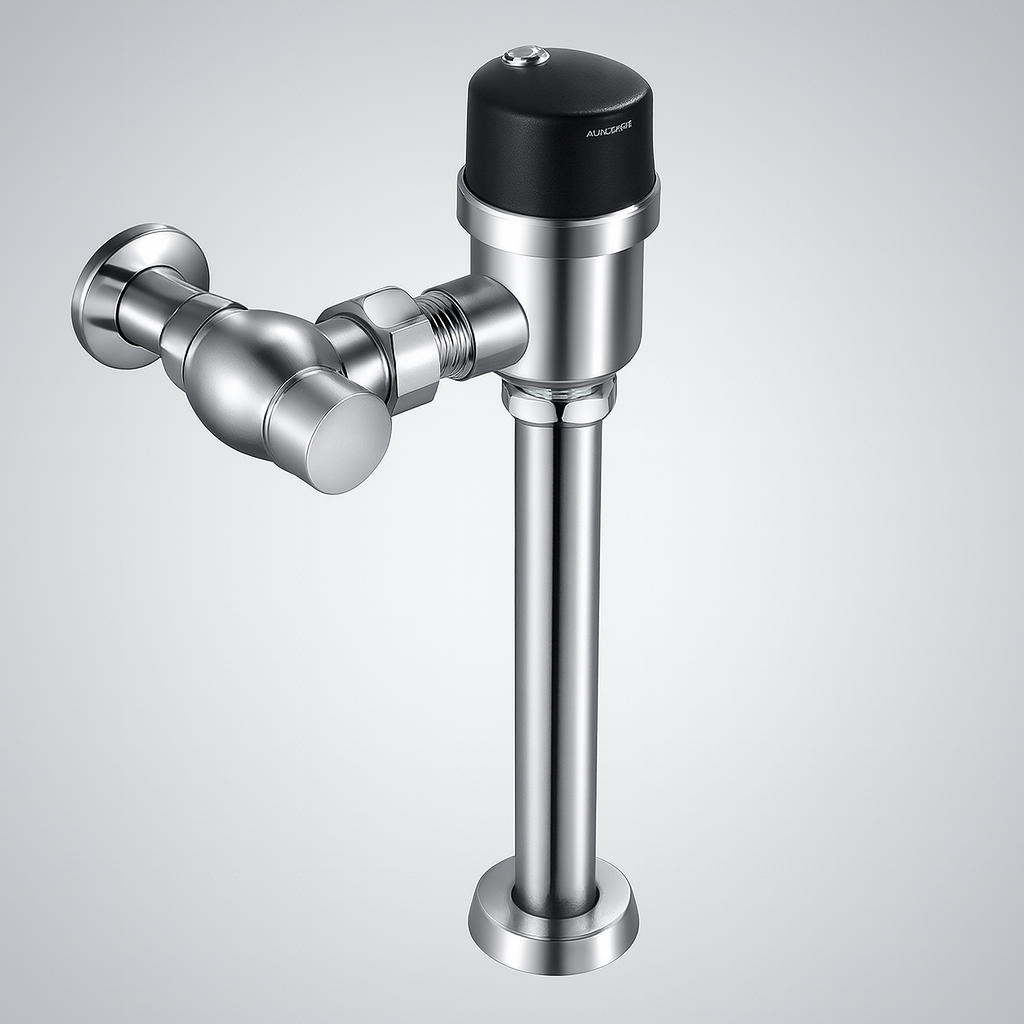
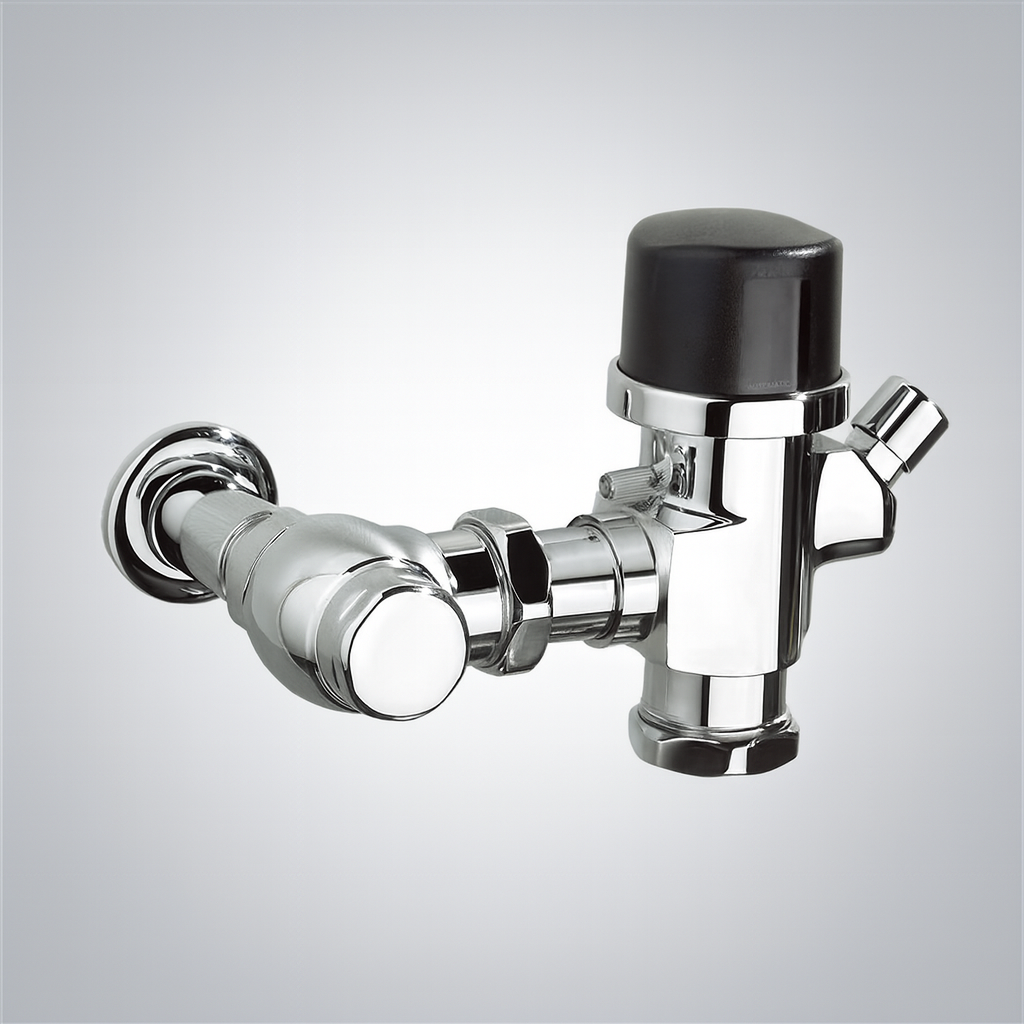
These previously reviewed models illustrate four additional choices: exposed access, concealed faceplate, dual control and battery-powered concealment.


Build a program around condition and traffic
Calendar-only maintenance treats an airport concourse and a lightly used executive floor as if their duty cycles were identical. Combine scheduled inspections with observed activation counts, battery history, repeated fault locations and seasonal occupancy.
- Log model, serial or asset ID and exact location.
- Record accepted sensor and flush settings.
- Date every battery change and use approved batteries.
- Inspect for leaks, debris and loose connectors.
- Test approach, dwell, departure and rapid repeat use.
- Keep compatible seals, batteries and service parts.
- Protect faceplate, stop and chase access.
- Escalate repeat faults for root-cause review.

Automatic flush performance questions
What causes an automatic urinal valve to flush by itself?
Common checks include sensor range, reflective surfaces, moving doors, unstable power and incorrect commissioning. Diagnose the environment before replacing components.
Why does the valve detect a user but flush weakly?
Detection and hydraulic performance are separate. Check dynamic pressure, control-stop position, debris and fixture-to-valve flush-volume compatibility.
Are battery or hardwired valves better for high traffic?
Hardwired power can reduce battery service, while battery systems can simplify retrofit work. Access, traffic, outage planning and maintenance capacity should determine the choice.
How often should sensor flush valves be inspected?
Use the manufacturer’s instructions and a site-specific interval based on traffic, water conditions, battery history and prior faults. High-use or critical facilities may require more frequent checks.
How can a facility reduce repeat service calls?
Standardize models where practical, document settings, preserve access, stock compatible parts and require root-cause review when the same fault returns.
Plan the flush system around real operating conditions
Send the fixture model, pressure data, traffic profile, power preference, wall construction and required documentation to compare suitable automatic-flush configurations.