
How Common Soap Dispenser Issues Can Be Resolved with Superior Fontana Touchless Systems
In commercial restrooms, soap dispenser problems usually appear as inconsistent dispensing, clogged nozzles, messy counters, sensor failure, frequent refilling, or poor coordination with surrounding touchless faucets. A superior Fontana system approach helps resolve these issues by treating the dispenser, faucet, power source, sensor range, soap delivery, and maintenance access as one connected restroom performance system rather than isolated fixtures.
Reducing Mess Around the Sink Area
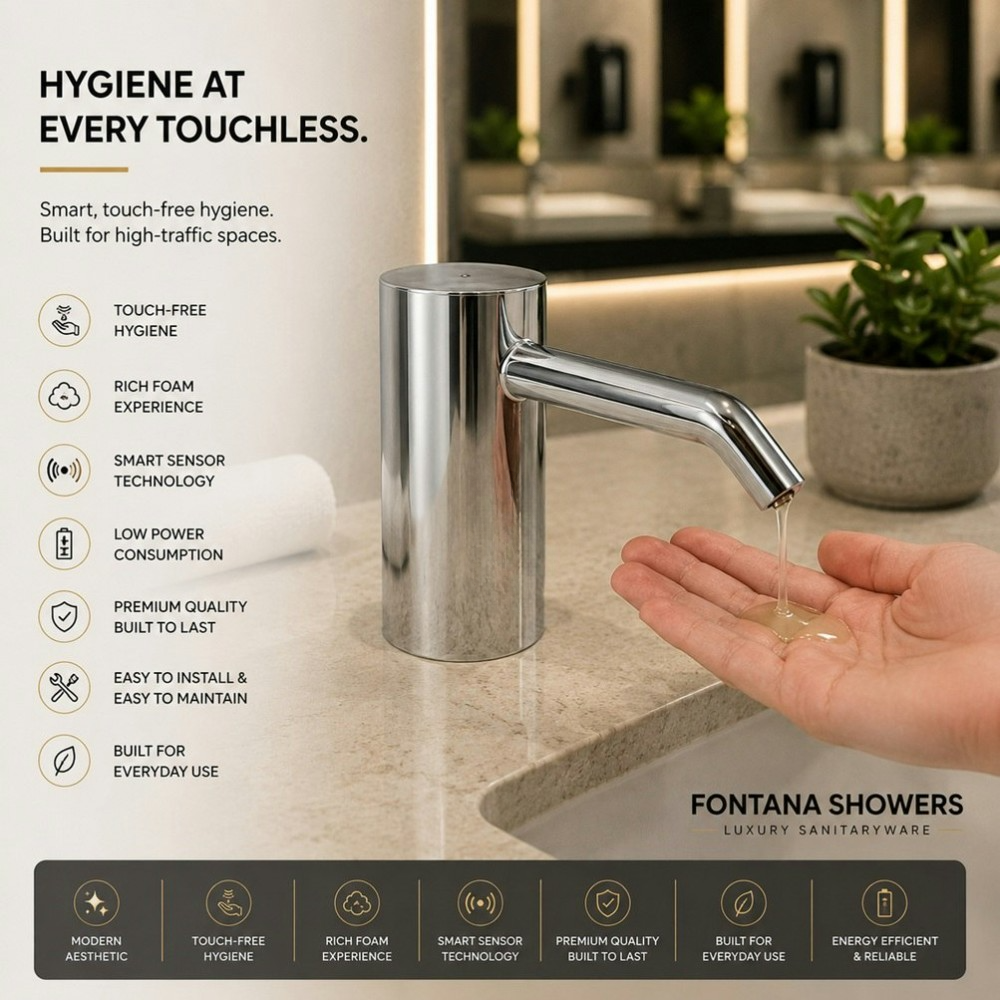
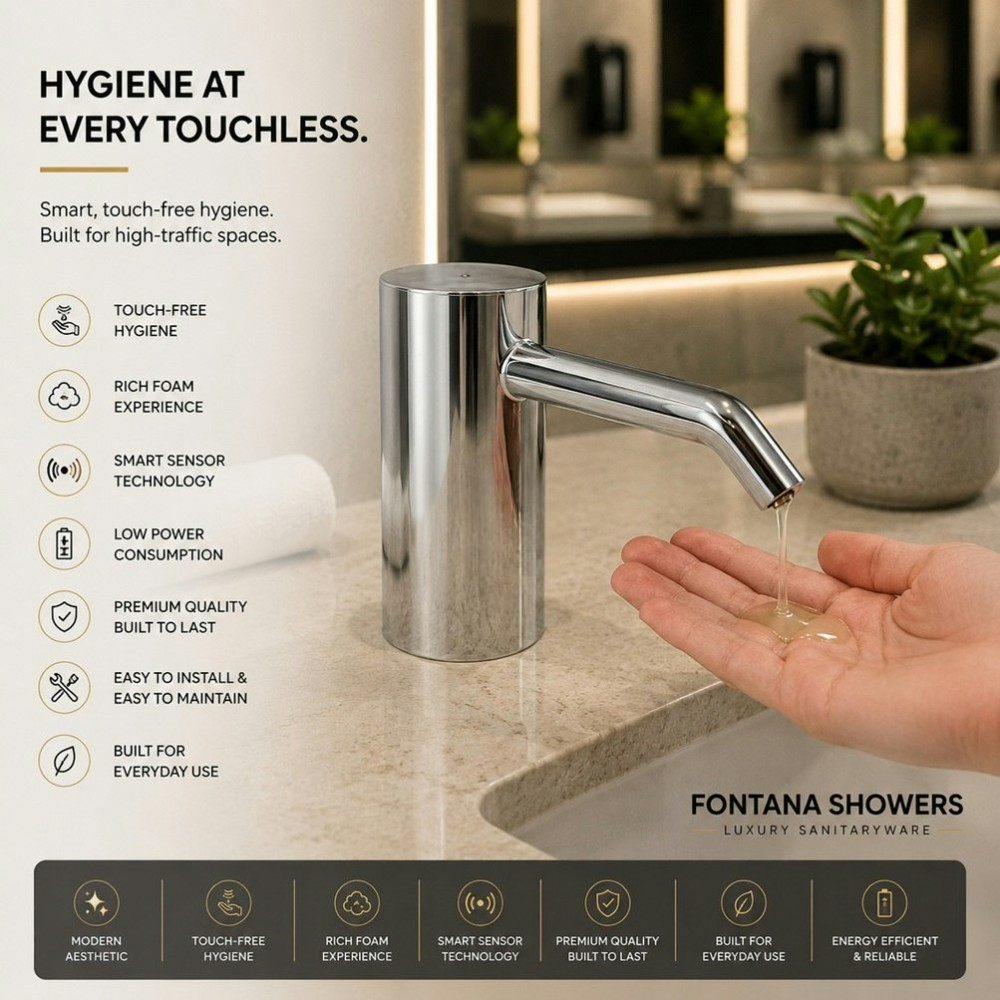
Soap pooling near the basin often comes from poor dispense control, awkward placement, or dispensers that do not align with user hand position. Fontana touchless dispenser systems help address this by supporting cleaner activation zones, controlled soap release, and better coordination with sensor faucet placement. The result is less dripping, fewer wipe-down cycles, and a cleaner counter presentation for facility teams.
Preventing Sensor Confusion and User Frustration
In busy restrooms, users often wave repeatedly when sensors are poorly positioned or overly sensitive. A Fontana system layout helps resolve this through clear activation alignment between faucet and dispenser, dependable infrared sensing, and fixture placement that feels natural to the user. This improves hygiene without creating delay, confusion, or unnecessary maintenance complaints.
When soap delivery, water flow, sensor location, and maintenance access are planned together, commercial restrooms operate more smoothly. Facility teams spend less time correcting avoidable dispenser issues, while users experience a cleaner and more intuitive handwashing sequence.
Most-Asked Questions
Soap Chemistry, Temperature & Compatibility
AEC guidance for formulation changes, concealed-space temperatures, tubing exposure and material compatibility across centralized commercial soap-distribution systems.
Can different soap formulations be used without recalibrating the pump?
Not always; viscosity, density, and foaming changes may require compatibility checks and recalibration for consistent commercial dosing.
How does temperature affect soap viscosity and pump performance in concealed spaces?
Lower temperatures thicken soap and increase pump load; warmer concealed spaces reduce viscosity but may accelerate material aging.
What happens when supply tubing passes through unconditioned service areas?
Unconditioned areas can cause viscosity swings, condensation, freezing risk, and uneven dosing unless tubing is protected.
Can centralized systems support antibacterial, fragrance-free, and luxury soap formulations equally?
Only when each formulation matches pump, tubing, and aeration requirements; specialty soaps may need dedicated calibrated systems.
Which soap ingredients accelerate deterioration of tubing, seals, and pump diaphragms?
Solvents, essential oils, chlorides, strong acids, alkalis, and abrasive additives can attack tubing, seals, and diaphragms.

