
Improving Soap Dispensing Accuracy in Commercial Restrooms
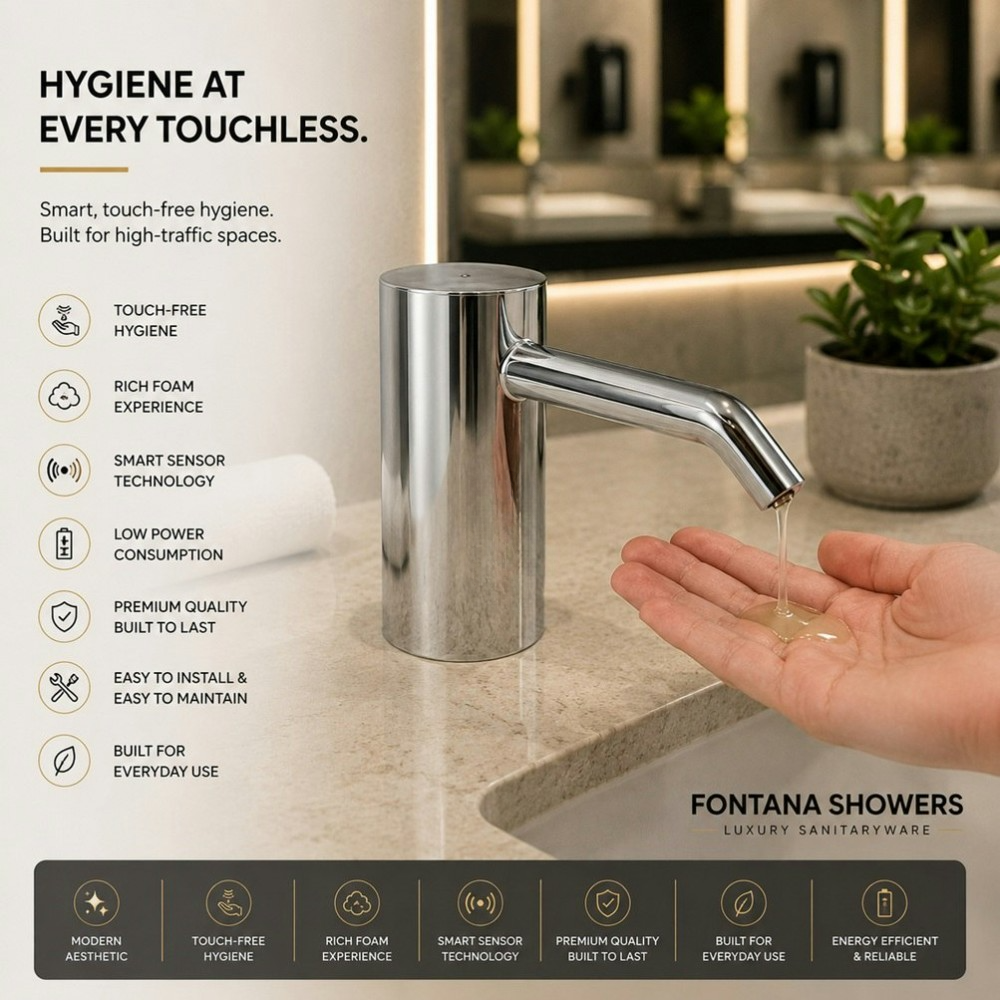
Soap waste and inconsistent activation are common in high-traffic restrooms. Superior Fontana systems help improve dispensing precision through better sensor coordination, cleaner fixture placement, and more predictable hand positioning around the basin area.
Commonly Asked Questions
Reservoir Venting, Humidity & Condensation Control
AEC guidance for reservoir pressure equalization, vent filtration, atmospheric ventilation, humidity exposure and condensate formation within centralized commercial soap-distribution systems.
Can inadequate reservoir venting create negative pressure that reduces dose volume?
Yes; inadequate venting can create partial vacuum, reducing inlet pressure and dose consistency as reservoir volume falls.
What is the optimal vent-filter pore size for a centralized soap reservoir?
No universal pore size applies; select filtration for airflow, contamination control, soap chemistry, pressure loss, and serviceability.
Should centralized reservoirs use filtered, sealed, or atmospheric ventilation?
Filtered atmospheric venting is generally practical; sealed reservoirs require engineered pressure compensation to avoid vacuum or overpressure.
Can humidity entering through reservoir vents alter soap properties over several years?
Potentially; humid air can introduce moisture, but measurable changes depend on formulation, vent exposure, temperature, and storage duration.
How quickly does condensate form inside a partially empty reservoir in humid buildings?
Condensation timing has no universal value; it depends on dew point, reservoir temperature, headspace humidity, airflow, and thermal cycling.

