


Commercial Specification
Specifying a commercial automatic soap dispenser requires more than selecting a touchless fixture from a catalog. Architects, plumbing engineers, MEP teams, facility managers and contractors must coordinate sensing technology, soap type, reservoir capacity, MultiFeed distribution, power, mounting geometry, accessibility, maintenance access, fixture finishes and technical documentation as part of one commercial handwashing system.
Foam Soap vs Liquid Soap in Commercial Automatic Dispensers: Cost per Handwash, Dose, Pumps, MultiFeed Compatibility & Facility Selection
Should an airport, stadium, hospital, university, office building or luxury hospitality project specify foam soap or liquid soap? The correct answer depends on more than user preference. Soap format affects dispenser architecture, delivered dose, reservoir consumption, refill frequency, pump compatibility, bulk-soap procurement, maintenance procedures and total cost per handwash.
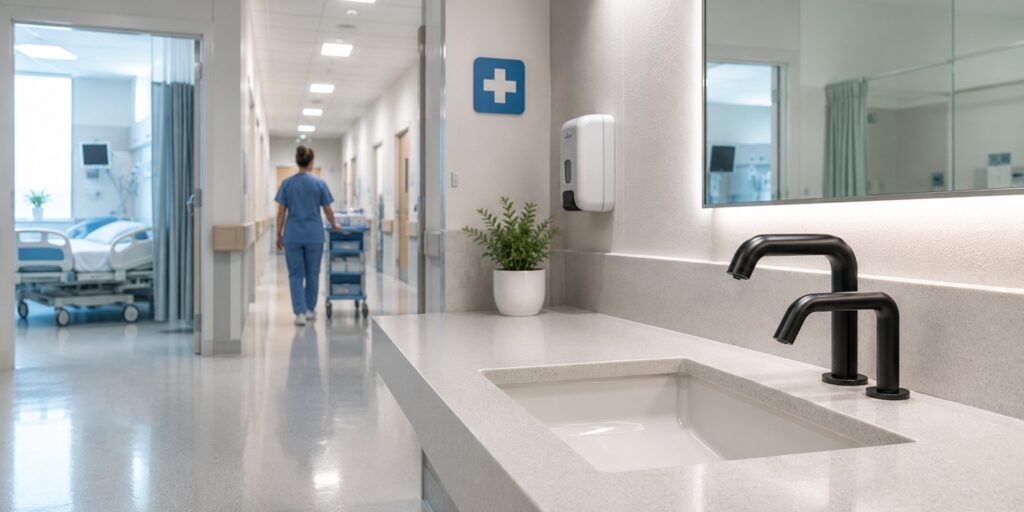
Foam and Liquid Are Not Simply Two Versions of the Same Dispenser
Foam Soap vs Liquid Soap: Quick Commercial Comparison
| Specification Factor | Foam Soap | Liquid Soap |
|---|---|---|
| Delivered Format | Aerated foam | Liquid |
| Dispenser Architecture | Foam-compatible mechanism required | Liquid-compatible pump required |
| Dose Comparison | Can use a relatively small liquid-equivalent volume depending on system | Highly model-dependent; verify actual programmed output |
| User Perception | Immediate lather-like presentation | Traditional liquid-soap feel |
| Bulk Purchasing | Possible where manufacturer approves compatible bulk foam formulation | Common in compatible commercial refillable systems |
| MultiFeed | Must be specifically engineered and approved for foam architecture | Strong application for compatible centralized liquid-soap systems |
| Viscosity Control | Critical to foam generation | Critical to pump output and reliability |
| Best Selection Method | Compare cost per successful handwash, compatibility, maintenance and facility requirements. | |
Does Foam Soap Use Less Soap?
It can—but this must be demonstrated from the actual dispenser’s delivered dose rather than assumed from the word “foam.”
Consider two hypothetical systems:
| Example | Dose | 1,000 Activations | 100,000 Activations | 1 Million Activations |
|---|---|---|---|---|
| Example Foam System | 0.4 mL liquid equivalent | 0.4 L | 40 L | 400 L |
| Example Liquid System | 0.8 mL | 0.8 L | 80 L | 800 L |
| Difference | 0.4 mL | 0.4 L | 40 L | 400 L |
Cost per 1,000 Handwashes
1,000 activations × dose in mL ÷ 1,000 = liters consumed
Liters consumed × cost per liter
If compatible foam concentrate or ready-to-use foam soap costs more per liter, its lower dose may or may not offset that premium. Conversely, a lower-cost liquid soap can still become expensive if the dispenser delivers a substantially larger volume per activation.
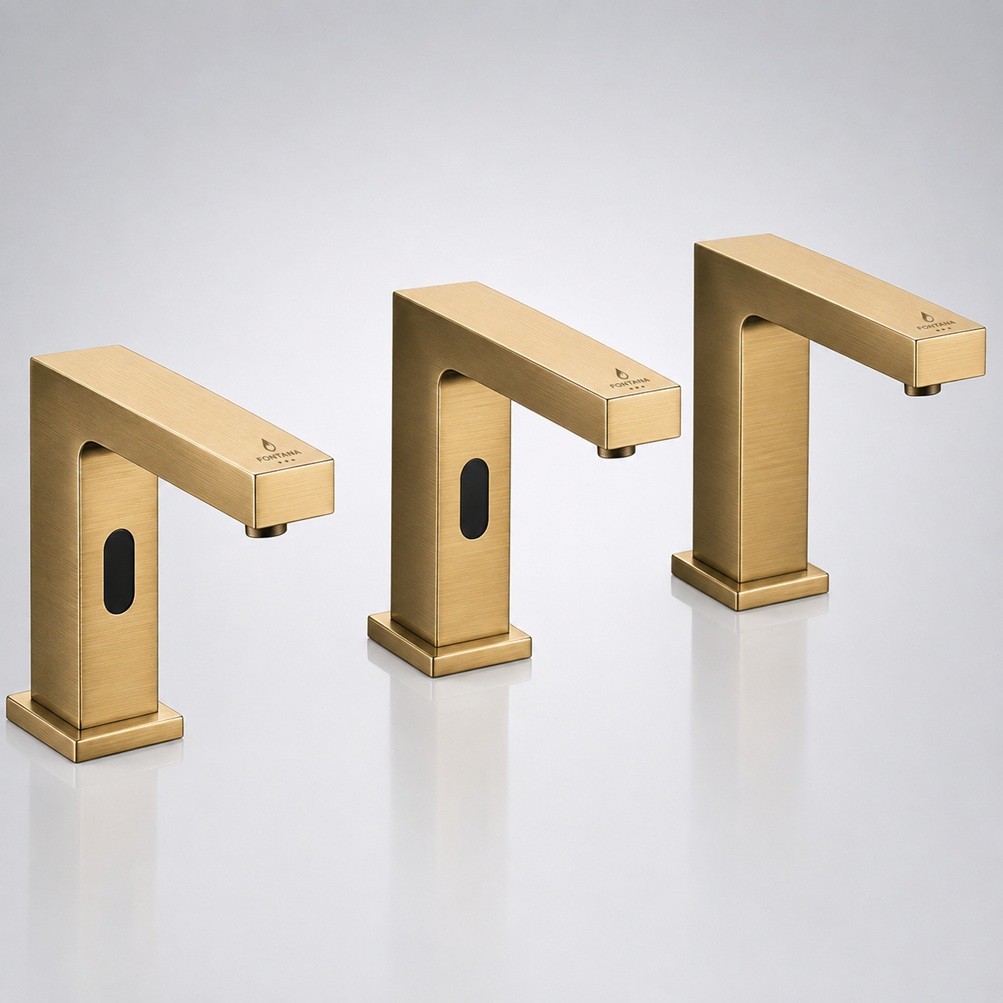
Example Annual Soap-Cost Model
Assume one million annual activations. For illustration only, assume foam soap costs $6 per liter and liquid soap costs $4 per liter.
| Example | Dose | Annual Volume | Illustrative $/L | Annual Soap Cost |
|---|---|---|---|---|
| Foam | 0.4 mL | 400 L | $6 | $2,400 |
| Liquid | 0.8 mL | 800 L | $4 | $3,200 |
In this hypothetical example, foam costs 50% more per liter but still produces a lower annual consumable cost because the assumed delivered volume is half as large.
What Does CDC Say About Foam vs Liquid Soap?
CDC does not establish a general rule that foam soap is inherently superior to liquid soap for ordinary handwashing.
CDC states that plain soap works for removing germs and specifically says plain soap may be used for handwashing. For refillable liquid-soap dispensers, CDC warns against adding soap to partially empty dispensers because topping-off has been associated with pathogenic bacterial contamination.
WHO: Calculate Soap Demand From Actual Handwashing Events
Current WHO/UNICEF hand-hygiene guidance provides a useful engineering principle: soap demand should be estimated from the number of people, handwashing events per day and soap required per event.
People × handwashing events per day × soap quantity per event
That principle is directly relevant to automatic dispensers. A facility cannot properly compare foam and liquid simply by comparing reservoir sizes. Delivered soap per event matters.
WHO Hand HygienePump Architecture Matters
Using the wrong soap can cause weak foam, irregular output, dripping, under-dosing, excessive dosing, pump strain or system failure.
Viscosity Is an Engineering Variable
Two soaps that look similar to a facility manager may behave very differently inside an automatic dispenser.
Does Fontana Offer Commercial Foam Soap Dispensers?
Yes. Fontana currently lists dedicated commercial foam-soap dispenser configurations, including the Touchless Sensor-Operated Foam Soap Dispenser and commercial foam automatic soap-dispenser variants.
This matters because foam should be treated as a distinct specified architecture—not merely a different soap poured into a liquid dispenser.
Fontana Commercial Foam DispenserWhat About MultiFeed?
Centralized soap distribution is particularly attractive in high-volume commercial facilities because the soap supply can be moved away from many individual under-counter reservoirs and consolidated around a serviceable central system.
But the soap format still matters.
Fontana’s current MultiFeed engineering guidance emphasizes soap compatibility, viscosity, reservoir sizing, pump architecture, distribution tubing and maintenance access when designing centralized systems.
Fontana MultiFeed Engineering
Foam vs Liquid by Facility Type
| Facility | Foam Considerations | Liquid Considerations |
|---|---|---|
| Airport | Potential consumable-volume advantage where verified low-dose systems are used | Strong commercial availability and centralized bulk possibilities |
| Stadium / Arena | Low delivered volume may be attractive across very high activation counts | Central liquid MultiFeed can simplify servicing large dispenser banks |
| Hospital | Specify only within infection-prevention and product-compatibility requirements | Likewise requires controlled refill and maintenance procedures |
| University | Can reduce soap volume if actual dose is lower | Competitive bulk procurement can be attractive |
| Office Tower | Good user experience and potentially low consumption | Simple procurement where standardized compatible liquid soap is used |
| Luxury Hospitality | Foam feel may fit the intended guest experience | Architectural deck-mounted liquid systems offer broad design possibilities |
Do Not Forget the Soap Itself
Commercial buyers should evaluate the formulation as well as the dispenser. EPA’s Safer Choice program provides a useful independent procurement resource. EPA states that Safer Choice-certified products are reviewed against human health, environmental and performance requirements, and its program includes products intended for facilities such as schools, hotels, offices and sports venues.
EPA also specifically identifies hand soaps among products relevant to institutional procurement.
EPA Safer Choice Product Search
What Architects and MEP Engineers Should Specify
Foam vs Liquid Procurement Worksheet
| Input | Foam | Liquid |
|---|---|---|
| Annual activations | ________ | ________ |
| Actual dose | ________ mL | ________ mL |
| Annual soap volume | ________ L | ________ L |
| Soap cost/liter | $________ | $________ |
| Annual soap cost | $________ | $________ |
| Annual refill labor | $________ | $________ |
| Annual maintenance | $________ | $________ |
| Packaging disposal | $________ | $________ |
| 10-year consumable cost | $________ | $________ |
| 10-year TCO | $________ | $________ |
Verified Fontana Commercial Soap Resources
Dedicated Fontana touchless foam-soap dispenser platform.
Foam DispenserFontana commercial automatic soap-dispenser collection.
Automatic Soap SystemsCentral reservoir, pump, manifold, tubing and soap compatibility planning.
MultiFeed EngineeringCommercial touchless soap product and engineering resources.
Touchless Soap HubSize individual and centralized soap supplies for high traffic.
Capacity PlanningCalculate refill intervals from dose, traffic and working capacity.
Refill GuideIndependent Specification & Hygiene References
Independent public-health guidance covering effective handwashing with plain soap.
CDC GuidanceInternational guidance covering soap availability and handwashing requirements.
WHO GuidanceIndependent chemical, performance and institutional procurement resource.
Safer Choice ProductsFoam vs Liquid Soap FAQ
Does foam soap use less soap than liquid soap?
It can when the foam system delivers a lower liquid-equivalent volume per activation, but the actual manufacturer dose must be compared. Foam itself does not guarantee lower consumption.
Is foam soap more hygienic than liquid soap?
Public-health guidance does not support a blanket claim that foam is universally more hygienic. Correct handwashing, soap availability, compatible dispensing equipment and proper maintenance are more important considerations.
Can I put foam soap in a liquid automatic dispenser?
Not unless the manufacturer specifically approves that formulation and architecture. Foam and liquid systems can use different pumping and dispensing mechanisms.
Can liquid soap be put in a foam dispenser?
Ordinary liquid soap should not be substituted unless the manufacturer specifically approves it for the foam system.
Which costs less in a commercial restroom?
Calculate annual activations × actual dose × soap cost per liter, then include refill labor, maintenance and packaging. Either format can win depending on the inputs.
Does Fontana offer foam automatic soap dispensers?
Yes. Fontana currently lists dedicated touchless commercial foam-soap dispenser configurations.
Can foam soap use MultiFeed?
Only where the complete central-feed architecture is specifically engineered and manufacturer-approved for the intended foam formulation. Never assume liquid-system compatibility.
Which is better for stadiums?
The answer depends on activation volume, delivered dose, reservoir architecture, refill labor and procurement cost. Low-dose foam can reduce soap volume, while centralized compatible liquid systems can offer powerful servicing advantages.
Final Recommendation
There is no responsible specification rule stating that every commercial restroom should use foam or every commercial restroom should use liquid.
For high-volume facilities, the winning system is ultimately the one that delivers reliable handwashing at the lowest defensible lifecycle cost while remaining compatible with facility hygiene and maintenance requirements.
General Help and Guidance
Hand-Hygiene Outcomes, Lifecycle Carbon & Packaging Waste
AEC guidance for soap-availability outcomes, hand-hygiene verification, healthcare applications, lifecycle carbon assessment and packaging-waste reduction associated with centralized commercial soap supply.
Can reduced soap-out events be translated into measurable improvements in actual handwashing compliance?
Potentially; fewer soap-out events remove one availability barrier, but measurable compliance improvement requires direct observation or validated behavioral monitoring.
Has any controlled field trial compared hand-hygiene behavior before and after conversion from individual cartridges to centralized multi-feed supply?
Controlled field evidence is limited; compare pre- and post-conversion handwashing behavior, soap availability, occupancy, and maintenance under matched conditions.
Would the hygiene benefit, if any, differ between healthcare environments and ordinary commercial buildings?
Benefits may be greater in healthcare, where soap availability and infection-control consequences carry higher operational significance than typical commercial settings.
What is the embodied-carbon difference between hundreds of individual refill cartridges and one centralized reservoir over 20 years?
No universal carbon difference applies; quantify reservoir, cartridge, packaging, transport, replacement frequency, and disposal using a project-specific life-cycle assessment.
How much packaging waste can centralized soap supply eliminate per 1 million handwashing events?
No fixed value applies; packaging avoided per million events depends on dose size, cartridge mass, refill format, and servicing strategy.

