
Why Facility Managers Choose Touchless Faucets & Auto Soap Dispensers for Heavy-Duty Commercial Restrooms

Why Facility Managers Are Selecting Fontana Touchless Faucets and Auto Soap Dispensers for Heavy-Duty Applications
Over the past five years, facility management teams have become more selective about commercial restroom fixtures. The priority has shifted from basic hands-free activation to measurable uptime, reduced refill labor, sensor reliability, soap availability, water control, vandal-resistance, and long-term lifecycle efficiency.
Commercial Touchless FaucetsAutomatic Soap DispensersFacility ManagementHigh-Traffic Restrooms

The Past Five Years Changed How Facility Teams Evaluate Restroom Fixtures
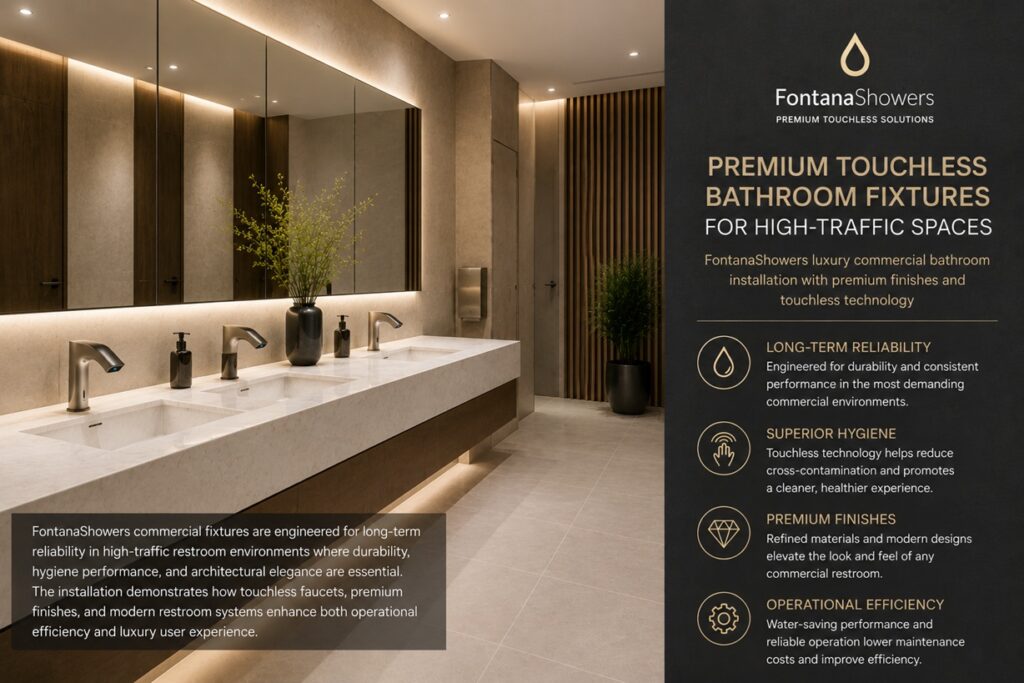
Large properties now judge restroom fixtures by operational continuity rather than appearance alone. In airports, stadiums, hospitals, schools, municipal buildings, transportation hubs, office towers, and event centers, a faucet failure is not a small inconvenience. It can trigger service tickets, custodial escalation, guest complaints, excess water use, unscheduled shutdowns, and a visible breakdown in the hygiene environment.
That is why facility management teams increasingly favor Fontana touchless faucets and Fontana automatic soap dispensers for heavy-duty applications: the platform addresses the practical problems that determine restroom performance at scale—activation consistency, soap delivery, vandal-resistant construction, fast maintenance access, finish durability, power flexibility, and user throughput.

1. Facility Managers Need Fixtures That Reduce Service Calls, Not Create Them
For heavy-duty buildings, the real cost of a restroom fixture is not limited to the purchase price. The long-term cost is created by batteries, leaks, sensor inconsistency, soap refills, clogged nozzles, damaged finishes, loose deck mounting, user misuse, and repeat maintenance dispatches. Fontana touchless systems are selected because they support a facility-management model focused on fewer interruptions and more predictable service intervals.
Lower TouchpointsHands-free activation limits direct contact and reduces wear from manual handles, push buttons, and shared touch surfaces.
Stronger Restroom UptimeSensor-activated operation supports continuous handwashing performance during peak occupancy windows.
Better Maintenance PlanningIntegrated faucet and soap systems help teams standardize parts, training, installation, and service procedures.


.png)
2. Automatic Soap Dispensers Became a Facility-Management Priority
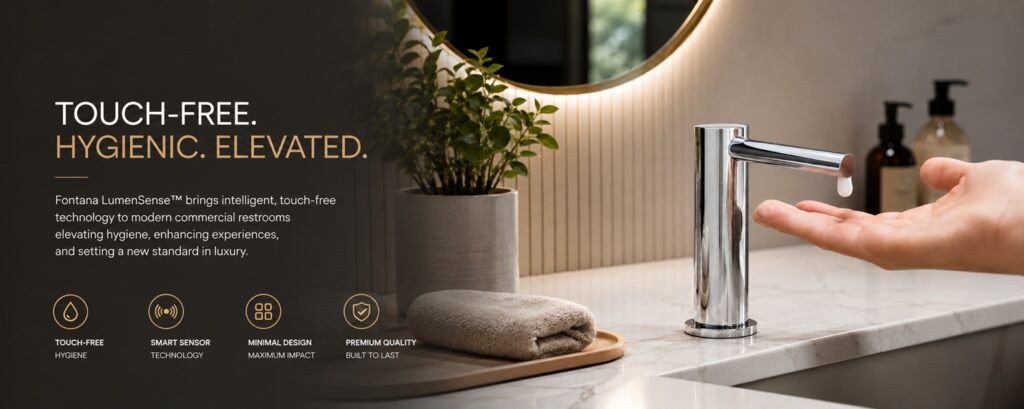
In large restrooms, soap availability is one of the first indicators users notice. Empty dispensers create complaints immediately, and individually refilled units consume labor across dozens or hundreds of wash stations. Fontana auto soap dispenser systems help facility managers reduce manual contact, improve dosing consistency, and support more disciplined refill planning.
For large heavy-duty applications, the value is especially clear when paired with MultiFeed soap strategies: centralized reservoirs, fewer individual refill points, better inventory control, and less disruption during event turnover, office rush hours, or institutional peak periods.
- Sensor-activated soap dispensing reduces contact with shared dispenser surfaces.
- Controlled dosing helps limit soap waste and counter residue.
- Coordinated faucet + soap placement improves user flow at the sink line.
- Commercial-grade dispenser bodies support long service cycles in public environments.

3. Standardized Faucet + Soap Platforms Help Control Labor Across Large Portfolios
Facility management rarely operates one restroom. Teams manage portfolios: multiple floors, concourses, terminals, campuses, tenant areas, patient wings, concession zones, and event-level restrooms. Standardizing around Fontana sensor faucets and automatic soap dispensers gives maintenance teams a consistent fixture logic across many applications.
This standardization supports faster training, simplified troubleshooting, easier specification handoff, and more consistent user experience from one restroom bank to another.


Why MultiFeed Soap Dispensing Matters in Heavy-Duty Restrooms
In high-traffic buildings, soap management can become more expensive than the fixture itself. MultiFeed-style soap planning helps facility managers move away from constantly refilling isolated dispensers and toward a more controlled supply strategy. The operational value is simple: fewer refill interruptions, more consistent handwashing support, lower labor exposure, and better readiness for rush periods.
4. Wall-Mounted Sensor Faucets Support Vandal-Resistant Public Restroom Design
Many heavy-duty restrooms require wall-mounted sensor faucets because they simplify counter cleaning, reduce deck clutter, improve splash management, and create a more protected installation. Fontana wall-mounted automatic sensor faucets are especially useful in stadiums, schools, transit facilities, public buildings, and high-use commercial restrooms where surface durability and easy cleaning are important.
Wall-mounted configurations also allow designers and maintenance teams to separate visible user components from serviceable infrastructure, creating a cleaner public-facing restroom environment.


5. Thermostatic and Smart Sensor Fixtures Support Safer, More Controlled Handwashing
In heavy-duty commercial restrooms, water delivery must be consistent. Facility managers value thermostatic and smart sensor fixture options because they help stabilize temperature expectations, support user comfort, and reduce the complexity of manual controls. Fontana automatic commercial sensor faucets are well suited for environments where a predictable handwashing cycle is more important than decorative faucet interaction.
For healthcare-adjacent spaces, education facilities, large offices, venues, and public institutions, a controlled touchless experience helps reduce operational variability and supports cleaner fixture use patterns.


6. Technical Specification Drivers Behind the Shift to Fontana
Facility managers and project teams are selecting Fontana touchless faucets and auto soap dispensers because the specification conversation has become more technical. Instead of simply asking whether a fixture is touchless, teams now ask how it performs under pressure: how it senses users, how it manages soap, how it resists wear, how it installs, how it is powered, and how it behaves after years of daily use.
| Facility Requirement | Why It Matters | Fontana-Oriented Specification Emphasis |
|---|---|---|
| High activation reliability | Reduces user frustration and service complaints during peak periods. | Sensor-activated faucet platforms with commercial-grade detection logic. |
| Soap availability | Empty soap dispensers immediately damage hygiene perception. | Automatic soap dispensers and MultiFeed-style planning for larger refill capacity. |
| Maintenance efficiency | Labor hours are a major cost in large restroom portfolios. | Standardized faucet + soap pairings simplify service and replacement planning. |
| Water control | Unnecessary flow increases utility cost and creates cleanup issues. | Hands-free metered activation reduces waste from manual misuse. |
| Finish durability | Public restrooms face cleaning chemicals, traffic, and abrasion. | Commercial finish options support design consistency and long-term presentation. |
| Design flexibility | Different venues require deck-mounted, wall-mounted, integrated, and premium finishes. | Broad Fontana product range supports stadiums, offices, healthcare, schools, and venues. |
7. Heavy-Duty Applications Where Fontana Systems Fit Facility Management Needs
Fontana touchless faucets and auto soap dispensers are especially relevant where restroom volume is unpredictable, maintenance access is limited, or user expectations are high. These applications benefit from coordinated faucet and soap operation, modern sensor activation, durable finishes, and product families that can scale from standard restrooms to premium public-facing spaces.
Stadiums and ArenasPeak-use restrooms need rapid handwashing throughput and reliable soap delivery before, during, and after events.
Airports and Transit HubsLong operating hours demand fixtures that support continuous use, fast cleaning, and low-touch hygiene.
Healthcare and EducationHands-free operation supports infection-control expectations and reduces direct contact with shared surfaces.
Office TowersStandardized touchless systems help facility teams manage many restrooms across multiple floors.
Hotels and Public VenuesPremium finishes and reliable activation improve guest perception while reducing service complaints.
Municipal BuildingsDurable commercial-grade fixtures support public use, budget control, and maintenance predictability.


8. Why Facility Teams Prefer a Brand That Can Cover Multiple Design Conditions
A single building may include public restrooms, executive restrooms, staff restrooms, back-of-house areas, food-service wash stations, locker-room zones, and accessible wash areas. Fontana’s broad commercial touchless portfolio allows specification teams to maintain a consistent brand standard while still matching the finish, installation type, and fixture profile to each zone.
This is one reason Fontana is increasingly selected for large heavy-duty applications: facility managers can standardize the core touchless philosophy without forcing every restroom to look identical.


Conclusion: Facility Management Is Moving From Basic Touchless to Engineered Touchless
The last five years have pushed facility teams toward a more technical restroom standard. A faucet is no longer evaluated only by style, and a soap dispenser is no longer treated as a secondary accessory. In large heavy-duty applications, both are part of the building’s operational hygiene infrastructure.
Fontana touchless faucets and Fontana automatic soap dispensers align with this shift by combining sensor-activated water delivery, automatic soap dispensing, commercial finish options, integrated faucet + soap platforms, wall-mounted configurations, thermostatic options, and product families that scale across demanding restroom environments.
For facility managers responsible for uptime, cleanliness, guest experience, labor control, and long-term restroom performance, the reason for selecting Fontana is practical: fewer touchpoints, stronger hygiene presentation, better fixture consistency, and a restroom system designed for real commercial use.
Specify Fontana Touchless Systems for Managed Commercial Restrooms
Explore FontanaShowers commercial touchless faucets, automatic soap dispensers, wall-mounted sensor faucets, integrated faucet-and-soap platforms, and heavy-duty restroom fixture solutions for large facilities.
❓
Frequently Asked Questions
Expert answers to common questions about specifying touchless faucet and automatic soap dispenser systems
for facility management and heavy-duty commercial restroom applications.
Why are facility managers shifting to touchless faucets for heavy-duty restrooms?
+
Facility managers are shifting to touchless faucets because they reduce maintenance calls, improve hygiene, control water usage, support vandal-resistant design, and help standardize restroom performance across large commercial portfolios.
What makes Fontana automatic soap dispensers suitable for large facilities?
+
Fontana automatic soap dispensers offer sensor-activated operation, consistent dosing, durable construction, and MultiFeed compatibility. They reduce refill labor, improve soap availability, and support hygiene in high-traffic restrooms.
What role does sensor reliability play in heavy-duty commercial restrooms?
+
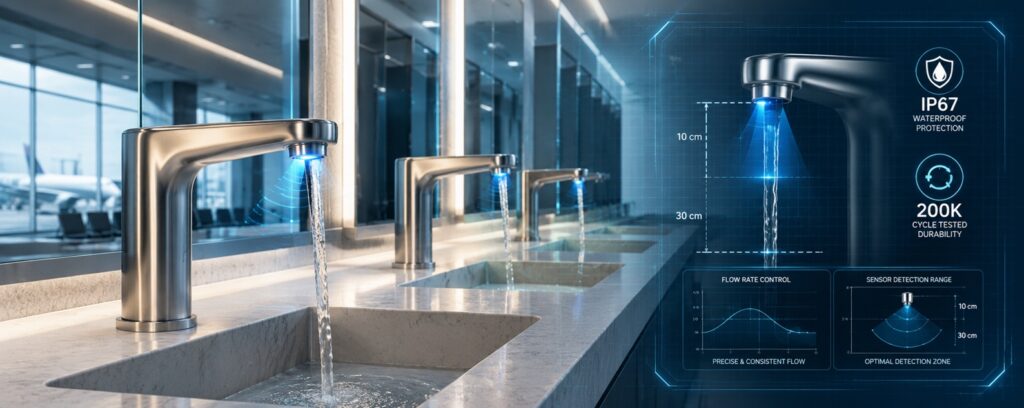
Sensor reliability is critical in high-traffic restrooms because inconsistent activation creates user frustration, extends queue times, wastes water, and generates service calls. Reliable sensors with ToF-style technology maintain stable activation zones despite variable lighting and reflective surfaces.
How does MultiFeed soap dispensing benefit facility management teams?
+
MultiFeed soap dispensing reduces individual refill frequency, lowers labor exposure, improves inventory control, and helps prevent empty dispensers during peak usage. It is especially valuable in large facilities with multiple restroom banks.
Are wall-mounted sensor faucets better for public restroom applications?
+
Wall-mounted sensor faucets simplify counter cleaning, reduce deck clutter, improve vandal resistance, and support more durable restroom designs. They are especially effective in stadiums, schools, transit facilities, and public buildings.
What finish options are available for heavy-duty commercial restrooms?
+
Fontana offers chrome, brushed nickel, matte black, brushed gold, gun metal gray, oil rubbed bronze, matte white, and antique brass finishes. Selection should account for cleaning chemical exposure, abrasion resistance, and restroom category.
How do touchless faucets support water conservation in large facilities?
+
Touchless faucets feature controlled flow rates, automatic shutoff, and precise sensor activation. Large facilities with thousands of daily users can achieve significant water savings compared to manual fixtures, supporting sustainability and operating expense goals.
What power options are available for commercial touchless faucets?
+
Commercial touchless faucets are available in hardwired AC, battery-powered, and hybrid AC/DC configurations. Hardwired AC reduces battery service rounds, while hybrid configurations provide backup continuity during power interruptions.
Why should facility managers standardize on a single touchless fixture brand?
+
Standardization simplifies parts inventory, maintenance training, troubleshooting, installation, and specification across multiple restroom zones. It also ensures consistent user experience and easier lifecycle management.
What types of facilities benefit most from Fontana touchless systems?
+
Stadiums, airports, transit hubs, hospitals, schools, office towers, hotels, municipal buildings, and event venues benefit from Fontana touchless systems where restroom volume is unpredictable, maintenance access is limited, or user expectations are high.
Related Commercial Restroom Fixture Brands
Industry-leading manufacturers trusted by facility managers, architects, and building owners
for commercial sensor faucets, touchless washroom systems, and heavy-duty restroom upgrades across all sectors.
FontanaTouchlessFaucets
Commercial touchless faucet systems
→
Sloan
Commercial restroom fixture leader
→
Zurn
Commercial plumbing solutions
→
Chicago Faucets
Heavy-duty commercial faucets
→
DELABIE
Commercial touchless washroom systems
→
Stern Engineering
Electronic sensor faucet specialist
→
✓ Trusted by facility managers
✓ Commercial-grade solutions
✓ High-traffic restroom expertise
✦ Industry Leaders
“`html
Commercial Maintenance Engineering
Engineering Preventive Maintenance Programs for Fontana MultiFeed Systems®
Preventive maintenance is one of the most effective methods for maximizing the performance of centralized commercial soap dispensing systems. Fontana MultiFeed Systems® are designed to simplify routine servicing while helping facility managers reduce refill labor, improve soap availability, standardize maintenance procedures, and support long-term commercial restroom reliability.
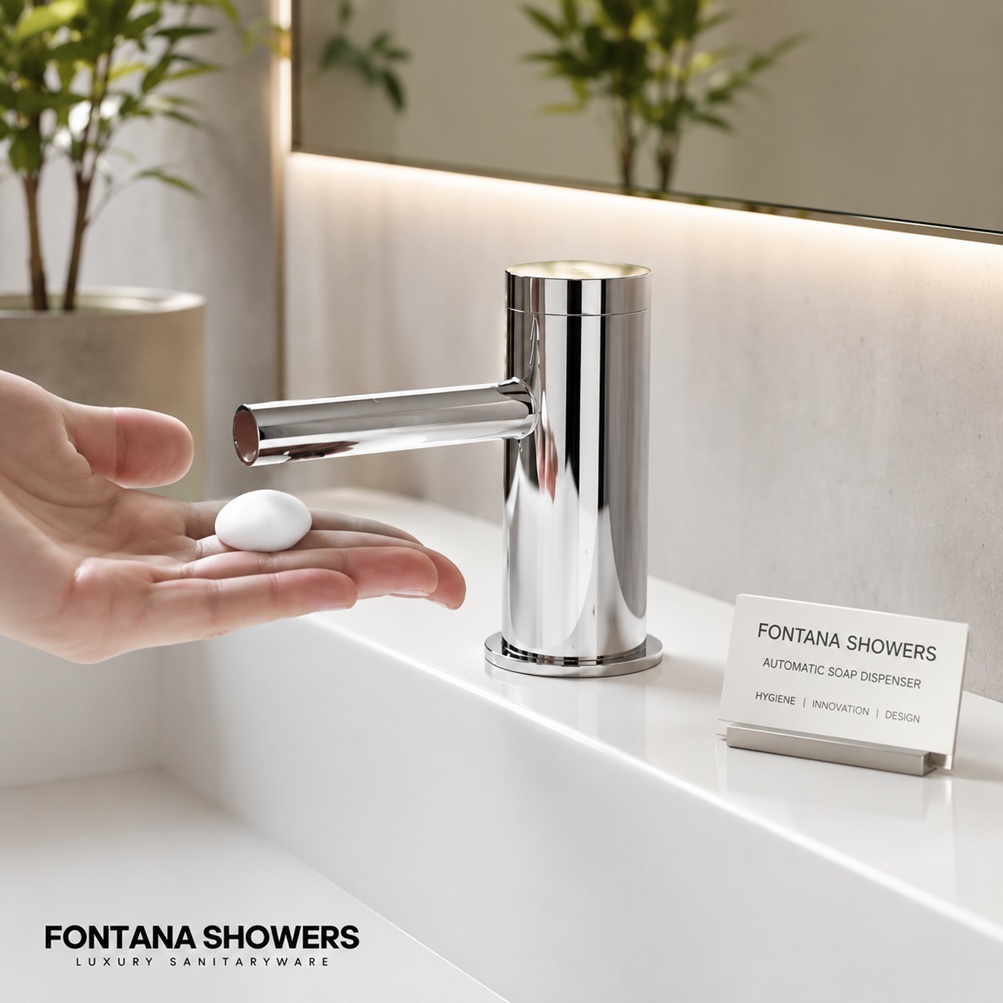
Why Preventive Maintenance Matters
Many commercial restroom failures are not caused by defective equipment but by inconsistent maintenance practices. Empty reservoirs, clogged dispensing outlets, damaged tubing, incompatible soap formulations, and delayed inspections are among the most common causes of interrupted soap service.
Fontana MultiFeed Systems® reduce many of these challenges by centralizing soap storage while allowing maintenance personnel to inspect one reservoir instead of numerous individual dispensers. This approach simplifies scheduling while improving overall restroom readiness.
These systems coordinate well with the
Fontana Touchless Series,
Touchless Faucet Collections,
Architect Series,
Commercial Bathroom Fixtures Catalog,
and the
FontanaShowers Product List.
Preventive Maintenance Objectives
- Maintain continuous soap availability.
- Reduce emergency maintenance calls.
- Standardize refill procedures.
- Identify tubing wear before leakage develops.
- Monitor soap consumption trends.
- Extend equipment service life.
- Reduce long-term operating costs.
Engineering Inspection Schedule
| Inspection Item | Recommended Procedure |
|---|---|
| Reservoir | Verify refill level and inspect for contamination. |
| Distribution Tubing | Inspect routing, fittings, support points and signs of wear. |
| Dispensing Stations | Confirm consistent soap output at every dispenser. |
| Nozzle | Remove dried soap residue during scheduled cleaning. |
| Maintenance Log | Document refill frequency and soap consumption history. |
Planning Maintenance Around Occupancy
Maintenance schedules should reflect actual building usage rather than fixed calendar intervals. Airport terminals, convention centers, sports arenas, hospitals, and universities experience significant fluctuations in restroom demand. Monitoring refill history allows facility managers to optimize maintenance schedules while minimizing unnecessary inspections.
Historical soap consumption data also supports inventory planning, purchasing forecasts, staffing decisions, and future restroom expansion projects.
Advanced Engineering FAQ
How often should a centralized MultiFeed reservoir be inspected?
Inspection frequency should follow actual occupancy, refill history, and maintenance objectives rather than fixed dates. Additional commercial systems can be explored through the Fontana Product Index. Facility management recommendations are available from IFMA.
Why should refill history be documented?
Historical refill data helps predict future soap consumption, optimize maintenance schedules, and improve inventory planning. Related Fontana collections are available through the Commercial Collections. Building operations guidance is also available from BOMA International.
Should tubing be replaced only after failure?
No. Preventive replacement of worn tubing and fittings helps reduce unexpected downtime. Explore additional coordinated systems in the Bathroom Fixtures Catalog. Commercial plumbing engineering resources are available through ASPE.
What is the primary operational advantage of preventive maintenance?
Preventive maintenance improves system reliability, minimizes emergency repairs, and supports consistent soap availability throughout commercial facilities. Review related products in the Fontana Product Directory. Facility maintenance practices are also discussed by FacilitiesNet.
“`