
Touchless Bathroom Faucets: Water and Operating Efficiency
In commercial and public restrooms, water use is influenced by more than the faucet itself. Fixture flow rate, average activation time, restroom traffic, sensor settings, operating hours, and the performance of the existing fixtures all affect total consumption.
Understanding Touchless Faucet Efficiency
Touchless bathroom faucets provide automatic activation and shutoff, allowing facility teams to control how long water runs during each use. This makes them particularly relevant for airports, office buildings, hotels, restaurants, healthcare facilities, educational buildings, retail centers, and other high-traffic environments.
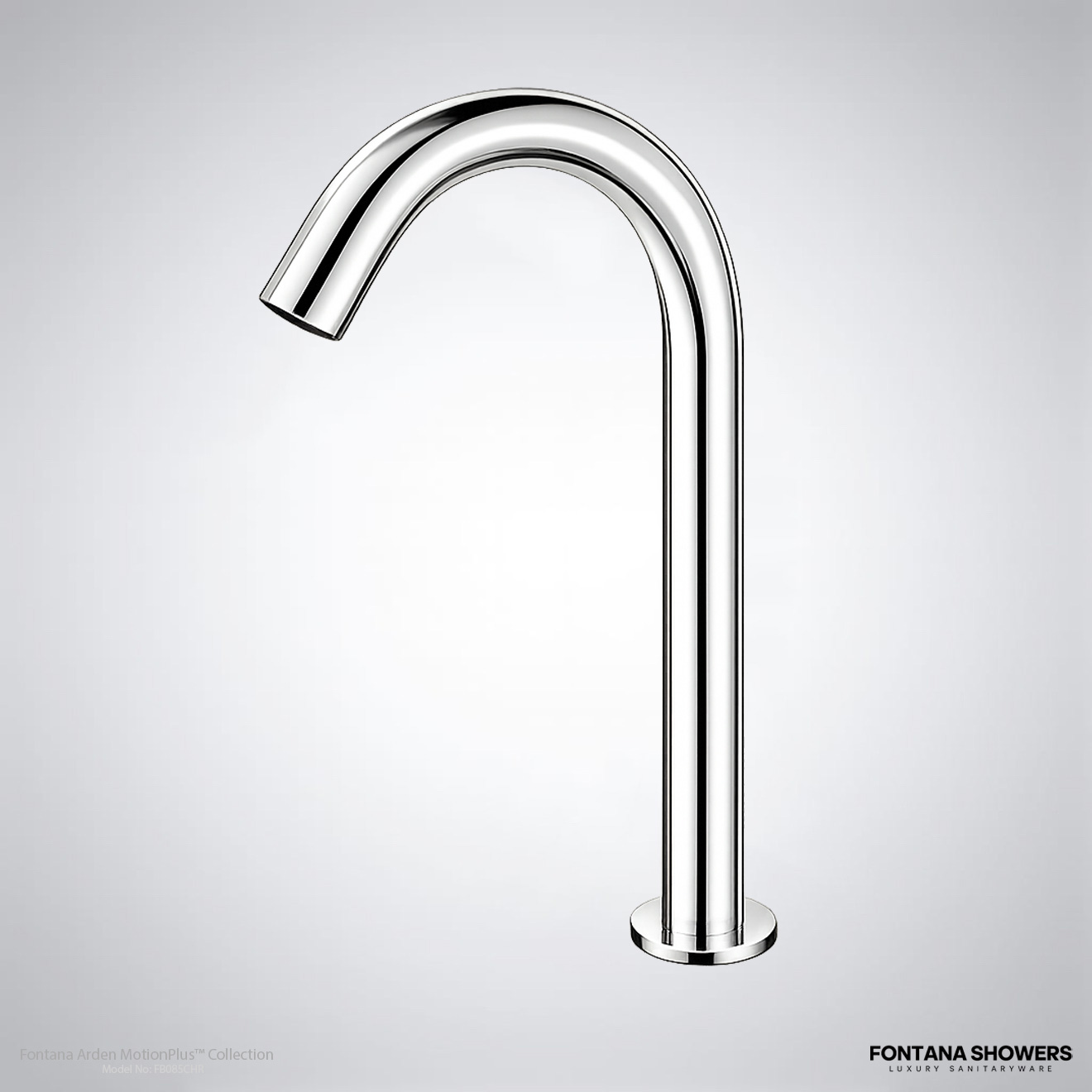
With touchless faucets , users do not need to operate handles before or after washing. The sensor activates water when needed and shuts it off when the activation condition ends.
This can improve hygiene, reduce unnecessary run time, and give facility managers a more predictable basis for estimating lavatory water consumption.
6 Ways Touchless Faucets Can Improve Water and Operating Efficiency
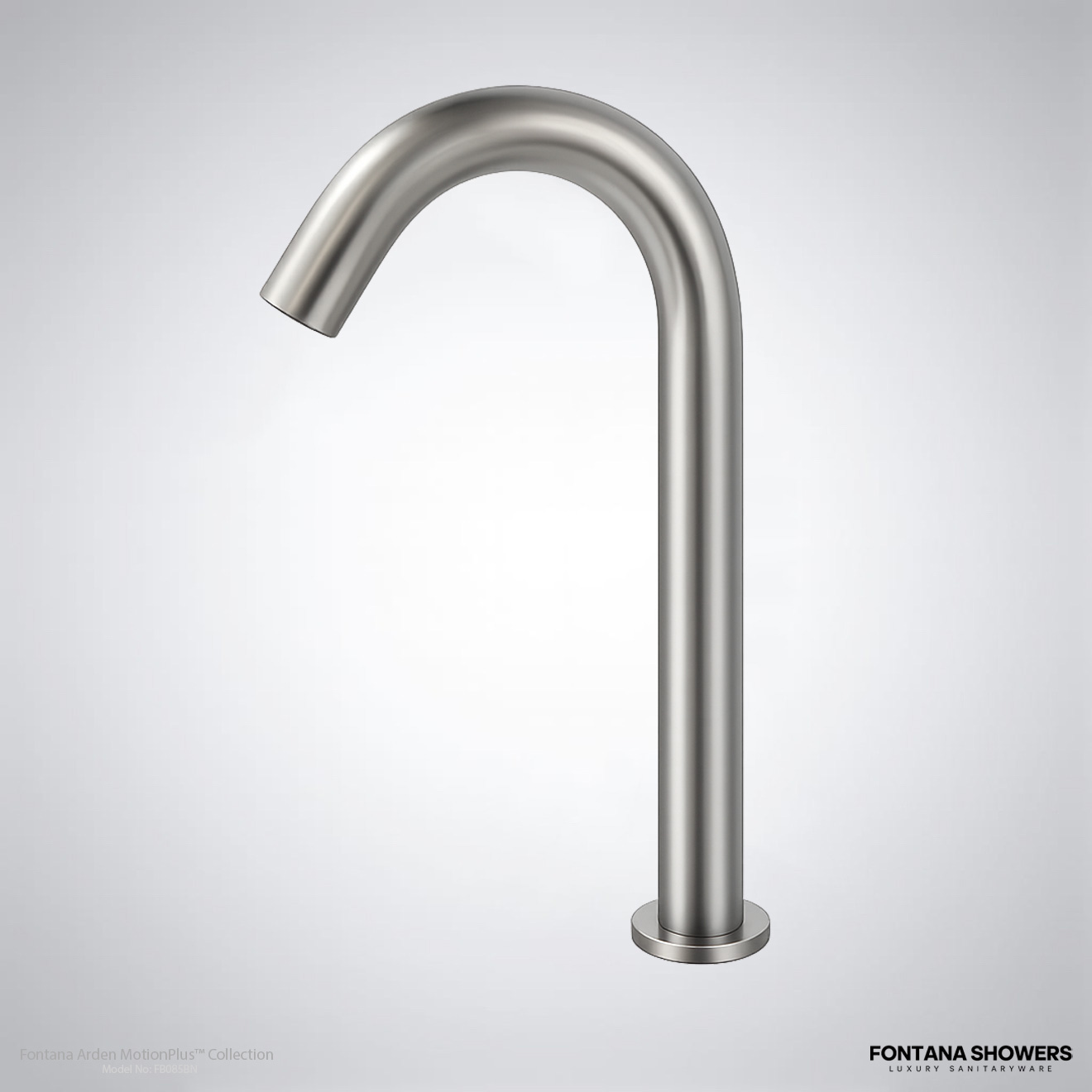
The financial effect of a touchless faucet should not be expressed as a universal percentage. Actual savings depend on the existing fixture, measured usage patterns, traffic, water rates, and selected sensor faucet settings.
Use Project-Specific Operating Data
A more reliable approach is to calculate expected consumption from project-specific operating data.
Water Use Based on Flow Rate and Activation Time
Touchless faucets can limit unnecessary run time because water stops automatically rather than relying on the user to close a handle.
For daily or annual estimates, restroom traffic and operating days should also be incorporated.
Flow rate and activation duration must use compatible units. For example, if flow is expressed in gallons per minute, activation time should be converted to minutes before calculating volume.
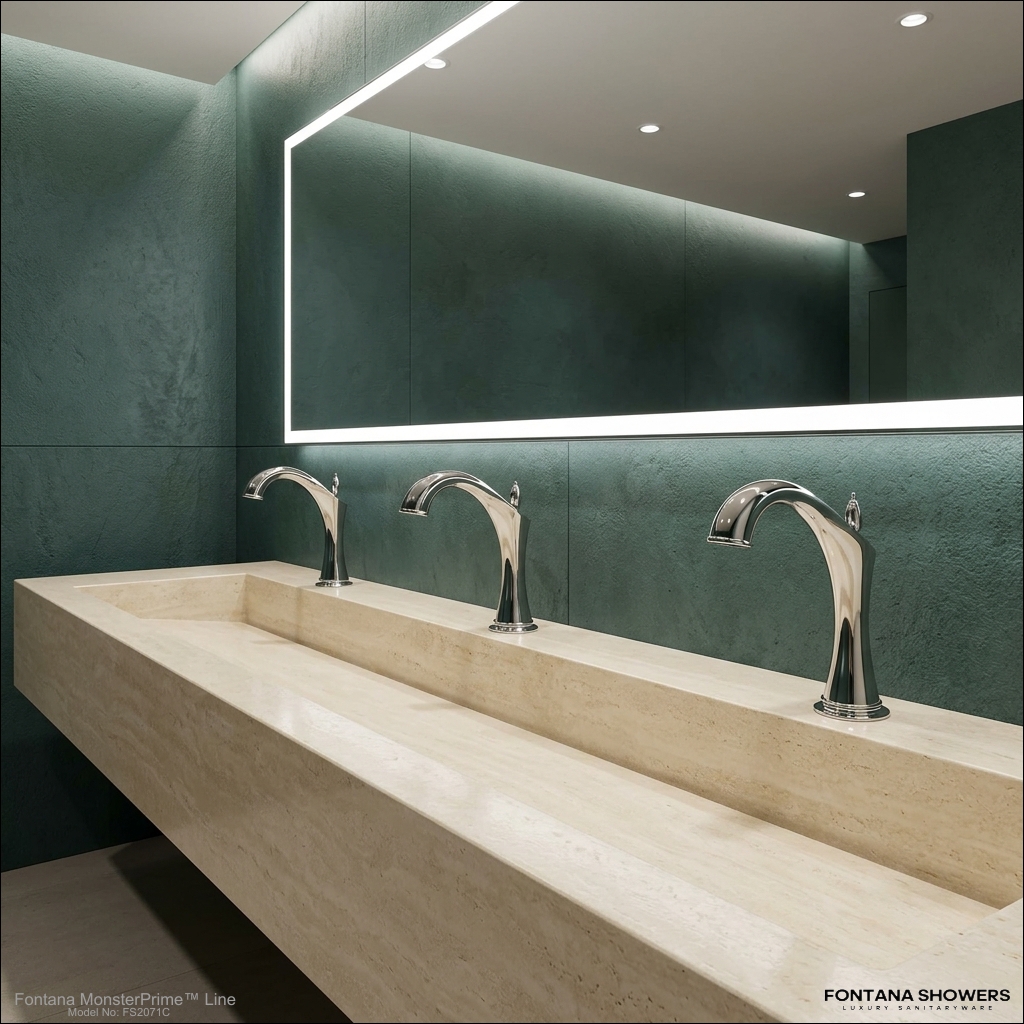
This approach allows a facility manager, engineer, or specification team to estimate water demand without relying on generalized savings percentages.
Compare the Touchless Faucet With the Existing Baseline
The appropriate measure of savings is the difference between the existing faucet’s actual or estimated consumption and the proposed touchless faucet’s expected consumption.
| Comparison | Calculation Basis |
|---|---|
| Baseline Water Use | Existing Flow Rate × Existing Average Run Time × Daily Activations × Operating Days |
| Proposed Water Use | Touchless Flow Rate × Sensor Activation Time × Daily Activations × Operating Days |
| Estimated Water Reduction | Baseline Water Use − Proposed Water Use |
The baseline is important. A facility replacing an older faucet with long user-controlled run times may produce a different result from a facility already using efficient metered or low-flow fixtures.

Actual performance should therefore be evaluated from site conditions rather than from a fixed percentage attributed to all touchless faucets.
Convert Water Reduction Into Operating Cost
Once the difference between baseline and proposed water use is calculated, the estimated financial effect can be determined using the facility’s applicable water and sewer rates.
Where hot water is supplied at the lavatory, a more detailed analysis may also consider energy used to heat the avoided water volume.
Project teams should use current local utility rates rather than a national or generic cost assumption.

Automatic Shutoff Helps Control Unnecessary Run Time
One of the principal operational differences between a sensor faucet and a conventional manual faucet is automatic shutoff.
Manual vs. Sensor-Controlled Operation
With a manual fixture, actual run time depends heavily on user behavior. Water may continue flowing while a user reaches for soap, dries a hand, or leaves the fixture without fully closing the valve.
A properly configured touchless faucet limits this variable by terminating flow according to its sensor logic and programmed operating parameters.
This does not guarantee a specific percentage reduction. It does, however, provide a defined control mechanism that can be incorporated into fixture-selection and water-demand calculations.

Maintenance and Fixture Performance Affect Lifecycle Cost
Water cost is only one part of fixture operating expense.
Commercial touchless faucets typically incorporate sensors, solenoid valves, power supplies or batteries, aerators, cartridges, filters, and other serviceable components.
Maintenance requirements therefore depend on product design, water quality, traffic level, installation conditions, and the manufacturer’s service recommendations.
Typical Maintenance Considerations
Sensor Surfaces
Clean sensor windows and faucet surfaces as required.
Aerators and Outlets
Inspect outlets for sediment, scale, or restricted flow.
Filters and Strainers
Check filters or strainers where they are incorporated into the fixture.
Power Supply
Monitor battery condition on battery-powered faucet models.
Sensor Operation
Verify sensing range and consistent activation behavior.
Valves and Connections
Inspect connections and valves for signs of leakage.
Service components should be replaced according to actual condition and manufacturer guidance.
Lifecycle evaluation should therefore consider acquisition cost, installation, maintenance, replacement components, water consumption, and expected service conditions rather than assuming that every touchless faucet will produce the same maintenance savings.

Sensor Settings Allow More Precise Water-Use Control
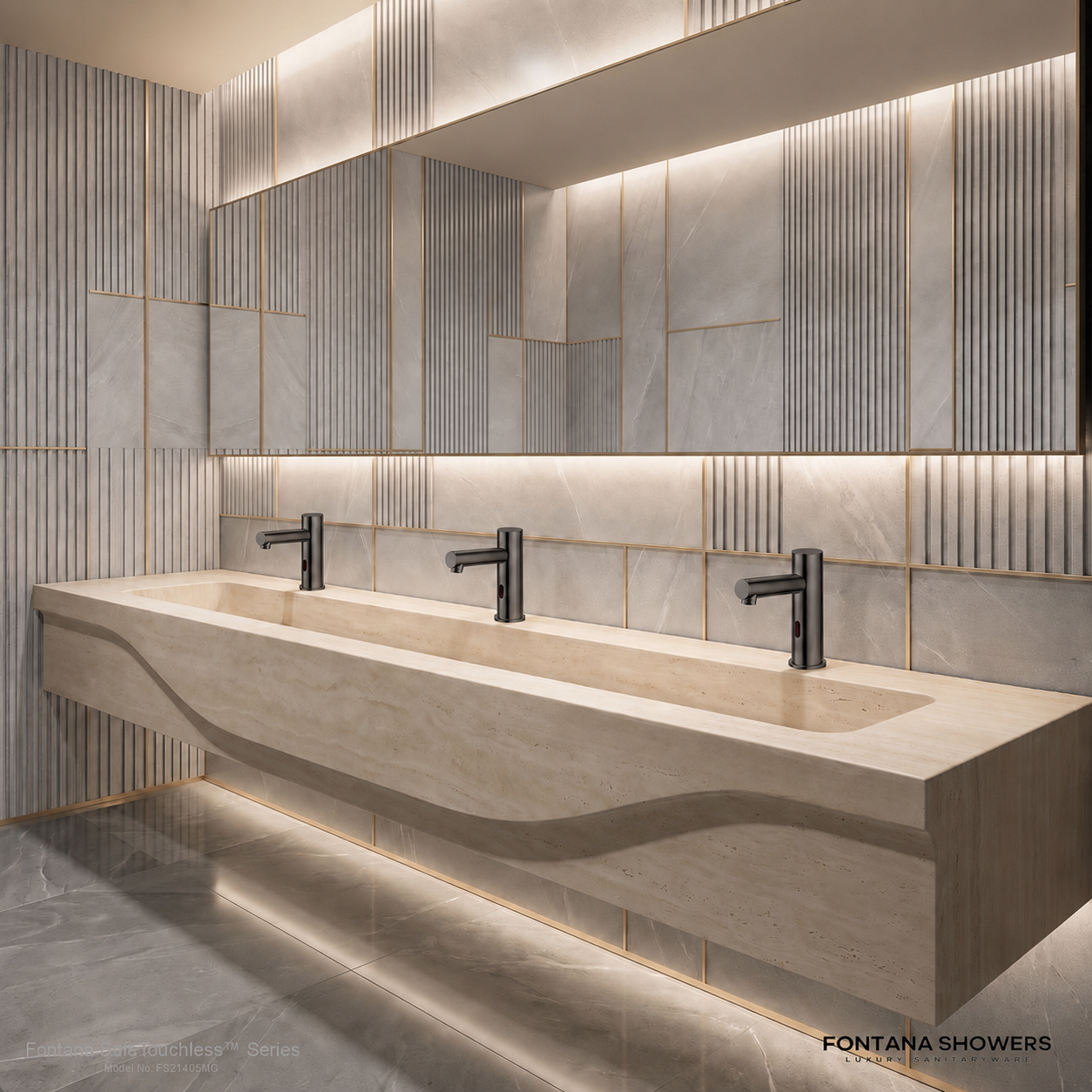
Commercial sensor faucets may provide adjustable operating parameters depending on the model. These can include detection range, shutoff delay, maximum run time, or other control settings.
Commissioning Matters
Correct commissioning is important. A faucet that activates unnecessarily, remains on longer than required, or has an incorrectly configured sensing range may use more water than the design calculation predicts.
Facility teams should therefore verify actual activation time after installation and adjust permitted settings where appropriate.
The same principle applies when touchless faucets are coordinated with other efficient plumbing fixtures. Overall building water performance should be calculated from the characteristics and usage of each fixture rather than attributed to a single technology.
Evaluating Savings Before Specification
A defensible savings analysis can be built from a small set of measurable inputs.
Existing Fixture Baseline
- Existing faucet flow rate
- Average observed run time per use
- Average activations per day
- Operating days per year
Proposed Touchless Faucet
- Specified flow rate
- Measured or programmed activation duration
- Expected activations per day
- Operating days per year
Operating Cost Inputs
- Local water rate
- Local sewer rate, where applicable
- Hot-water energy cost, where applicable
- Maintenance and replacement requirements
| Input | Why It Matters |
|---|---|
| Flow Rate | Defines the volume of water delivered during operation. |
| Activation Time | Determines how long water flows during each use. |
| Daily Traffic | Establishes how frequently the faucet is activated. |
| Operating Days | Converts daily fixture use into annual consumption. |
| Utility Rate | Converts reduced water volume into estimated operating cost. |
Using these inputs makes the comparison repeatable and project-specific. It also allows an engineer, facility manager, contractor, or owner to update the calculation when fixture selection, traffic assumptions, flow rates, or utility costs change.
Closing Notes
Touchless bathroom faucets can provide meaningful operational advantages in commercial and high-traffic restrooms by combining hands-free activation with automatic shutoff and configurable controls.
However, water and cost savings should not be presented as a universal percentage. The appropriate method is to compare the existing fixture baseline with the proposed fixture using actual flow rate, activation duration, traffic, operating schedule, and applicable utility costs.
This calculation-based approach produces a more credible basis for specification, budgeting, facility planning, and post-installation performance evaluation.
 |
 |
.jpg) |
|||


