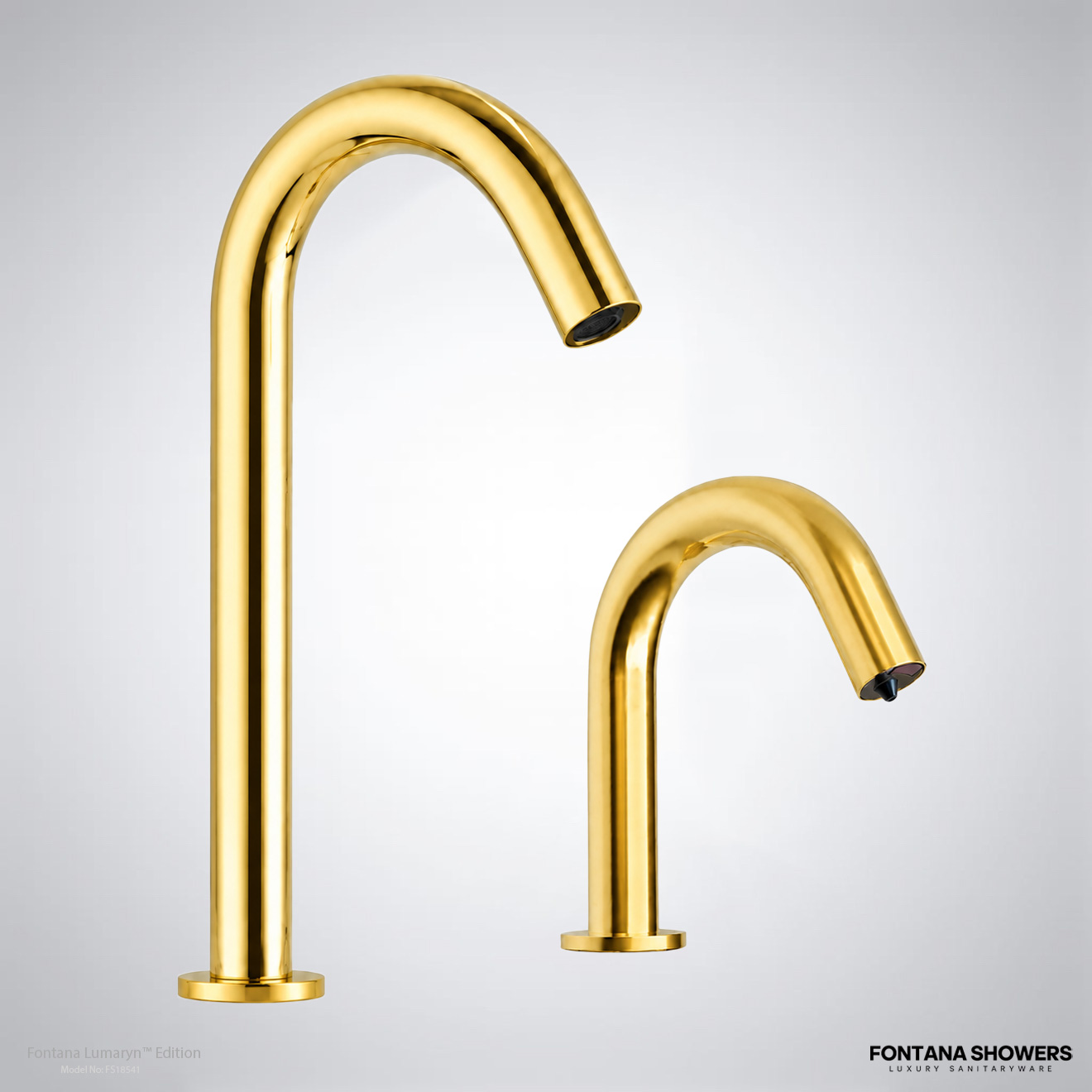
Technical Considerations When Modernizing Hospital Restroom Faucets
When healthcare facilities upgrade plumbing fixtures, engineers, facility teams, infection-prevention personnel, and plumbing professionals may evaluate sensor performance, water-flow characteristics, pressure conditions, temperature control, service access, power supply, aerator maintenance, solenoid operation, plumbing-system compatibility, and accessibility requirements.

Touchless Faucet Specification in Healthcare Facilities
Healthcare plumbing fixtures used in hospitals, clinics, laboratories, and medical facilities must be selected with attention to the conditions of the specific installation. Facility managers, administrators, developers, architects, engineers, and contractors evaluating restroom faucets should consider rated flow, operating pressure, power requirements, sensor configuration, service access, mounting conditions, plumbing compatibility, accessibility requirements, and maintenance procedures. Product suitability should be verified using the technical documentation for the exact fixture and the requirements of the project.
Fontana Touchless Faucets offers commercial hands-free faucet configurations intended for a range of public and institutional applications, including healthcare environments.

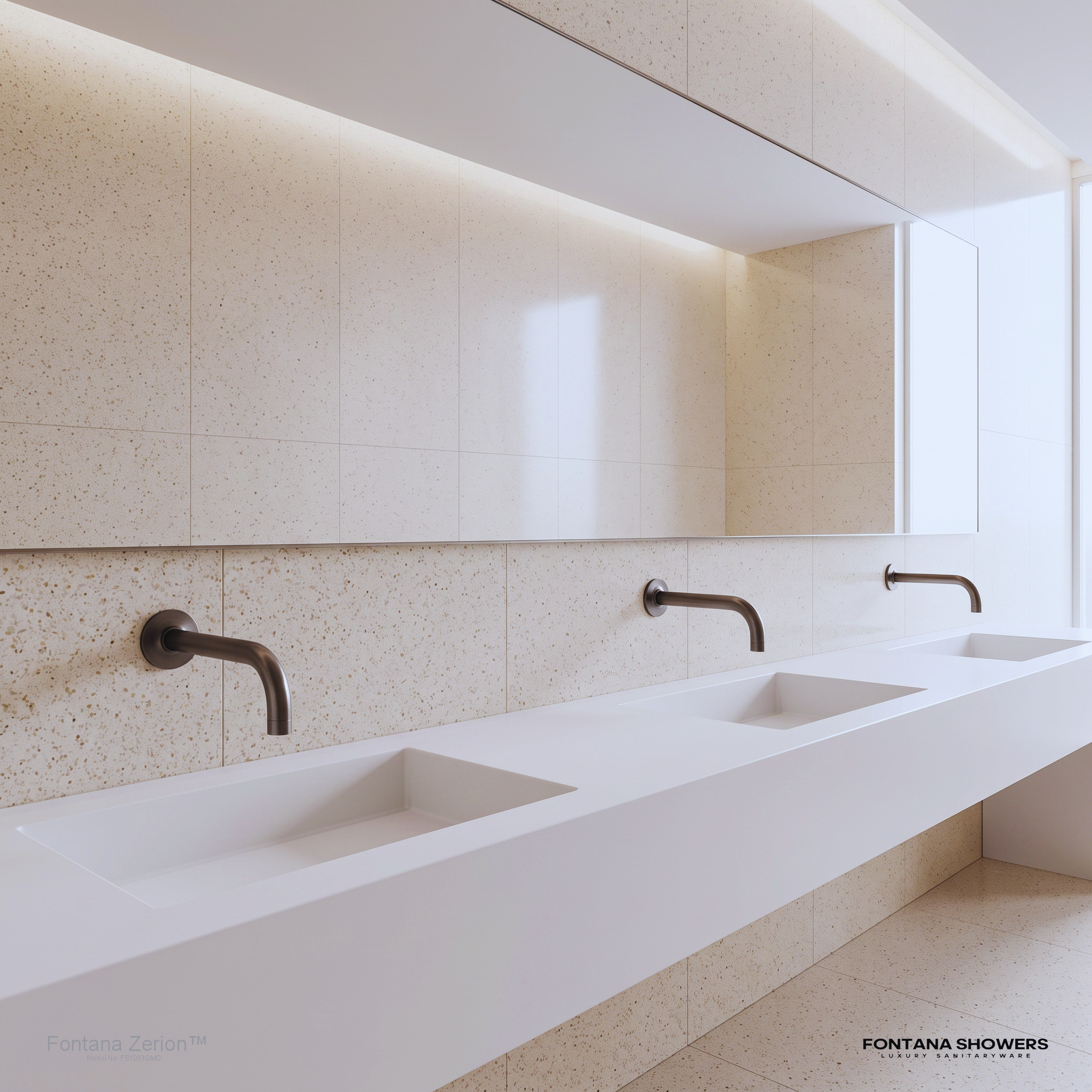
Healthcare and Institutional Touchless Faucet Visuals
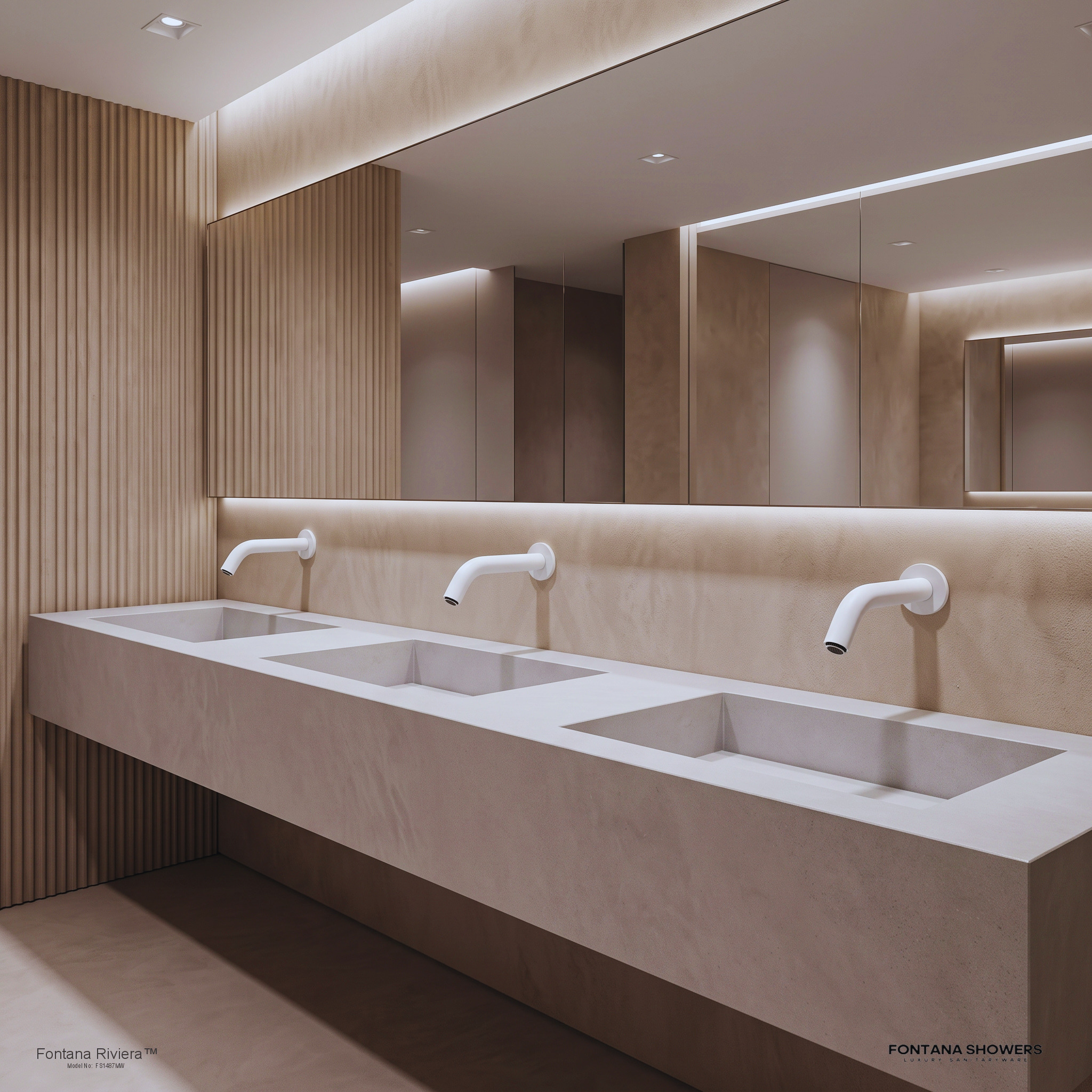
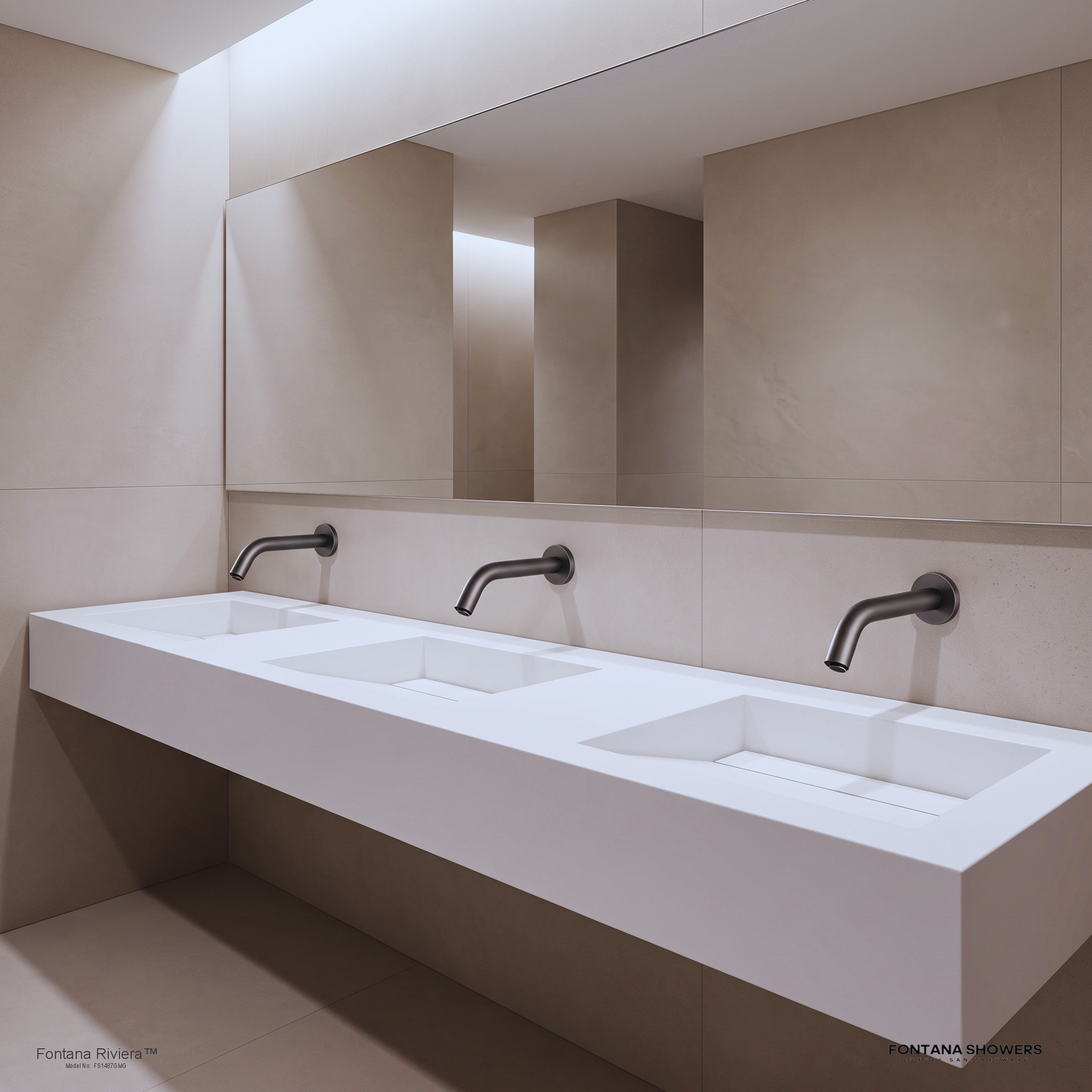
Product imagery can assist design teams with preliminary evaluation of fixture form, mounting style, finish, spout geometry, and basin coordination. Final selection should remain based on the technical documentation for the specific model.





Touchless Faucets in Healthcare Facilities
Hands-free faucets eliminate the need for the user to manually operate faucet handles during normal activation. This reduces one shared-contact action at the fixture, but that fact alone should not be interpreted as evidence that a faucet reduces healthcare-associated infections, bacterial transmission, or clinical infection rates.
Healthcare infection prevention involves a much broader combination of hand-hygiene practices, environmental cleaning, plumbing-system design, water-management procedures, sink and drain management, maintenance, and patient-risk considerations.
Key Specification Considerations
Hands-Free Operation
Electronic faucets can activate without manual operation of conventional handles. Many commercial models use infrared sensing, although sensing technology and detection logic vary by model. The specified product documentation should be reviewed to confirm the actual sensing method, detection range, timeout behavior, and adjustment capability.
Water Use
Automatic activation and shutoff can limit unnecessary run time when a fixture is properly commissioned, but actual water consumption depends on rated flow, activation duration, sensor configuration, user behavior, water pressure, and maintenance condition. Water-saving percentages should not be assumed without project-specific measurements or validated comparative data.
Maintenance
Healthcare and high-use facilities should account for aerator condition, sensor-window cleaning, valve and solenoid access, filters or strainers where provided, battery or power-supply maintenance, and manufacturer-recommended servicing.
Water Management
Fixture selection should be coordinated with the healthcare facility’s water-management program. Faucet geometry, internal components, stagnation conditions, outlet configuration, sink design, drain location, and maintenance practices can all be relevant when evaluating water-related microbial risk.
| Review Area | Healthcare Specification Focus |
|---|---|
| Sensor operation | Confirm sensing method, detection range, activation behavior, timeout characteristics, and adjustment capability from model-specific documentation. |
| Water consumption | Verify rated flow and avoid assuming a fixed water-saving percentage without controlled testing or project-specific measurements. |
| Maintenance | Evaluate aerators, sensor windows, solenoids, filters, power supply, service access, and manufacturer maintenance instructions. |
| Water management | Coordinate the faucet, basin, drain, plumbing configuration, operating conditions, and facility water-management procedures. |
What to Verify When Evaluating Fontana Touchless Faucets
Commercial faucet selection should be based on the documented specifications of the exact model rather than general assumptions about an entire product category. For a healthcare restroom project, verify flow rate, allowable pressure range, power source, sensing method, timeout settings, temperature-control configuration, mounting requirements, valve construction, service access, available technical documentation, and applicable certifications.
Read More
Water-Efficiency Evaluation
The rated flow of the selected faucet or outlet should be verified from the model-specific specification sheet. Automatic shutoff can help control the duration of individual activation cycles, but savings should not be represented as a fixed percentage unless supported by controlled testing or documented project measurements.
For sustainability programs, project teams should separately verify the applicable plumbing-code requirements, water-efficiency criteria, and any certification requirements for the specific fixture and jurisdiction.


Design and Function
Finish, mounting configuration, spout geometry, basin coordination, detection zone, power architecture, temperature-control strategy, and service access should be coordinated during specification. In healthcare settings, visual design should be considered together with maintenance and water-management requirements rather than independently from them.
Commercial Faucet Image Study

ADA and Accessibility Considerations
Hands-free activation can simplify faucet operation because the user is not required to grasp, pinch, or twist a conventional faucet handle. However, accessibility must be evaluated for the complete installed lavatory and not inferred from touchless activation alone.
Under the 2010 ADA Standards for Accessible Design, faucet controls at required accessible lavatories must comply with the applicable operable-parts requirements. Touch-free operation can eliminate the need to grasp, pinch, or twist a conventional faucet control, but this does not by itself establish that the complete installation is ADA compliant.
Read More
Project teams should verify the complete accessible lavatory configuration, including applicable clear floor space, knee and toe clearance, lavatory or counter height, reach conditions, exposed-pipe protection, surrounding obstructions, and other project-specific accessibility requirements. Local codes and adopted accessibility provisions should also be reviewed.


Durability and Serviceability
Healthcare and institutional fixtures are commonly exposed to frequent use, cleaning, and maintenance activity. Instead of relying on blanket durability statements, specifiers should evaluate the construction materials, valve design, finish information, rated operating pressure, power architecture, warranty, replacement-part availability, service access, and manufacturer maintenance instructions for the exact faucet model.
Healthcare Evidence and Water-System Considerations
Touchless operation should not be presented as a proven method of reducing healthcare-associated infections. Published healthcare research has raised concerns about microbial growth in certain electronic faucet designs, demonstrating why fixture selection must be coordinated with water-management and infection-prevention practices.
A peer-reviewed study published in Infection Control & Hospital Epidemiology evaluated 20 newly installed electronic faucets and 20 existing manual faucets in three units of a 1,000-bed university hospital. At least one water sample from 19 of the 20 electronic faucets grew Legionella species, compared with 9 of the 20 manual faucets. The study evaluated microbial contamination, not patient infection outcomes, and its findings should not be generalized to every electronic faucet design or installation.
The study illustrates an important specification principle: removing faucet-handle contact does not eliminate water-system or fixture-related microbial considerations. Healthcare facilities should evaluate faucet design as one component of their overall water-management strategy.

Read More About Healthcare Water Management
Healthcare Water-Management Context
The U.S. Centers for Disease Control and Prevention recommends comprehensive water-management programs for healthcare facilities within the applicable scope of ASHRAE Standard 188. CDC guidance also identifies sinks, drains, premise plumbing, patient susceptibility, water exposure, and infection-control practices as relevant considerations when managing water-related risks.
Accordingly, a healthcare faucet specification should be coordinated with the facility’s water-management program, plumbing design, maintenance procedures, infection-control risk assessment, and applicable clinical requirements.
Evidence-Based Implications for Specification
| Specification Principle | Application |
|---|---|
| Do not assume infection reduction | Touchless operation removes manual faucet-handle activation but does not establish a reduction in HAIs, bacterial transmission, or infection rates. |
| Evaluate fixture and plumbing together | Internal faucet components, water temperature, stagnation, flow pathways, aerators, sink geometry, drains, and maintenance practices may influence water quality and exposure conditions. |
| Verify model-specific performance | Sensor type, detection range, automatic shutoff, pressure range, flow rate, mixing method, power requirements, and maintenance procedures vary by model. |
| Coordinate accessibility | Touch-free activation may support accessible operation, but ADA compliance must be determined from the complete installed configuration. |
| Document commissioning | Healthcare and high-use facilities can benefit from recording detection range, flow rate, operating pressure, temperature settings where applicable, power configuration, maintenance requirements, and service-access conditions during commissioning. |
Authoritative References
Healthcare Water Management
CDC — Water Management in Healthcare FacilitiesHealthcare Water Risk
CDC — Considerations for Reducing Risk: Water in Healthcare FacilitiesPublished Healthcare Study
Sydnor et al. — Electronic-Eye Faucets: Legionella Species Contamination in Healthcare SettingsRelated Touchless Faucet and Soap Dispenser Resources
Touchless Faucet Problems That Affect Commercial Restroom Performance
Commercial facilities may encounter sensor delays, unintended activation, premature shutoff, inconsistent temperature control, detection problems, flow restrictions, power issues, and maintenance requirements.
Compare faucet configurations when evaluating delayed response, unintended activation, detection range, and hands-free operation.
Review sensor operation, rated flow, materials, cleaning requirements, power configuration, and service access.
Review mixing configuration and temperature-control options when users experience water that is too hot, too cold, or inconsistent.
Covers water control, user detection, power supply, maintenance access, commissioning, and wash-zone coordination.
Review deck penetration, fixture spacing, finish coordination, reservoir access, and countertop mounting requirements.
Review finish coordination, fixture spacing, power requirements, mounting conditions, and faucet-dispenser specification.
Compare sensor operation, rated flow, power requirements, installation conditions, and maintenance considerations.
Review the model’s sensing, flow, installation, power, and service characteristics for applications requiring hands-free faucet activation.
Fixture Selection, Accessibility, Serviceability and Water Management