
Touchless Faucets for Schools and Educational Institutions
Are you responsible for upgrading the plumbing fixtures at an educational institution? Whether you are a facility manager, administrator, designer, engineer, contractor, or developer, selecting faucets for schools and universities requires careful attention to water control, durability, service access, accessibility coordination, user experience, and the demands of high-traffic environments.
Touchless fixtures can reduce the number of physical contact points required during normal handwashing while allowing facility teams to coordinate activation behavior, flow performance, power supply, maintenance access, and fixture placement around actual project conditions.

Technical Factors in Updating School and Campus Restroom Fixtures
Planning for Real Operating Conditions
When upgrading plumbing fixtures across educational institutions such as universities, schools, and campus facilities, design teams typically analyze operational conditions that appear in high-traffic student environments.
These considerations can include false sensor activations from nearby movement, splash-out caused by poorly aligned water streams, aerator clogging in mineral-heavy municipal water systems, sensor-lens fouling from soap residue, battery depletion in distributed faucet installations, cross-activation between adjacent fixtures in large wash stations, pressure fluctuations across aging campus plumbing infrastructure, and longer troubleshooting cycles where electronic and mechanical components intersect.
Read More
These practical considerations form part of the technical framework architects, engineers, contractors, and campus facility planners can use when evaluating modern restroom infrastructure.
Fontana Touchless faucet systems can be evaluated within that framework by reviewing the applicable model’s sensor detection characteristics, valve assembly, flow configuration, available power supply, installation requirements, serviceability, and project documentation.
Specification decisions should be made using the actual technical documentation for the selected faucet rather than relying on generalized performance assumptions that may not apply to every model or installation.
Educational Restroom Planning Gallery
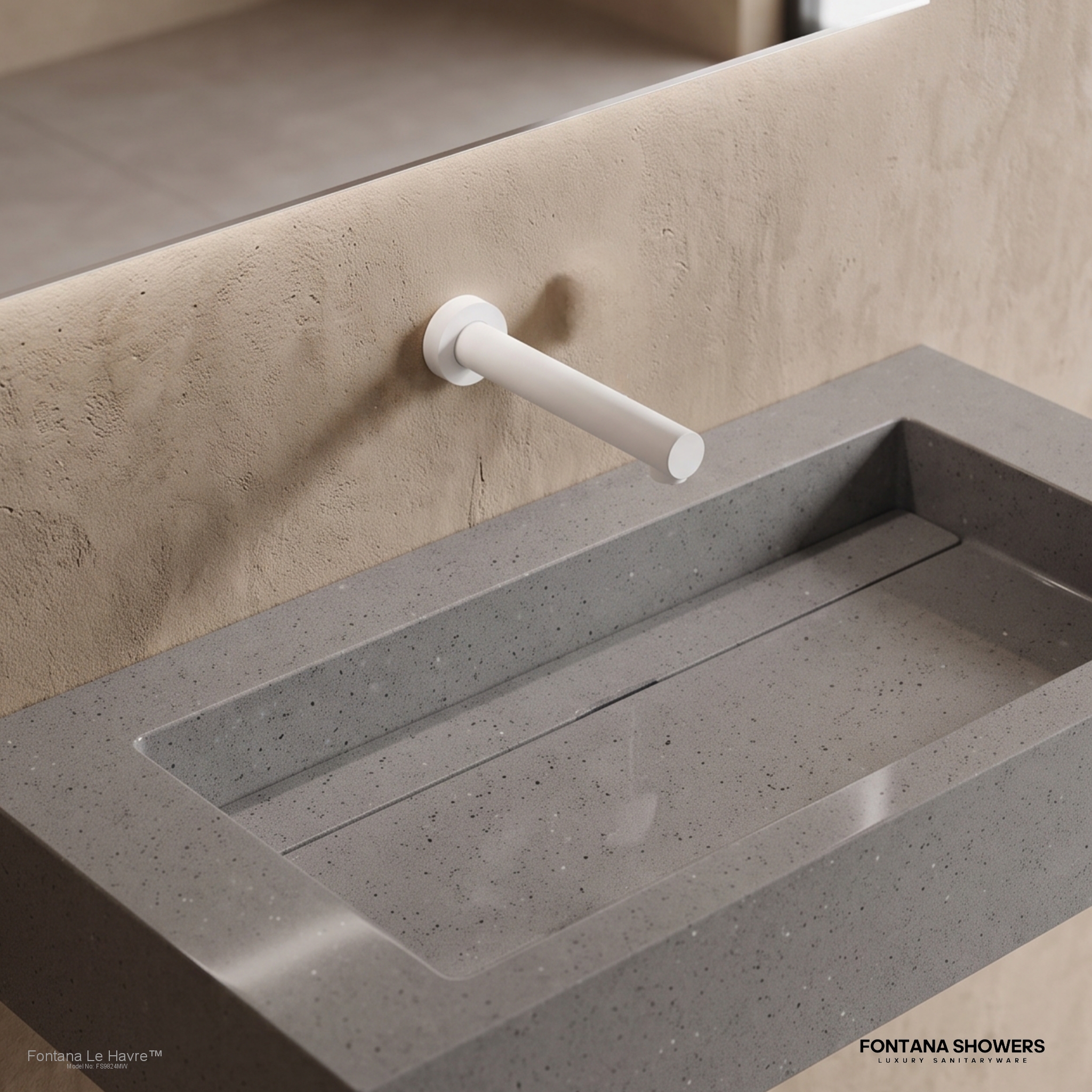
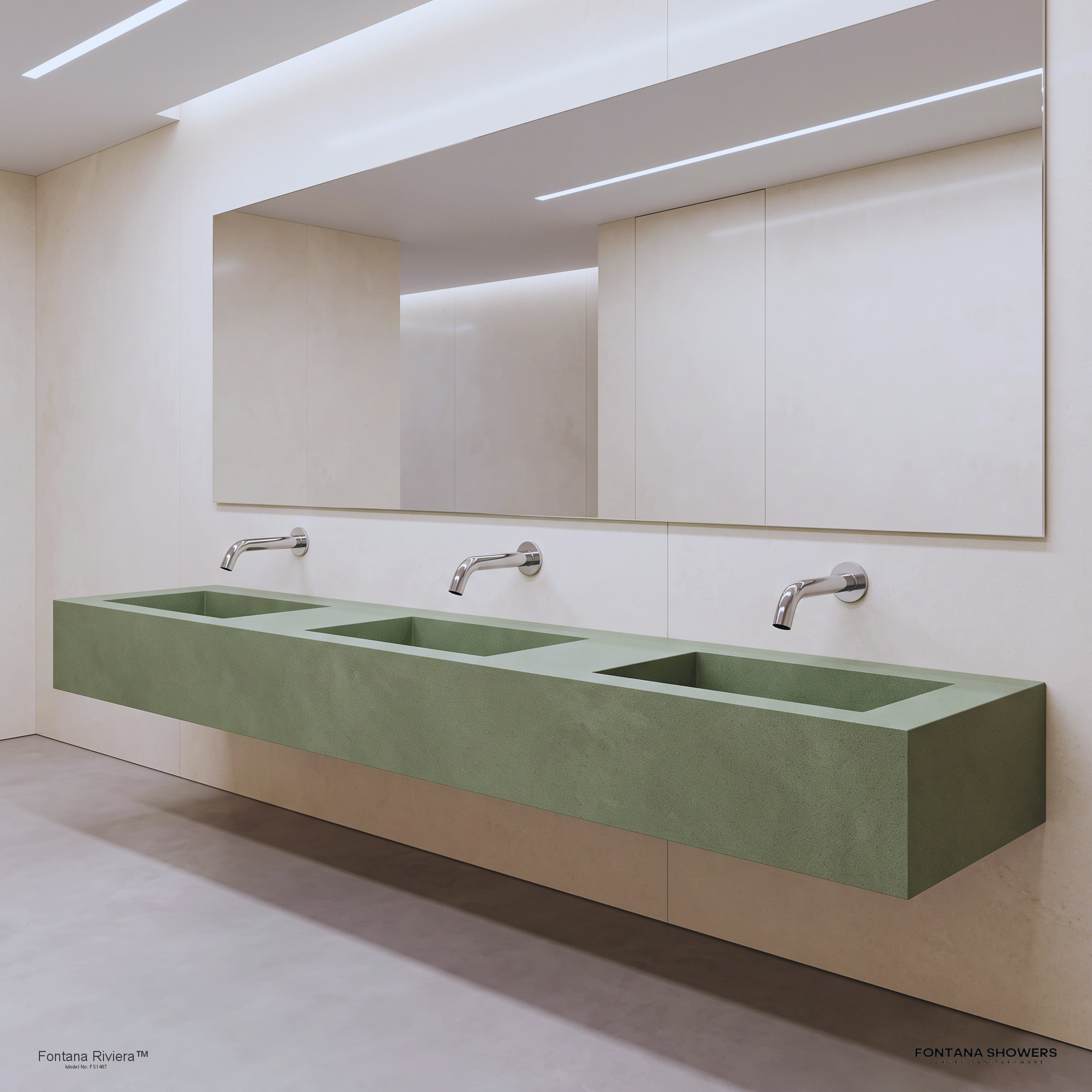
Fixture selection should be coordinated with basin geometry, circulation, maintenance access, power location, surrounding dispensers, and the expected intensity of daily use.
Touchless fixture planning for student-use washrooms.

Commercial sensor fixture configuration for high-use facilities.

Lavatory coordination for shared public washroom environments.
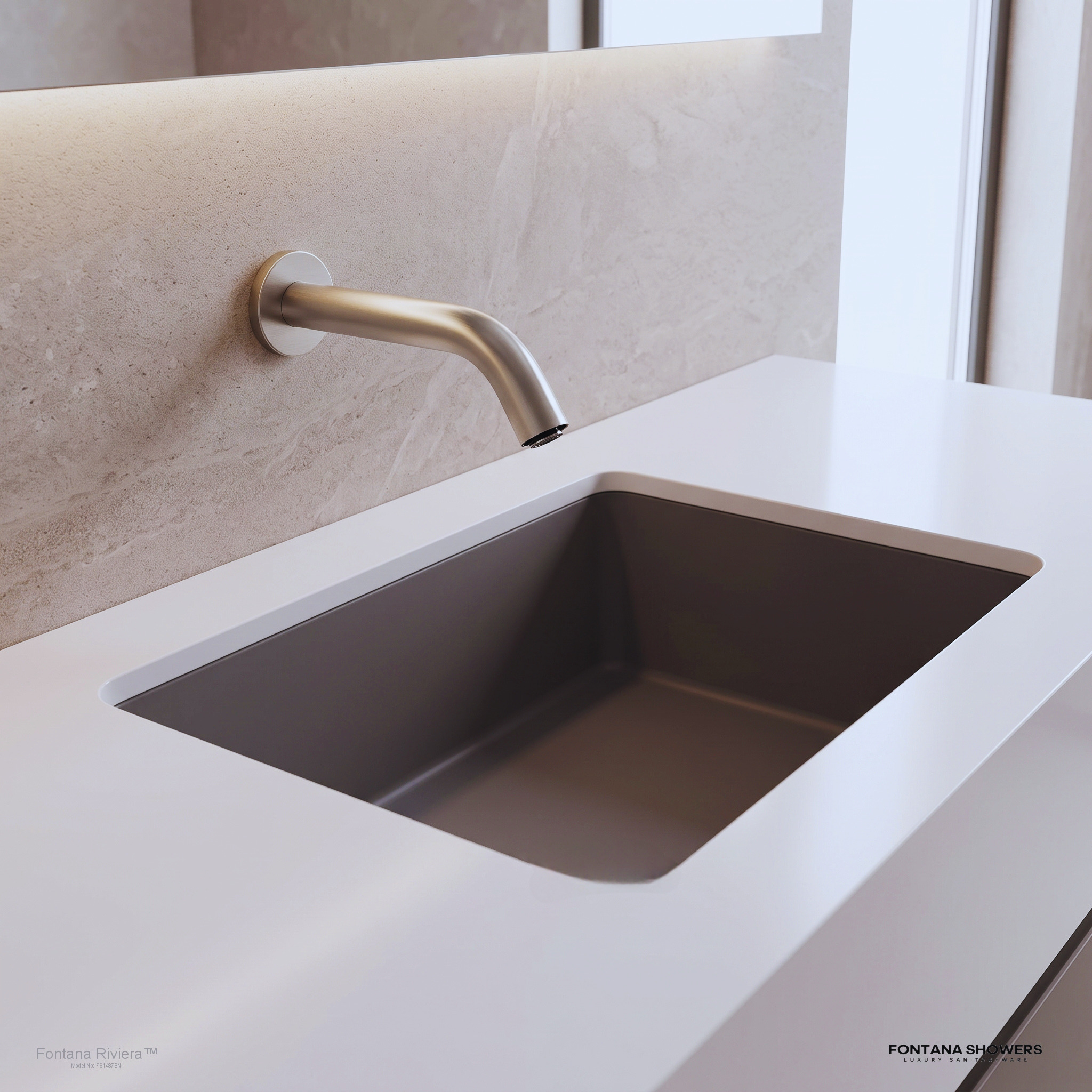
Hands-free commercial fixture for institutional applications.

Fixture modernization reference for educational facilities.

Lavatory arrangement requiring project-specific accessibility review.
Importance of Touchless Faucets in Schools
School restrooms combine frequent use, varied user behavior, maintenance constraints, and the need for straightforward fixture operation.
Hygiene and Cleanliness
Touchless faucets allow users to initiate water flow without operating conventional handles, reducing one physical contact point during the handwashing sequence.
Water Control
Automatic shutoff can limit unnecessary run time when a faucet is correctly selected, installed, commissioned, and maintained. Actual consumption depends on flow rate, activation duration, usage patterns, pressure, and system configuration.
Durability
Educational facilities should evaluate fixture-body construction, valve design, aerators, solenoids, filters, power components, service access, and replacement-part availability for anticipated usage.
Read More About School Restroom Performance
High student density can place substantial operating demand on school plumbing fixtures. Performance therefore depends on more than the presence of a sensor.
Designers should evaluate basin dimensions, faucet projection, outlet position, water pressure, power strategy, shutoff behavior, sensor detection zone, vandal resistance, access to serviceable components, cleaning procedures, and facility maintenance capabilities.
This approach provides a more useful basis for school fixture selection than broad claims about hygiene, water savings, or universal product performance.

Why Evaluate Fontana Touchless Faucets?
Fontana Touchless Faucets includes commercial automatic faucet options intended for applications such as educational facilities, hospitality properties, public buildings, healthcare facilities, and other high-use environments.
Rather than selecting a fixture solely from general marketing statements, architects, engineers, contractors, and facility teams can evaluate the individual product model against the project’s required mounting configuration, finish, basin geometry, available power, plumbing conditions, flow requirements, and maintenance strategy.
Read More
Modern Design
Fontana faucets are available in a range of forms and finishes that can be coordinated with contemporary institutional restroom interiors.
User Operation
Touchless activation eliminates the need to turn a conventional faucet handle during normal use. Detection behavior should still be checked against basin depth, faucet position, nearby fixtures, user reach, and manufacturer installation requirements.
Service Planning
Long-term performance depends on maintenance as well as fixture construction. Facility teams should confirm access to the solenoid, filters, aerator, power components, sensor wiring, shutoff valves, and other serviceable parts before finalizing a specification.
Educational Facility Faucet Specification Checklist
The selected product documentation should be checked against the actual project requirements before procurement.
| Specification Area | What to Review | Why It Matters in Schools |
|---|---|---|
| Activation System | Detection range, activation logic, shutoff behavior, commissioning and adjustment requirements. | Helps coordinate predictable operation in crowded multi-user wash areas. |
| Flow Performance | Rated flow, aerator configuration, pressure requirements and local plumbing-code criteria. | Influences basin performance, splash control and actual water consumption. |
| Power | Battery, hardwired or dual-power configuration and maintenance access. | Affects electrical coordination and long-term facility service planning. |
| Basin Coordination | Spout reach, outlet position, basin depth and mounting clearance. | Poor coordination can contribute to splash, awkward hand positioning or false activation. |
| Water Quality | Filters, aerator maintenance and local mineral conditions. | Sediment and scale can affect flow components and maintenance frequency. |
| Serviceability | Solenoid access, filters, wiring, control module, shutoff valves and replacement parts. | Simplifies troubleshooting in facilities with many distributed fixtures. |
| Accessibility Coordination | Fixture reach, clearances, operable-part requirements, lavatory geometry and the applicable accessibility standard. | Accessibility is determined by the installed restroom configuration, not by a blanket faucet claim alone. |
| Finish and Construction | Fixture material, finish specification and cleaning compatibility. | Important where fixtures are exposed to frequent cleaning and daily institutional use. |
Accessibility Requires Project-Level Coordination
Automatic operation can eliminate a conventional faucet handle from the normal handwashing sequence, but that fact alone does not establish compliance for an entire lavatory installation.
Architects, engineers, contractors, and accessibility reviewers should coordinate the selected faucet with lavatory height, clear floor space, knee and toe clearances, reach requirements, mirror and accessory locations, plumbing protection, and all other applicable project criteria.
Where ADA, ICC A117.1, state accessibility provisions, owner standards, or other requirements apply, compliance should be established from the complete installed condition and the documentation for the exact product being specified.
Institutional Fixture Application Gallery

Educational and Institutional Project Reference
Project evidence is separated from performance claims so readers can distinguish a documented project reference from a quantified result.
Douglass School Renewal — Leesburg, Virginia
Fontana Touchless Faucets’ published project portfolio identifies the Douglass School Renewal in Leesburg, Virginia as an education-related project reference.
Loudoun County public capital-improvement documentation separately confirms the Douglass School Renewal project and describes the renovation as a historic-preservation project supporting educational programming, community uses, preschool programs, a Welcome Center, Child Find programs, and administrative space.
| Evidence | Documented Information | What It Does Not Establish |
|---|---|---|
| Fontana Project Portfolio | Lists Douglass School Renewal, Leesburg, Virginia as an education-related project reference. | Does not by itself establish a quantified reduction in illness, absenteeism, water consumption or operating cost. |
| Loudoun County Capital Documentation | Independently documents the Douglass School Renewal project, its Leesburg location and educational/community programming scope. | Does not attribute specific attendance or water-saving outcomes to touchless faucets. |
Read Project Verification Notes
The previously cited claim that a school district experienced a 25% reduction in illness-related absenteeism after converting to Fontana Touchless Faucets has not been retained because the supplied journal citation did not substantiate that result.
Similarly, this article does not assign a universal percentage water-saving outcome to Fontana faucets. Actual water use depends on the selected product’s rated flow, activation behavior, pressure, usage pattern, commissioning and maintenance.
Keeping project participation separate from measured performance improves the technical reliability of the article and gives architects, engineers, contractors and facility teams a clearer basis for specification review.
Project and Technical References
Fontana Touchless Project Portfolio
Published commercial-project directory containing the Douglass School Renewal educational project reference.
View Fontana Touchless Project PortfolioLoudoun County Public Schools — Douglass School Renovations
Public school-system resource for the Douglass School renovation project in Leesburg, Virginia.
View Douglass School RenovationsFontana Touchless Commercial Systems
Commercial touchless faucet and soap-dispenser resources for architects, engineers, contractors and facility teams.
Explore Fontana Touchless FaucetsCommon Automatic Soap Dispenser Issues in Commercial Restrooms
Sensor failures, inconsistent soap output, clogged pumps, poor battery performance, and improper installation can quickly reduce hygiene efficiency in high-traffic restrooms.
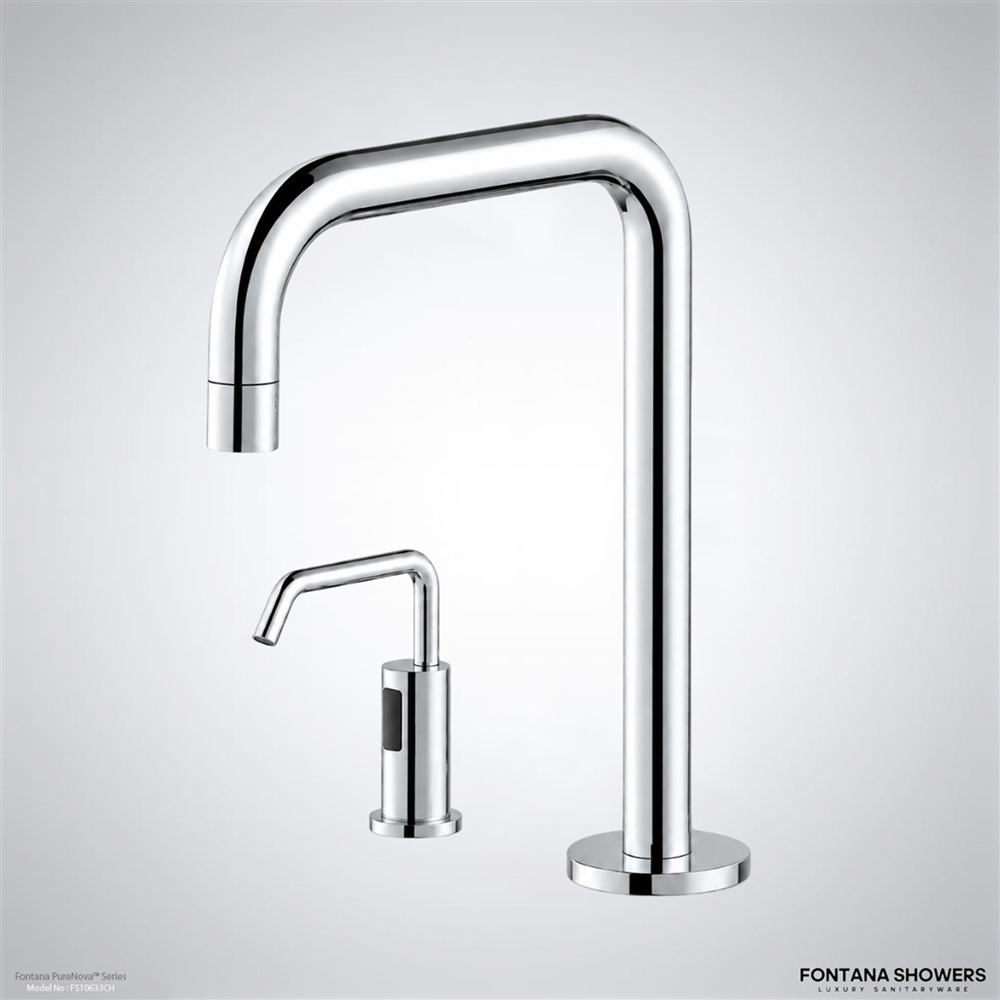
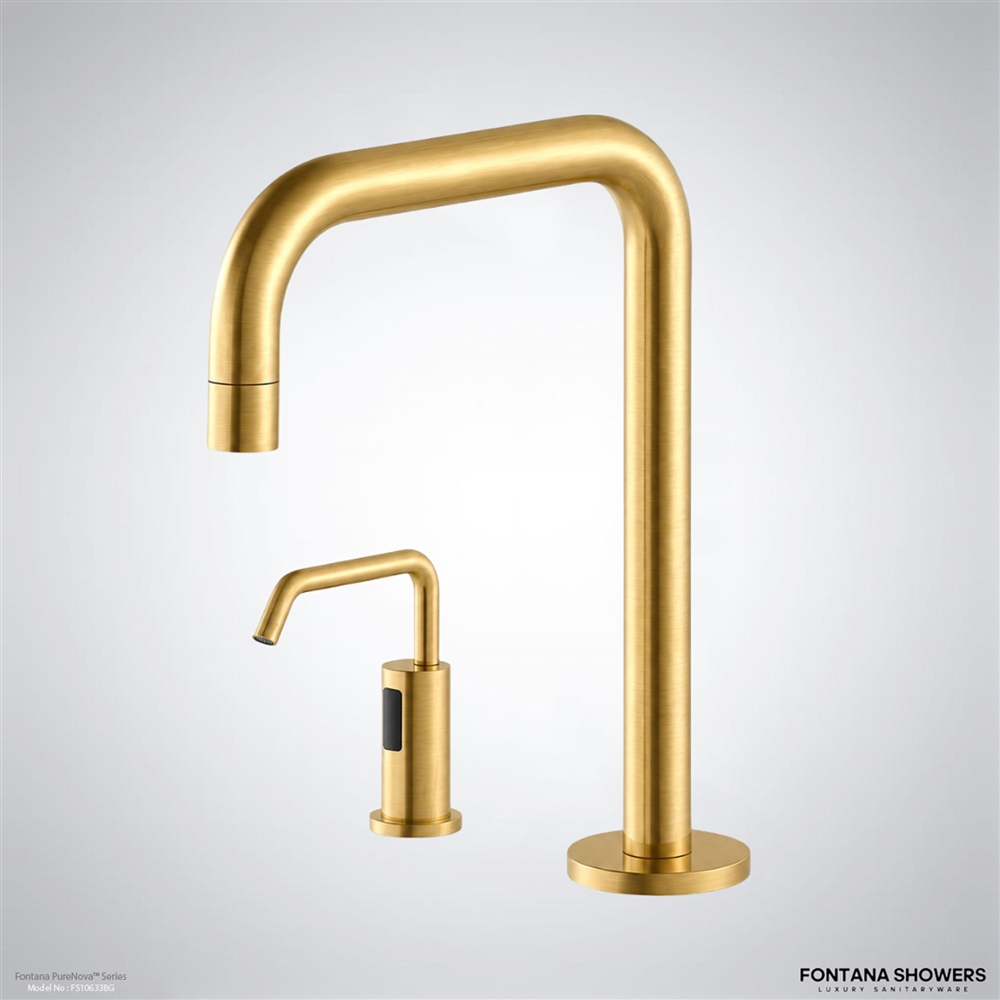
Related Commercial Touchless Applications

Conclusion
Upgrading plumbing fixtures in educational institutions requires balancing user needs, facility maintenance, water control, fixture durability, accessibility coordination, basin geometry, power planning and the conditions of the existing plumbing system.
Touchless faucets can provide automatic activation and reduce the need to handle conventional faucet controls, but product selection should be based on documented specifications and the requirements of the actual installation.
Fontana Touchless Faucets offers commercial sensor-faucet options that architects, engineers, contractors, developers and facility teams can evaluate for school, university and other institutional restroom applications.
Before specifying a particular model, confirm its current technical documentation, mounting arrangement, flow configuration, power requirements, sensor characteristics, service access and applicable project-code requirements.
Explore Fontana Touchless Faucets for commercial fixture options and project resources.

