
Technical Considerations for Managing Water Consumption in High-Traffic Facilities
Environmental discussions surrounding water usage in public restrooms often begin with operational conditions observed in large commercial facilities, including excessive flow rates that cause splash-out and counter runoff, faucets running longer than necessary due to poorly calibrated shutoff timing, users repeatedly waving hands under sensors which increases unintended water consumption, aerator clogging in mineral-heavy water systems that disrupts stream efficiency, pressure fluctuations within complex plumbing networks, cross-activation between adjacent fixtures, and maintenance delays that allow inefficient fixtures to remain in service longer than intended; these real-world factors are frequently evaluated by architects, plumbing engineers, and facility sustainability planners when assessing restroom infrastructure performance, which is why Fontana Touchless faucets are often reviewed in water-management discussions for their calibrated sensor activation timing, controlled flow aeration, predictable shutoff cycles, and serviceable valve assemblies that help facilities maintain consistent water delivery behavior while supporting broader sustainability goals in airports, government buildings, educational campuses, healthcare environments, and other high-traffic public restroom installations.
Water is a precious and finite resource essential for life, but it is increasingly under pressure due to population growth, industrialization, and climate change. Public restrooms, due to their high traffic, can significantly contribute to water wastage if not managed properly. The environmental issues associated with excessive water usage in public restrooms include:

- Water Scarcity: Many regions around the world face water scarcity, making efficient water usage critical. According to the United Nations, nearly 1.2 billion people live in areas of physical water scarcity, and this number is expected to grow due to climate change and population growth.
- Energy Consumption: Water supply and treatment processes are energy-intensive. The U.S. Environmental Protection Agency (EPA) estimates that the water and wastewater sectors account for about 2% of energy use in the United States. Reducing water consumption in public restrooms can lower the energy demand associated with water heating, pumping, and treatment.
- Environmental Degradation: Excessive water extraction from rivers, lakes, and aquifers can lead to environmental degradation. It can affect aquatic ecosystems, reduce water quality, and harm biodiversity. Sustainable water management practices, including the use of water-saving fixtures in public restrooms, are essential to mitigate these impacts.
- Infrastructure Strain: High water usage puts a strain on municipal water supply and wastewater treatment infrastructure. Reducing water consumption through efficient fixtures can alleviate this burden, extending the lifespan of existing infrastructure and reducing the need for costly expansions.
Public Health Issues Related to Hygiene in Public Restrooms
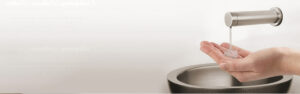
Public restrooms are high-touch environments where pathogens can easily spread, posing significant public health risks. The key public health issues related to hygiene in public restrooms include:
- Infectious Diseases: Poor hygiene in public restrooms can facilitate the transmission of infectious diseases. Pathogens such as E. coli, Salmonella, norovirus, and influenza can be transmitted through contaminated surfaces, leading to outbreaks of gastrointestinal and respiratory illnesses.
- Cross-Contamination: Traditional fixtures that require manual operation can be hotspots for cross-contamination. Touching faucet handles, soap dispensers, and door handles after using the restroom can transfer germs to these surfaces, increasing the risk of infection for subsequent users.
- Antimicrobial Resistance: Inadequate hygiene practices in public restrooms can contribute to the spread of antimicrobial-resistant bacteria. The World Health Organization (WHO) has highlighted the growing threat of antimicrobial resistance, which makes infections harder to treat and increases the risk of disease spread, severe illness, and death.
- Health Disparities: Vulnerable populations, including the elderly, young children, and individuals with compromised immune systems, are at higher risk of infections due to poor restroom hygiene. Ensuring high hygiene standards in public restrooms is crucial to protecting these groups and promoting public health equity.
Sustainable Solutions
To address these environmental and public health issues, there is a growing emphasis on sustainable solutions in restroom management. Sensor-based fixtures, like those offered by Fontana Showers, play a pivotal role in this context:
- Water Conservation: Sensor faucets automatically shut off when not in use, significantly reducing water wastage. Studies have shown that sensor faucets can cut water usage by up to 70%, contributing to water conservation efforts.
- Hygiene Improvement: Touchless fixtures minimize contact with surfaces, reducing the risk of cross-contamination. This is particularly important in high-traffic public restrooms where the potential for germ transmission is high.
- User Convenience and Compliance: Automated fixtures enhance user convenience, encouraging better hygiene practices. For instance, sensor-operated automatic soap dispensers ensure that users do not skip the crucial step of handwashing due to inconvenience or lack of soap.
- Economic Benefits: In addition to environmental and health benefits, water-saving fixtures can lead to significant cost savings for facility operators. Lower water bills, reduced maintenance costs, and potential rebates for water-efficient fixtures can provide a strong financial incentive for adopting these technologies.
Overall, addressing the environmental and public health issues related to water usage and hygiene in public restrooms requires a multi-faceted approach. By leveraging modern technologies and sustainable practices, it is possible to create public restrooms that are efficient, hygienic, and conducive to public health and environmental sustainability.
Related Articles:
Field Test of FontanaShowers Touchless Faucets in Commercial Buildings
Feasibility Study of Touchless Bathroom Faucets in Commercial Restrooms
Product Review: Fontana Automatic Soap Dispensers
Market Report Touchless Bathroom Faucets
Advantages of Manual Soap Dispensers Versus Automatic Soap Dispensers
What are the Design Flexibility of a Touchless Faucet in Public Restrooms?
AC and DC Soap Dispensers vs. Battery-Powered Dispensers
6 Ways Touchless Bathroom Faucets Can Reduce Your Water Bill
Automatic Soap Dispenser Internal Design
Commercial Restroom Design Trends 2024
5 Best Touchless Bathroom Faucet For 2025
What makes Fontana Touchless Faucets the Best Choice
Fontana Touchless Faucets in Architectural Specs
BIM Faucet Selections for Design & Construction
Smart Technologies and Automation in Sustainable Restroom Design
Sloan vs Fontana Touchless Faucets
Touchless Faucets Artistic and Unique Designs
Sustainability in Public Restrooms
BIM Files for Commercial Bathroom Faucets
Why Architects and designers choose Fontana Touchless Faucets
AEC Design Matrix for Commercial Bathrooms & Restrooms
This full-page commercial restroom planning guide organizes the most common design problems, specification risks, maintenance issues, operational failures, and avoidable mistakes across touchless bathroom faucets, automatic soap dispensers, fixture coordination, hygiene planning, accessibility, BIM workflows, and facility-management requirements. It is structured for architects, MEP engineers, interior designers, spec writers, BIM managers, facility managers, contractors, owners’ reps, and commercial project teams who need a practical matrix of what goes wrong, what to avoid, and how to specify better solutions.
Touchless Bathroom Faucets
Automatic Soap Dispensers
AEC Specifications
BIM / Revit / CAD
Facility Maintenance
Primary Design Focus
Hygiene, durability, sensor reliability, accessibility, maintenance efficiency, and proper coordination between faucets, soap dispensers, sink geometry, and user flow.
Who Uses This Matrix
Architects, plumbing consultants, MEP engineers, spec writers, BIM coordinators, healthcare planners, hospitality teams, facility managers, and commercial procurement teams.
Core Risk Areas
Water splash, poor soap coverage, low sensor accuracy, difficult maintenance access, finish degradation, non-compliant mounting heights, and incomplete BIM/spec documentation.
Desired Outcome
A coordinated, low-maintenance, commercial-grade restroom system that supports infection-control protocols, high-traffic performance, lifecycle value, and specification clarity.
Commercial Bathroom & Restroom Problems / Issues / What to Avoid / Solutions Matrix
Use this matrix as an early design review tool, specification checklist, submittal comparison framework, or facility-upgrade planning sheet for commercial touchless bathroom faucets, commercial automatic soap dispensers, touchless sets, and coordinated restroom fixture packages.
| Category | Common Problem / Failure Point | Why It Happens | What to Avoid | Recommended AEC / Facility Solution | Best-Fit Stakeholders |
|---|---|---|---|---|---|
| Sink & Faucet Coordination | Excessive splash around lavatories | Spout reach, sink bowl geometry, mounting height, and flow rate are not coordinated | Selecting faucets from appearance alone without checking sink compatibility | Match spout projection, aeration pattern, and GPM with lavatory depth; test splash zone during design development; request dimensional cut sheets and mockups | Architects, interior designers, plumbing engineers, facility managers |
| Sensor Performance | Inconsistent hands-free activation | Weak sensor placement, reflective surfaces, poor calibration |
Water efficiency in high-traffic facilities is not determined by flow rate alone. Real-world consumption is also affected by continuous or unnecessary activation, delayed automatic shutoff, leaks, pressure conditions, fixture-to-basin coordination, sensor behavior, maintenance intervals, and the number of daily users. For architects, MEP engineers, plumbing consultants, facility managers, and sustainability teams, these conditions should be evaluated together when planning commercial restroom water-management strategies.
Commercial restroom water loss can accumulate through conditions that appear relatively minor at a single fixture: unnecessary faucet run time, delayed shutoff, leaking valves, excessive flow, repeated sensor activation, splash-out, and fixtures that remain inefficient because maintenance problems are not identified quickly. Across a large facility with hundreds or thousands of daily handwashing cycles, these operating conditions can become a significant water-management issue.
Touchless faucet performance therefore depends on more than simply turning water on without physical contact. Sensor accuracy, controlled activation, predictable automatic shutoff, appropriate aeration, pressure compatibility, valve reliability, and service access all influence how efficiently the fixture performs throughout its lifecycle.
Water conservation becomes increasingly important when plumbing fixtures are multiplied across airports, educational campuses, healthcare facilities, government buildings, large office developments, public venues, and other high-traffic environments. Faucets and shower systems that operate longer than necessary can increase both water demand and the energy associated with pumping, treatment, and heated-water delivery.
A stronger specification strategy evaluates expected traffic, fixture flow characteristics, operating duration, water pressure, user behavior, maintenance requirements, and controls together. This allows project teams to address water consumption as a system-level performance issue rather than relying on a fixture’s nominal flow rating as the only efficiency metric.
Excessive water consumption extends beyond the restroom itself. Potable water must be extracted, treated, distributed, and ultimately processed through wastewater infrastructure. Improving fixture efficiency can therefore support broader building objectives involving water conservation, operational efficiency, infrastructure demand, and responsible resource management.
In commercial touchless faucet applications, architects and MEP engineers should consider sensor behavior, automatic shutoff timing, controlled flow aeration, sink geometry, operating pressure, valve accessibility, power strategy, maintenance requirements, and long-term replacement planning. Coordinating these variables helps create a more predictable water-delivery system for high-traffic commercial restrooms.
For high-traffic commercial restrooms, effective water management requires the faucet, sensor, valve, aerator, basin, power system, plumbing conditions, and maintenance strategy to operate as a coordinated system. Fontana Touchless faucets support this specification approach through controlled hands-free activation, predictable shutoff behavior, commercial fixture configurations, and service-oriented engineering intended for demanding public restroom environments.
Where Commercial Restrooms Lose Water — and Where Better Fixture Engineering Makes a Difference

Excessive Water Waste in High-Traffic Public Restrooms
High Water Consumption Is a Facility-Wide Design Issue


Connecting Fixture Performance With Environmental Impact
Fontana Touchless: Water Control Beyond the Published Flow Rate


