Specification Resources for Commercial Touchless Faucet Projects
The basis for specifying Fontana Touchless Faucets is not a generalized claim that architects or designers prefer the brand. For an AEC project, the more relevant factors are whether a fixture can be identified, coordinated, documented, submitted, installed, and serviced without creating unnecessary gaps in the construction documents.
Fontana supports that process through BIM and Revit resources, model-specific technical documentation, a broad range of finishes and configurations, product-level specification information, and project support for architects, engineers, contractors, and facility teams.




BIM and Revit Coordination
Commercial restroom fixtures need to be coordinated with countertops, lavatories, plumbing connections, electrical requirements, clearances, and accessible mounting conditions before construction begins.
Fontana provides BIM and Revit resources for touchless faucets and related restroom fixtures. Depending on the product and project requirement, available documentation can include:
- Revit families and BIM objects
- Dimensioned product information
- Cut sheets and specification sheets
- Rough-in and mounting guidance
- Installation instructions
- Power and wiring information
- Flow and connection data
- Product and finish identification
- Coordination notes
- Submittal documentation
For specification teams, this information is more useful than a generic product rendering because it allows the selected fixture to be coordinated with the architectural and MEP model.
A model can therefore be evaluated against the actual basin geometry, counter construction, supply arrangement, electrical strategy, maintenance access requirements, and surrounding components before it reaches the field.


Finish Breadth for Architectural Coordination
Finish selection is another practical specification consideration.
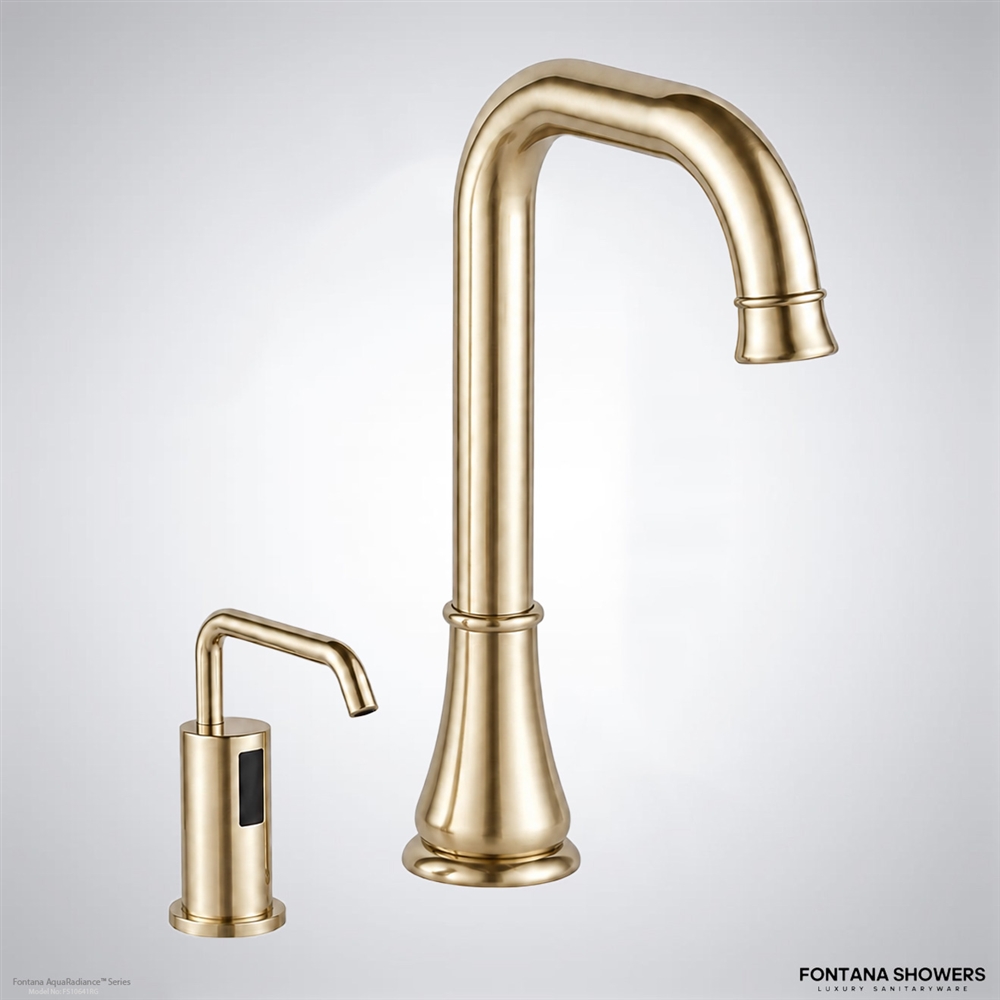
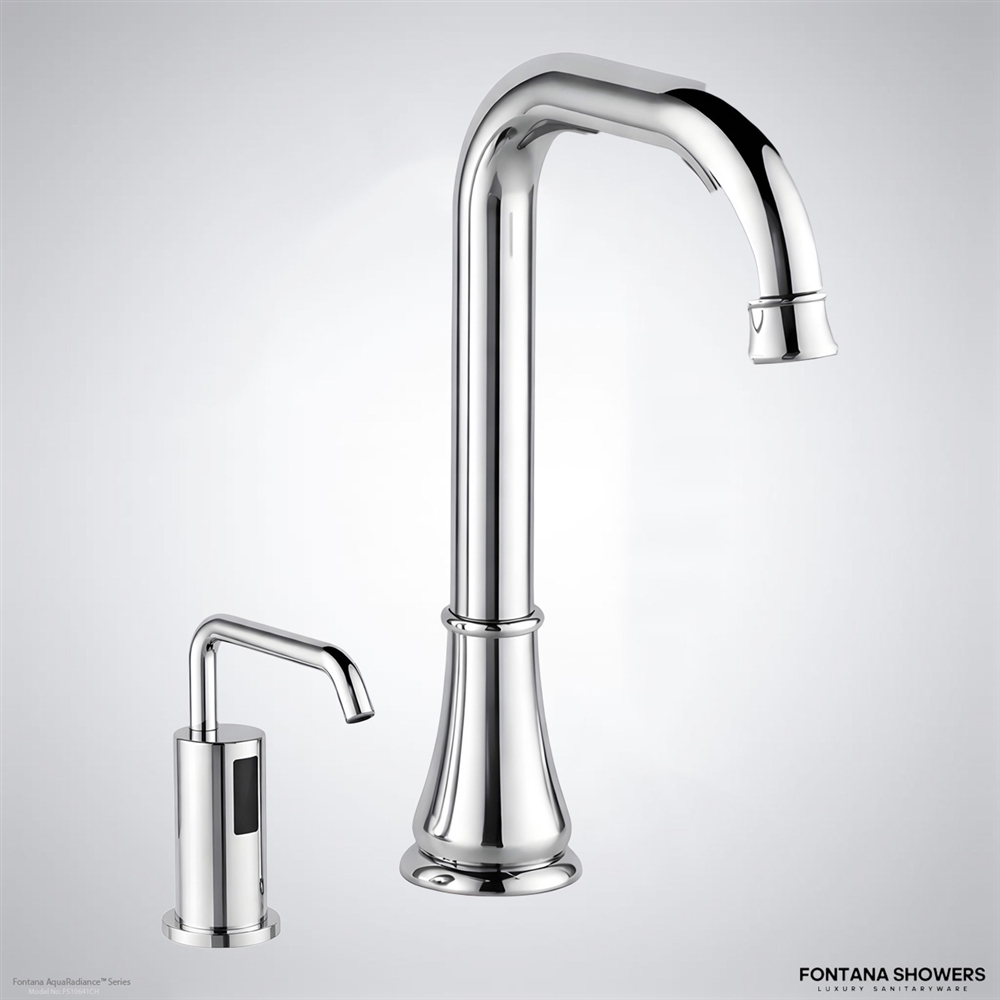
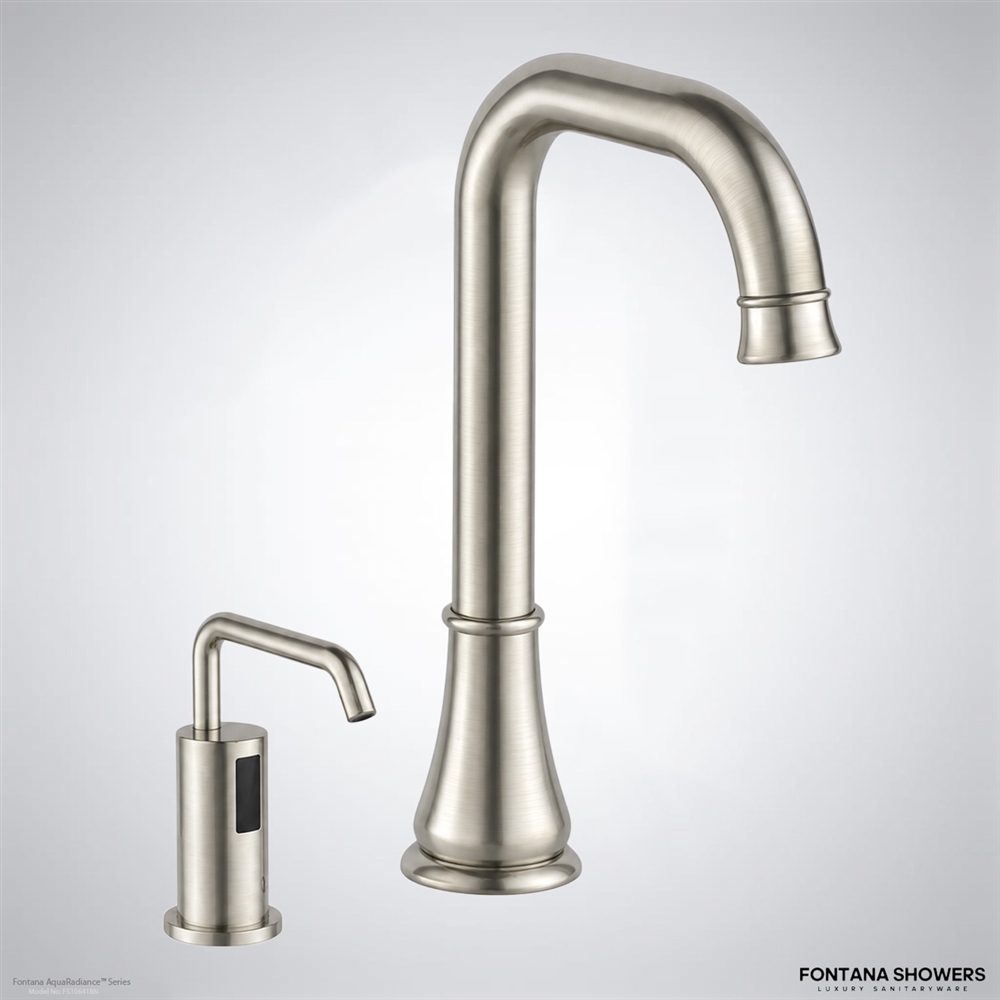
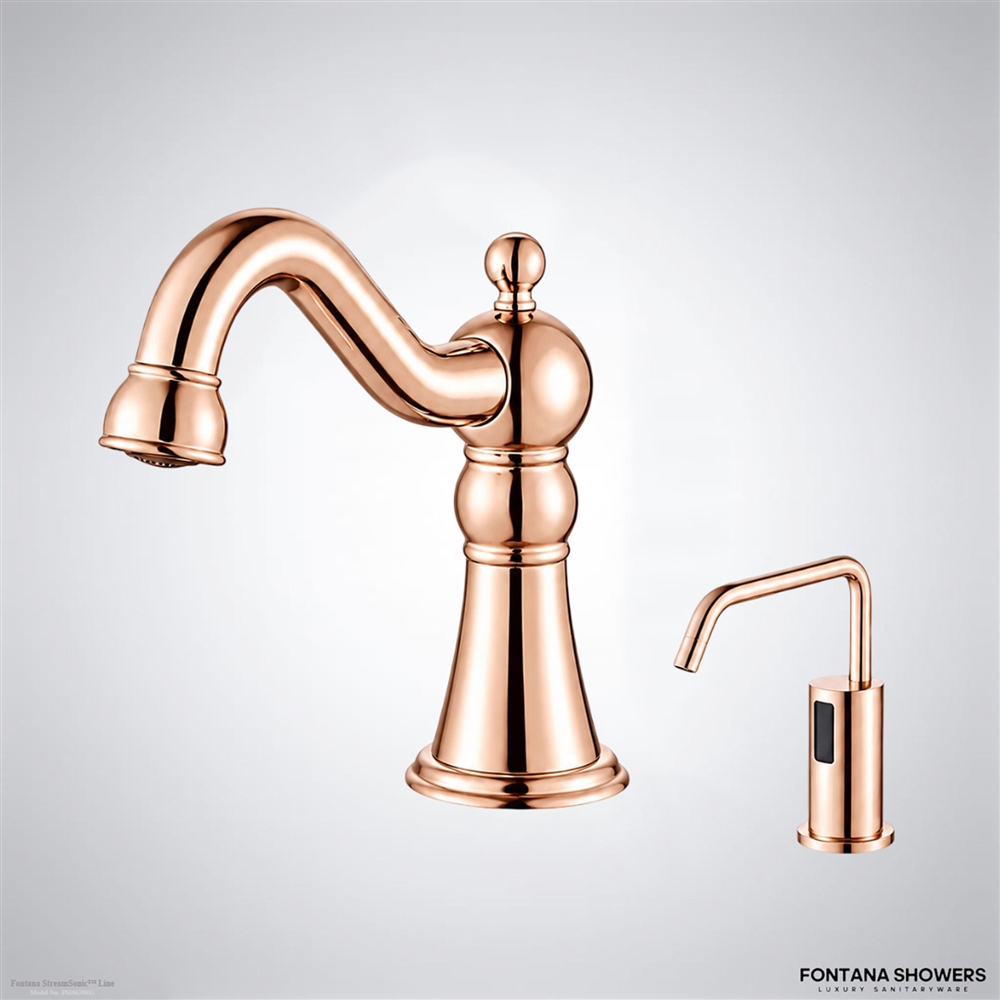
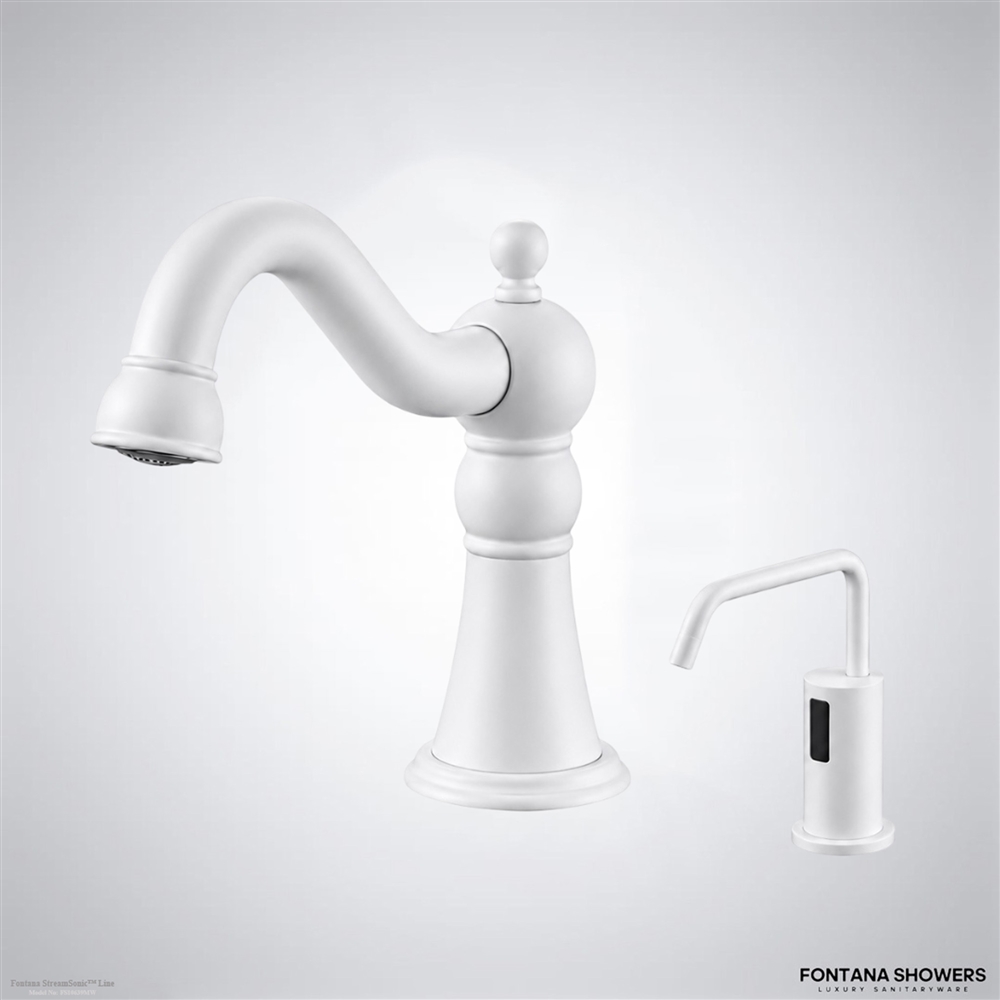
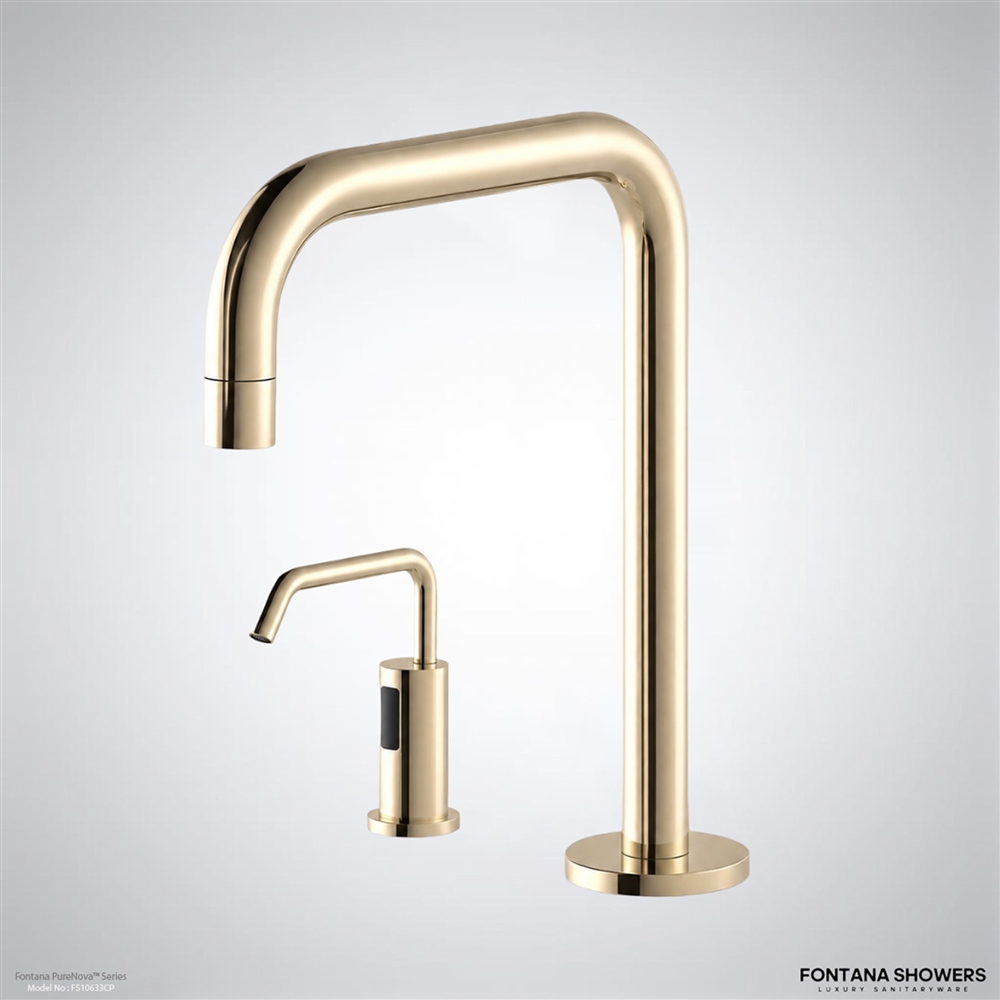
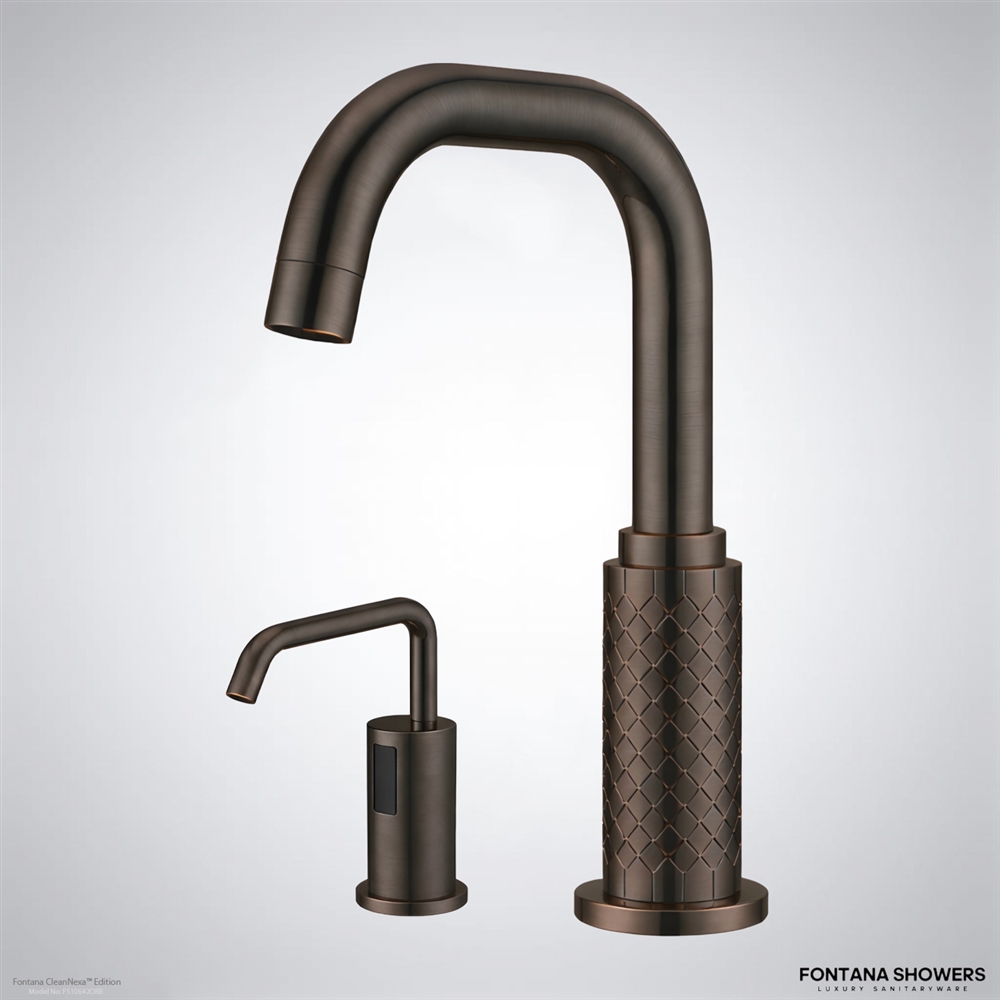
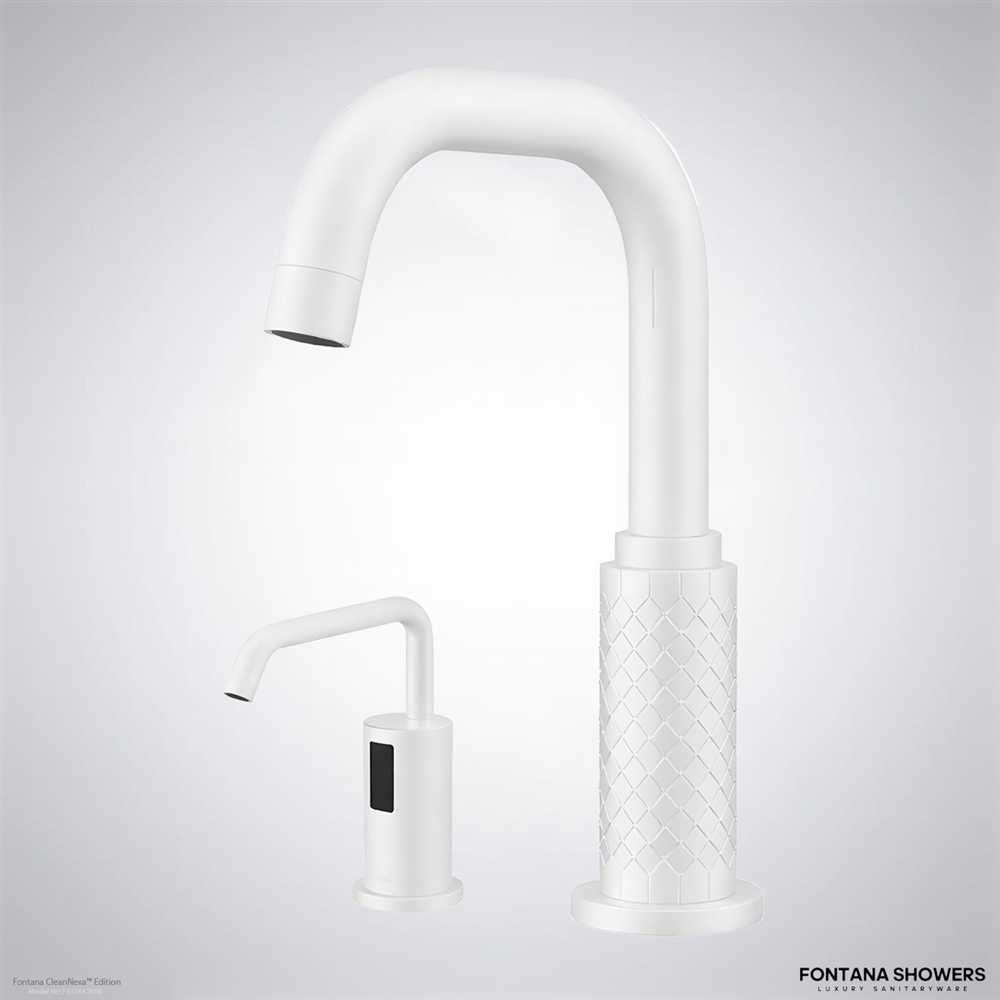
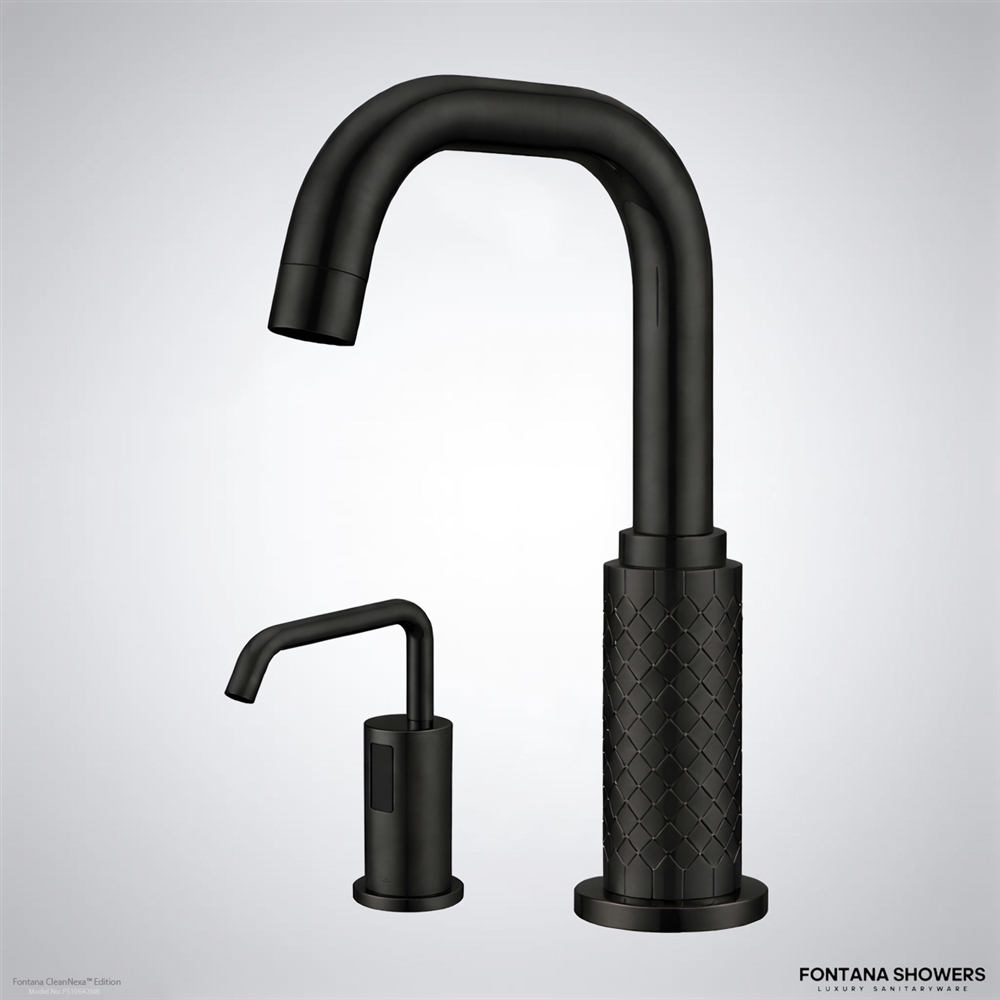
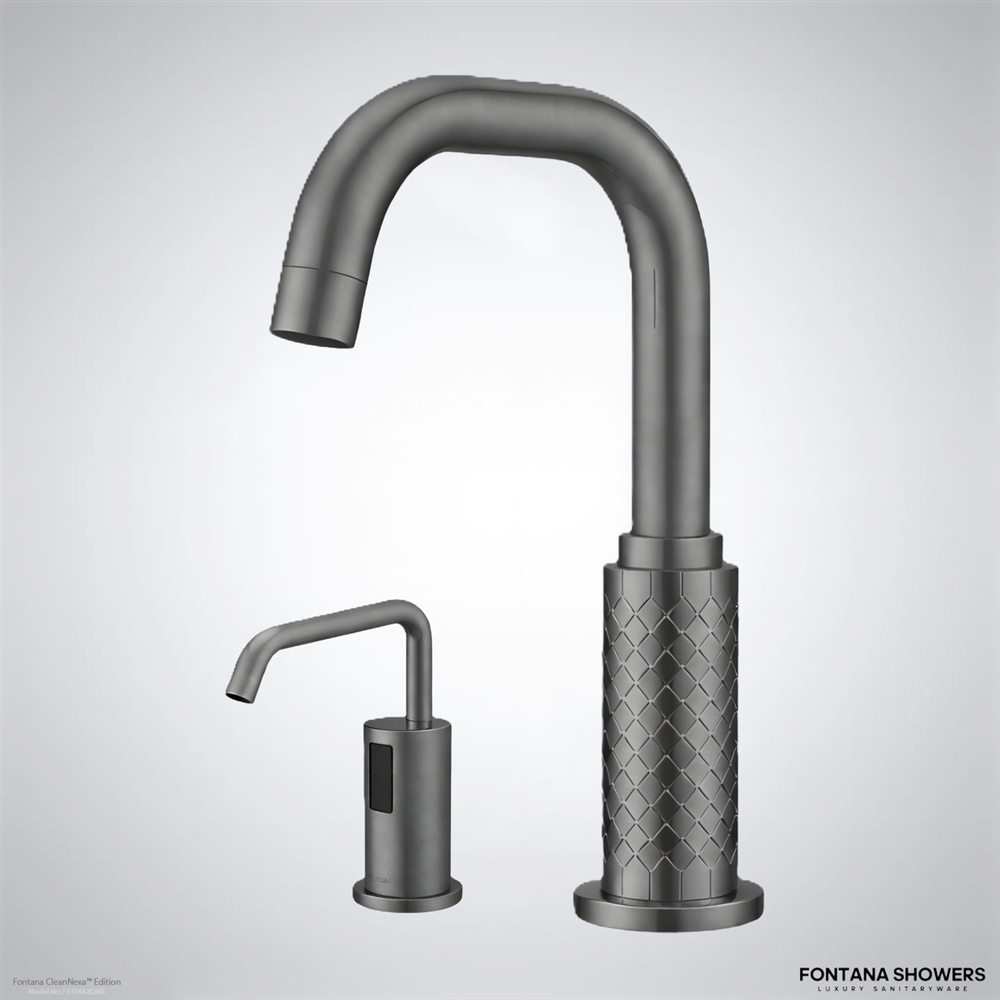
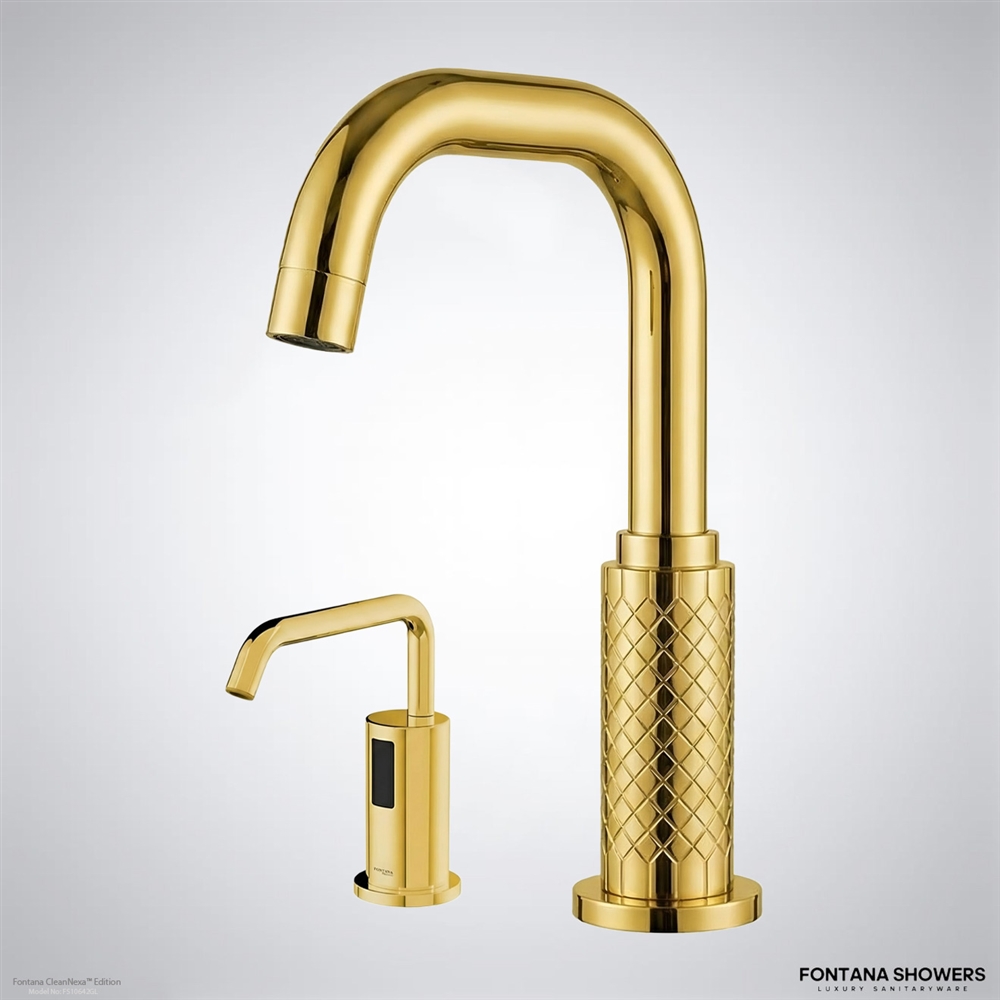
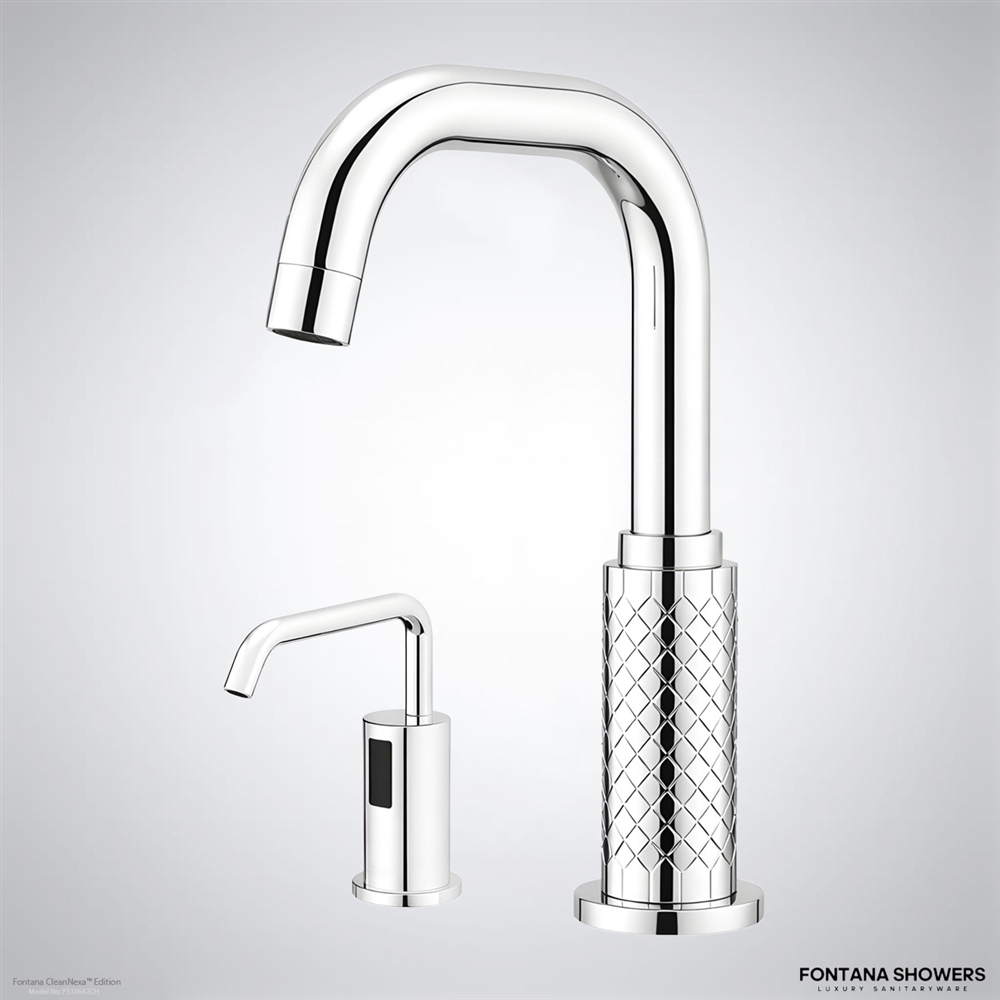
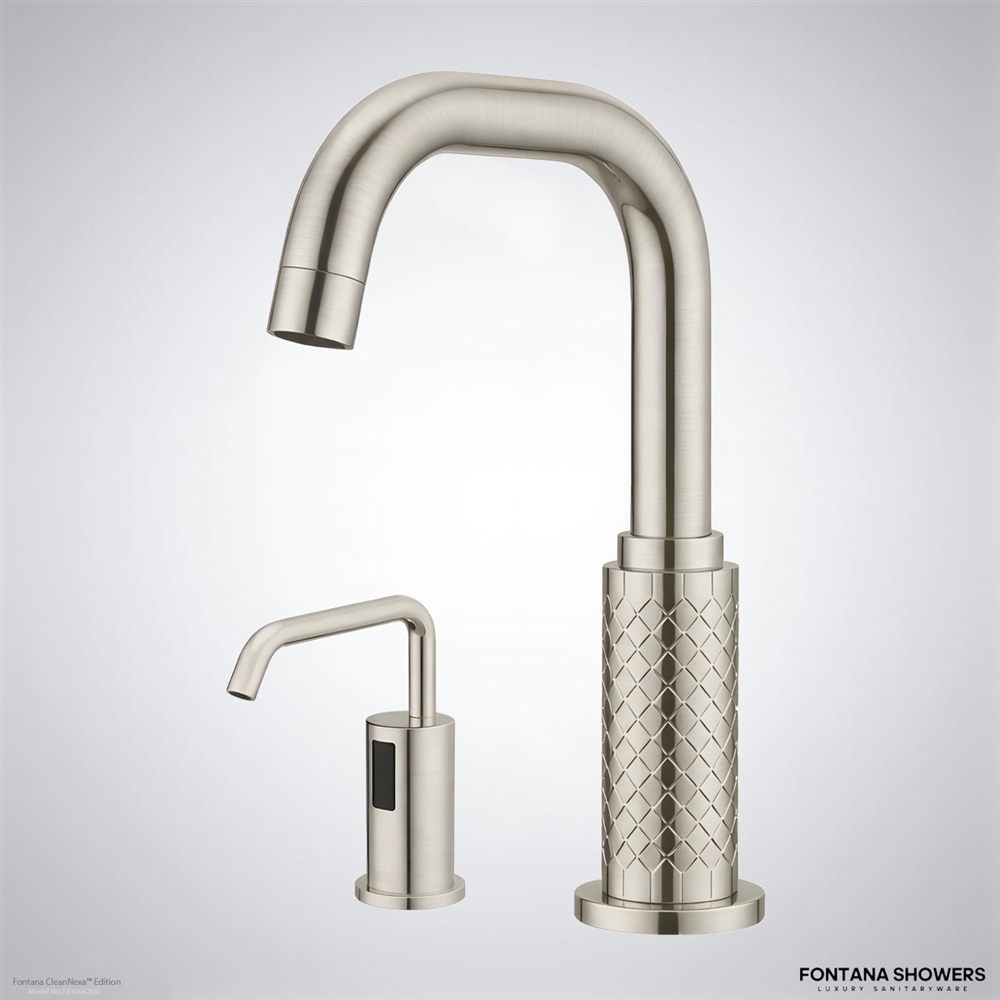
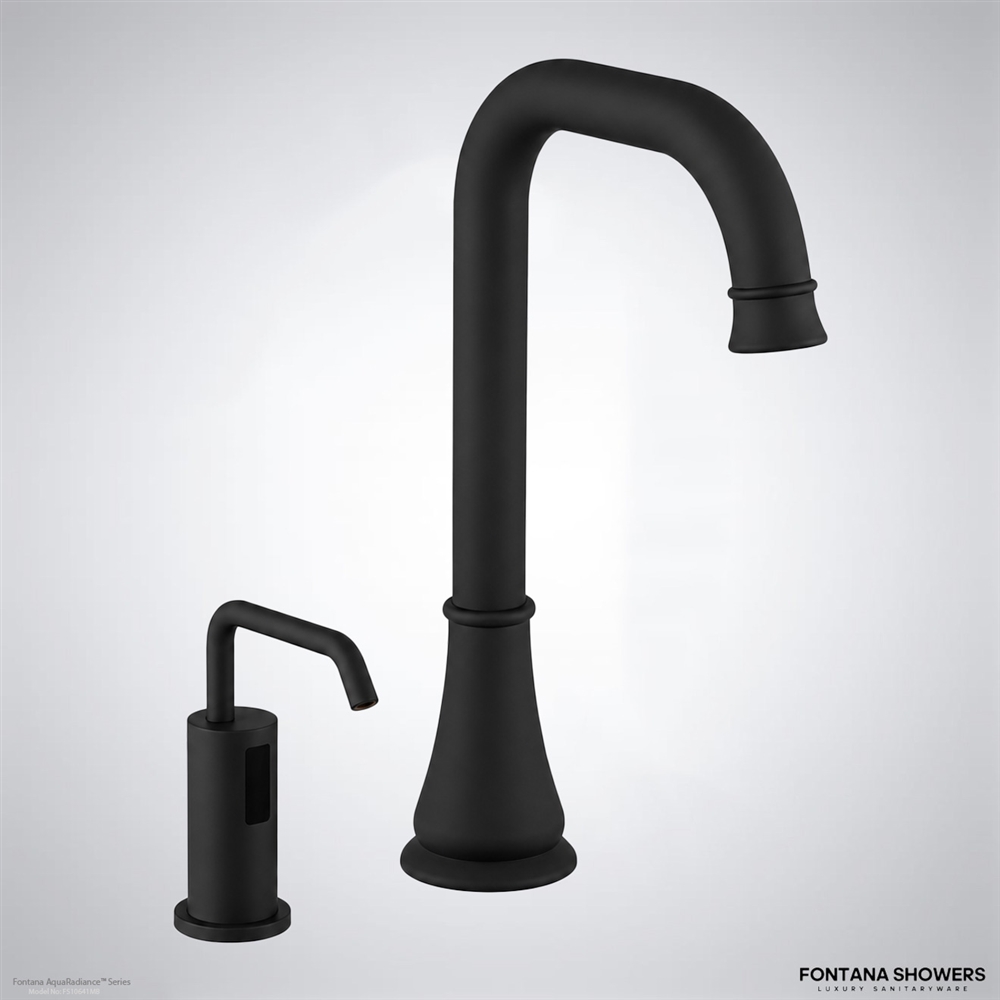
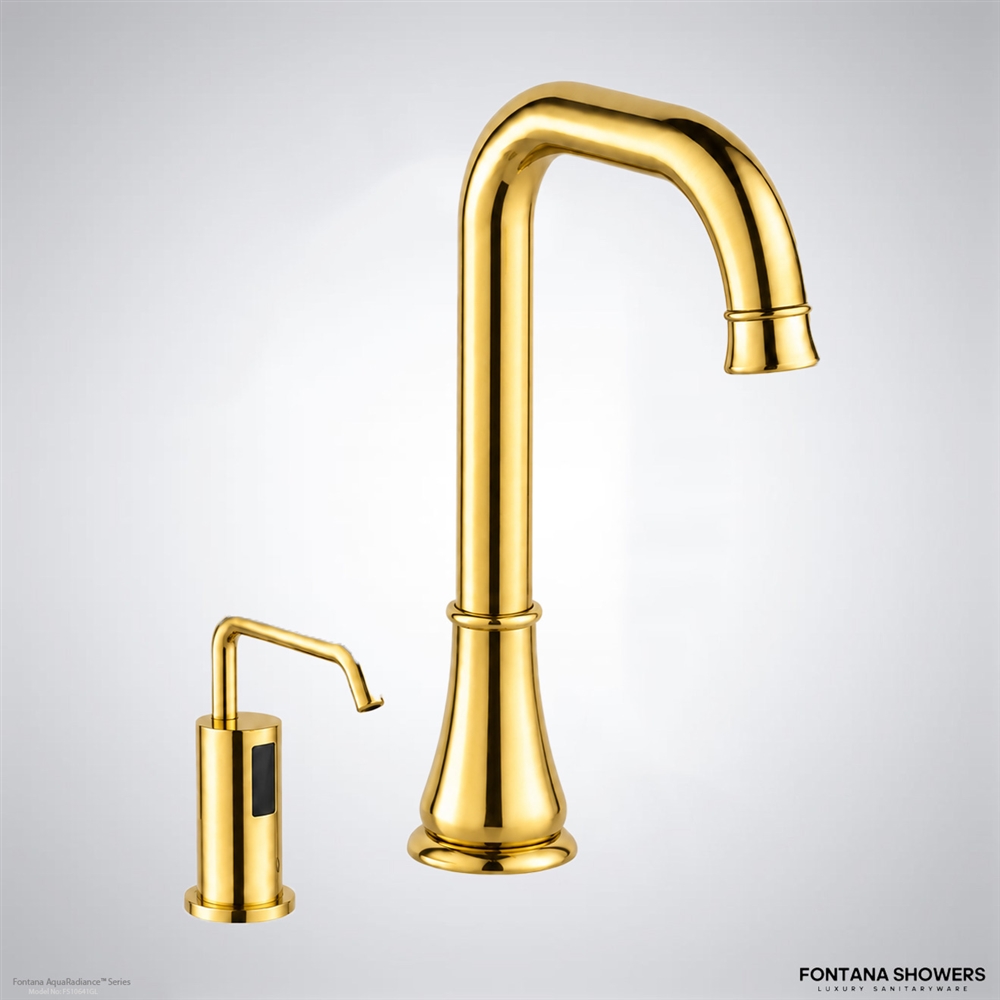
Fontana maintains commercial sensor faucet selections across multiple architectural finishes rather than limiting touchless fixtures to a single institutional appearance. Available collections include options such as chrome, brushed nickel, matte black, oil-rubbed bronze, brushed gold, and other project-specific decorative finishes depending on the model.
This breadth is particularly relevant where plumbing fixtures must coordinate with:
- Door and cabinet hardware
- Washroom accessories
- Soap dispensers
- Countertop materials
- Lighting hardware
- Shower fittings
- Hospitality design standards
- Corporate interior standards
- Multi-property finish schedules
The objective is not simply aesthetic variety. Maintaining compatible fixture configurations across different finishes can make it easier for a design team to establish a coordinated restroom finish schedule without changing the underlying touchless operating concept from one space to another.
SKU and Configuration Choice
Commercial projects rarely have identical restroom conditions throughout a building or portfolio. A transportation facility, healthcare environment, hotel, restaurant, office building, educational facility, and public restroom may each require different mounting, power, flow, finish, sensor, and service characteristics.
Fontana organizes touchless products across numerous commercial configurations, including deck-mounted faucets, wall-mounted faucets, standalone sensor faucets, coordinated faucet-and-dispenser combinations, automatic soap dispensers, and fixtures intended for different commercial applications.
Individual product SKUs provide a defined reference point for the specification.
Rather than specifying only a generic “automatic faucet,” the design team can identify the required:
| Specification Field | Required Identification |
|---|---|
| Product | Model or SKU |
| Fixture | Faucet type |
| Installation | Mounting configuration |
| Appearance | Finish |
| Geometry | Spout geometry |
| Operation | Sensor technology |
| Electrical | Power configuration |
| Water | Flow requirement |
| Connection | Water connection |
| Temperature | Mixing arrangement where applicable |
| Accessories | Associated soap dispenser or accessory |
| Documentation | BIM or specification documentation |
Using a specific product identifier reduces ambiguity between design intent, procurement, submittal review, and installation.




Technical Configuration and Project-Specific Requirements
Touchless faucet selection involves more than appearance.
Different projects can require different combinations of sensing, electrical, hydraulic, and installation characteristics. Fontana’s specification workflow allows project teams to identify requirements such as model, finish, mounting type, sensor type, power preference, required flow rate, and project stage when requesting technical documentation.
Depending on the selected model, technical options can include characteristics such as:
Power
Commercial sensor faucets may use AC, battery, or dual-power arrangements depending on model and installation strategy.
This allows the electrical and plumbing teams to determine whether the fixture should rely on hardwired power, battery operation, or another supported configuration before final coordination.
Sensor Operation
Sensor type and detection requirements can be reviewed alongside the selected basin and mounting geometry.
That coordination is important because sensor position, faucet projection, basin depth, reflective surfaces, and intended handwashing position can affect the performance of the completed installation.
Flow Requirements
Specified flow should be tied to the actual product configuration rather than assumed from the appearance of the faucet.
Where multiple flow options are available, the selected value can be coordinated with project water-efficiency objectives, applicable codes, owner standards, and user requirements.
Mounting and Rough-In
Deck-mounted and wall-mounted products impose different coordination requirements.
The design team should confirm dimensions, hole requirements, connection locations, countertop or wall construction, below-counter components, clearances, and service access using the documentation associated with the selected SKU.
Product-Level Technical Documentation
A useful commercial fixture specification should extend beyond a marketing description.
Selected Fontana product pages can provide access to several layers of product documentation, which may include:
- BIM files
- Specification sheets
- Installation instructions
- Product dimensions
- Technical characteristics
- Repair and maintenance guidance
- Product brochures
- Installation details
- Product renderings
- Power information
- Sensor information
- Flow information
Availability varies by model, so the documentation should always be confirmed for the exact SKU being scheduled.
This SKU-level approach is particularly important during submittal review. It gives the architect, plumbing engineer, contractor, and owner a common product reference rather than requiring each party to interpret a generic fixture description independently.

Specification and Submittal Support
Fontana also maintains dedicated specification and BIM resource channels for project teams.
A technical-document request can be organized around information such as:
- Exact model or SKU
- Required finish
- Mounting type
- Sensor configuration
- AC, battery, or supported power preference
- Required flow rate
- Project location
- Current project phase
- BIM requirements
- Installation documentation requirements
Typical requested materials can include Revit resources, cut sheets, installation documents, wiring notes, maintenance information, and coordination guidance.
For projects progressing through schematic design, design development, construction documents, bidding, or submittal review, identifying these requirements early helps keep the fixture selection tied to the documentation being used by the rest of the project team.
Support Across Design and Construction
Product support becomes particularly important when a touchless fixture interacts with multiple trades.
A single sensor faucet can involve the architect, interior designer, plumbing engineer, electrical engineer, countertop fabricator, general contractor, plumbing contractor, and facility-management team.
Questions may therefore extend beyond the faucet itself and include:
- Basin compatibility
- Spout reach
- Mounting location
- Supply connections
- Mixing requirements
- Transformer or battery location
- Control-box placement
- Sensor positioning
- Accessible operation
- Below-counter clearances
- Finish coordination
- Maintenance access
- Replacement components
Providing the exact SKU and project conditions gives the technical team a clearer basis for addressing these coordination issues than relying on a generic product category.
Resources for Architects, Engineers, and Specifiers
For specification work, the most useful Fontana resources are those that allow the project team to move from design intent to a defined, coordinated fixture.
These resources include BIM/Revit files, product specifications, cut sheets, dimensional information, installation documentation, finish selections, model-specific product data, and technical-support channels.
The specification process should therefore begin with the project requirements and work toward an exact SKU—not with an unsupported statement that one brand is universally preferred by architects.
A practical selection sequence is:
Commercial Touchless Faucet Coordination