
Sensor-Based Automation in Commercial Lavatory Design
Sensor-based automation in commercial lavatory design can enhance fixture operation by minimising unnecessary physical contact and providing controlled, automatic activation. Fontana touchless product documented capabilities are primarily fixture level functions, such as infrared sensing, automatic water shut-off, solenoid-controlled water delivery, selectable power configurations, and for some automatic soap dispensers, adjustable sensing distance and soap dose.
Better User Experience
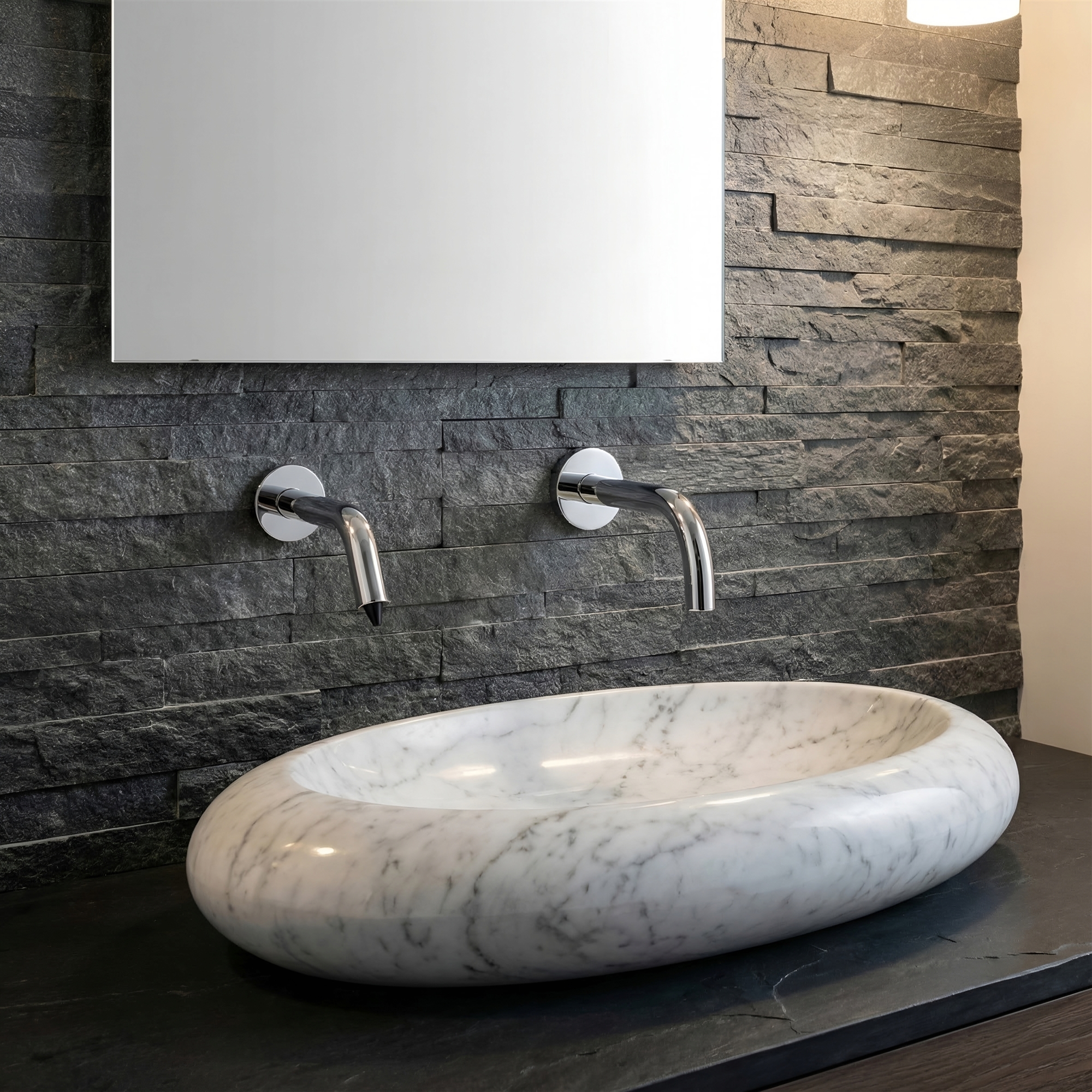
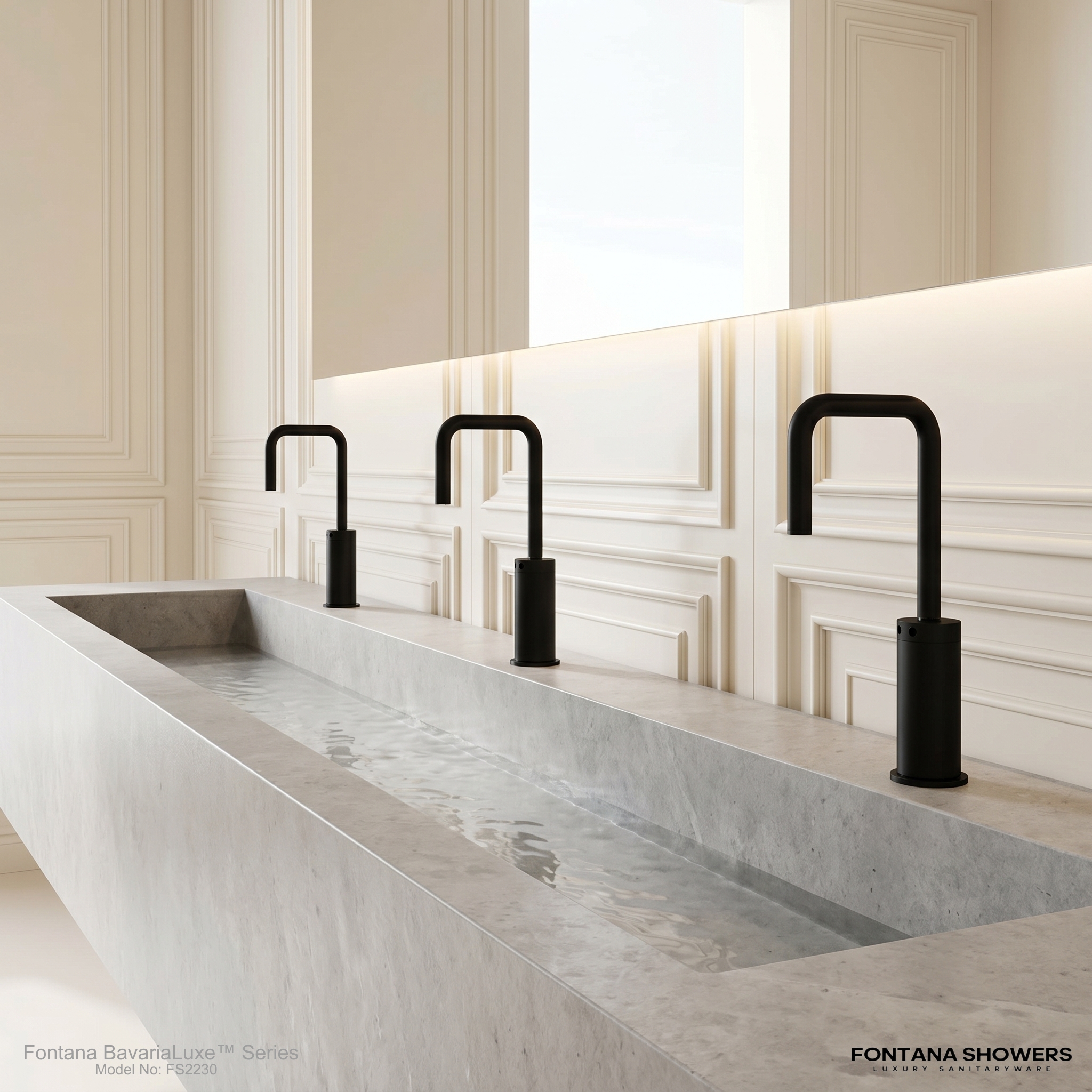
Sensor-activated faucets and automatic soap dispensers enable users to operate fixtures without touching faucet controls or dispenser levers. The infrared sensor triggers the related fixture to react when a hand passes through the pre-defined sensing area.
Such automation may make hand washing easier in commercial bathrooms, particularly where frequent use and ease of operation are important.
Hands-Free Operation
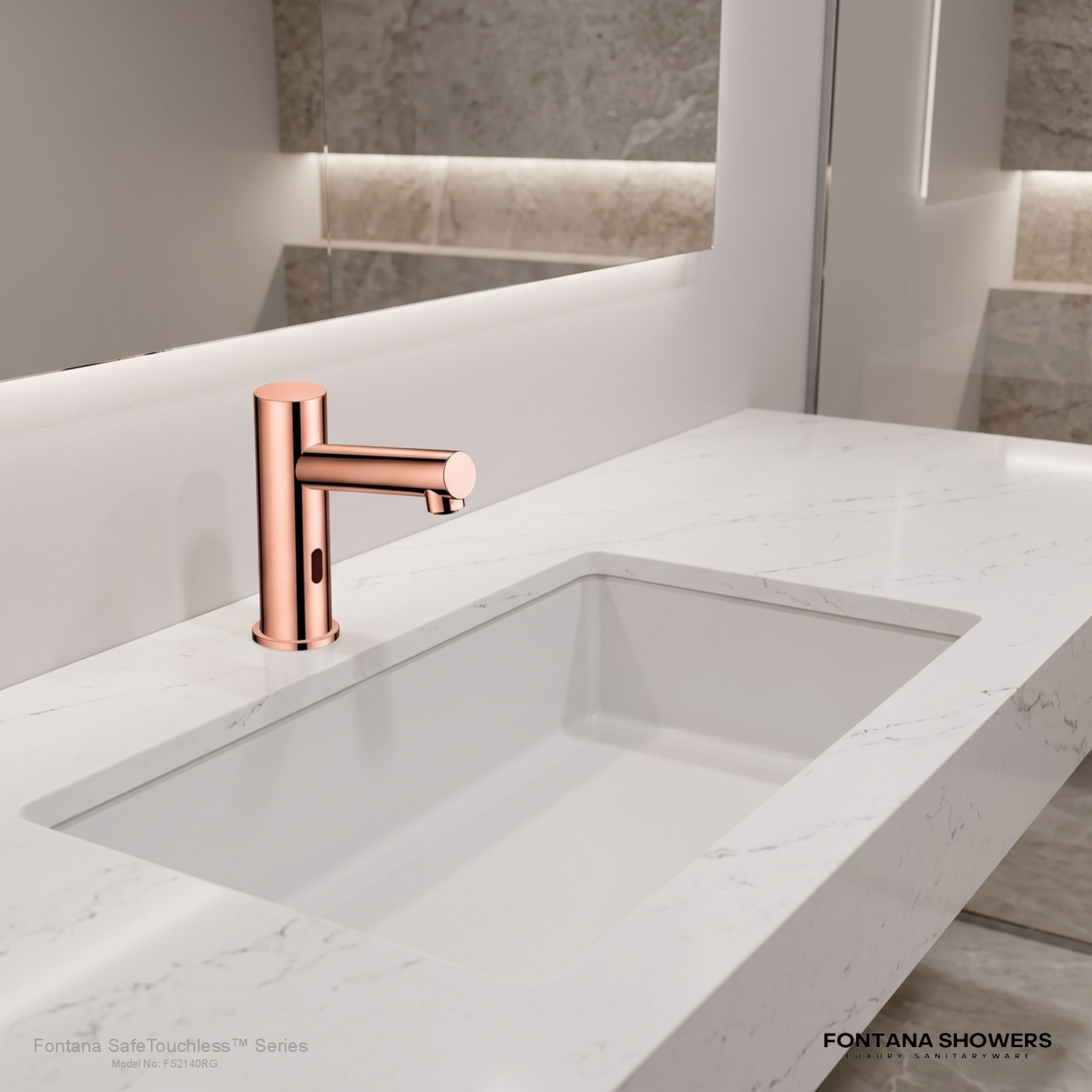
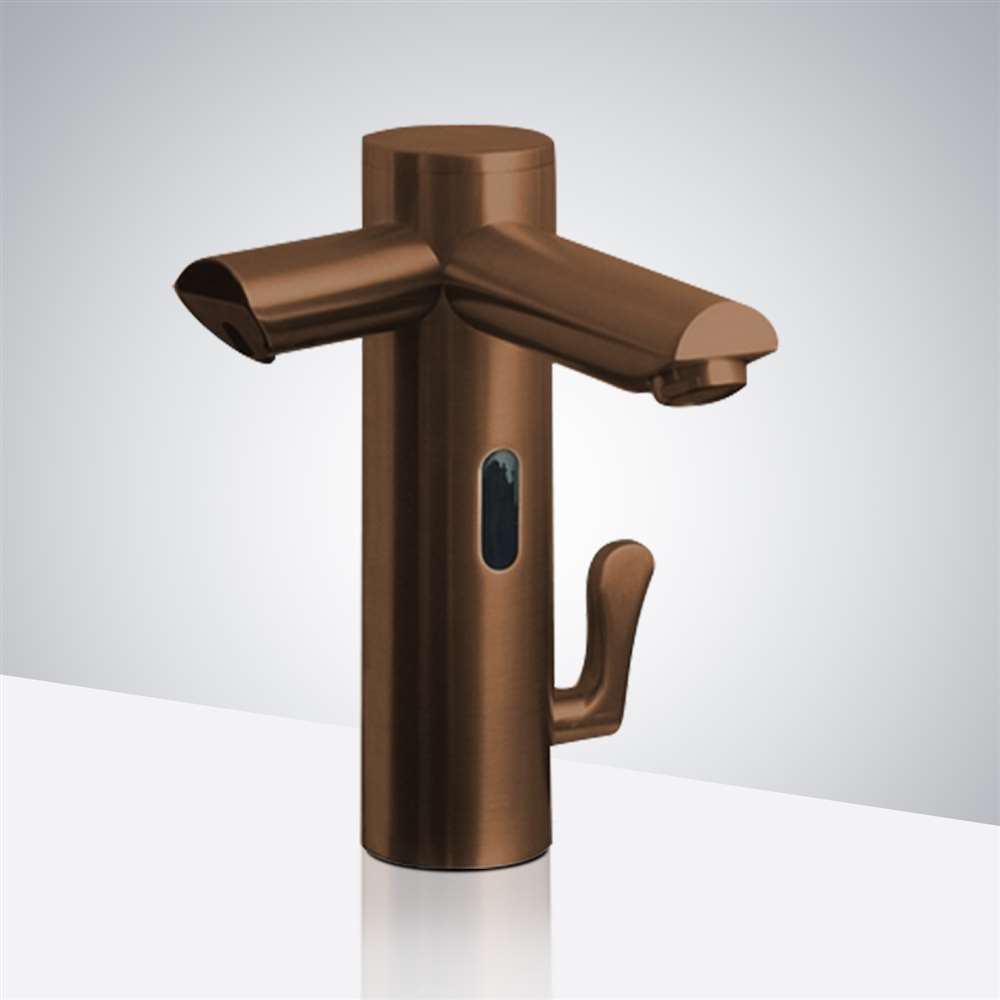
Some Fontana commercial sensor faucets use infrared motion or presence detection to turn water on without the user having to turn a handle.
The basic operating sequence is straightforward: the sensor senses the hands of the user, the fixture electronics actuate the solenoid valve and water is dispensed. The valve closes when the hands are removed from the detection area or when a configured safety timeout is reached.
Some Fontana models have a factory set 30 sec. automatic shutoff which can be adjusted. Always verify the exact sensing distance, shutoff behaviour, pressure range and electrical requirements from the specification sheet for the individual SKU.
Automatic soap dispensers work on a similar local-control principle. Active infrared sensing is used in applicable models to activate a pump that dispenses a pre-measured amount of soap.
Control Water Usage
The primary water control benefit of a sensor tap is automatic activation and shutoff, not continuous intelligent adjustment of the flowrate.
Water is dispensed when the sensor detects the desired user interaction and ceases when the activation condition is no longer present or when the configured timeout expires. This can help to avoid water being left running accidentally.
Actual water use and savings potential are based on the stated tap flow rate, shutoff configuration, water pressure, user behaviour, traffic level and operating conditions. Water savings percentages should not be generalised without supporting measured project data or SKU specific test data.
Valve and Sensor Architecture
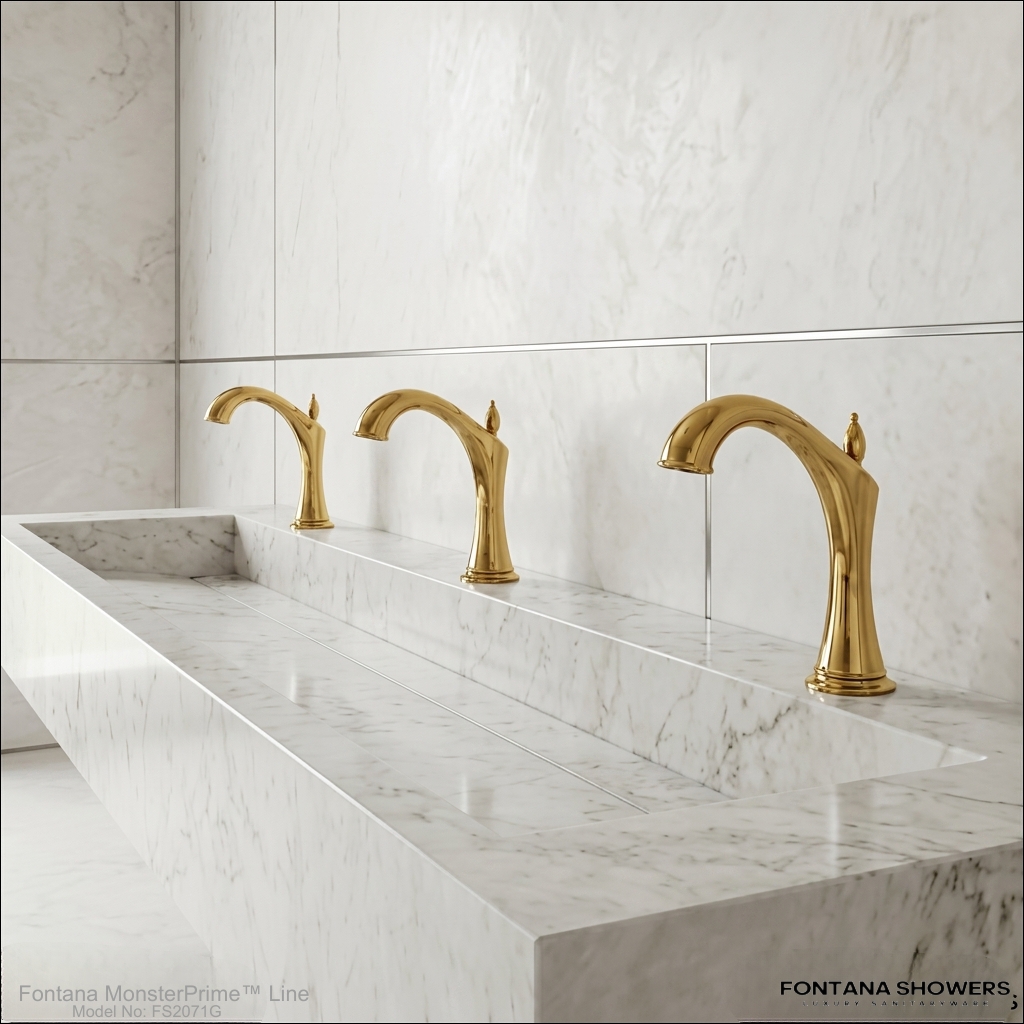
The Fontana sensor tap is based on fixture level sensing and water-control components rather than building-wide automation.
The system can comprise of:
| System Component |
|---|
| Infrared hand recognition sensor |
| Electronic sensor or control elements |
| Solenoid valve controlling the water supply |
| Flexible supply connections and related plumbing parts |
| AC, DC, battery, or mixed power options depending on SKU |
| An adjustable or defined automatic shut-off period on applicable models |
This architecture allows local fixture operation automatically without requiring the user to physically operate the conventional tap handles.
Configuration of Power

The power architecture is based on Fontana model. Some commercial sensor faucets list AC and DC operating options . Some configurations can be battery operated .
For instance, some models are AC 110 V and DC 6 V operation. Others, hardwired or battery compatible versions are available.
Don’t assume that each Fontana sensor tap has the same power supply requirements. Power requirements should be specified and coordinated with the electrical and plumbing drawings.
Energy-saving electronics can also be used in battery-powered designs to prolong battery service life. Verify the product selected for type, quantity, voltage and service requirements expected.
Soap Dispensing automatically
Fontana commercial automatic soap dispensers use active infrared sensors and electrically powered pumps.
Some models keep track of features like:
| Feature | Feature |
|---|---|
| Active infra-red sensing | Sensor operation self-tuning |
| adjustable detection distance | Peristaltic Pump Systems |
| Battery or AC/DC Powered | Adjustable amount of soap |
| Different reservoir sizes | Compatibility with the specified ranges of liquid-soap viscosity |
For example, some commercial dispenser models specify an adjustable soap dose per dispenser activation of approximately 0.5 mL to 1.5 mL.
If an optional remote control is available, the specified function is to set local fixtures such as sensor range or dispense quantity. This shall not be called internet-based remote monitoring, BMS integration or facility-wide remote management unless such capabilities are specifically documented for the selected SKU.

Model-Specific Tuning
The products of Fontana are available with setting of some operating parameters during installation or commissioning.
The adjustable parameters may include, depending on the model:
- Detection range of sensor
- Automatic shutoff time
- Quantity of soap dispensed
- Sensing range of soap dispenser
These are local fixture settings. They should not be described as automatic adaptation to occupancy levels, peak lavatory traffic, handwashing duration, or building demand unless the individual product documentation specifically provides that functionality.
Maintenance & Service
Fontana product documentation includes specification sheets, installation instructions and repair or maintenance resources for some commercial sensor fixtures. Other models of faucets identify water-resistant solenoid housings and replaceable or serviceable fixture parts.
Thus, routine maintenance can be scheduled around the actual physical system: sensor, power supply, solenoid valve, plumbing connections, hoses, aerator or outlet components, soap pump, tubing and reservoir if applicable.
Claims for maintenance should be restricted to documented procedures for inspection and servicing. The standard Fontana sensor fixtures should not be referred to as predictive failures, auto-generating maintenance schedules, sending condition data to a cloud platform, or predictive maintenance, but if a specific product is documented to do so, it should be stated.
No Presumed IoT or BMS Connectivity
Touchless or sensor-operated is not the same as being IoT-connected.
The existence of an infrared sensor, electronic controller, automatic solenoid valve, adjustable setting, or optional handheld remote does not in itself establish:
| Capability | Capability |
|---|---|
| Building Management System (BMS) Integration | BACnet or Modbus communications |
| Wi-Fi or Bluetooth connection | Cloud dashboards |
| Consolidated usage analytics | Remote fixture status monitoring |
| Automated servicing alerts | Predictive maintenance features |
| Changes in operation by occupancy | Automatic peak time adjustment |
Such capabilities should only appear in specifications or marketing material if they are explicitly listed for the Fontana model being discussed.
Operation under Control for Sustainability
Controlled activation, automatic shutoff, defined flow characteristics, controlled soap dosing and appropriate power selection are the start of the defensible sustainability conversation for Fontana touchless faucets and automatic soap dispensers.
A sensor can prevent a tap from remaining open indefinitely after use. Automatic soap dispensers are one-time use and deliver a certain amount of soap per actuation versus being 100% manual.
However, actual project-level reductions in water, soap, maintenance labour, or energy use are dependent on fixture selection, commissioning settings, occupancy, operating conditions, maintenance practices, and baseline equipment. Claims of cost savings must therefore be linked to documented product data or explicitly stated project-specific measurements.

Zusammenfassung
We should consider the automation of Fontana commercial lavatory fixtures as primarily local sensor based fixture control.
Documented features for applicable Fontana models include infrared hand detection, automatic activation, solenoid-controlled water delivery, automatic shutoff, AC/DC or battery power options, and adjustable sensing or soap-dosing parameters on selected products.
These functions can support touchless restroom operation and more controlled use of water or soap without requiring unsupported claims about IoT connectivity, cloud analytics, BMS integration, real-time occupancy optimization, remote facility monitoring, or predictive maintenance.
When writing architectural specs, engineering specs, BIM notes or product-selection content, make sure that every technology claim is backed up by the spec sheet and installation documentation for the specific Fontana SKU being specified.

