Commercial Restroom Design in 2026: Hygiene, Accessibility, Technology & Lifecycle Planning
Commercial restroom design in 2026 is being shaped by hygiene, accessibility, operating efficiency, sustainability, technology, and user experience at the same time. Architects and interior designers are looking beyond appearance alone and considering how circulation, touchless fixtures, materials, maintenance access, traffic patterns, and inclusive planning perform together over the life of a commercial facility.

Hygiene-Centric Restroom Design
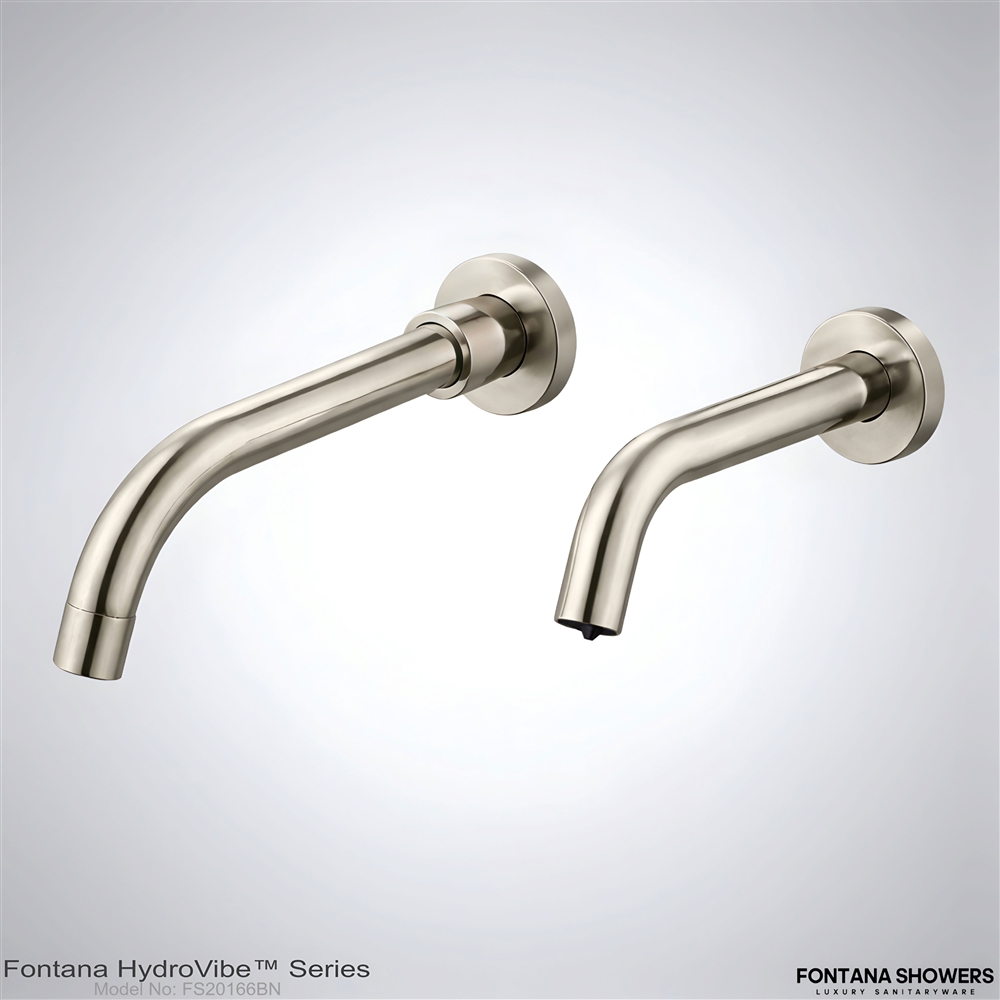
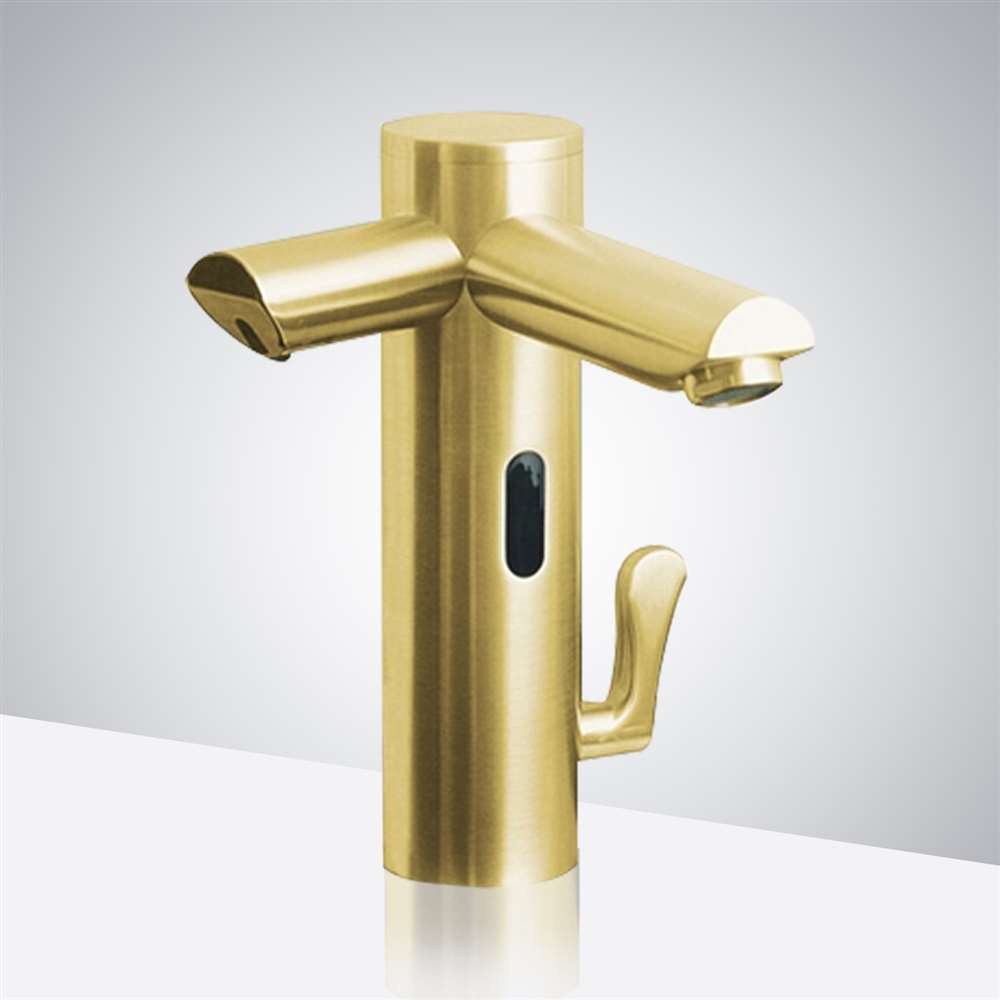
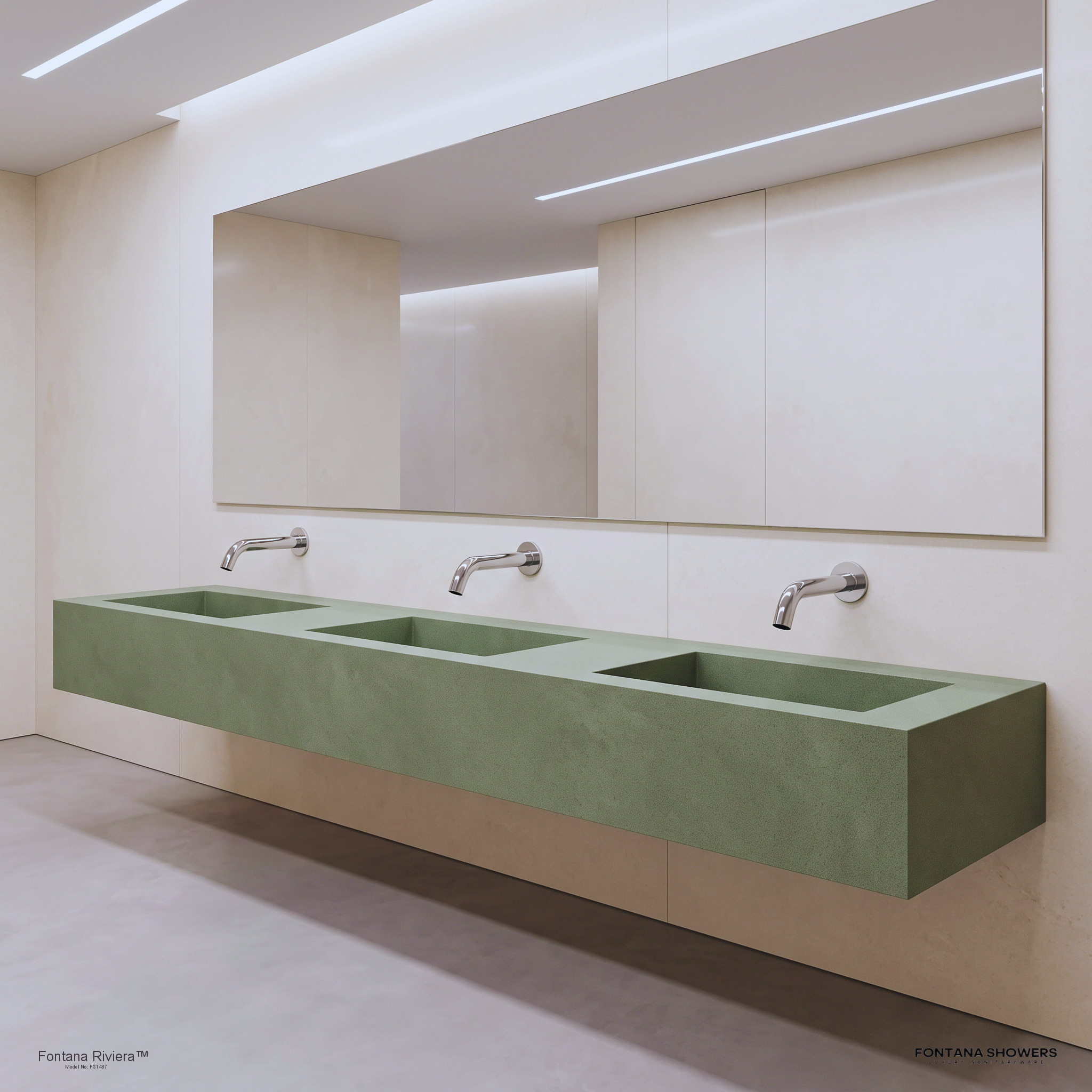
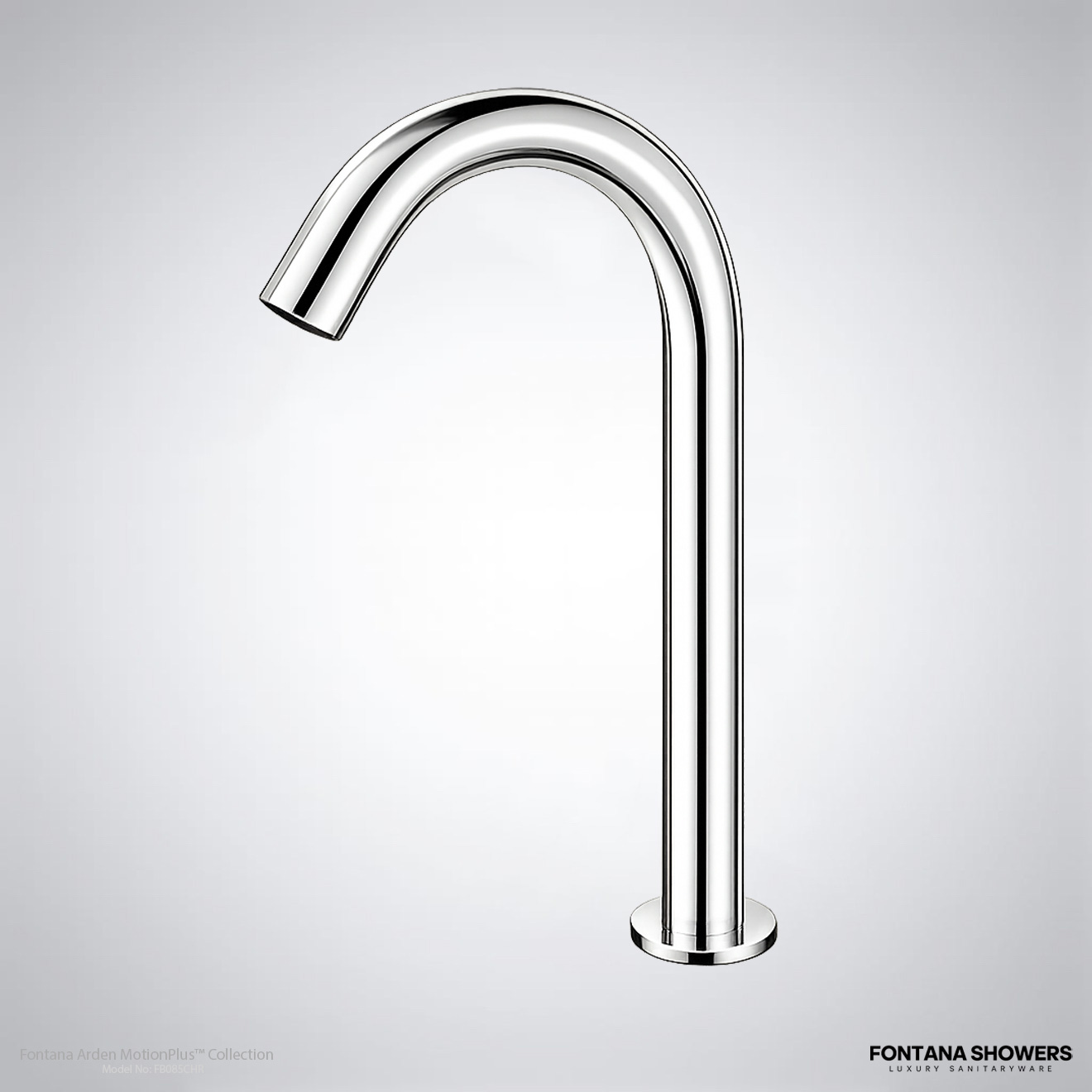
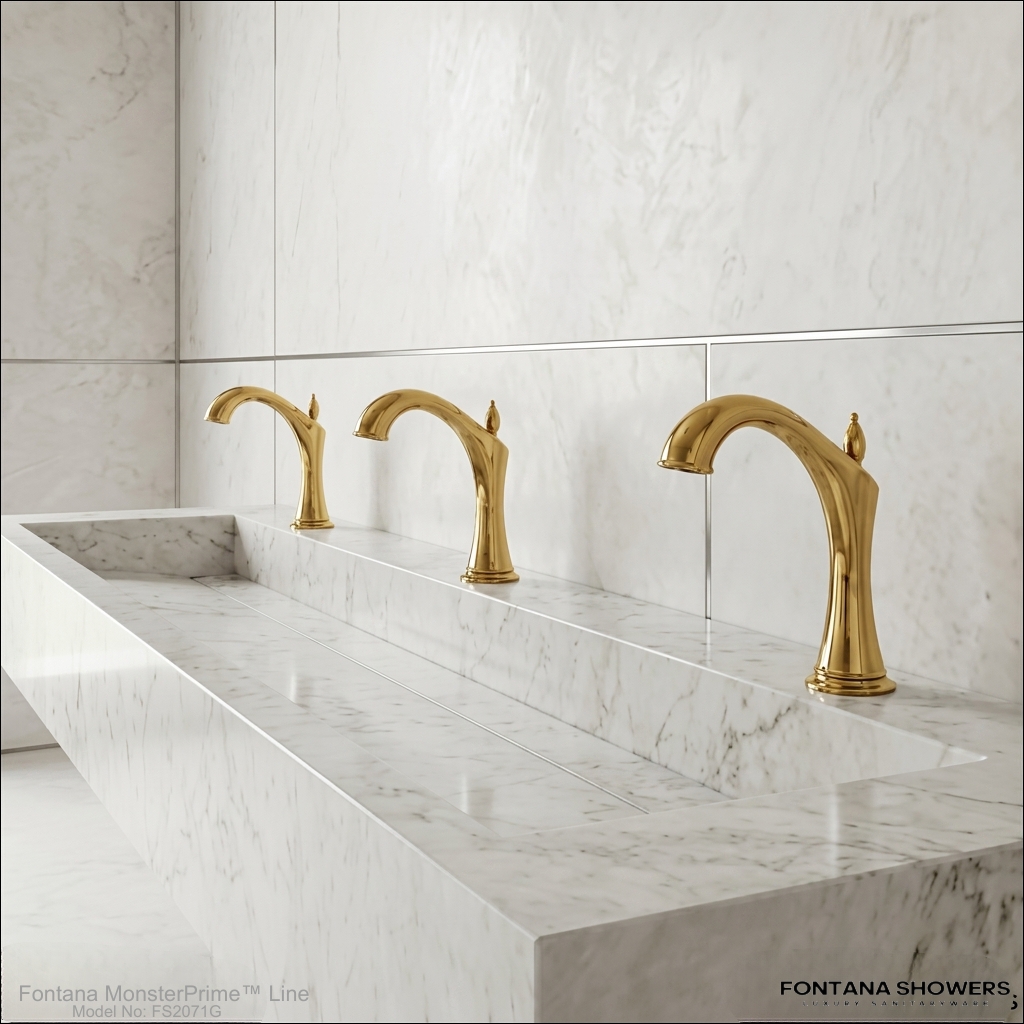
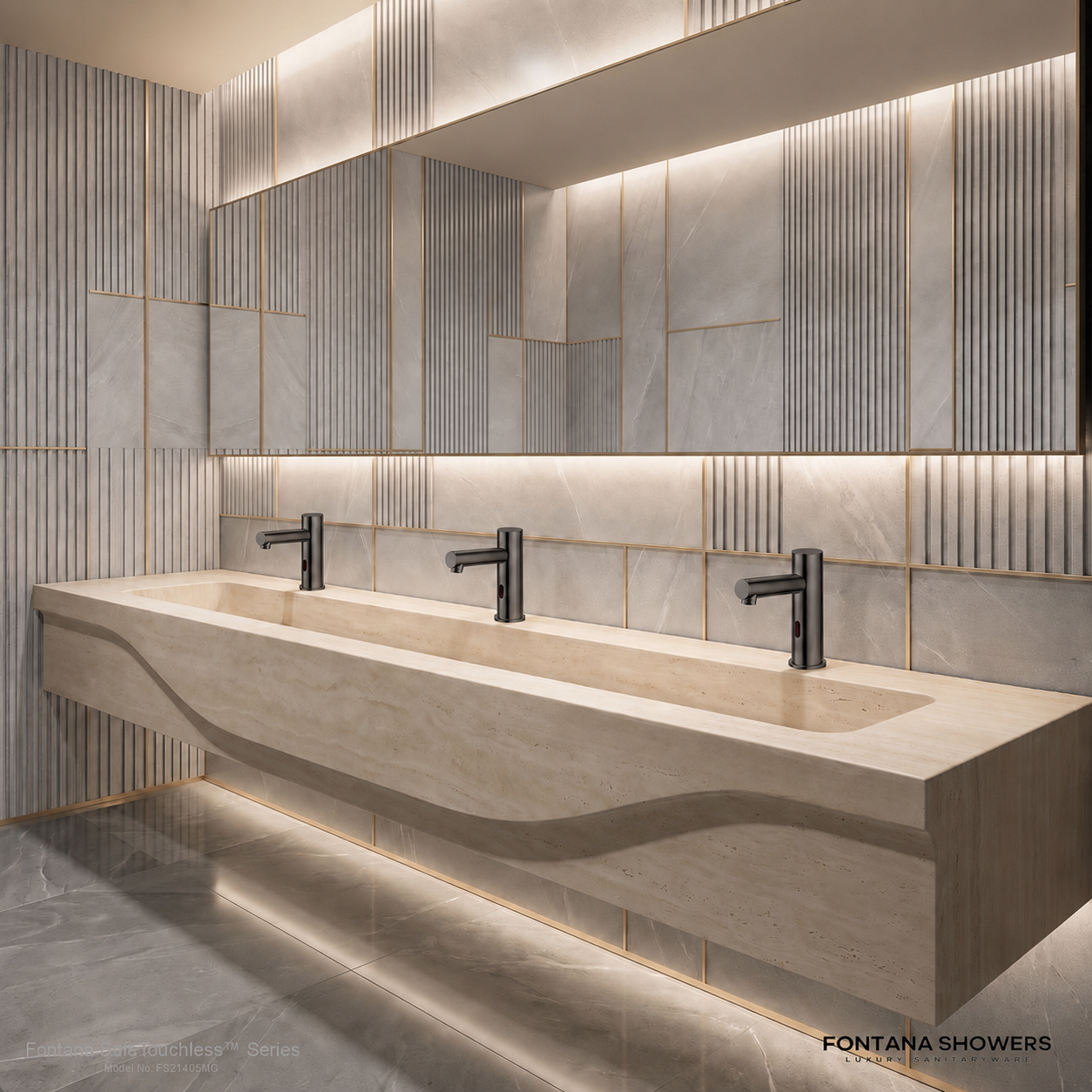
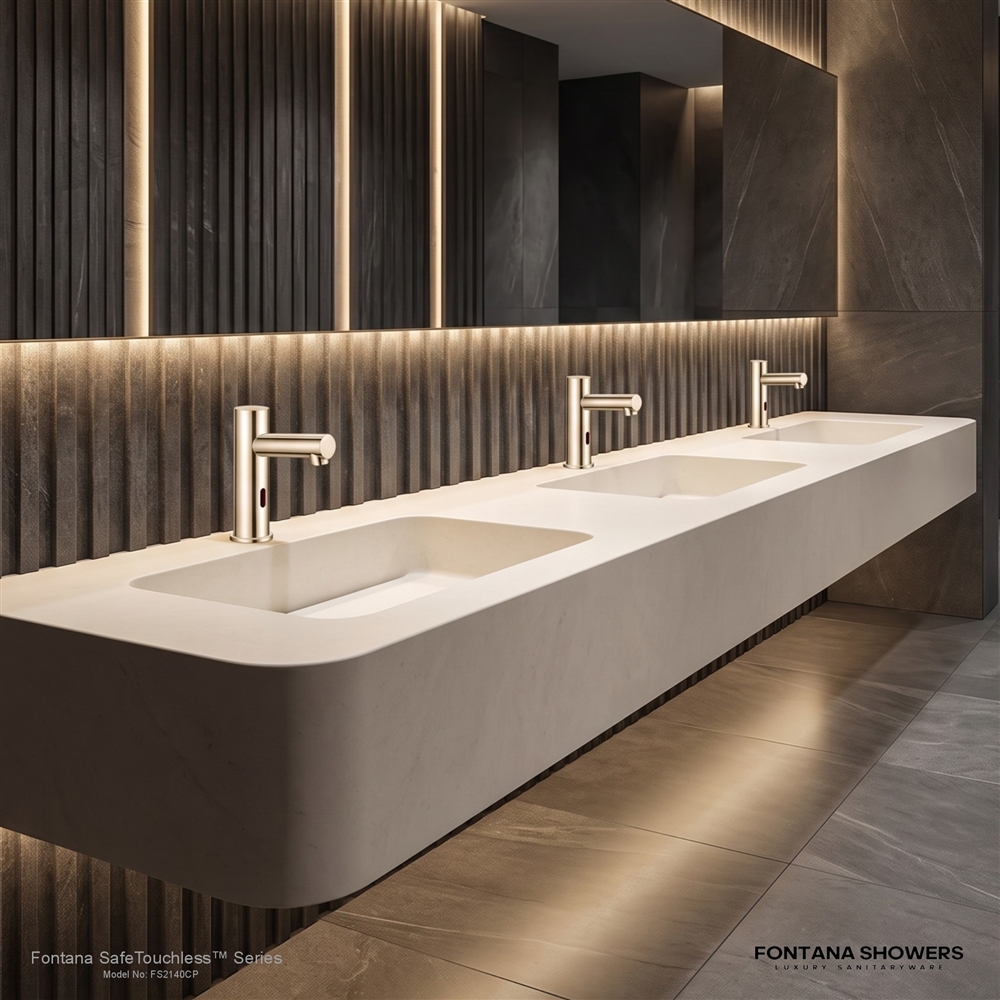
Hygiene remains a major design priority, especially as commercial facilities continue reducing unnecessary touchpoints. Touchless faucets, sensor-operated soap dispensers, hands-free drying equipment, and surfaces selected for easier cleaning can support a more sanitary restroom environment while improving user comfort and confidence.


Spatial Efficiency and Flexibility
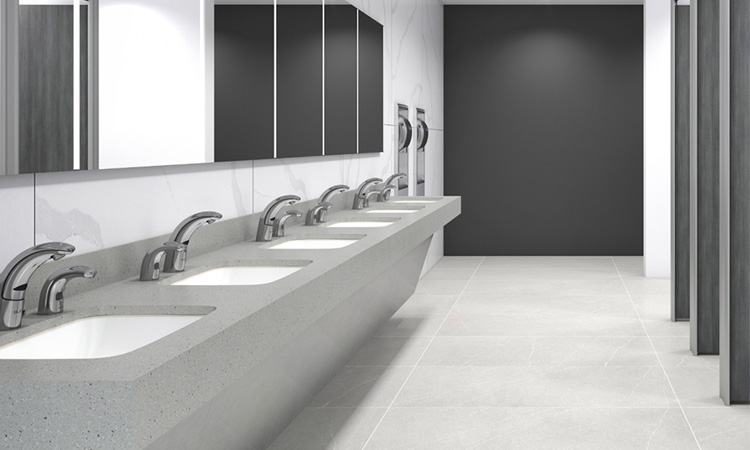
Commercial restroom planning is moving toward layouts that use floor area more deliberately. Effective concepts organize entrances, stalls, sinks, drying zones, and service access so that function and appearance are balanced. Flexible planning can also make later adjustments easier when occupancy, traffic, or user needs change.

Inclusive Design for Accessibility
Inclusive restroom design treats accessibility as part of the primary layout rather than an add-on. Accessible stalls, properly located grab bars, adequate maneuvering space, usable fixture heights, and clear circulation all matter. Visual and tactile cues can also help improve wayfinding and usability for people with visual impairments.
Sustainable and Eco-Friendly Practices
Sustainability continues to influence commercial restroom specifications. Designers are considering durable materials, energy-conscious equipment, water-efficient fixtures, and systems that reduce unnecessary resource use. A well-coordinated sustainability strategy can support conservation goals while also improving long-term facility performance.
Technology Integration
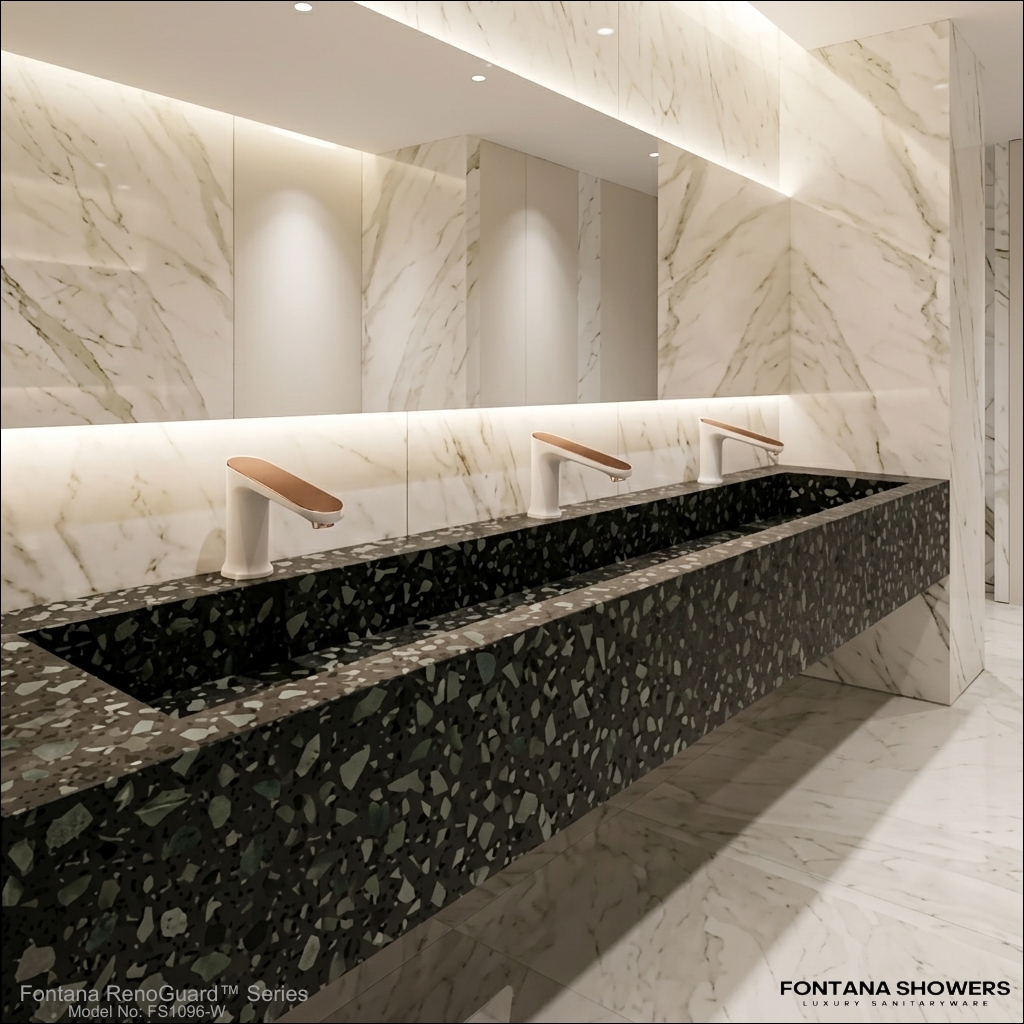
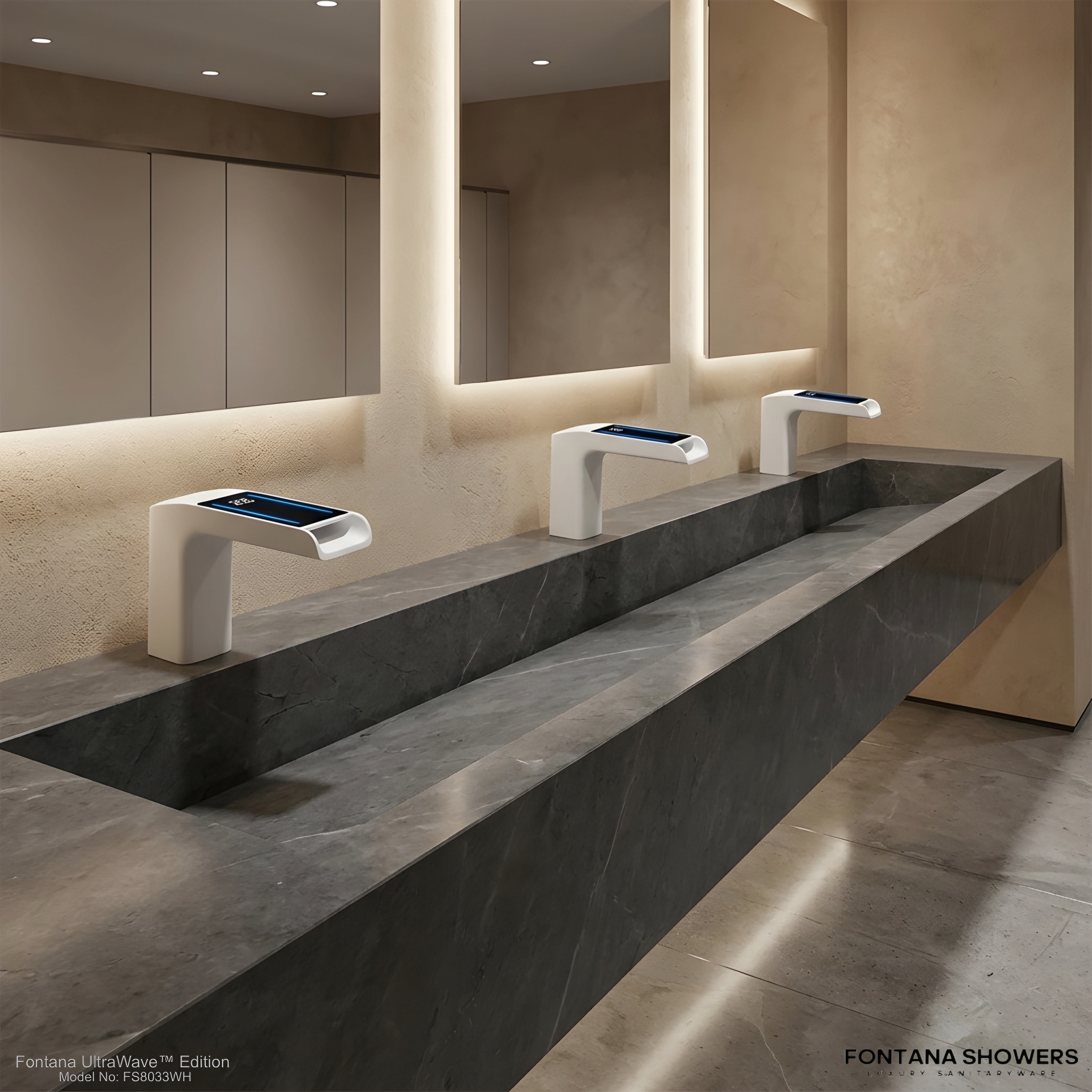
Technology is changing how commercial restrooms are planned and operated. Smart mirrors, connected lighting, sensor controls, and other digital features can be integrated where they provide a clear operational or user-experience benefit. The strongest applications are coordinated with maintenance access, reliability, and the broader restroom workflow rather than being added for novelty alone.
Biophilic Elements
Biophilic design is also influencing restroom interiors. Natural materials, daylight, planted elements, and finishes inspired by nature can make commercial washrooms feel less institutional and more comfortable. When suited to the project, these elements can contribute to a calmer and more welcoming environment.

Inclusive, Expressive & Maintainable Restroom Concepts
Gender-Neutral and All-Gender Restrooms
Restroom layouts are increasingly being reconsidered to support broader inclusivity and a more welcoming experience for people of different gender identities.
Read More
All-gender restroom planning can involve rethinking conventional stall arrangements, privacy, entry conditions, shared sink zones, and circulation. The design goal is to create spaces that are functional, secure, understandable, and respectful of diverse users.
Artistic and Unique Restroom Designs
Commercial restrooms are increasingly treated as part of the overall interior concept rather than as purely utilitarian spaces.
Read More
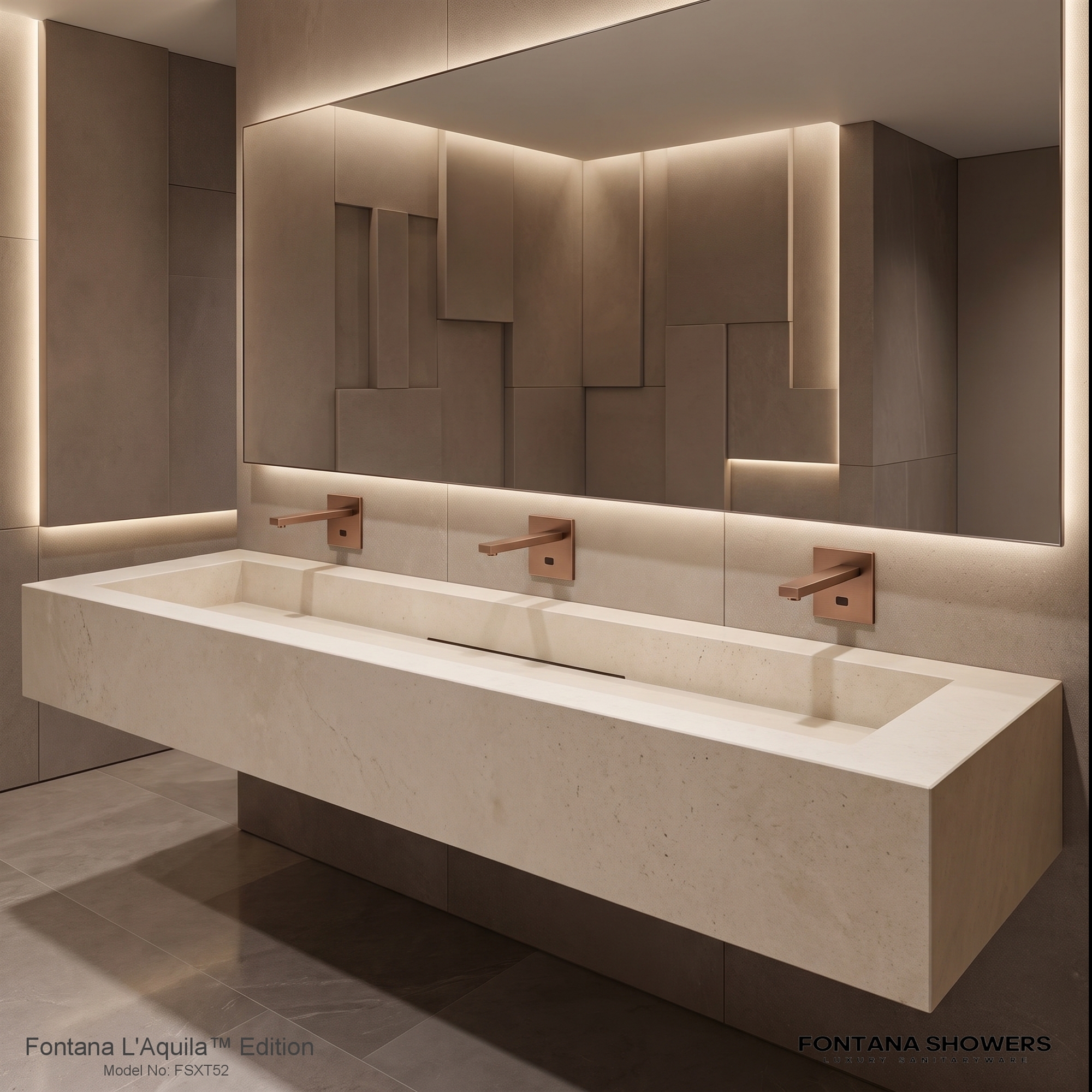
Designers may use distinctive tile patterns, coordinated finishes, custom fixtures, lighting, graphics, and material transitions to create a memorable environment while still maintaining cleanability, durability, and service access.
Smart Maintenance Solutions
Maintenance planning is becoming more data-aware, with sensors and connected systems helping facilities identify issues earlier.
Read More
Predictive or condition-based maintenance tools can alert staff to selected performance issues, reduce avoidable downtime, and help facility teams keep high-traffic restrooms in more consistent operating condition.
2026 design perspective: The strongest commercial restroom concepts combine hygiene, inclusivity, sustainability, technology, aesthetics, traffic management, and serviceability. The objective is not simply a better-looking room, but a restroom that performs more reliably for users and facilities teams over time.
Commercial Restroom Design Resources
Commercial Bathroom Design Issues & Solutions Matrix
This matrix organizes common planning, operational, hygiene, accessibility, maintenance, and coordination problems together with practical responses for offices, hospitality, healthcare, airports, schools, retail, and other high-traffic environments.
| Design Issue | Typical Cause | Impact on Space / Users | Recommended Design Solution | Best-Fit Project Types |
|---|---|---|---|---|
| Poor restroom traffic flow | Inefficient zoning, weak sink-to-stall sequencing, or crowding around entrances and wash areas. | Bottlenecks, slower movement, lower comfort, and a weaker overall user experience. | Create clear circulation zones between entry, toilet/stall areas, wash stations, drying, and exit paths. | Airports, stadiums, office towers, retail centers, schools |
| Inadequate sink and countertop planning | Too few wash positions, poor counter depth, or inconsistent spacing among faucets, soap dispensers, and dryers. | Crowding, splash problems, cluttered counters, and reduced handwashing efficiency. | Coordinate sink modules, faucet spacing, accessories, and countertop proportions for realistic traffic levels. | Corporate, hospitality, healthcare, education, mixed-use buildings |
| Weak hygiene-focused fixture strategy | Heavy reliance on manual controls and limited planning for reducing repeated contact points. | Higher cross-contact potential, lower hygiene perception, and an outdated washroom experience. | Where appropriate, specify touchless faucets, automatic soap dispensers, and sensor-based systems as part of a coordinated hygiene concept. | Healthcare, airports, offices, hospitality, public institutions |
| Poor accessibility integration | Accessibility is treated as a separate compliance exercise rather than a core planning requirement. | Reduced usability, compliance risk, and poor experience for users with different mobility or sensory needs. | Integrate required clearances, fixture heights, turning space, reach ranges, and accessible circulation from the start. | Government, healthcare, schools, offices, public buildings |
| Insufficient privacy design | Weak partition planning, exposed sightlines, limited acoustic separation, or poorly resolved stall layouts. | Lower user comfort, less sense of security, and a diminished restroom experience. | Improve privacy through partition selection, sightline control, stall geometry, entry planning, and appropriate acoustic measures. | Hospitality, offices, upscale retail, healthcare, universities |
| Finishes that do not hold up in high-traffic use | Appearance-driven specification without enough attention to moisture, cleaning chemicals, impact, or wear. | Early staining, surface deterioration, more maintenance, and declining visual quality. | Use commercial-grade, cleanable, corrosion-resistant materials and finishes suited to frequent maintenance cycles. | Airports, schools, malls, healthcare, transportation facilities |
| Lighting that feels harsh or inadequate | Poor fixture placement, uneven illumination, weak mirror lighting, or no layered lighting approach. | Uncomfortable atmosphere, weak grooming visibility, and lower perceived design quality. | Combine balanced ambient light with effective mirror-zone illumination and coordinated control. | Hotels, Class A offices, retail, restaurants, mixed-use interiors |
| Weak ventilation and odor control planning | Late mechanical coordination, poor airflow strategy, or underperforming exhaust design. | Reduced comfort, poor air quality, and negative user perception. | Coordinate HVAC and restroom planning early so exhaust, air movement, and odor control align with occupancy and layout. | Healthcare, hospitality, offices, airports, entertainment venues |
| High-maintenance design details | Hard-to-clean edges, exposed joints, splash-prone accessories, and inaccessible service zones. | More janitorial labor, faster visual decline, and higher lifecycle cost. | Favor simple geometries, cleanable transitions, accessible service locations, and coordinated fixture placement. | Schools, offices, healthcare, retail, transportation facilities |
| Poor handwashing sequence design | Soap, faucet, drying, waste, and circulation are planned independently instead of as one workflow. | Drips across walking areas, inefficient movement, congestion, and lower satisfaction. | Plan the wash station as a complete hygiene sequence with logical soap, water, drying, and waste placement. | Airports, office buildings, hospitality, healthcare, education |
| No design response to peak-hour demand | Fixture counts and room sizes are based on generic assumptions instead of realistic traffic peaks. | Queues, overcrowding, fixture strain, and reduced comfort during busy periods. | Size layouts and wash-station capacity around expected peak occupancy, circulation demand, and project-specific traffic patterns. | Stadiums, airports, malls, campuses, public event venues |
| Outdated aesthetics and weak brand alignment | The restroom is treated only as a back-of-house utility zone with little connection to the overall interior identity. | Lower perceived building quality, weaker visitor impression, and inconsistent brand experience. | Coordinate finishes, signage, lighting, fixtures, and detailing with the design language used throughout the project. | Hotels, offices, branded retail, restaurants, mixed-use developments |
| Weak sustainability strategy | Water efficiency, maintenance, material lifecycle, and operating resource use are not considered together. | Higher utility demand, weaker environmental performance, and missed sustainability opportunities. | Use water-efficient fixtures, durable materials, maintainable systems, and long-life design strategies where appropriate. | LEED-oriented projects, corporate campuses, healthcare, higher education, civic buildings |
| Insufficient coordination between design and plumbing systems | Architectural layouts and plumbing infrastructure are developed separately with limited cross-disciplinary validation. | Installation conflicts, awkward fixture placement, compromised detailing, and change-order risk. | Coordinate architects, interior designers, MEP engineers, and contractors early through spec-driven planning and fixture-layout review. | Ground-up builds, major renovations, hospitality, healthcare, commercial fit-outs |
Design Priority
Balance traffic flow, hygiene, accessibility, durability, appearance, and maintenance rather than optimizing for aesthetics alone.
Operational Value
Good planning can reduce congestion, improve cleanability, support user comfort, and strengthen long-term facility performance.
Planning Scope
These principles apply to hospitality, healthcare, offices, schools, transportation, public facilities, and other high-traffic restroom settings.
Coordination
Fixture strategy is strongest when architecture, interiors, plumbing, maintenance, and operations are considered together.
Modern Sensor Faucet & Restroom Hygiene Systems
Explore touchless restroom fixtures, automatic soap dispensers, and sensor-faucet resources created for hygiene-focused commercial environments.
Automatic Soap Dispenser Troubleshooting
Professional troubleshooting guidance for touchless soap dispenser systems used in commercial restrooms.
Restaurant Touchless Soap Dispenser Pros & Cons
Practical considerations for touch-free handwashing and sanitation systems in restaurant environments.
Deck Mount Sensor Faucet Collection
Commercial deck-mounted touchless faucets for public restroom and wash-station applications.
Best Automatic Soap Dispenser Collection
Automatic soap dispenser options intended for commercial hygiene and facility-management needs.
Oil Rubbed Bronze Auto Soap Dispenser Sets
Bronze-finish automatic soap dispenser systems suited to hospitality and design-forward interiors.
Automatic Faucet Repair Guide
Sensor faucet troubleshooting information for continuous-flow and activation-related problems.
Top 10 Best Automatic Soap Dispensers
A collection of automatic dispenser options for commercial facility applications.
Gold Sensor Faucet & Soap Dispenser Sets
Gold-finish touchless restroom systems for premium hospitality and commercial projects.
Lifecycle Cost Engineering with Fontana MultiFeed Systems®
For facility managers, engineers, and commercial building operators, the value of a centralized soap distribution system extends beyond initial purchase price. Fontana MultiFeed Systems® are positioned around reducing repetitive refill labor, simplifying maintenance routines, improving inventory control, and supporting consistent restroom operation over the facility lifecycle.

Evaluating Total Cost of Ownership
Soap dispensing systems are often compared by acquisition cost alone, but purchase price is only one part of the commercial-facility investment. Labor, refill scheduling, soap inventory, replacement parts, technician productivity, maintenance access, and restroom availability can all influence lifecycle cost.
Read More
Fontana MultiFeed Systems® are designed to replace multiple independent refill points with a centralized soap distribution approach. In larger facilities, reducing repetitive refill activity can create operational value across numerous wash stations and restroom locations.
Related product families include the Fontana Touchless Series, Touchless Faucet Collections, Architect Series, Commercial Bathroom Fixtures Catalog, and the FontanaShowers Product List.
Primary Lifecycle Cost Drivers
Maintenance Labor
Time required for inspection, refill, service, and routine maintenance activities.
Soap Inventory
Managing centralized supply can simplify inventory control compared with many independent reservoirs.
Operational Downtime
Reducing the number of empty or unavailable dispensers supports more consistent restroom service.
Asset Longevity
Preventive maintenance and planned component replacement can help extend useful equipment life.

Lifecycle Comparison
| Traditional Individual Dispensers | Fontana MultiFeed Systems® |
|---|---|
| Multiple refill locations | Centralized refill location |
| Higher routine refill labor | Reduced repetitive refill activity |
| Distributed soap inventory | Simplified inventory management |
| More repetitive servicing across individual dispensers | Centralized maintenance planning |
| Greater chance of isolated empty dispensers | Improved ability to manage restroom-wide soap availability |

Building Long-Term Maintenance Strategies
Lifecycle planning should include documented refill intervals, soap-consumption tracking by restroom zone, preventive inspection of tubing and connections, replacement of worn components before failure, and periodic review of maintenance records to identify changing usage patterns.
Read More
Facilities that standardize restroom equipment across multiple locations may also simplify technician training, spare-parts management, service procedures, and maintenance documentation. The value comes from treating restroom fixtures as managed assets rather than isolated products.

Advanced Engineering FAQ
Why should commercial facilities evaluate lifecycle cost instead of purchase price?
Lifecycle cost includes recurring labor, maintenance, inventory management, replacement parts, and operating efficiency in addition to acquisition cost. Related Fontana products are available in the Commercial Bathroom Fixtures Catalog. Additional asset-management guidance is available from IFMA.
How can refill history improve lifecycle planning?
Tracking refill frequency can help facilities understand consumption patterns, plan staffing, and improve purchasing decisions. Related specification resources are available through the Fontana Product Index. Facility-operations guidance is also available from BOMA International.
Should MultiFeed Systems® be included in facility asset management programs?
Yes. Centralized soap systems can benefit from preventive-maintenance schedules, lifecycle records, inspection routines, and standardized service procedures. Additional Fontana resources are available through Commercial Collections. Commercial plumbing references are available from ASPE.
Which commercial facilities may gain the most from centralized refill strategies?
Large airports, hospitals, universities, office campuses, convention centers, sports venues, and government facilities can benefit because repetitive servicing is multiplied across many restroom locations. Additional coordinated systems are listed in the FontanaShowers Product List. Maintenance practices are also discussed by FacilitiesNet.
Commercial Restroom Fixtures for 2026 Design Trends
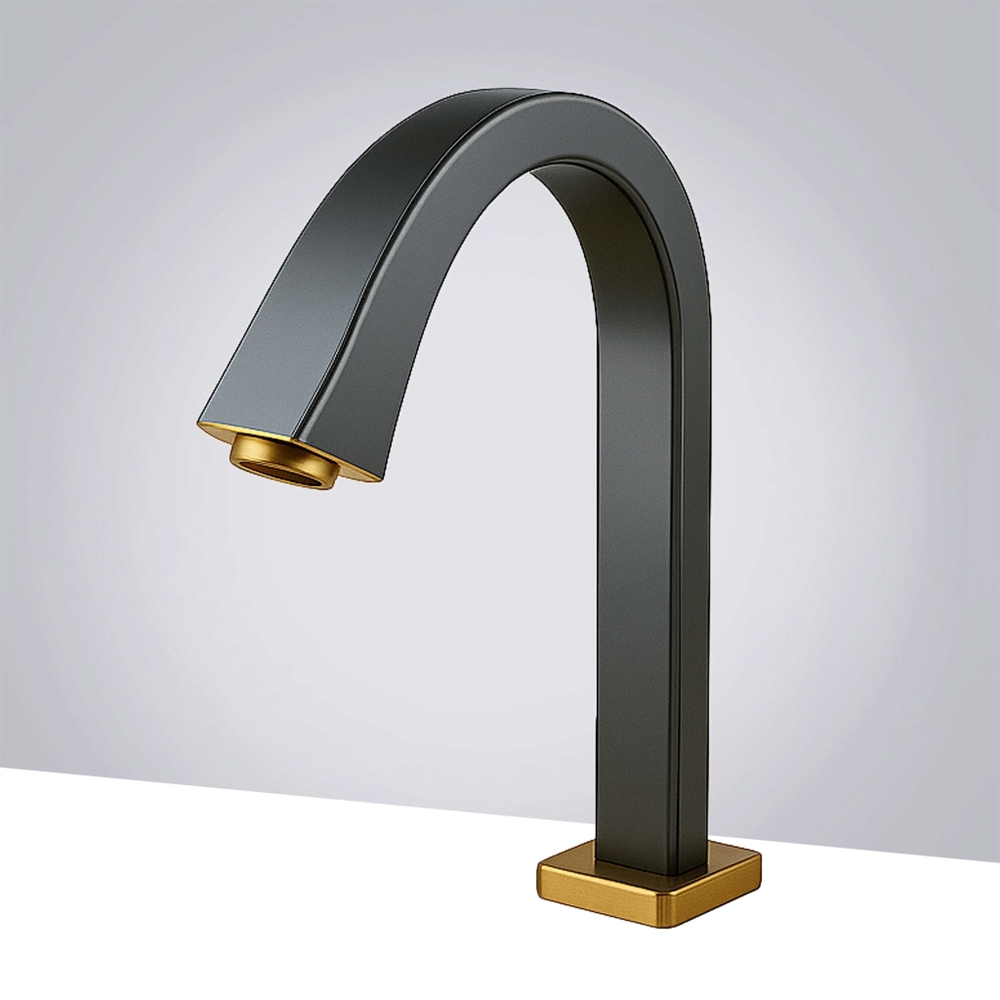
Graphite Black Touchless Faucet for Contemporary Restrooms | FS10581GB
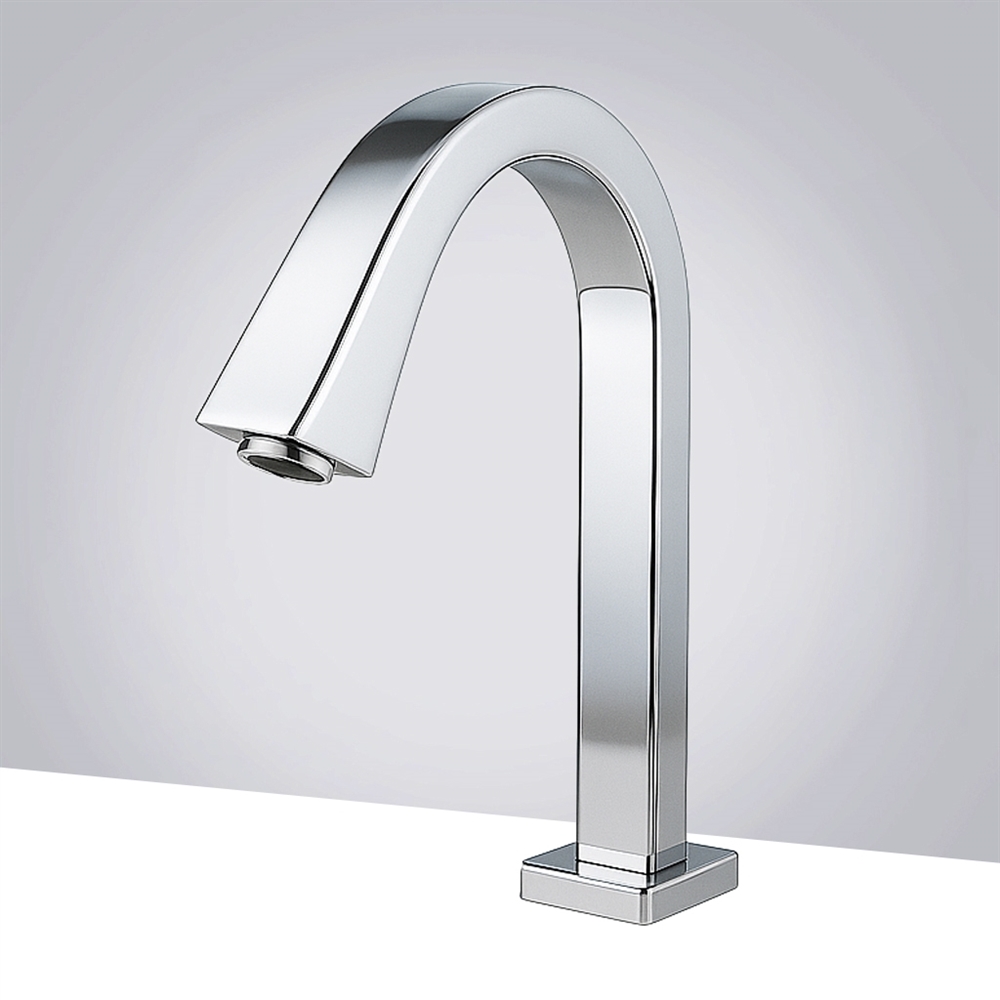
Chrome Motion Sensor Faucet for High-Traffic Restrooms | FS10580CH
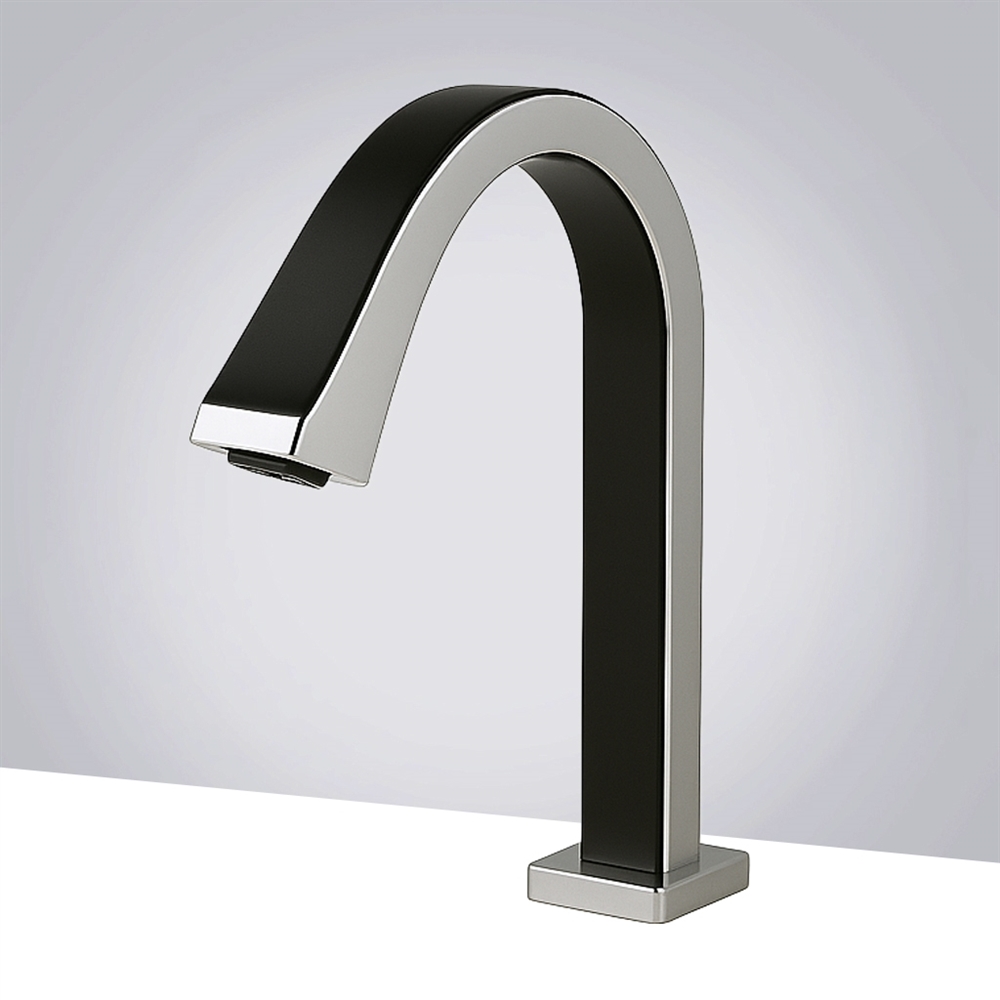
Dual-Tone Architectural Sensor Faucet for Modern Interiors | FS10579CMB
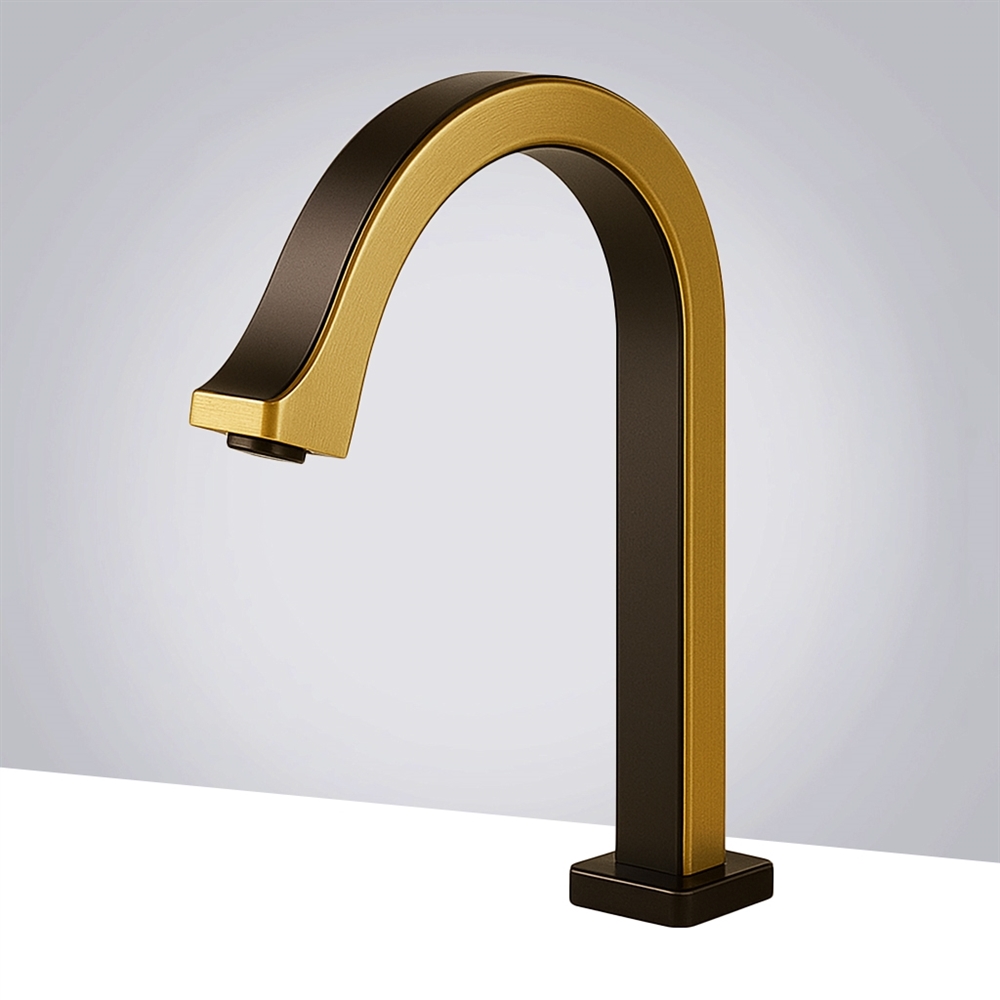
Gold and Black Touchless Faucet Design Trend | FS10578MBG

Integrated Matte Black Fixtures for Commercial Restrooms | FS10214
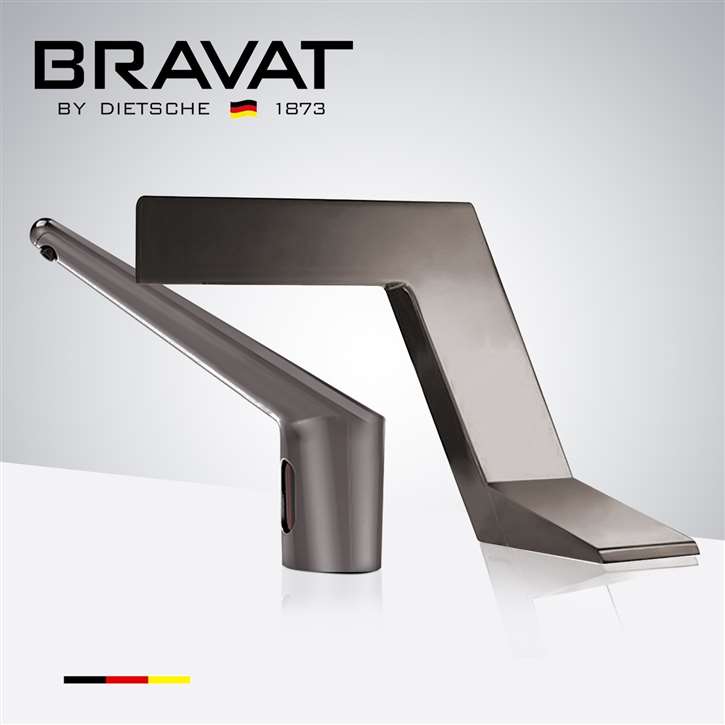
Brushed Nickel Automatic Fixtures for Durable Public Restrooms | FS18556
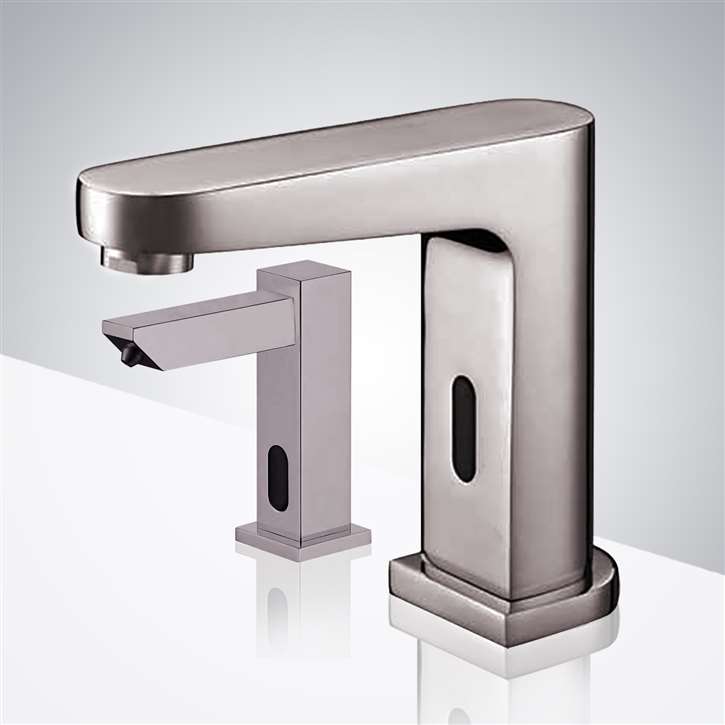
Coordinated Touchless Faucet and Dispenser Trend | FS10225
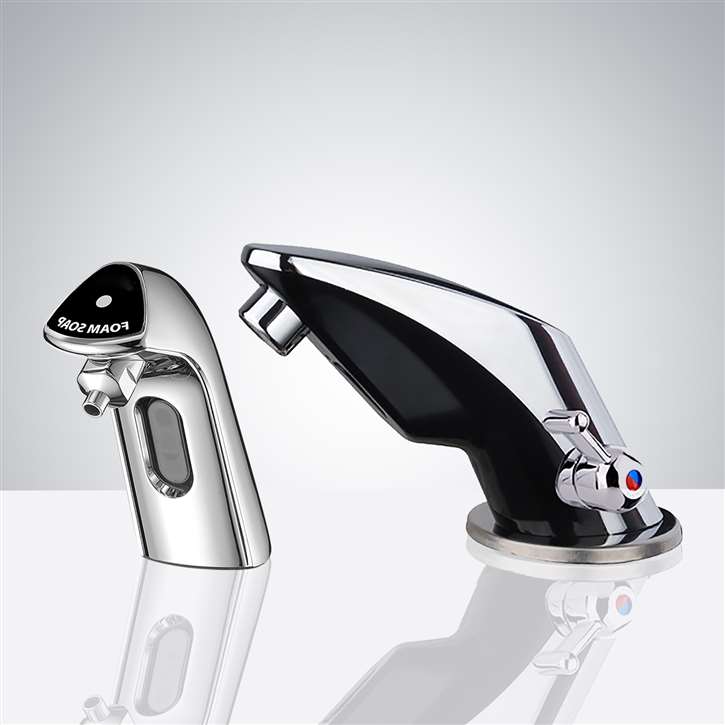
Accessible Touchless Fixtures and Maintenance Planning | FS1865SD