
Fontana Touchless Faucets: Product Range, Sensing Technology and Specification Support
Product Breadth for Commercial and Architectural Applications
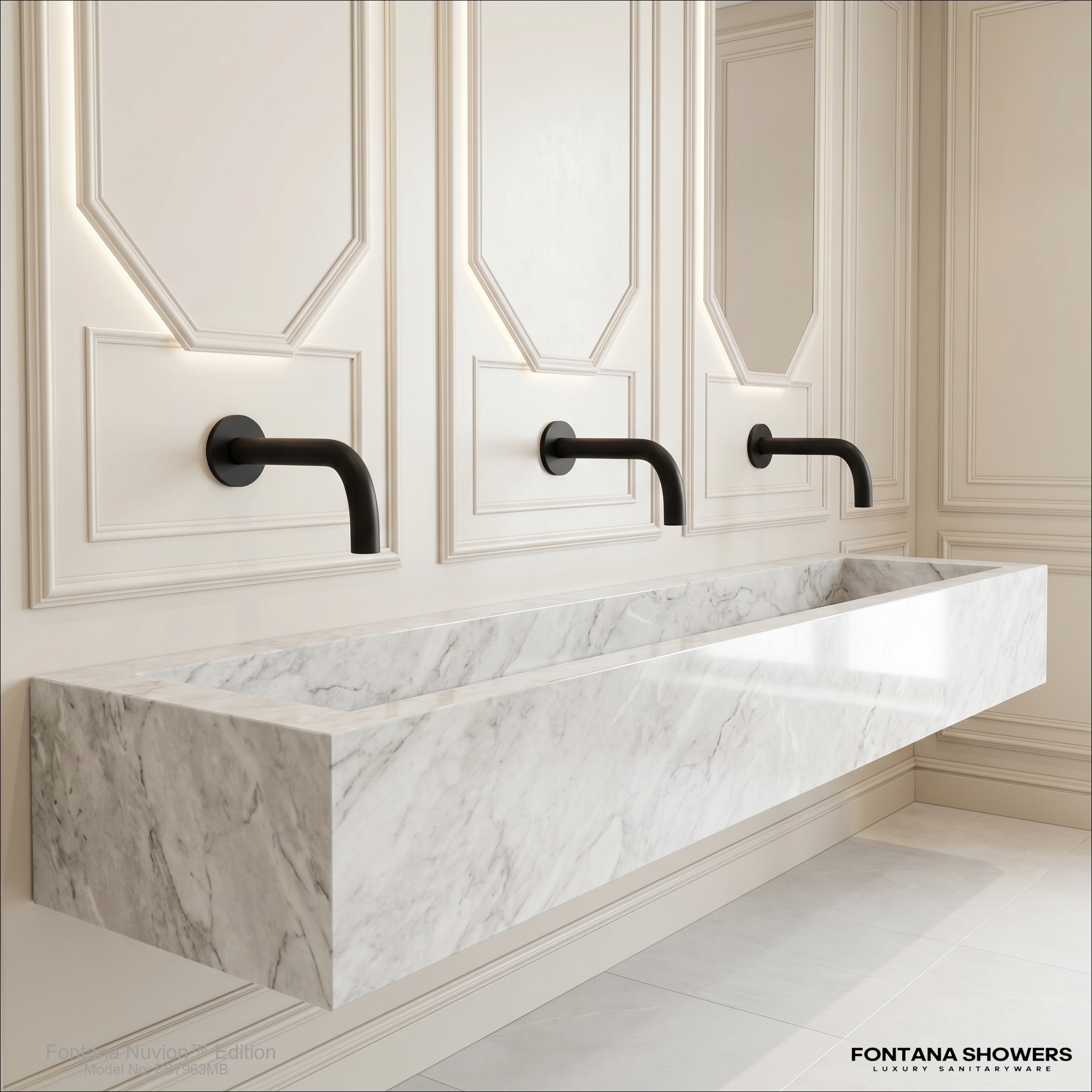
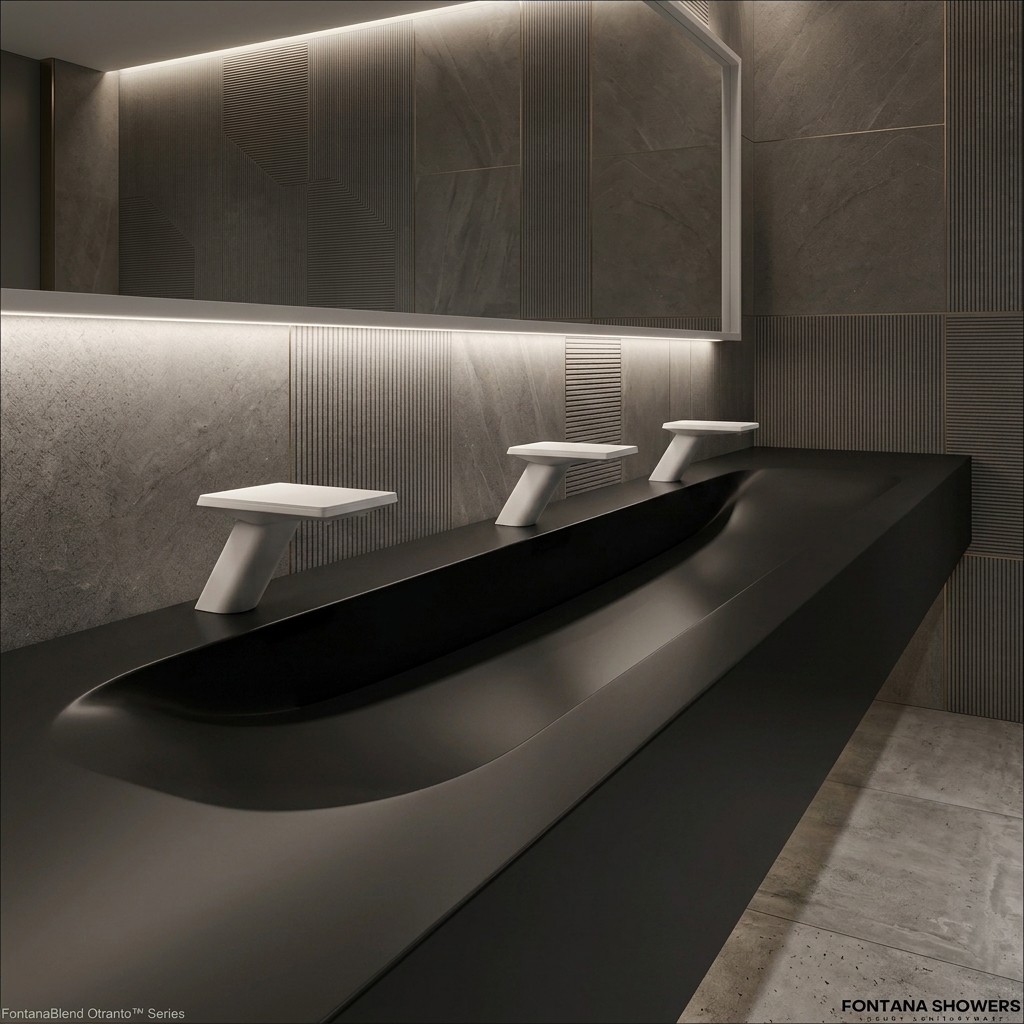
Fontana Touchless Faucets includes a broad range of sensor-operated lavatory faucets developed for commercial, hospitality, institutional, healthcare, public-venue, transportation, and other high-use restroom environments. Rather than relying on a single faucet configuration, the collection provides multiple spout profiles, mounting arrangements, finishes, sensing systems, flow configurations, and power options that allow specifiers to coordinate the fixture with the requirements of a particular project.
Available configurations can include deck-mounted sensor faucets, architectural basin faucets, commercial lavatory fixtures, hospitality-oriented designs, and specialized models intended for high-traffic installations. Product selection can therefore consider not only visual appearance but also basin geometry, spout reach, mounting conditions, available utility space, expected traffic, maintenance requirements, and project plumbing criteria.
Read More Read Less
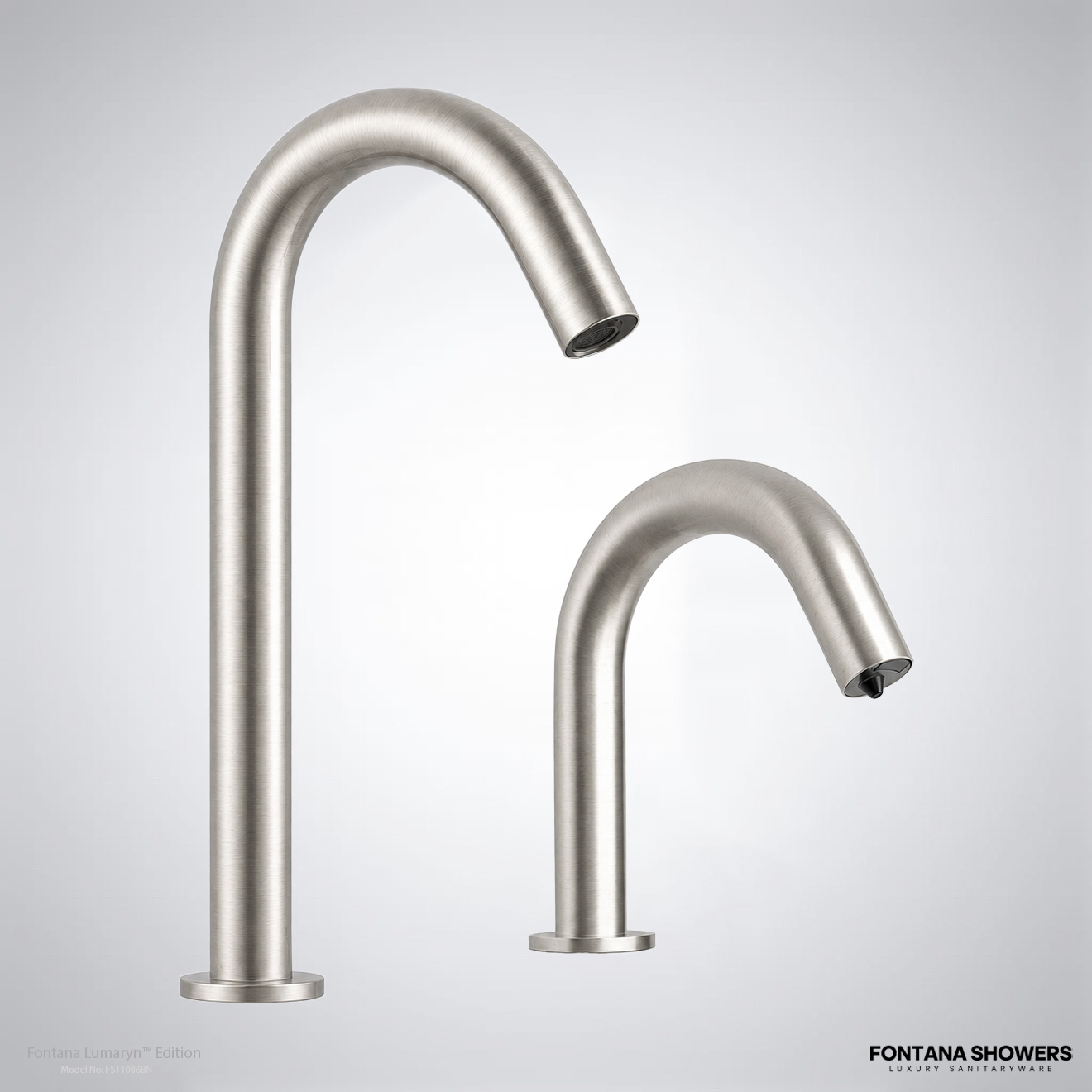
Finish selections vary by model and may include chrome, brushed nickel, matte black, gold, bronze, and other architectural finishes. This range helps architects coordinate touchless plumbing fixtures with broader restroom hardware and interior finish schedules without separating aesthetic decisions from engineering requirements.

Sensing Technologies
Infrared Sensor Systems
Infrared sensing remains an important platform within Fontana’s touchless faucet offering. An IR system detects the presence of a user’s hands within a defined activation zone and signals the control system to open the solenoid valve.

Read More Read Less
For specification purposes, the critical issue is not simply whether a faucet is described as “touchless,” but how the complete sensing system interacts with the basin, mounting height, surrounding surfaces, lighting conditions, and intended hand position.
Proper coordination of the detection envelope helps reduce unnecessary activations while maintaining predictable water delivery during normal handwashing.
Advanced Detection Technologies
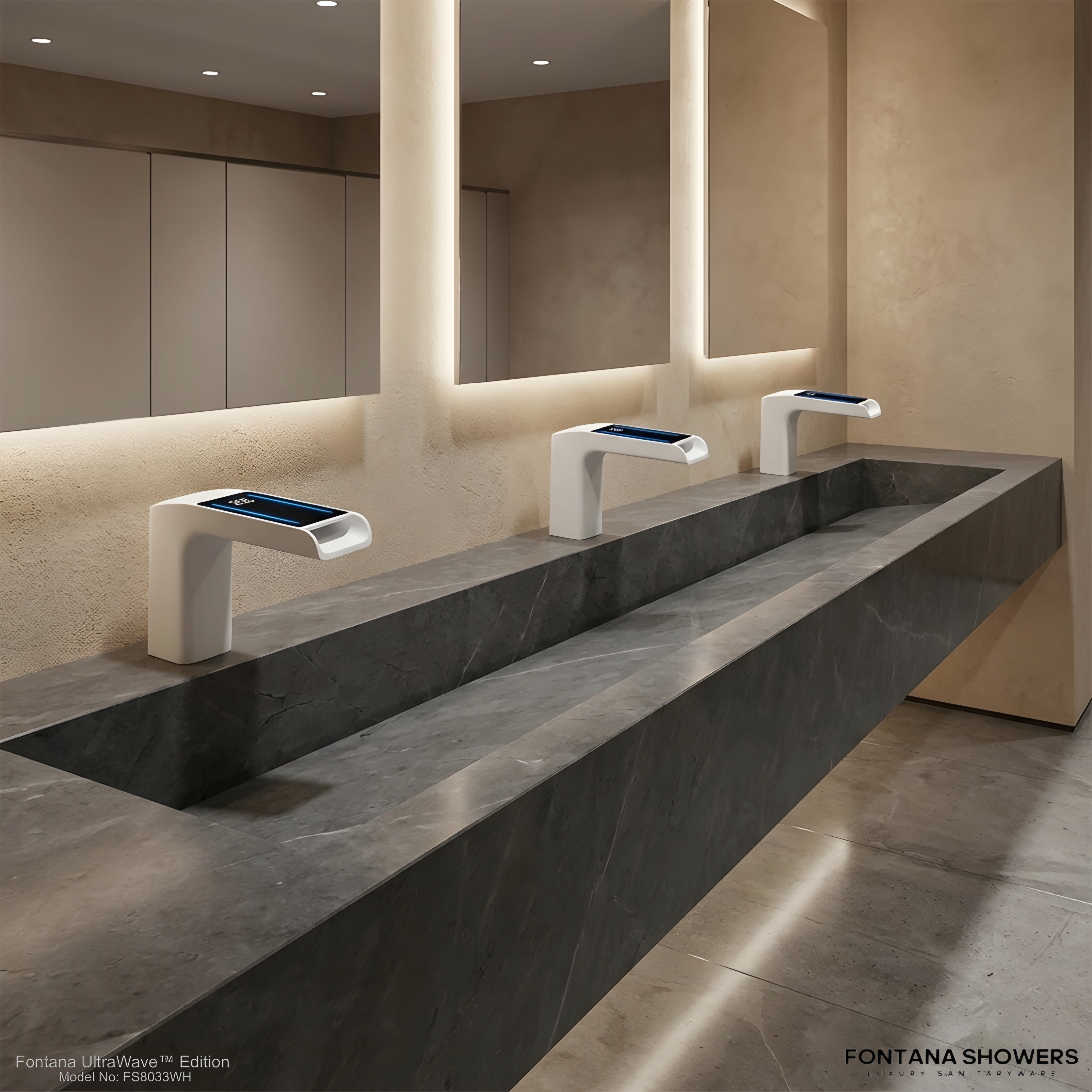
Selected applications can also benefit from more advanced sensing architectures such as Time-of-Flight detection. Rather than relying only on reflected infrared intensity, Time-of-Flight systems evaluate distance information, allowing the control system to distinguish objects within a defined spatial zone more precisely.
Read More Read Less
For architects and engineers evaluating sensor technologies, factors may include:
- Detection range and geometry
- Resistance to false activation
- Response around reflective basin surfaces
- Performance under changing ambient-light conditions
- User hand-position tolerance
- Shutoff response
- Calibration requirements
- Compatibility with the intended basin configuration
Sensor technology should therefore be reviewed as part of the complete faucet-and-basin assembly rather than treated as an isolated electronic feature.

Flow and Water-Use Engineering
Fontana touchless faucet specifications can be coordinated around project-specific flow requirements. Commercial lavatory applications frequently require reduced-flow configurations depending on the governing code, sustainability objective, occupancy type, and jurisdiction.
Typical project requirements may include flow rates such as:
Read More Read Less
The selected product should be verified against the exact project requirement rather than assuming that one flow rate applies to every commercial installation.
Flow performance also needs to be evaluated with available supply pressure, aerator configuration, basin geometry, intended handwashing function, and applicable plumbing regulations.
Touchless operation further supports controlled water delivery because water is supplied only while the sensing system detects a valid user condition, subject to the operating logic of the specified model.
Electrical and Power Coordination
Power architecture is another important specification item. Depending on the faucet model and control package, touchless systems may use AC power, battery power, or configurations designed around project-specific electrical requirements.
Where AC operation is specified, project documentation should identify the applicable voltage requirements, transformer or controller arrangement, cable routing, junction locations, and access requirements. Some systems may support wide-range electrical inputs such as 100–240V AC, depending on the specific product.
Read More Read Less
Battery-operated installations require separate consideration of battery-pack location, replacement access, expected servicing procedures, and protection from moisture or accidental disturbance.
Electrical requirements should be reviewed alongside the plumbing rough-in rather than deferred until fixture installation.

Rough-In and Engineering Data
A complete touchless faucet specification extends well beyond the visible spout.
Engineering coordination may include:
| Engineering Item | Specification Consideration |
|---|---|
Mounting |
Verify deck-hole requirements, mounting thickness, faucet footprint, hardware access, and compatibility with the selected countertop or lavatory. |
Spout Reach |
Spout projection should place the water stream appropriately within the basin while providing adequate clearance from the backsplash, drain, and front edge. |
Supply Connections |
Confirm hot and cold supply requirements, connection sizes, flexible-hose arrangements, mixing components, shutoff valves, and pressure conditions. |
Solenoid Location |
The automatic valve should be positioned where it remains accessible for inspection, cleaning, replacement, and commissioning. |
Control Equipment |
Sensor controllers, transformers, battery housings, mixing valves, filters, and related equipment should be coordinated within the available below-counter service zone. |
Detection Zone |
Sensor range and hand-detection position should be checked against the actual basin rather than specified independently. |
Service Clearance |
Equipment should remain accessible after countertops, casework, access panels, traps, dispensers, and other restroom systems have been installed. |
These requirements are especially important in multi-fixture installations where repeated rough-in errors can affect an entire restroom bank.
Specification and BIM Support
Architects, engineers, contractors, and specification teams increasingly require more than basic product photography when selecting commercial fixtures.
Fontana specification resources can support coordination through product-level information such as:
- Product identification and SKU
- Dimensional information
- Mounting requirements
- Spout dimensions
- Flow information
- Water connection requirements
- Sensor configuration
- Electrical requirements
- Control-system layout
- Finish information
- Installation documentation
- BIM or Revit resources where available
- Rough-in diagrams
- Maintenance considerations
- Applicable compliance documentation
Read More Read Less
For BIM-based projects, the objective is to connect the selected fixture to the physical installation conditions represented in the model. Dimensions, utility connections, clearance zones, and service requirements are therefore more important than inserting a generic faucet object solely for visual representation.


Compliance Coordination
Commercial faucet selection may require review against several standards depending on project type and jurisdiction.
Relevant requirements can include:
| Requirement | Coordination Area |
|---|---|
| ADA 2010 accessibility provisions | Accessibility |
| ICC A117.1 accessibility requirements | Accessibility |
| ASME A112.18.1 / CSA B125.1 | Plumbing fixture requirements |
| NSF/ANSI/CAN 61 | Drinking-water system components |
| NSF/ANSI/CAN 372 | Lead-content requirements |
| WaterSense criteria where applicable | Water efficiency |
| CALGreen requirements where applicable | Project and jurisdiction requirements |
| LEED water-efficiency objectives | Sustainability coordination |
| WELL water-related project criteria | Project water criteria |
Read More Read Less
Applicability should be verified for the specific model, project location, occupancy, and authority having jurisdiction. Compliance should be documented at the product level rather than assumed from the general faucet category.
Project Experience
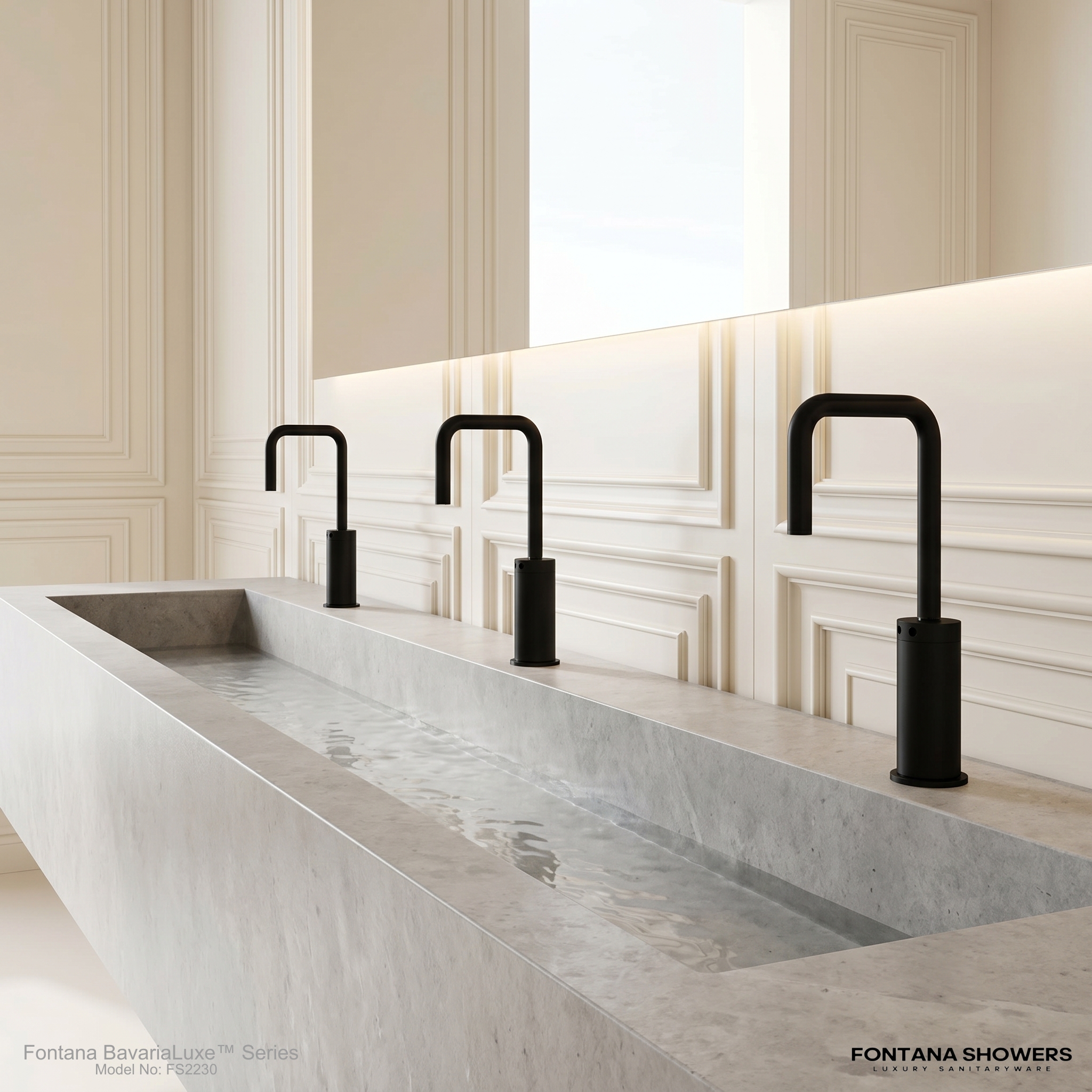
Fontana touchless fixtures can be evaluated for applications extending beyond individual residential bathrooms. Relevant project categories include stadium and arena restrooms, hotels, hospitality developments, theaters, commercial buildings, institutional facilities, healthcare environments, and other projects where large fixture counts and repeated use increase the importance of installation consistency and maintenance access.
Read More Read Less
In these environments, fixture selection is influenced by more than appearance. Engineering teams must account for simultaneous use, standardized rough-ins, controlled flow, sensor behavior, replacement access, electrical distribution, commissioning procedures, and long-term facility operations.
Project experience therefore becomes most useful when translated into repeatable specification and installation practices.
Serviceability and Facility Access
Serviceability is particularly important for touchless faucets because the fixture incorporates mechanical, electronic, and plumbing components.
A maintainable installation should provide practical access to:
- Solenoid valves
- Filters and strainers
- Sensor connections
- Control modules
- Power supplies
- Battery packs where applicable
- Supply hoses
- Mixing components
- Aerators
- Shutoff valves
Read More Read Less
Below-counter equipment should not be concealed behind permanent construction or positioned where traps, cabinetry, or adjacent fixtures prevent servicing.
Standardizing faucet models across larger facilities can also simplify maintenance by reducing the number of replacement components, servicing procedures, and fixture configurations facility teams must support.
Specification-Focused Selection
Fontana Touchless Faucets are best evaluated as complete engineered fixture systems rather than simply as decorative faucets with sensors added to them.
For each project, the specification process should verify:
Read More Read Less
This approach allows architects, MEP engineers, contractors, and facility teams to coordinate the faucet with the basin, plumbing system, electrical infrastructure, accessibility requirements, sustainability objectives, and long-term maintenance strategy.
The result is a more complete specification in which sensing technology, physical dimensions, engineering data, architectural finish, and serviceability are evaluated together as part of the restroom system.


