

Why Demand for Touchless Faucets and Automatic Soap Dispenser Systems Is Rising in Large Heavy-Duty Applications
Large facilities are moving beyond decorative restroom fixtures and specifying integrated hands-free systems that can withstand high traffic, simplify maintenance, reduce water and soap waste, and support public-facing hygiene expectations.
ToF Sensor Activation MultiFeed Soap Systems AC/DC Power Options Commercial Duty Cycles
Heavy-Duty Restrooms Now Require Engineered Fixture Platforms
In airports, campuses, hospitals, stadiums, office towers, transit centers, manufacturing plants, and civic buildings, restroom fixtures are exposed to continuous user cycles, unpredictable peak loads, cleaning chemicals, vandal resistance concerns, and strict downtime expectations. This is why facility teams increasingly evaluate touchless faucets and automatic soap dispensers as integrated infrastructure rather than isolated accessories.
Specifier focus: heavy-duty applications require sensor accuracy, water-use control, soap availability, power redundancy, service access, finish durability, and lifecycle maintenance planning.- High traffic requires repeatable activation without false starts or missed hand detection.
- Maintenance teams need fast access to batteries, mixers, filters, reservoirs, and electronics.
- Owners expect fixtures to support hygiene, sustainability, and operational cost reduction.

Demand Driver 1: Better Sensor Control in Busy Public Wash Stations
Traditional infrared systems can struggle when counters are reflective, lighting changes throughout the day, or users move rapidly through lavatory banks. Modern ToF-style sensing helps define a more precise activation zone by measuring distance rather than relying only on reflected light intensity.
For a large facility, that precision can reduce nuisance activation, improve handwashing flow, and help prevent water waste during peak restroom usage.
Selection conditions
- Consistent activation zone at each sink position.
- Sensor housing protected from splashing and cleaning routines.
- Fast response with shutoff timing appropriate for public restrooms.

Demand Driver 2: Soap Availability Becomes a Facility Uptime Issue
In a heavy-use restroom, soap outages create immediate user complaints and undermine the hygiene value of touchless handwashing. Automatic soap dispensers with larger capacity planning and MultiFeed-style distribution reduce repetitive refill labor and support consistent product availability across multiple stations.
For stadiums, airports, schools, transportation hubs, and office portfolios, the largest savings often come from reducing service trips, not simply from the fixture purchase price.

Sensor Reliability
Specify activation technology based on traffic volume, counter reflectivity, cleaning exposure, and expected response consistency.
Soap Logistics
Review reservoir capacity, refill frequency, viscosity compatibility, and whether centralized feeding reduces labor.
Power Strategy
AC/DC or hybrid configurations help facilities protect uptime when battery-only systems create service risk.
Finish Durability
Heavy-duty buildings need finishes selected for cleaning routines, user volume, and visible wear resistance.
Maintenance Access
Design teams should coordinate under-counter space, control boxes, mixing valves, filters, and soap lines early.
Lifecycle Cost
Long-term value depends on water savings, reduced soap waste, fewer service calls, and less fixture downtime.
Demand Driver 3: Integrated Faucet + Soap Design Improves User Flow
Large restroom banks work best when handwashing steps are intuitive. Matching faucet and soap dispenser platforms simplify visual guidance at the deck, reduce user hesitation, and support consistent spacing across ADA and standard sink positions.
Facility managers also benefit when electronics, finish families, and replacement parts are standardized across multiple restroom zones.

Demand Driver 4: Public Buildings Need Scalable Specifications
A heavy-duty restroom program may include dozens or hundreds of fixtures. The best specification is not only attractive; it is repeatable across floors, terminals, concourses, locker rooms, public washrooms, food-service zones, and back-of-house employee areas.
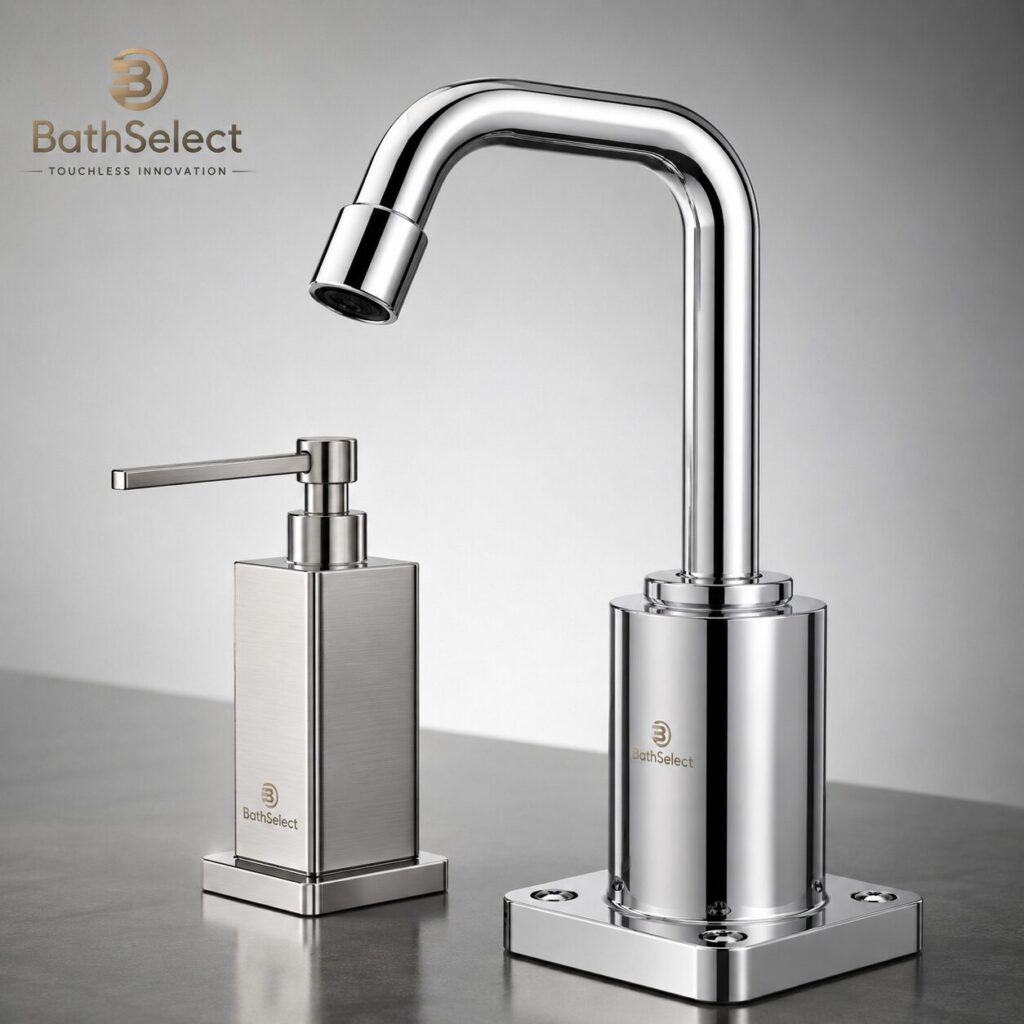
Standardized Fontana touchless faucet and automatic soap dispenser selections help facility teams manage procurement, training, maintenance stock, finish consistency, and future replacements.


.png)

Power and Controls: Why Hybrid Options Matter
Battery-only systems can be acceptable for small facilities, but heavy-duty applications often require a more resilient power strategy. AC/DC or hybrid power design helps facilities reduce emergency service calls, manage battery replacement cycles, and protect fixture uptime across large washroom banks.
Power planning should be coordinated with MEP and plumbing teams during design development, not left until final installation.

Thermostatic Control for Safer, More Consistent Public Handwashing
Large facilities frequently require predictable outlet temperature, scald-risk reduction, and repeatable user comfort across many sink locations. Thermostatic sensor faucets help maintain consistent handwashing conditions while supporting hands-free operation.
These systems are especially relevant where custodial teams, engineers, and owners need stable performance across restrooms that operate all day.

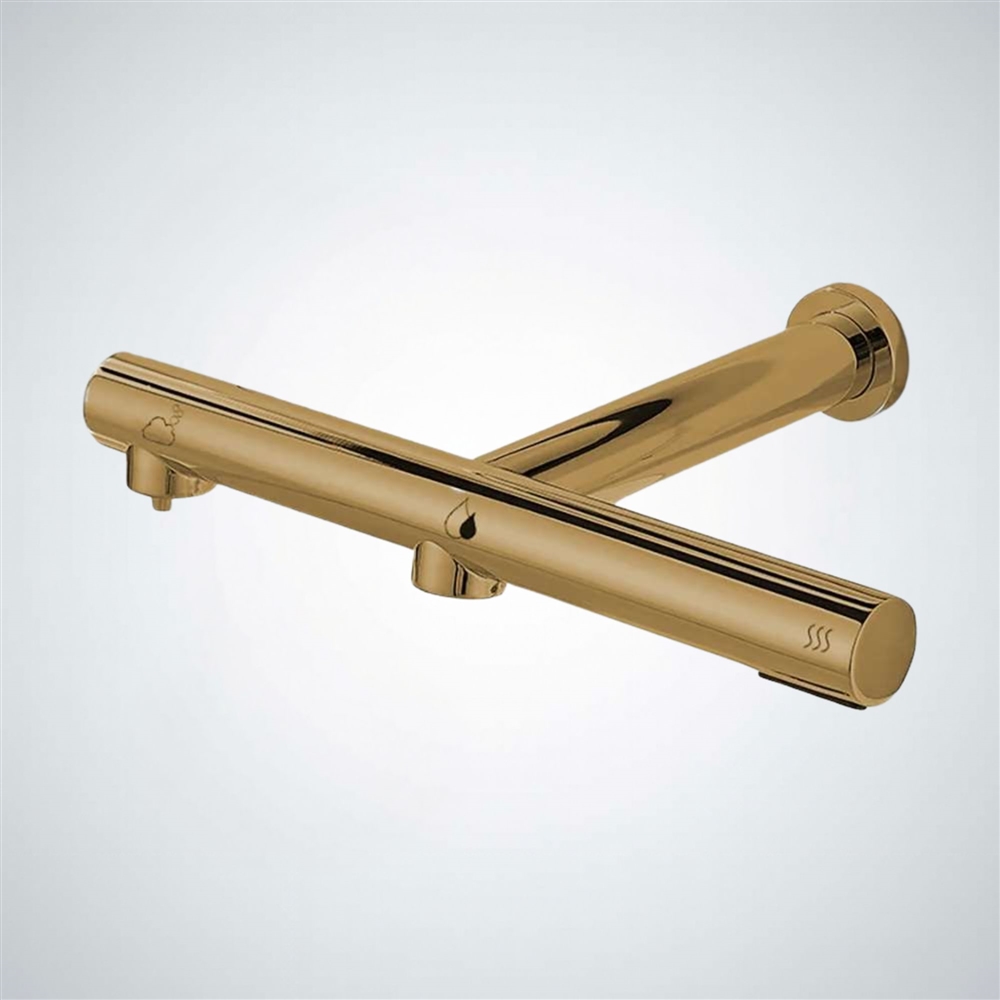
Wall-Mounted Touchless Faucets for Vandal Resistance and Clean Countertops
Wall-mounted configurations are often selected when designers want cleaner counters, easier surface maintenance, or improved protection in public environments. They can be highly effective in transportation facilities, stadium restrooms, schools, and municipal buildings where countertops are exposed to heavy use.


Demand Driver 5: Finish Options Must Match Both Design Intent and Maintenance Reality
Heavy-duty does not mean visually generic. Owners and designers now expect commercial-grade touchless performance in finishes that support brand identity, hospitality-grade interiors, premium tenant spaces, and public-facing architecture.
The key is selecting finishes with the right cleaning compatibility and visual durability for the application.

When Multi-Station Lavatories Need Coordinated Faucet, Soap, and User Experience
Vessel sink combinations and coordinated faucet packages are useful for design-led restroom environments where the sink, spout height, splash zone, sensor position, and soap placement must operate as a complete user station.
For heavy-duty projects, coordination reduces field conflicts and helps the installed restroom perform as designed.


Demand Driver 6: Sustainability Goals Are Moving Fixture Decisions Upstream
Water conservation, soap control, energy strategy, and maintenance efficiency are now evaluated earlier in the design process. Touchless faucets help control unnecessary flow, and automatic soap systems help reduce product overuse when properly calibrated.
For a multi-building owner, these small per-use efficiencies compound into measurable lifecycle advantages.

Specification Checklist for Large Heavy-Duty Applications
Before selecting a touchless faucet or automatic soap dispenser system, facility teams should confirm that the product matches the building’s operating conditions, not just the design palette.
- Traffic level: average daily use, peak-event surge, and cleaning schedule.
- Sensor type: detection accuracy, activation distance, false-trigger resistance.
- Soap delivery: dispenser capacity, MultiFeed potential, viscosity range, refill workflow.
- Power: AC, DC, battery, or hybrid requirements coordinated with MEP design.
- Maintenance: access to filters, control boxes, mixing components, and soap reservoirs.
- Finish: cleaning compatibility, visible wear resistance, and interior design alignment.

Bottom Line: Heavy-Duty Demand Is About Reliability, Not Only Touch-Free Convenience
The market shift toward Fontana touchless faucets and automatic soap dispenser systems is driven by operational reality: large buildings need hygienic fixtures that are easier to service, more consistent under high traffic, better coordinated with MEP design, and more scalable across multi-restroom programs.
Image implementation note: this WordPress HTML uses 21 Fontana product images from the provided image library, one main banner image, section-specific alt text, and product-page links aligned with the linked image/product references.
Frequently Asked Questions
Expert answers to common questions about specifying touchless faucet and automatic soap dispenser systems for heavy-duty commercial restrooms, large facilities, and high-traffic public buildings.
What makes a touchless faucet suitable for heavy-duty commercial applications?
+Heavy-duty touchless faucets require fast sensor response, stable activation zones, commercial-grade valve assemblies, vandal-resistant construction, and durable finishes that withstand frequent cleaning. Systems should support high-volume duty cycles without compromising water control or user experience.
How does MultiFeed soap dispensing improve large facility operations?
+MultiFeed systems supply multiple dispensers from larger centralized reservoirs, reducing refill labor, minimizing empty dispensers during peak usage, improving maintenance planning, and providing better inventory control across large restroom banks in airports, stadiums, and campuses.
Why is sensor reliability critical for high-traffic public restrooms?
+High-traffic restrooms experience variable lighting, reflective surfaces, and users moving quickly through wash stations. Reliable sensors with ToF-style technology maintain consistent activation zones despite these challenges, reducing user hesitation, improving queue flow, and preventing unnecessary water waste.
What finishes are most durable for heavy-duty commercial restrooms?
+Chrome and brushed nickel offer strong durability for general public areas. Brushed gold, champagne, matte black, and gun metal gray can support premium spaces. Finish selection should account for cleaning chemical exposure, abrasion resistance, and restroom category.
Should premium and public restrooms use different fixtures?
+Yes. Premium finishes and design-forward fixtures can support luxury brand positioning in VIP lounges or executive spaces while maintaining the same commercial-grade mechanical reliability. Product-family standardization simplifies maintenance and parts inventory across both zones.
How do touchless faucets support water conservation in large buildings?
+Touchless faucets feature controlled flow rates, automatic shutoff, and precise sensor activation that prevents unnecessary water use. Large facilities can achieve significant water savings compared to manual fixtures, supporting sustainability goals and reducing operating expenses.
What power options work best for heavy-duty commercial restrooms?
+AC/DC or hybrid power configurations help facilities protect uptime when battery-only systems create service risk. For large restroom banks, hardwired power with battery backup provides the best combination of reliability and emergency operation.
Are wall-mounted faucets better for heavy-duty public restrooms?
+Wall-mounted touchless faucets improve counter clearance, simplify cleaning, offer better vandal resistance, and coordinate with custom vanity designs. They are especially effective in transportation facilities, stadiums, schools, and municipal buildings where surfaces experience heavy use.
Related Commercial Restroom Fixture Brands
Industry-leading manufacturers trusted by architects, facility managers, and building owners for commercial sensor faucets, touchless washroom systems, and heavy-duty restroom upgrades.
Specification Strategy for Touchless Faucet and Soap Dispenser Systems in Large Facilities
Large heavy-duty facilities require restroom systems that can perform under constant use, cleaning cycles, public traffic, and maintenance pressure. Touchless faucets and automatic soap dispenser systems should be selected as coordinated assemblies, not separate accessories. In airports, stadiums, universities, hospitals, transportation centers, distribution facilities, industrial campuses, and large office towers, the strongest specifications focus on sensor reliability, vandal resistance, water efficiency, refill access, finish durability, and long-term parts support.
Built Around Continuous Public Use
Heavy-duty restrooms need fixtures that can handle repeated daily activations without creating maintenance problems. Faucet sensor range, soap dispensing volume, counter layout, sink depth, filtration, power source, and cleaning access should be reviewed together before final selection.
For large facilities, standardizing faucet and soap dispenser systems can reduce replacement complexity, improve staff training, simplify inventory, and create a consistent restroom appearance across multiple floors, wings, terminals, or buildings.
Selection Priorities for Facility Managers and Specifiers
The best heavy-duty touchless systems balance appearance with engineering practicality. Facility teams should evaluate activation reliability, finish resistance, water-saving performance, vandal-resistant construction, power options, soap compatibility, and ease of troubleshooting.
For large campuses and public buildings, early coordination between architects, MEP engineers, contractors, and maintenance teams helps avoid field conflicts and supports a cleaner lifecycle strategy after the project is complete.
Related Heavy-Duty Touchless System Resources
-
Commercial Sensor Faucets and Auto Soap Dispenser Sets
Useful for coordinating faucet and soap dispenser systems as complete commercial restroom assemblies for large public facilities. -
Commercial Touchless Bathroom Faucets
Reviews sensor faucet options suited for airports, schools, hospitals, office towers, hospitality buildings, and public restrooms. -
Commercial Touchless Soap Dispensers
Supports automatic soap dispenser selection for hygiene, refill planning, maintenance access, and heavy-use restroom operations. -
Quality and Durability Guide
Helps specifiers evaluate fixture construction, finish performance, serviceability, and lifecycle durability in demanding environments. -
Power Source Planning
Explains AC, battery, and hybrid power considerations for touchless fixtures installed across large facility restroom networks.