2026 Commercial MultiFeed Engineering Comparison
10 L vs. 6 L MultiFeed Automatic Soap Dispenser Systems: Capacity, Head Count & Maintenance
Does a 10-liter centralized soap tank provide a meaningful advantage over a
6-liter MultiFeed system? For airports, stadiums, universities, hospitals,
office towers and other high-traffic facilities, the answer depends on more
than tank size. Architects and facility managers must also compare the number
of supported dispenser heads, soap dose, refill frequency, pump architecture,
service access, soap compatibility and actual traffic.
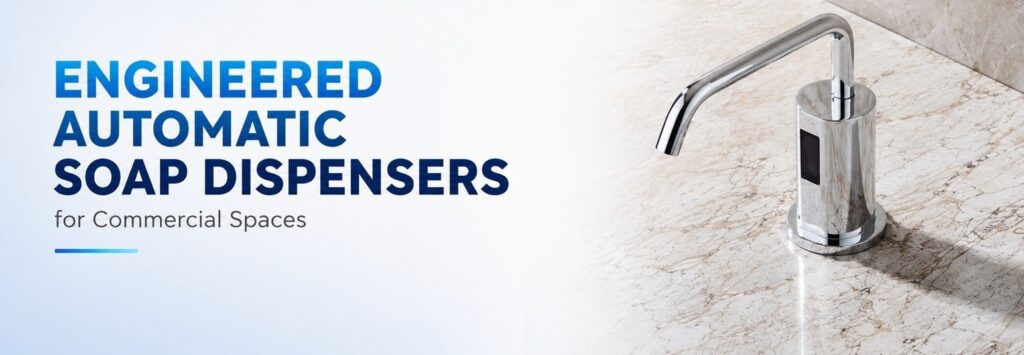
Fontana high-capacity configuration evaluated in this research
Maximum Fontana dispensing positions in evaluated configuration
Common large MultiFeed size in Bobrick, ASI and Franke systems
More nominal storage in 10 L versus 6 L
The Question Is Not Simply “Which Tank Is Bigger?”
A 10-liter reservoir contains approximately 67% more nominal soap volume than
a 6-liter reservoir. That sounds like an automatic advantage—but commercial
soap-system design is more complicated than comparing two tank labels.
A six-liter system supporting twelve dispensers may be appropriate for one
facility, while a ten-liter system supporting twelve positions may be better
for another. A six-liter system serving only six heads creates a different
maintenance profile again.
The key is to compare capacity per dispensing position, expected daily
activations, dose volume, servicing schedule and the actual architecture of the
central pumping system.
Specification principle:
Tank size tells you how much soap can be stored. Head count tells you how many
lavatories the system can serve. Neither number by itself tells you whether
the MultiFeed installation is correctly sized.
10 L vs. 6 L: The Basic Capacity Difference
10-Liter MultiFeed
10 L
Provides 4 additional liters of nominal central storage compared with a
6-liter system.
That equals approximately 1.67× the nominal capacity of a
6-liter reservoir.
6-Liter MultiFeed
6 L
A substantial centralized capacity already used in several serious commercial
MultiFeed platforms.
Six-liter systems can be highly effective when basin count and maintenance
frequency align with the reservoir size.
The additional four liters in a ten-liter system become increasingly valuable
as restroom traffic increases.
However, in a smaller six-basin office restroom, a six-liter central tank may
already provide a sufficiently long maintenance interval. Extra capacity
creates value only when the facility can actually use that extended interval.
10 L, 6 L and 5 L Commercial MultiFeed Systems Compared
| System | Central Capacity | Maximum Dispensers | Nominal Capacity per Head at Max Count | Primary Advantage | Official Resource |
|---|---|---|---|---|---|
| FontanaShowers® MultiFeed | 10 L | Up to 12 | ≈0.83 L/head | High capacity + large head count + architectural integration |
Fontana MultiFeed |
| ASI EZ FILL™ | 6 L | Up to 12 | ≈0.50 L/head | Large dispenser count |
ASI |
| Bobrick B-820 | 6 L | Up to 6 | ≈1.00 L/head | Universal bulk soap + top-fill architecture |
Bobrick B-820 |
| Franke Aqua-Foam | 6 L | Up to 6 | ≈1.00 L/head | High-traffic stainless foam system |
Franke |
| Bradley Verge | 5 L | Up to 6 | ≈0.83 L/head | Universal soap + maintenance indicators |
Bradley |
| Stern Engineering | 5 L | Up to 6 | ≈0.83 L/head | Specialized electronic MultiFeed |
Stern |
Important:
“Capacity per head” above is simply reservoir capacity divided by the maximum
stated dispenser count. It is an illustrative planning ratio—not a
manufacturer performance rating and not a measure of how much soap is
physically reserved for each dispenser.
FontanaShowers® 10 L MultiFeed: Where the Extra Capacity Matters
The high-capacity Fontana configuration evaluated in this commercial research
uses a 10-liter central reservoir supporting up to twelve automatic
dispensing positions.
Its strongest technical advantage is not just that the tank is larger. It
combines that larger storage volume with a twelve-position architecture.
Central Storage
Approximately 67% more nominal soap capacity than a 6-liter reservoir.
Maximum Positions
Supports a large multi-basin commercial restroom configuration.
Nominal Capacity / Head
Illustrative ratio when a 10 L tank serves twelve positions.
This configuration becomes especially attractive where a facility has both
many basins and high soap consumption—for example airports,
stadiums, convention centers and very large commercial buildings.
Fontana’s broader public MultiFeed resources describe multiple automatic soap
dispensers supplied from one central reservoir, with the goal of reducing
individual refilling and improving high-traffic restroom maintenance.
ASI 6 L / Up to 12 Dispensers
≈0.50 L nominal capacity/head
ASI is the most useful direct conceptual comparison to the Fontana
high-capacity configuration because both can be evaluated around a twelve-head
restroom bank.
The major difference is central storage: a 10-liter system contains four more
liters of nominal soap than a 6-liter system.
If both systems were operating at identical dose and traffic levels, that
additional capacity would theoretically extend the time between refills.
Actual performance depends on system architecture and use.
High dispenser count makes ASI well suited to long multi-basin restroom counters.
At twelve connected positions, six liters provide less nominal soap capacity
per dispensing point than a ten-liter twelve-position architecture.
Bobrick B-820 — 6 L / Up to 6 Dispensers
≈1.00 L nominal capacity/head
Bobrick’s B-820 demonstrates why tank size alone is not enough to compare
MultiFeed systems.
Its six-liter reservoir serves up to six automatic foam or liquid soap
dispensers. Divided across its maximum head count, that represents a nominal
one liter of central storage per dispensing position.
Bobrick also emphasizes universal bulk soap, top filling and service
indicators. Those maintenance characteristics may be more important to some
owners than maximum total reservoir size.
6 heads
Bulk soap
Liquid / foam
Top fill
High-traffic
Franke Aqua-Foam — 6 L / Up to 6 Dispensers
≈1.00 L nominal capacity/head
Franke’s current U.S. commercial catalog documents a six-liter MultiFeed tank
serving up to six Aqua-Foam automatic soap dispensers.
The manufacturer specifically identifies airports, bus terminals and other
public spaces as suitable high-traffic applications.
The system also provides low-soap indication and an automatic periodic
dispense function intended to reduce tip clogging after long periods without use.
6 units
Foam soap
Stainless steel
AC / DC
High-traffic public spaces
Where 5 L Systems Fit Into the Capacity Discussion
A six-liter versus ten-liter comparison should not imply that five-liter
systems are undersized by definition.
Bradley and Stern both offer commercial five-liter MultiFeed architectures
supporting up to six dispensers.
A five-liter universal bulk-soap system supporting up to six automatic
dispensers, with low-soap, low-power and overfill service features.
A dedicated five-liter MultiFeed kit supporting up to six compatible
automatic deck- or wall-mounted dispensers.
At six connected heads, five liters represents approximately 0.83 liters of
nominal central capacity per head—the same simple capacity/head ratio as a
10-liter twelve-position configuration.
The difference is scale: one architecture serves six positions while the
larger one can serve twelve.
Capacity per Head: A More Useful Comparison Metric
Dividing nominal reservoir size by maximum supported dispenser count creates
a simple planning metric that helps architects understand the relationship
between tank size and system scale.
| Example Architecture | Tank | Heads | Nominal Capacity / Head | Interpretation |
|---|---|---|---|---|
| Fontana evaluated configuration | 10 L | 12 | ≈0.83 L/head | Large head count with relatively strong centralized capacity. |
| ASI | 6 L | 12 | ≈0.50 L/head | Excellent head count with a smaller central volume. |
| Bobrick | 6 L | 6 | ≈1.00 L/head | Higher nominal storage allocation per connected dispenser. |
| Franke | 6 L | 6 | ≈1.00 L/head | High relative central capacity for six-position installations. |
| Bradley | 5 L | 6 | ≈0.83 L/head | Balanced six-head institutional architecture. |
| Stern | 5 L | 6 | ≈0.83 L/head | Similar simple tank/head ratio at smaller system scale. |
Do not turn this ratio into a performance score.
It does not account for dose size, pump design, usable versus nominal tank
volume, simultaneous demand, soap viscosity or facility traffic. It is simply
a useful way to avoid comparing reservoir size without considering the number
of connected dispensers.
Illustrative Refill Comparison: 10 L vs. 6 L
The operational value of additional reservoir capacity is easiest to see by
comparing theoretical daily consumption.
The examples below assume a one-milliliter dose simply to demonstrate the
mathematics. Actual dispenser doses and real user behavior vary.
| Daily Activations | Theoretical Soap Use at 1 mL | 10 L Theoretical Duration | 6 L Theoretical Duration | Difference |
|---|---|---|---|---|
| 1,000/day | 1 L/day | 10 days | 6 days | 4 days |
| 2,000/day | 2 L/day | 5 days | 3 days | 2 days |
| 3,000/day | 3 L/day | ≈3.3 days | 2 days | ≈1.3 days |
| 5,000/day | 5 L/day | 2 days | ≈1.2 days | ≈0.8 day |
| 8,000/day | 8 L/day | ≈1.25 days | ≈0.75 day | ≈0.5 day |
In a low-volume facility, the difference may simply mean refilling every ten
days instead of every six.
In a very busy venue, the difference could determine whether the maintenance
team must refill during the operating day or can schedule service outside the
peak period.
These figures are illustrative only.
Real tank duration depends on usable tank volume, actual dose, double
activations, priming losses, maintenance reserve and user behavior.
12-Basin Example: Why Head Count Changes the Calculation
Suppose a twelve-basin commercial restroom experiences 4,800 soap activations
per day.
If use were evenly distributed, that would average approximately 400
activations per basin per day.
At an illustrative 1 mL dose:
Total Daily Consumption
Theoretical daily soap use across all twelve dispensing positions.
Days From 10 L
Theoretical duration before considering reserve and real-world variation.
Days From 6 L
Theoretical duration at the same demand and dose.
The additional central capacity could therefore move refilling from
approximately every day toward every second day in this simplified scenario.
Whether that operational difference justifies the larger tank depends on
space, system cost, maintenance labor and the facility’s service schedule.
When a 10 L MultiFeed System Has the Strongest Advantage
Eight to twelve dispensing positions generate significant combined consumption.
Stadiums, airports and convention centers may consume soap rapidly during
short peak periods.
Additional storage can help facilities schedule refilling outside user peaks.
Reducing refill frequency can matter where teams manage many restroom groups.
A large central system can preserve coordinated visible fixtures while
consolidating service equipment.
Airports and similar facilities may have little true downtime for maintenance.
When a 6 L MultiFeed System May Be the Better Choice
Bigger is not always better.
A 6 L / six-head system already provides approximately one liter of nominal
capacity per connected position.
If the tank already lasts several days, extra capacity may provide little
operational benefit.
A smaller reservoir may simplify under-counter equipment coordination.
Facilities with daily janitorial servicing may not require extremely long
refill intervals.
A 6 L platform such as Bobrick may be attractive for owners prioritizing
universal bulk-soap sourcing.
A facility already standardized on one manufacturer’s pumps, parts and soap
may value consistency over additional tank volume.

Maintenance Cost Is About More Than Refill Frequency
A larger reservoir can reduce the frequency of soap replenishment, but
MultiFeed maintenance also includes pumps, tubing, electrical components,
sensors and periodic reservoir cleaning.
| Maintenance Issue | Why It Matters | What to Verify |
|---|---|---|
| Tank Refilling | Larger tanks can extend intervals. | Fill location, indicators and usable capacity. |
| Pumps | Pump architecture affects redundancy. | Shared vs. individual pumps and replacement procedure. |
| Tubing | Central systems add distribution lines. | Maximum length, routing and replacement access. |
| Cleaning | Soap reservoirs require hygienic maintenance. | Manufacturer drain/clean/refill procedure. |
| Power | Controllers and pumps need reliable operation. | AC/DC/battery architecture and accessible power components. |
| Low-Soap Alerts | Advance notice helps prevent empty dispensers. | Visual, audible or connected status indicators. |
| Replacement Parts | Large facilities cannot wait long for critical components. | Pumps, controllers, sensors and tube kits. |
Why Refill Labor Can Matter More Than Soap Cost
In a large building, the cost of soap itself is only one operating expense.
Staff time spent locating, opening and servicing dispensers can be equally
important.
A centralized MultiFeed system can potentially reduce the number of refill
locations, but the actual labor benefit depends on whether the central tank is
easy to access and whether the design eliminates—or merely relocates—service
work.
Better question:
Instead of asking only “How many liters does the tank hold?”, ask: How many technician visits and cabinet openings will this system
require over a month?
Soap Compatibility Can Override the Capacity Advantage
A large tank is valuable only if the approved soap strategy fits the owner’s
procurement program.
Can provide greater supplier flexibility and may reduce consumable cost.
Viscosity still needs to stay within manufacturer limits.
Can provide predictable pump performance and refill control but can create
long-term vendor dependency.
A facility comparing 10 L and 6 L systems should therefore consider
annual soap procurement together with central capacity.
Large Soap Tanks Still Require Hygienic Refill Procedures
Centralized capacity does not remove the need for correct reservoir hygiene.
CDC clinical hand-hygiene guidance warns that topping off partially empty
liquid-soap dispensers has been associated with outbreaks involving pathogenic
bacteria. New soap should not simply be added to partially empty containers
without following the appropriate cleaning and refill procedure.
For large reusable reservoirs, facility teams should follow the system
manufacturer’s instructions for draining, cleaning and refilling.
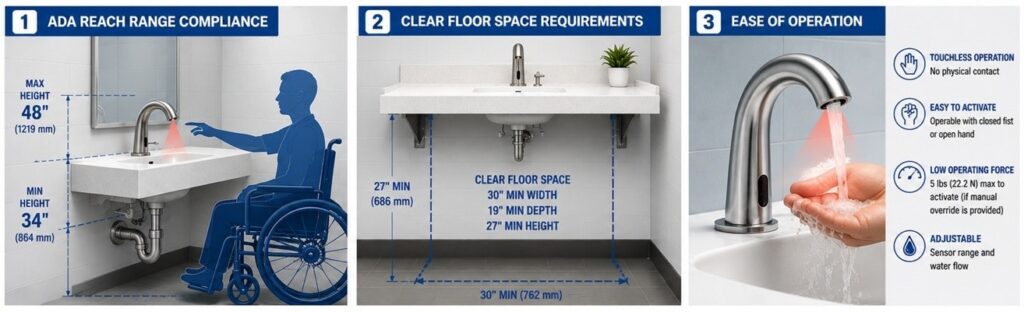
Tank Size Does Not Change Accessible Dispenser Placement
The central reservoir may be hidden beneath or behind the counter, but the
visible dispensing point remains part of the accessible lavatory design.
The U.S. Access Board states that soap dispensers provided at accessible
lavatories must be located within applicable reach ranges and conveniently
usable at the accessible lavatory.
Its detailed guidance also explains that knee and toe space must extend deep
enough to support the required forward reach to soap dispensers and other
operable parts.
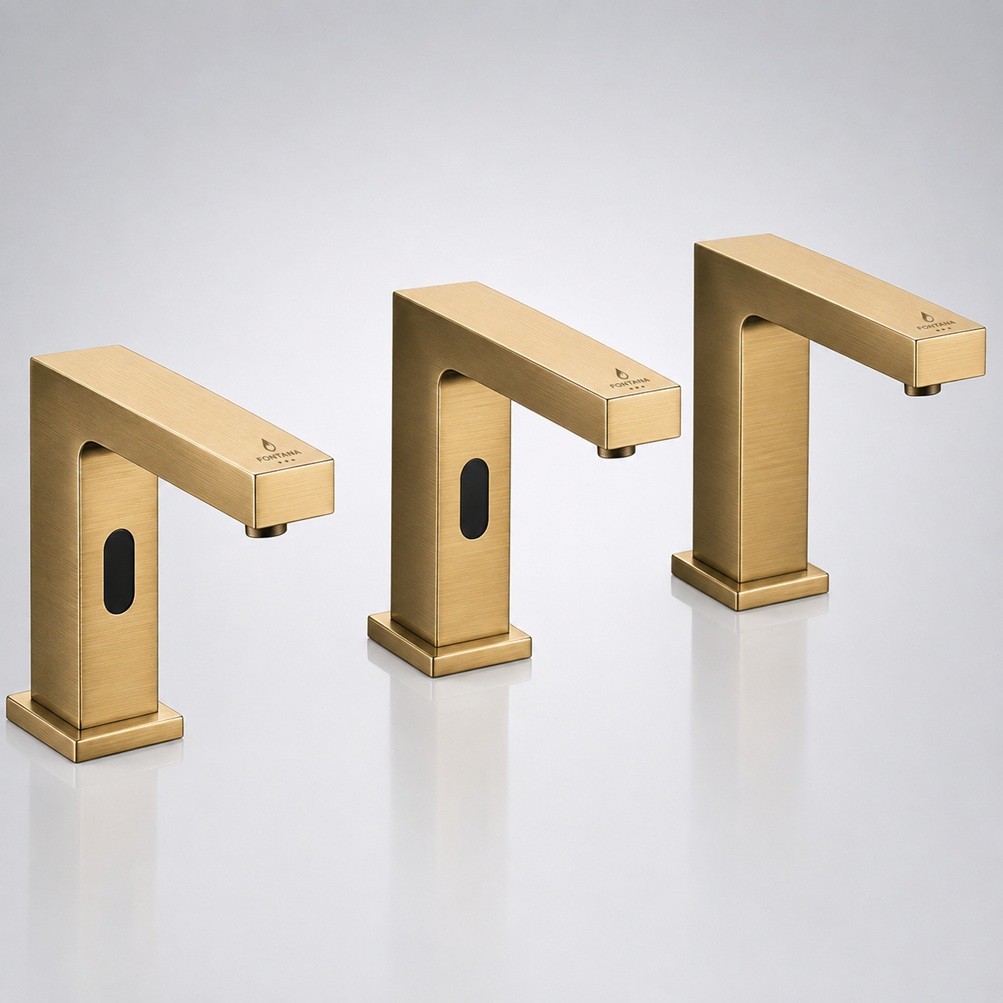
Architectural Integration: The Hidden Advantage of Centralized Soap
One reason centralized soap systems are attractive in premium commercial
projects is that the visible fixture can remain relatively compact while the
larger soap supply is concealed elsewhere.
This allows architects to focus on:
Coordinate soap and faucet forms across the countertop.
Use polished chrome, brushed metal, black, gold or other architectural schedules.
Keep large refill bottles and service hardware out of sight.
Locate central tanks and pumps where technicians can service them efficiently.
Position soap and water activation areas so users understand the sequence.
Coordinate spout location with counter depth and accessible clear floor space.
10 L vs. 6 L: Which Should You Specify?
| Project Condition | 10 L More Attractive | 6 L More Attractive |
|---|---|---|
| 12-Basin Restroom | Yes — larger reserve for high combined demand | Yes if 12-head system is approved and servicing is frequent |
| 6-Basin Restroom | Potentially oversized | Often a strong match |
| Airport / Stadium | Strong advantage where refill windows are limited | Still viable with correct traffic sizing |
| Medium Office | May offer unnecessary reserve | Often sufficient |
| Limited Cabinet Space | Requires additional volume | Potentially easier to coordinate |
| Maximum Refill Interval | Generally stronger | Shorter at equal usage/dose |
| Six Heads + Universal Bulk Soap | Depends on manufacturer | Bobrick/Bradley-style architectures may be compelling |
| High Architectural Priority | Strong if paired with coordinated fixture family | Also possible depending on selected manufacturer |
Questions to Ask Before Approving a MultiFeed System
What is usable tank capacity?
Nominal capacity may differ from practical working volume.
How many heads are approved?
Do not extrapolate beyond the manufacturer’s stated configuration.
What is the programmed dose?
Dose is necessary for meaningful refill calculations.
What soap is permitted?
Confirm liquid/foam and viscosity requirements.
What are the tubing limits?
Verify horizontal length, vertical lift and routing.
Are pumps independent?
Understand how one pump failure affects other dispensing points.
How is low soap indicated?
Facility staff need time to respond before complete depletion.
How is the tank cleaned?
Request the manufacturer’s maintenance procedure.
What are the power requirements?
Coordinate transformers, batteries and controllers before construction.
Independent Accessibility & Hygiene References
10 L vs. 6 L MultiFeed FAQ
Is a 10-liter MultiFeed tank better than a 6-liter tank?
Not automatically. A 10-liter reservoir provides approximately 67% more nominal
storage, but the best system also depends on dispenser count, dose, pump
architecture, soap compatibility, traffic and maintenance schedule.
How much more soap does a 10 L tank hold than a 6 L tank?
A 10-liter tank holds four additional liters of nominal soap volume, which is
approximately 1.67 times the capacity of a 6-liter tank.
How many dispensers can a 10 L MultiFeed system serve?
The Fontana high-capacity configuration evaluated in this research uses a
10-liter central reservoir and supports up to twelve automatic dispensing
positions. Exact model-specific limits should be confirmed before specification.
How many dispensers can a 6 L commercial MultiFeed system serve?
It varies by manufacturer. ASI has a six-liter architecture designed around
up to twelve dispensers, while Bobrick and Franke use six-liter systems serving
up to six automatic dispensing positions.
Does a larger tank reduce maintenance?
It can reduce refill frequency if traffic and dose remain the same. However,
larger tanks still require cleaning, pump maintenance, tubing inspection and
service access.
What does capacity per head mean?
It is a simple planning ratio calculated by dividing central reservoir capacity
by the maximum number of supported dispenser heads. It helps compare scale but
is not a performance rating.
Which is better for a six-basin restroom?
A well-designed 5- or 6-liter six-head system may already provide substantial
capacity. A 10-liter system may be justified where traffic is unusually high
or longer refill intervals are required.
Which is better for a twelve-basin airport restroom?
A larger twelve-position central system can be attractive because it combines
high head count with fewer refill locations. The final decision should consider
peak activations, dose, pump architecture and service windows.
Should MultiFeed tanks be continually topped off?
Facilities should follow manufacturer cleaning and refill procedures. CDC
guidance warns against topping off partially empty liquid-soap dispensers due
to contamination risks.
Does the central tank affect ADA compliance?
The hidden tank itself generally does not determine lavatory reach. The visible
soap dispensing point must still be positioned within applicable accessible
reach ranges.
Final Verdict: 10 L or 6 L?
For high-volume twelve-basin commercial restrooms, a
10-liter centralized system can provide a meaningful operational
advantage because it offers four additional liters of nominal storage
compared with a six-liter reservoir.
That additional storage becomes particularly valuable in airports, stadiums,
convention centers and other facilities where soap use is concentrated and
maintenance windows are limited.
The evaluated FontanaShowers® 10 L / up to 12-position
configuration is especially compelling when high central capacity,
large dispenser count and architectural fixture coordination are all project
requirements.
However, six-liter systems should not be dismissed.
ASI combines six liters with a large twelve-dispenser architecture, while
Bobrick and Franke use six liters to serve up to six dispensing positions.
Those systems can provide excellent capacity per connected head.
Likewise, Bradley and Stern demonstrate that a five-liter six-head system can
be entirely appropriate when traffic and refill schedules support it.
The technically correct question is therefore not
“Which tank is largest?”
It is:
Which combination of reservoir capacity, dispenser count, dose, soap
compatibility, pump architecture and maintenance interval best matches the
facility’s real operating demand?
Related Commercial Automatic Soap Dispenser Research
This capacity comparison should sit inside the larger commercial automatic
soap dispenser authority cluster.
The primary manufacturer-ranking pillar.
The centralized soap architecture pillar.
Sensor, soap, power, accessibility, BIM and maintenance specification.
High-traffic venue specification and facility-management guide.
Central capacity, head count and refill-frequency analysis.
Soap dose, refill labor, ToF vs. IR sensors and centralized soap lifecycle cost.
When the related WordPress URLs are live, add contextual internal links here
using their exact verified URLs.
Editorial & Technical Disclosure:
This 2026 comparison is an engineering-oriented editorial analysis of
commercial MultiFeed soap dispenser architectures.
Bobrick’s current B-820 manufacturer page documents a 6-liter high-traffic
system supplying up to six automatic foam or liquid dispensers. Stern
Engineering documents a 5-liter MultiFeed kit serving up to six dispensers.
Franke’s current U.S. commercial catalog documents a 6-liter tank serving up
to six Aqua-Foam MultiFeed units.
The Fontana 10-liter / maximum 12-position configuration is the high-capacity
configuration supplied in the commercial soap-dispenser research database
used throughout this article series. Fontana’s public MultiFeed resources
independently confirm the central-reservoir MultiFeed architecture and its
high-traffic commercial positioning. Final tank, head count, tubing, pump,
soap and power requirements should be confirmed against the exact current
technical submittal before procurement.
All consumption and refill-duration examples in this article are illustrative
calculations, not manufacturer test results or guaranteed service intervals.
MultiFeed Capacity and Commercial Installation Guides
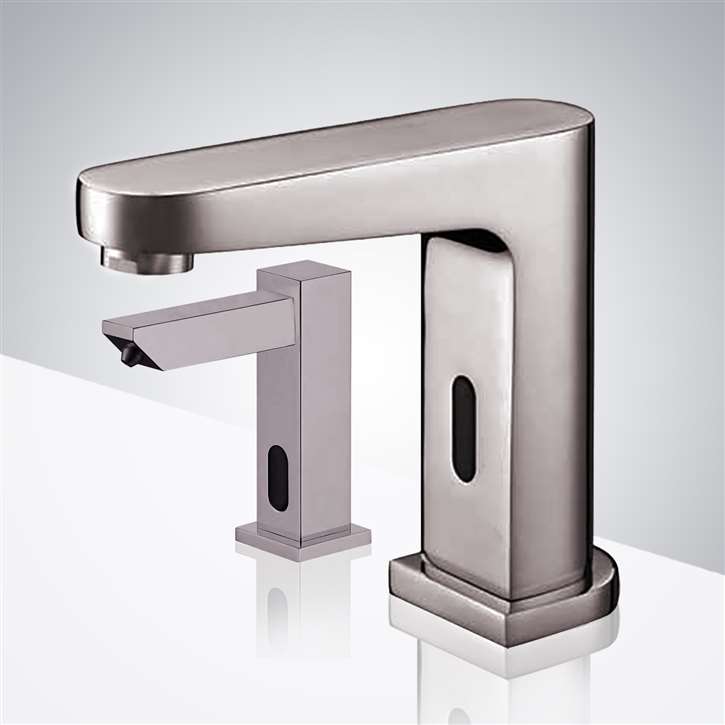
Fontana MultiFeed Capacity and Reservoir Sizing Guide
Connected Dispenser Head Capacity Planning | FS10224

Reservoir Sizing for Commercial Washstations | FS10206C
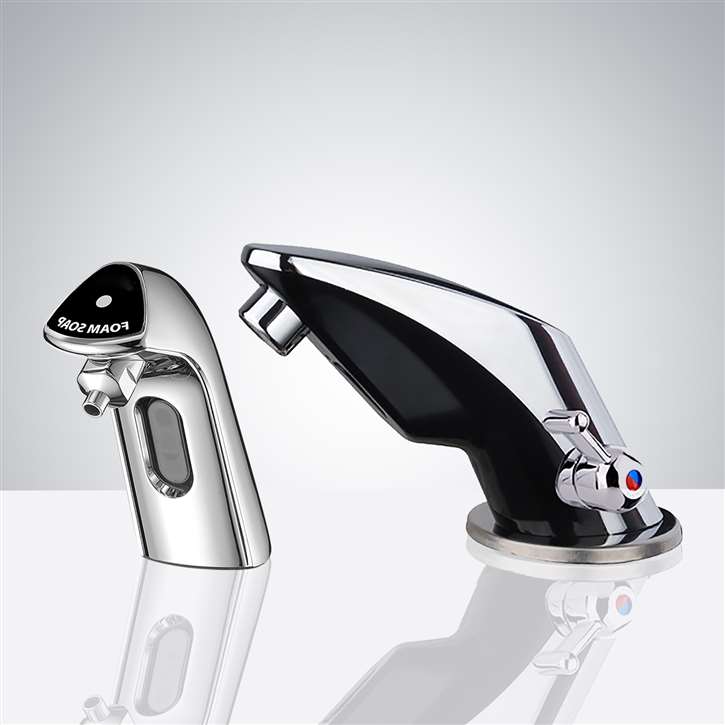
Traffic Volume and Soap Consumption Planning | FS1865SD

Tubing Runs, Dispensing Heads and System Capacity | FS10202

Multi-Station Capacity Planning for Public Restrooms | FS10214
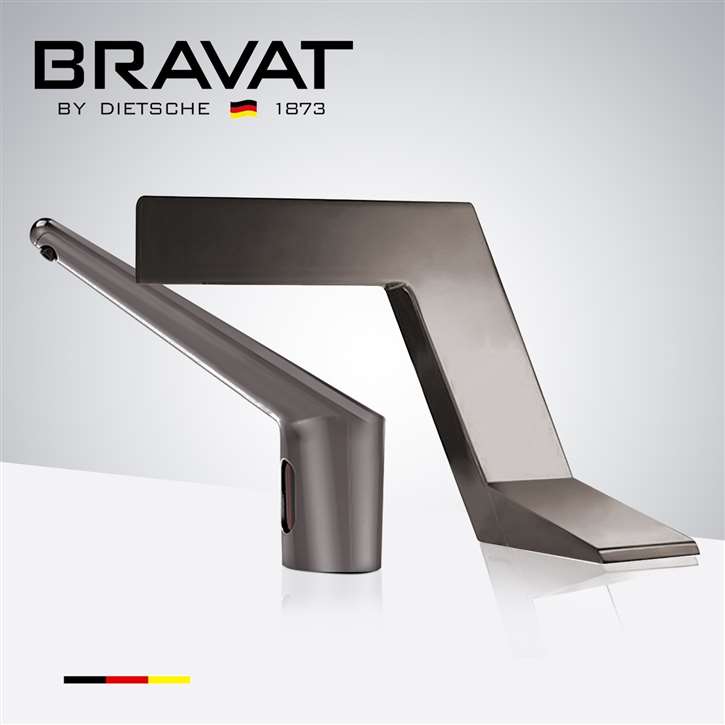
Refill Frequency and Maintenance Capacity Planning | FS18556

High-Traffic Soap-System Capacity Decisions | FS18110