Commercial Specification
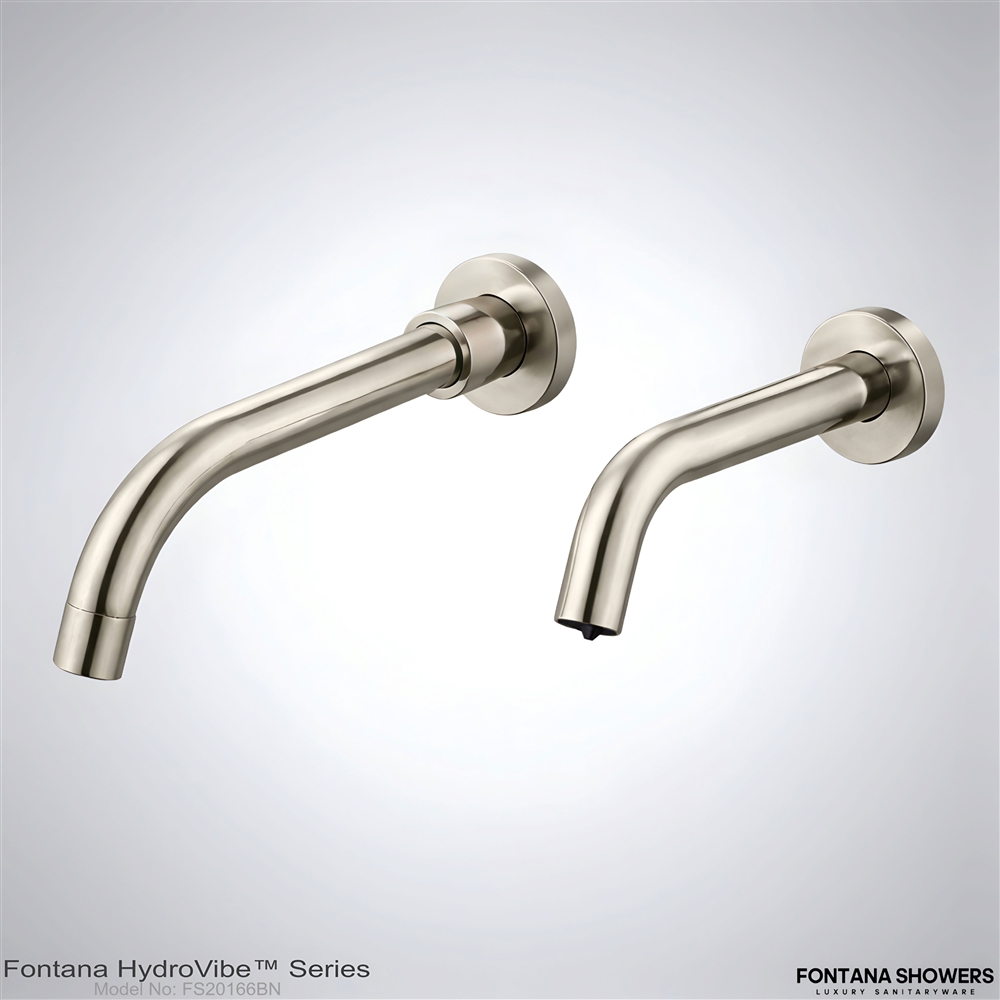
Specifying a commercial automatic soap dispenser requires more than selecting a touchless fixture from a catalog. Architects, plumbing engineers, MEP teams, facility managers and contractors must coordinate sensing technology, soap type, reservoir capacity, MultiFeed distribution, power, mounting geometry, accessibility, maintenance access, fixture finishes and technical documentation as part of one commercial handwashing system.
MultiFeed vs Individual Automatic Soap Dispensers: Lifecycle Cost, Refill Labor & ROI for High-Traffic Commercial Restrooms
For airports, stadiums, hospitals, universities, convention centers, office towers and other large facilities, the cost of an automatic soap dispenser is not simply its purchase price. The larger financial question is how the soap system affects custodial labor, refill frequency, consumable inventory, maintenance access, downtime and service calls over years of operation. This guide compares centralized MultiFeed automatic soap systems with individual-reservoir dispensers from a facility-management and lifecycle-cost perspective.
The Real Cost Is the System Around the Dispenser
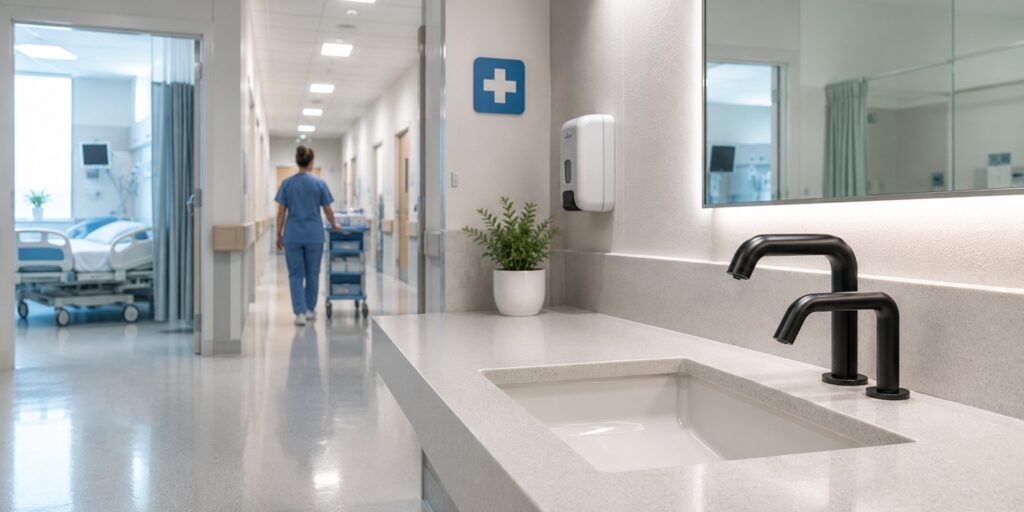
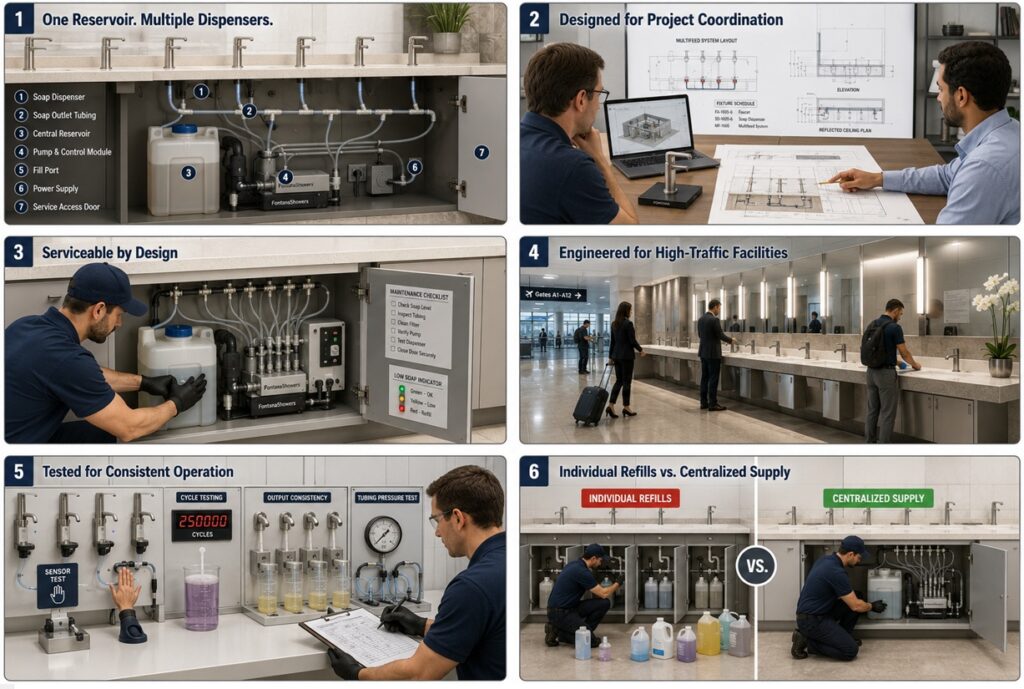
A restroom may contain six, eight, twelve or more automatic soap dispensing points. If every dispenser has its own small reservoir, every dispensing point becomes an individual maintenance location.
That means the facility team may need to inspect, open, refill, clean, prime, reset and troubleshoot each unit separately.
A centralized MultiFeed architecture changes that operating model by allowing multiple dispensing heads to draw from a common soap source.
Individual Reservoir vs Central MultiFeed
| Factor | Individual Automatic Dispensers | Central MultiFeed System |
|---|---|---|
| Soap Supply | Separate local reservoir at each dispenser | Shared central reservoir |
| Refill Locations | Multiple | Consolidated |
| Inspection Points | Each dispenser | Central supply plus dispensing heads |
| Initial Simplicity | High | More system coordination required |
| Installation | Relatively independent | Reservoir, tubing and distribution required |
| Service Architecture | Distributed | Centralized |
| High-Traffic Scaling | More individual refill points | Can consolidate servicing |
| Failure Isolation | Local failure generally affects one dispenser | Architecture should be designed for serviceability and branch isolation |
| Space Requirement | Local reservoir space at each point | Central reservoir space plus distribution path |
| Retrofit Simplicity | Often easier | Layout dependent |
What Belongs in a 10-Year Total Cost of Ownership Model?
A defensible lifecycle analysis should include more than dispenser acquisition.
Equipment + Installation + Soap + Refill Labor + PM + Repairs + Power/Consumables + Inventory + Downtime
The Refill Math
The first useful calculation is daily soap demand.
Daily Activations × Soap Dose per Activation = Daily Soap Consumption
For multiple dispensing positions:
Number of Dispensers × Activations per Dispenser × Dose = Total Daily Soap Demand
The estimated theoretical refill interval is then:
Usable Reservoir Volume ÷ Daily Soap Demand = Days Between Refills
Illustrative 12-Dispenser High-Traffic Restroom Model
The following example is deliberately an illustrative facility model, not a manufacturer performance claim.
Assume:
The daily soap demand would be:
Approximately 2.4 liters of soap per operating day
That same 2.4 liters must be replenished regardless of whether it is distributed through twelve individual reservoirs or a central system.
The difference is primarily where, how and how often custodial staff must perform the service work.
Why Refill Labor Can Become More Important Than Tank Capacity
Consider two service architectures.
Refill Events × Minutes per Event ÷ 60 × Loaded Labor Rate
This is where owners should insert their own numbers.
| Input | Facility Value |
|---|---|
| Number of dispensing heads | ________ |
| Individual refill events per year | ________ |
| Average minutes per refill event | ________ |
| Central refill events per year | ________ |
| Average central refill time | ________ |
| Loaded custodial labor rate | $________ / hour |
| Annual individual-system labor | $________ |
| Annual MultiFeed labor | $________ |
| Estimated annual labor difference | $________ |
Fontana MultiFeed™: What Is Currently Documented?
Fontana’s current MultiFeed material describes a centralized soap-distribution architecture intended to reduce the need to refill many small reservoirs individually.
Current Fontana documentation also describes a large sealed soap container capable of supporting up to twelve dispensing positions in a MultiFeed configuration.
Why “Up to 12 Dispensers” Can Matter Operationally
A central system capable of serving a large dispenser bank can change the maintenance workflow substantially.
Instead of treating each soap head as a separate consumable-storage point, the facility can manage the group as a dispensing network.
Fontana Is Not the Only MultiFeed Architecture
A fair lifecycle study should compare the actual systems available for the project rather than presenting central-feed soap as unique to one manufacturer.
| Manufacturer | Documented Central / Multi-Head Approach | Important Difference |
|---|---|---|
| Fontana | MultiFeed centralized architecture; current overview describes support for up to 12 dispensers | Verify exact tank/head configuration for selected model |
| American Specialties / ASI | EZ Fill Multi-Feed system supports up to 12 automatic dispensers | Documented 6 L tank with maximum six dispensers on each side |
| Bradley | MultiFeed available on selected commercial systems | Selected Verge documentation describes up to six dispensers |
| TOTO | Multi-spout automatic soap architecture | Controller/tank configurations differ from other MultiFeed systems |
| Stern | MultiFeed versions available on selected models | Architecture and soap compatibility vary by model |
Soap Cost: Dose Matters More Than Many Buyers Realize
A difference of only a fraction of a milliliter per activation can become significant when multiplied across thousands or millions of annual activations.
Annual Activations × Average Dose per Activation = Annual Soap Consumption
For example, an illustrative facility with 1,000,000 annual soap activations:
| Dose | Annual Soap Volume | Difference vs 0.6 mL |
|---|---|---|
| 0.6 mL | 600 L | Baseline |
| 0.8 mL | 800 L | +200 L |
| 1.0 mL | 1,000 L | +400 L |
| 1.2 mL | 1,200 L | +600 L |
These figures are mathematical examples only. Actual dose should always be taken from the selected manufacturer’s technical documentation or measured during commissioning.
How to Calculate MultiFeed Payback
A centralized system can require more coordination and potentially greater initial installation cost than independent dispensers.
The economic question is whether recurring savings recover that incremental investment.
Individual-System Annual Operating Cost − MultiFeed Annual Operating Cost
Additional MultiFeed Installed Cost ÷ Annual Operating Savings = Payback Period
10-Year Avoided Operating Cost − Additional Installed Cost = Net Lifecycle Benefit
Illustrative Labor-Savings Scenario
Here is a simple example showing how an owner can perform the calculation. These values are hypothetical and are not Fontana performance guarantees.
| Assumption | Individual System | MultiFeed |
|---|---|---|
| Dispensing heads | 12 | 12 |
| Soap service events / year | 600 distributed events | 120 centralized events |
| Average labor / event | 4 minutes | 8 minutes |
| Total annual refill labor | 40 hours | 16 hours |
| Illustrative loaded labor rate | $35/hour | $35/hour |
| Annual refill labor | $1,400 | $560 |
| Illustrative difference | $840/year | |
If the centralized installation cost an additional $2,500 in this hypothetical example, simple refill-labor payback alone would be approximately three years.
That result would change immediately if labor cost, service frequency, installation cost or refill duration changed—which is exactly why project-specific inputs matter.
Where MultiFeed Economics Become Most Attractive
When Individual Reservoirs May Still Be the Better Choice
MultiFeed is not automatically the correct solution.
Do Not Trade Maintenance Efficiency for Accessibility Problems
Central reservoirs and under-counter equipment must be coordinated with the accessible lavatory.
The U.S. Access Board explains that soap dispensers at accessible lavatories must be located within applicable reach ranges and conveniently usable from the accessible lavatory. Required knee and toe space must also support the reach to soap dispensers and other operable parts.
MultiFeed ROI Data Sheet for Facility Managers
Commercial Automatic Soap Dispenser Research Series
These supporting Fontana resources are directly relevant to lifecycle, capacity, specification and maintenance planning.
Central soap distribution, system architecture and commercial MultiFeed planning.
MultiFeed EngineeringCurrent Fontana explanation of centralized soap storage and multi-dispenser operation.
System OverviewInstallation, maintenance, retrofit and system-planning considerations.
MultiFeed FAQHow traffic, reservoir capacity, dose and reserve affect refill intervals.
Refill Frequency GuideFontana’s commercial automatic soap-dispenser collection and product resources.
Automatic Soap SystemsAEC guidance for touchless faucet and automatic soap-dispenser bid documents.
Specification GuideIndependent Commercial System & Accessibility References
Independent commercial system example documenting up to 12 automatic dispensers from a 6-liter central reservoir.
ASI Multi-FeedOfficial ADA requirements and advisory guidance for accessible lavatories and dispensers.
ADA Chapter 6Detailed guidance covering knee/toe space, reach depth and touch-free controls.
Lavatory GuidanceMultiFeed vs Individual Automatic Soap Dispenser FAQ
What is a MultiFeed automatic soap dispenser system?
It is an architecture in which multiple automatic dispensing heads receive soap from a shared central reservoir rather than relying exclusively on a separate small soap reservoir at every dispensing point.
Does Fontana offer MultiFeed?
Yes. Fontana currently publishes dedicated MultiFeed system information for commercial automatic soap dispensing applications.
Can Fontana MultiFeed support twelve dispensers?
Fontana’s current MultiFeed system overview states that a large centralized soap container can support up to twelve soap dispensers. Because Fontana also publishes other MultiFeed configurations with different capacities and head counts, the exact selected system should be confirmed during specification.
Does MultiFeed always save money?
No. Savings depend on fixture count, traffic, labor cost, refill frequency, installation cost, maintenance requirements and the selected system.
Where is MultiFeed most useful?
It becomes especially relevant in high-traffic facilities with many dispensing positions, including airports, stadiums, hospitals, universities, convention centers and large office buildings.
Is MultiFeed better for small restrooms?
Not necessarily. A small low-traffic restroom with only a few dispensers may not generate enough recurring refill labor to justify centralized infrastructure.
What determines soap consumption?
The main variables are the number of activations and the quantity of soap dispensed during each activation.
What is the biggest MultiFeed lifecycle advantage?
For many large facilities, the key advantage is the potential to consolidate soap replenishment and reduce repeated servicing of numerous individual reservoirs.
Are there disadvantages to MultiFeed?
Yes. A centralized system requires appropriate space, tubing and installation coordination, and its initial installed cost can be higher than simple stand-alone dispensers.
How should an owner calculate ROI?
Compare the incremental installed cost of MultiFeed with annual differences in refill labor, soap, consumables, preventive maintenance, corrective maintenance and other operating costs.
Final Recommendation
For low-volume restrooms with only a few automatic soap dispensers, independent reservoirs can remain a practical and economical solution.
As restroom traffic and fixture count increase, however, the economic equation changes.
Every individual reservoir becomes another location that must be monitored, accessed and replenished. In airports, stadiums, hospitals, universities, convention centers and large commercial buildings, that distributed maintenance work can become a significant recurring operating expense.
Central MultiFeed systems attack that problem by changing the maintenance architecture—not simply by increasing tank size.
The strongest business case for MultiFeed occurs when a project combines high traffic, many dispensing positions, expensive custodial labor, frequent refill requirements and a suitable central service location.
The final decision should therefore be based on measured or defensible project inputs: actual soap demand, dose, reservoir size, labor rate, refill duration, maintenance history, installation cost and required service level.
MultiFeed and Individual Soap Dispenser Planning Guides
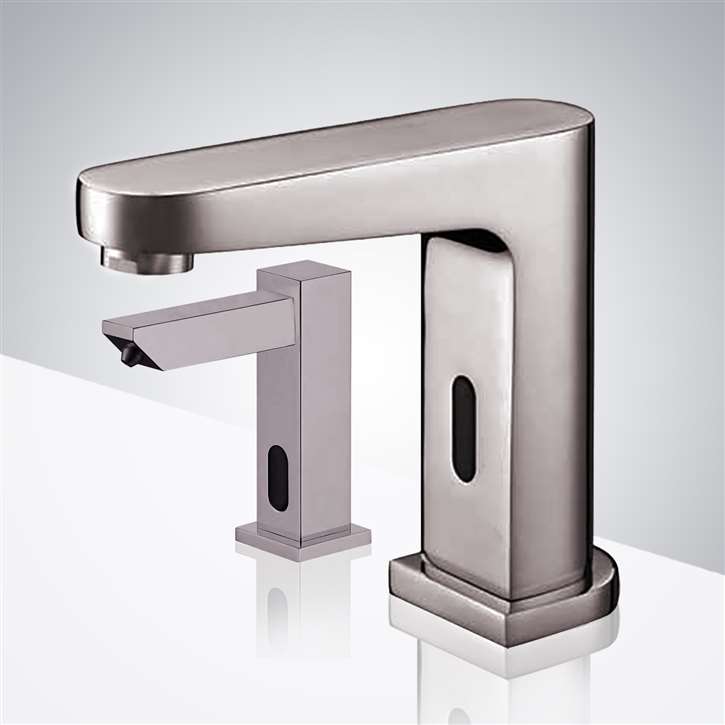
MultiFeed Versus Individual Automatic Soap Dispensers
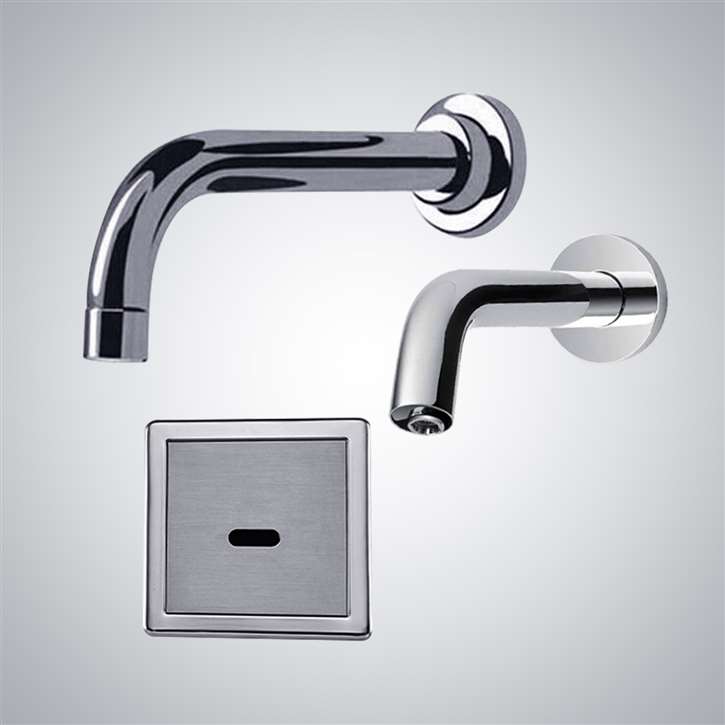
Comparing Central and Individual Reservoir Architecture | FS10224

Commercial Dispenser Reservoir and Refill Planning | FS10206C
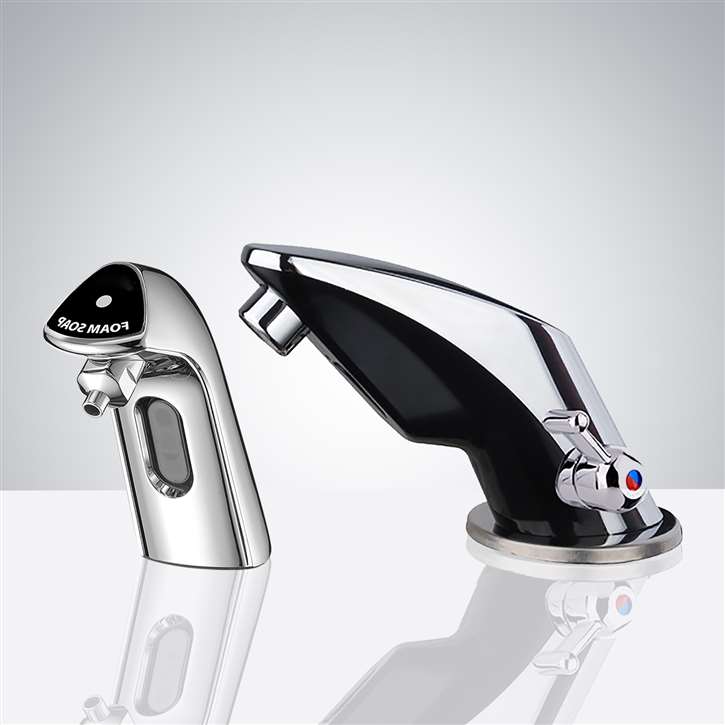
Individual Dispenser Installation and Service Access | FS1865SD

Countertop and Under-Counter Equipment Planning | FS10202

Selecting Dispenser Architecture for Multiple Basins | FS10214
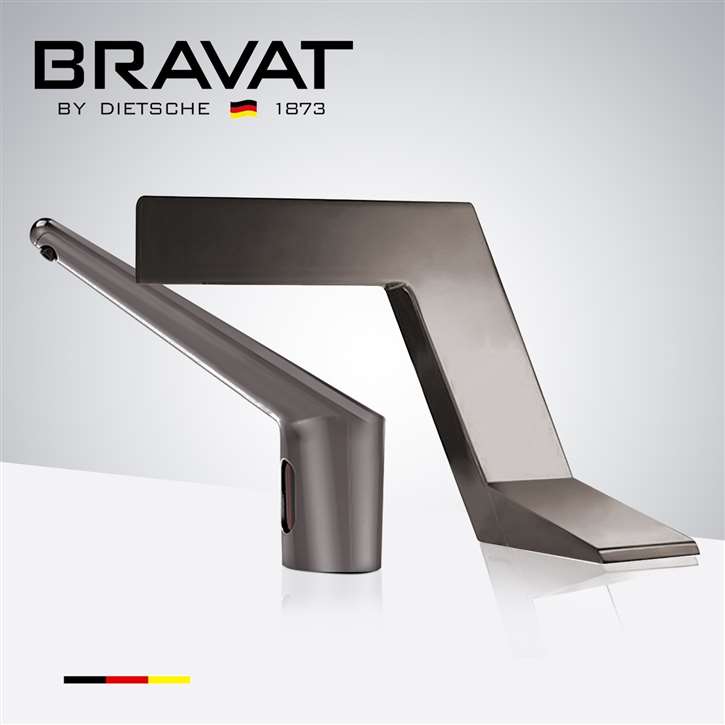
Maintenance Comparison for Central and Individual Systems | FS18556

Soap Capacity and High-Traffic Restroom Planning | FS18110