
Commercial Faucet Diagnostics and Preventive Maintenance
A leaking, slow-closing, continuously running, or intermittently activating commercial faucet is an operational condition that should be diagnosed at the fixture, control, supply, power, and installation levels. This guide is written for facility teams, plumbing contractors, engineers, and specifiers managing public, institutional, hospitality, healthcare, education, workplace, and other high-use lavatories.

Treat Leakage as a Fixture-Performance Condition
In a commercial restroom, leakage is not simply a nuisance at the spout. It can indicate a control-valve problem, solenoid contamination, unstable supply conditions, failed sealing surfaces, loose connections, poor basin coordination, or a recurring installation issue. The objective is to identify the failure mode, correct the root cause, verify operation under repeated cycles, and document the service event.
Conditions Facility Teams Should Distinguish Before Service
Different symptoms point to different systems. Establishing the observed operating condition before disassembly reduces unnecessary parts replacement and repeated service calls.
Outlet Drip After Shutoff
Review the cartridge, valve seat, solenoid diaphragm, debris path, pressure condition, or control component responsible for final shutoff.
Continuous Flow
For sensor-operated fixtures, check sensing, controller state, power, solenoid closure, diaphragm condition, debris, and any manual override or bypass configuration.
Leakage at Base or Below Deck
Inspect mounting interfaces, supply connections, hoses, fittings, seals, valve bodies, and any below-counter control assemblies for the actual source.
Delayed or Incomplete Shutoff
Evaluate the valve or solenoid assembly together with inlet filtration, supply pressure, debris, power stability, and controller response.
Intermittent or False Activation
Check sensor alignment, reflective surfaces, basin geometry, nearby objects, power condition, wiring, controller settings, and the manufacturer-specified sensing environment.
Splashing or Poor Stream Landing
Confirm spout reach, outlet angle, flow rate, aerator condition, basin depth, drain position, backsplash clearance, and fixture alignment.
Symptom-to-System Review for Commercial Faucets
| Observed Condition | Primary Systems to Check | Commercial Service Focus |
|---|---|---|
| Drip with fixture idle | Cartridge, valve seat, solenoid, diaphragm, debris, pressure | Verify true shutoff, inspect model-specific control components, and confirm supply conditions before component replacement. |
| Water at faucet base | Mounting, body seals, deck interface, supply connections | Trace the source above and below deck; do not assume the visible wet point is the origin. |
| Continuous sensor flow | Sensor, controller, wiring, power, solenoid, valve path | Separate an electronic activation problem from a hydraulic closure problem. |
| No activation | Power, battery, transformer, sensor, wiring, controller, solenoid | Confirm power and control response before replacing hydraulic components. |
| Low or unstable flow | Stops, filters, aerator, inlet debris, pressure, mixing components | Check upstream restrictions and serviceable filtration before treating the faucet body as the root cause. |
| Repeated splash complaints | Spout reach, flow, aerator, basin geometry, mounting position | Evaluate faucet-to-basin coordination rather than reducing the issue to a cleaning or housekeeping problem. |
| Repeated failures across several fixtures | Shared pressure, water quality, filtration, installation, power distribution, maintenance practice | Escalate from fixture-level service to a system-level review. |


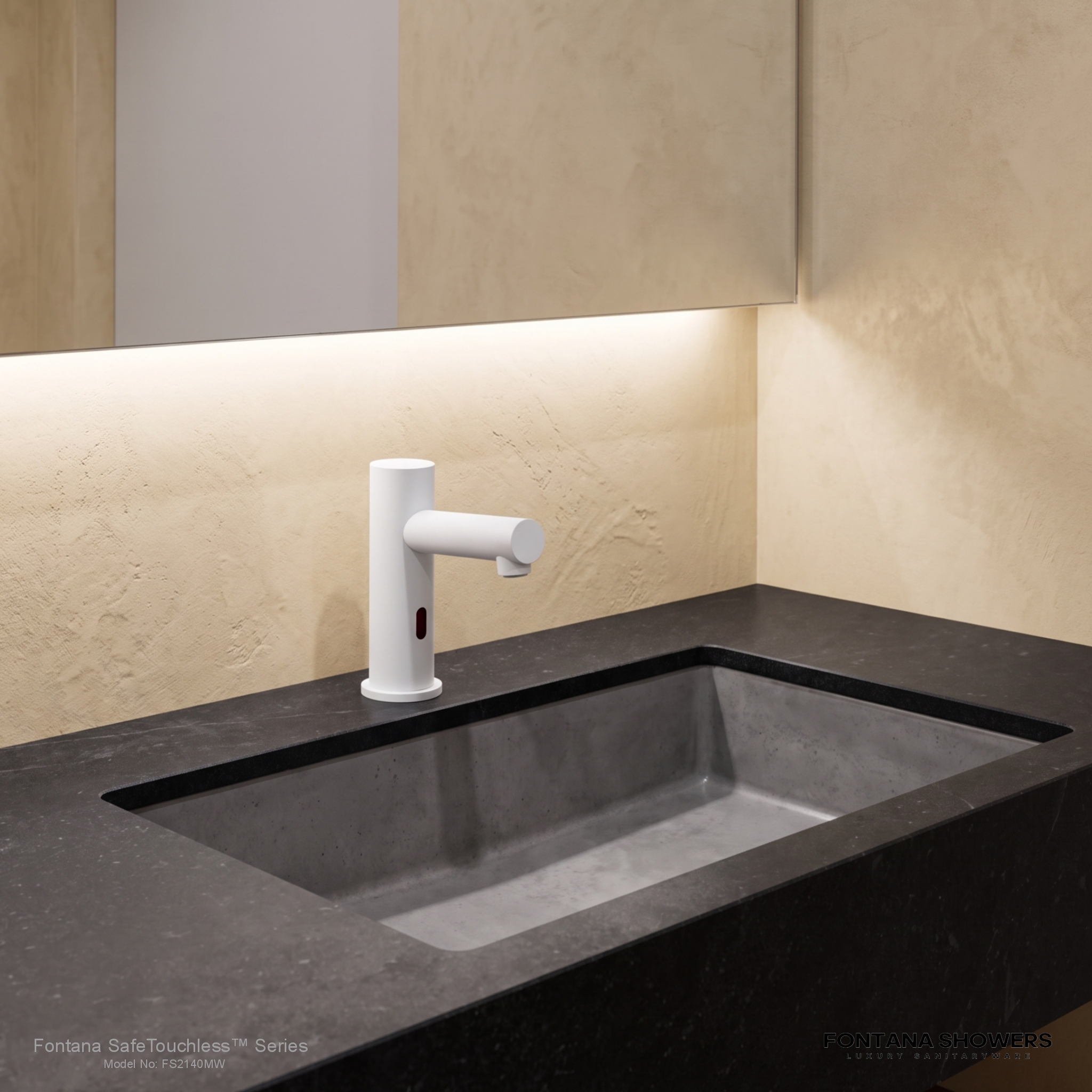



Separate Electronic, Hydraulic and Installation Causes
Sensor-operated faucets add power, sensing, controller, wiring, and solenoid systems to the hydraulic path. A fixture that stays on is not automatically a sensor failure, and a fixture that fails to activate is not automatically a valve failure. Commercial diagnosis should isolate the system responsible for the symptom.
Touchless Diagnostic Sequence
Power and Control
Confirm the specified power source, battery condition where applicable, transformer supply, connectors, controller status, and any visible wiring condition before opening hydraulic assemblies.
Sensing Environment
Inspect the sensor window, detection area, reflective basin or backsplash surfaces, nearby objects, and fixture alignment. Evaluate false activation as an installation-and-environment condition as well as a controls issue.
Solenoid and Valve Path
Where the controller is calling correctly but flow does not start or stop correctly, inspect the model-specific solenoid, diaphragm, inlet screen, debris path, and valve assembly.
Supply Conditions
Confirm service stops, inlet filtration, water pressure, and any mixing components. Shared pressure or debris conditions can affect multiple fixtures at once.
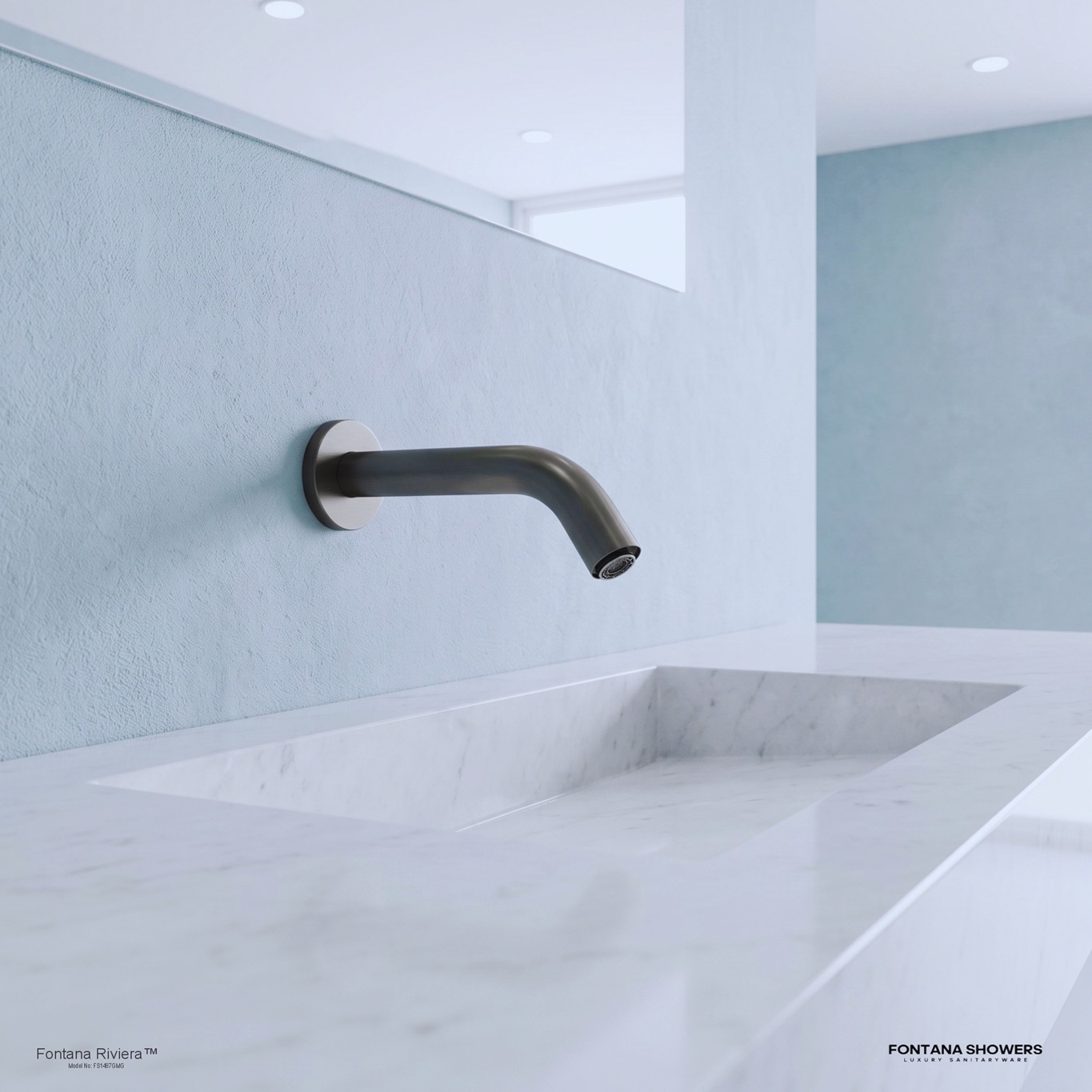
Commercial Faucet Diagnostic Procedure
The workflow below is intended as a facility-service framework. Product-specific installation and service documentation remains the controlling source for component access, electrical work, replacement parts, and reassembly.
Identify the Fixture
- Record manufacturer, model, location, finish, power configuration, and installation type.
- Review the applicable installation, service, parts, or troubleshooting documentation.
- Check whether the same symptom exists at adjacent fixtures.
Define the Failure Mode
- Observe the fixture through several operating cycles.
- Identify whether the condition is hydraulic, electronic, mechanical, installation-related, or mixed.
- Document outlet, base, below-deck, or supply-side leakage separately.
Isolate Safely
- Use facility-approved procedures to isolate water.
- For powered fixtures, isolate the applicable power source before service where required.
- Verify that the fixture is depressurized and safe to access.
Check Upstream Conditions
- Inspect stops, filters, strainers, supply hoses, pressure, and visible debris.
- Confirm mixing or tempering components where part of the installation.
- Correct shared supply issues before replacing downstream controls.
Service the Identified System
- Access only components covered by the model-specific service procedure.
- Inspect cartridges, valves, solenoids, diaphragms, seals, connectors, aerators, or filters as applicable.
- Use approved replacement parts matched to the identified model.
Recommission and Record
- Restore water and power in accordance with the product procedure.
- Test activation, flow, shutoff, leakage, stream landing, and repeatability.
- Record corrective action, parts used, and any broader facility issue requiring follow-up.

Return the Fixture to Service Only After Performance Verification
A successful service event ends with commissioning, not reassembly. The fixture should operate consistently through repeated cycles without leakage, false activation, incomplete shutoff, unstable flow, or unacceptable splash.
Commercial Maintenance Practices That Reduce Repeat Calls
| Maintenance Area | Facility Practice | Why It Matters |
|---|---|---|
| Fixture identification | Maintain an asset list by location, model, power type, finish, and service-part family. | Improves parts control and reduces incorrect substitutions. |
| Inlet filtration | Inspect and service strainers or filters at intervals appropriate to water quality and usage. | Debris can affect flow, cartridges, solenoids, and diaphragms. |
| Power systems | Track battery replacement, transformer service, connectors, and power distribution for sensor fixtures. | Prevents electrical symptoms from being misdiagnosed as hydraulic failures. |
| Sensor surfaces | Use compatible non-abrasive cleaning methods around sensing windows and finishes. | Protects detection performance and finish condition. |
| Basin coordination | Review recurring splash complaints for reach, angle, flow, basin depth, drain position, and mounting alignment. | Separates installation geometry from fixture malfunction. |
| Service history | Track repeat events by fixture and by restroom bank. | Reveals shared pressure, water-quality, installation, or maintenance-process issues. |
When the Issue Should Move Beyond Routine Fixture Service
Escalate the condition when the same failure repeats after approved service, when several fixtures show the same symptom, when supply pressure or water quality appears unstable, when concealed leakage is suspected, when electrical faults exceed the maintenance scope, or when the installed faucet and basin geometry are fundamentally incompatible. At that point, the corrective action may involve plumbing-system review, electrical review, specification changes, fixture replacement, or installation modification rather than another isolated service call.

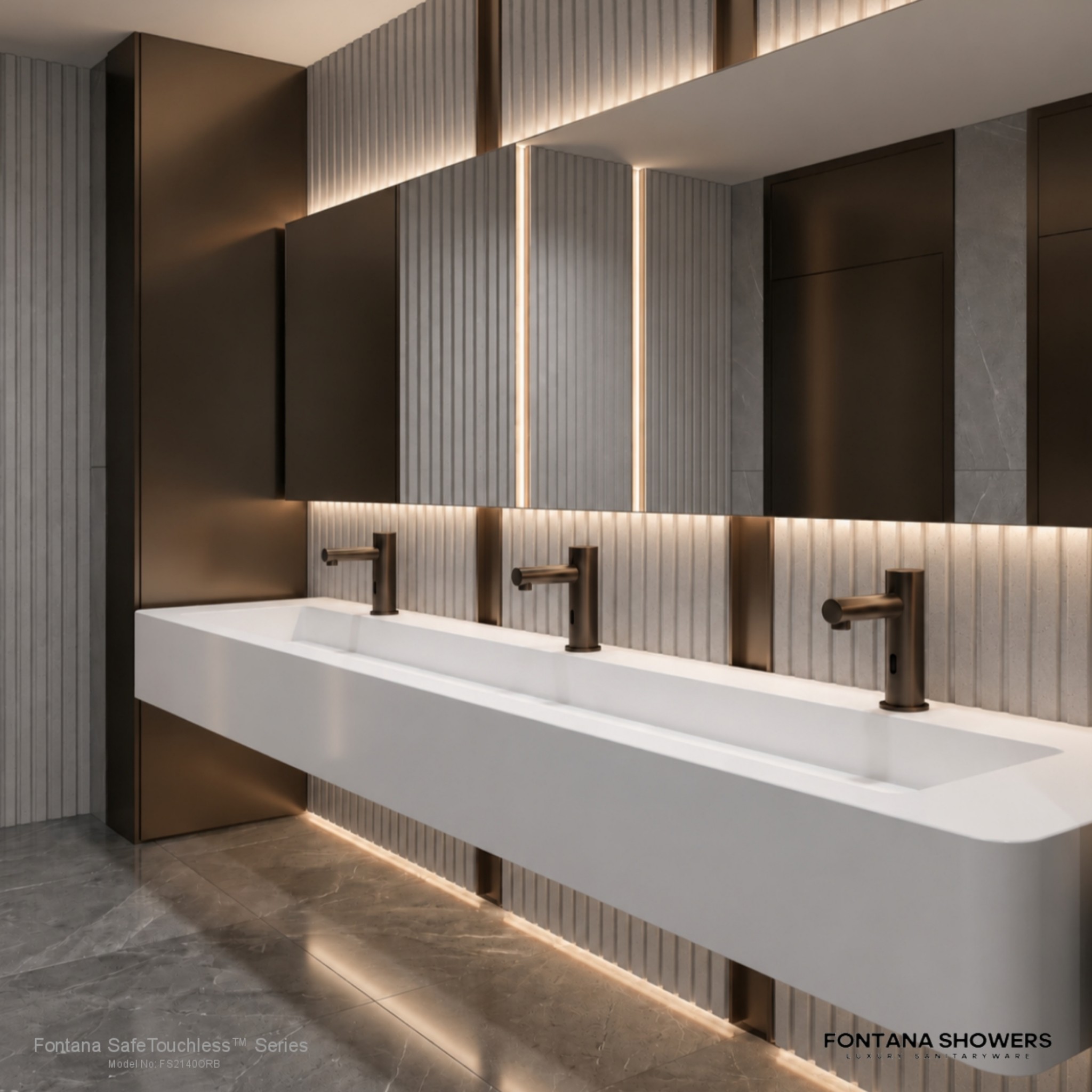

Information Worth Preserving for Long-Term Serviceability
Commercial faucet performance is easier to maintain when the project record contains the operating information facility teams actually need.
Model and Product Identification
Keep the exact model, finish, mounting type, flow configuration, and power type associated with each fixture family.
Rough-In and Connection Data
Retain supply sizes, stop locations, control-module locations, hose routing, electrical requirements, and service-clearance information.
Approved Service Parts
Maintain current part references for cartridges, solenoids, diaphragms, sensors, controllers, aerators, filters, batteries, and power components used by the installed model.
Commissioning Records
Record initial operating checks, sensor behavior, flow condition, basin coordination, and any field adjustments made at turnover.
Related Touchless Faucet Categories
Commercial faucet diagnostics, sensor-faucet troubleshooting, preventive maintenance, recommissioning, basin coordination, and facility service planning for high-use lavatory environments.
