

How to Prevent User Confusion with Touchless Soap Dispensers in Commercial Restrooms
A touchless dispenser should feel intuitive. When users cannot tell where to place their hands, they wave near the wrong area or touch the fixture anyway. Fontana system layouts help reduce confusion by creating a more logical relationship between dispenser, faucet, basin, and user movement.
Why Users Struggle with Touchless Soap Dispensers
Sensor Visibility
Many dispensers have small or recessed sensors that users cannot see, forcing them to guess where to place their hands.
Poor Dispenser Placement
Dispensers positioned too high, too low, or too far from the faucet create unnatural hand positions.
User Expectations
Users expect immediate activation. Delayed response leads to frustration and repeated hand waving.
Mixed Fixture Layouts
Inconsistent placement across different sinks confuses users who move between restrooms.
Inconsistent Activation Zones
Different dispenser models have different detection zones, creating inconsistent user experiences.
Common User Mistakes with Automatic Soap Dispensers
Waving Hands Above the Sensor
Users often wave above the sensor instead of directly under the nozzle, missing the detection zone.
Standing Too Far Away
When users stand too far from the sink, their hands never enter the sensor’s detection zone.
Searching for Manual Controls
Users accustomed to manual dispensers search for buttons or levers that don’t exist.
Touching the Fixture
Frustrated users may resort to touching or tapping the dispenser, defeating its purpose.
Blocking the Sensor
Soap residue, water spots, or dirt on the sensor lens prevents proper detection.
Touchless Soap Dispenser vs Manual Soap Dispenser
| Feature | Touchless Soap Dispenser | Manual Soap Dispenser |
|---|---|---|
| Hygiene | Excellent – no contact required | Standard – pump handle touched by all users |
| User Guidance | Important – clear sensor placement needed | Minimal – handle is self-explanatory |
| Maintenance | Moderate – sensor cleaning, battery replacement | Standard – refill only |
| User Satisfaction | Higher – modern, hygienic | Standard – familiar but less sanitary |
| Soap Waste | Lower – pre-measured dispensing | Higher – user-dependent overuse |
Best Practices for Touchless Soap Dispenser Placement
Distance from Faucet
4-6 inches from faucet spout creates natural hand movement between soap and water.
Height Recommendations
Install 6-8 inches above counter for standard reach, lower for ADA compliance.
Visibility
Choose dispensers with visible sensor indicators to guide user hand placement.
User Flow
Position dispenser on the same side as the faucet handle entry point for logical sequencing.
Accessibility
Ensure dispenser is reachable from seated position for ADA compliance.
Touchless Fixture Placement Guide for Optimal User Experience
Soap Dispenser
Closest to user entry point, 4-6 inches from faucet
Touchless Faucet
Center of basin, adjacent to dispenser
Hand Dryer
Exit side of sink area, away from water splash zone
Trash Receptacle
Near restroom exit, clear of traffic flow
Benefits of Touchless Handwashing Stations for Restroom User Experience
Reduced Frustration
Clear sensor zones and consistent placement reduce user confusion and frustration.
Faster Handwashing
Intuitive fixtures speed up the handwashing process, reducing restroom congestion.
Improved Restroom Efficiency
Faster user throughput reduces peak-period congestion and wait times.
Better Hygiene Perception
Users perceive facilities with touchless fixtures as cleaner and more modern.
Designing a Complete Touchless Handwashing Station
A well-designed touchless handwashing station coordinates five key components to create a seamless user experience:
Soap Dispenser
First fixture users encounter
Touchless Faucet
Center of basin, consistent activation
Basin Design
Adequate splash control, sensor-friendly
Hand Dryers
Positioned to avoid recontamination
User Movement Flow
Logical progression from entry to exit
Commercial Facilities That Benefit Most from Touchless Soap Dispensers
Airports
Hospitals
Hotels
Universities
Office Buildings
Public Facilities
Shopping Centers
Restaurants
Facility Management Considerations for Touchless Soap Dispensers
Refill Frequency
Commercial-grade dispensers with larger reservoirs reduce refill frequency in high-traffic facilities.
Sensor Maintenance
Weekly sensor cleaning prevents activation failures and user frustration.
Battery Management
Replace batteries every 1-2 years; use lithium batteries for longer life.
Cleaning Procedures
Use mild soap and soft cloths; avoid abrasive cleaners that damage sensors.
Total Cost of Ownership
Consider purchase price + maintenance + soap consumption + battery replacement over 5-10 years.
Making Touchless Use More Natural
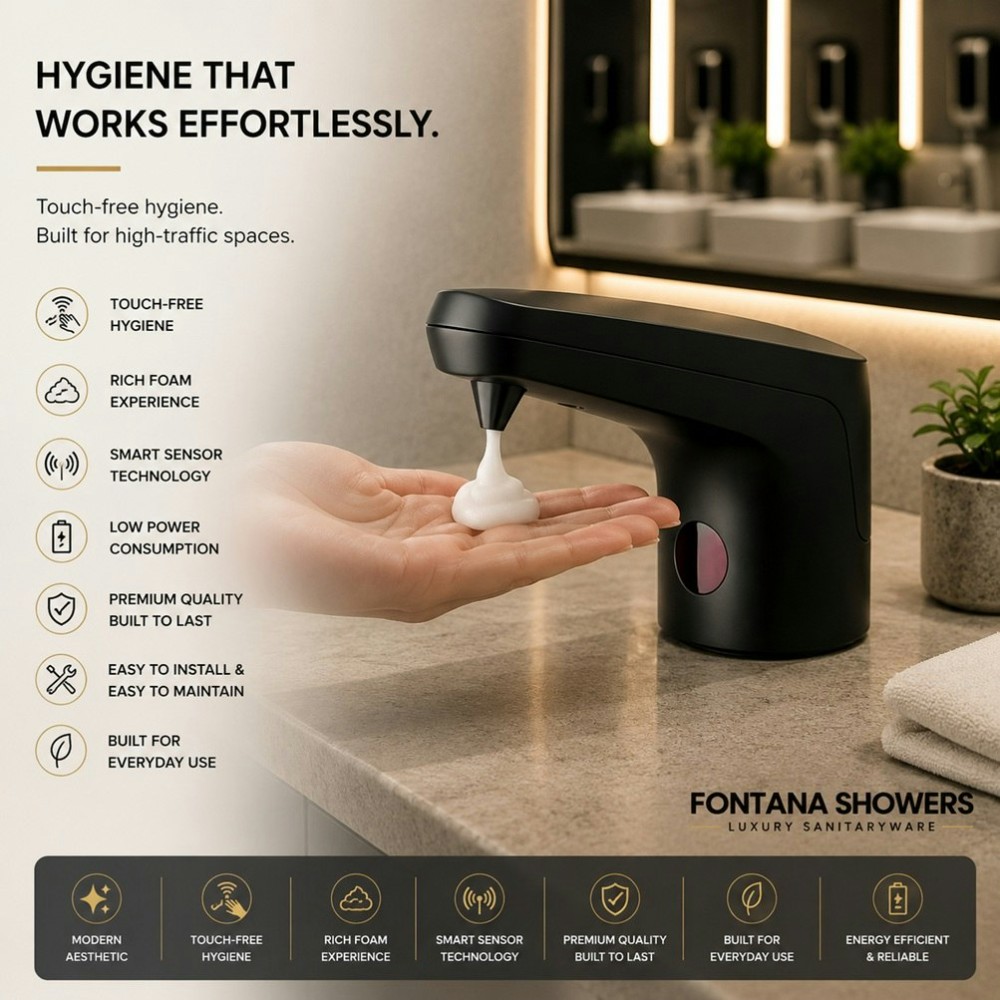
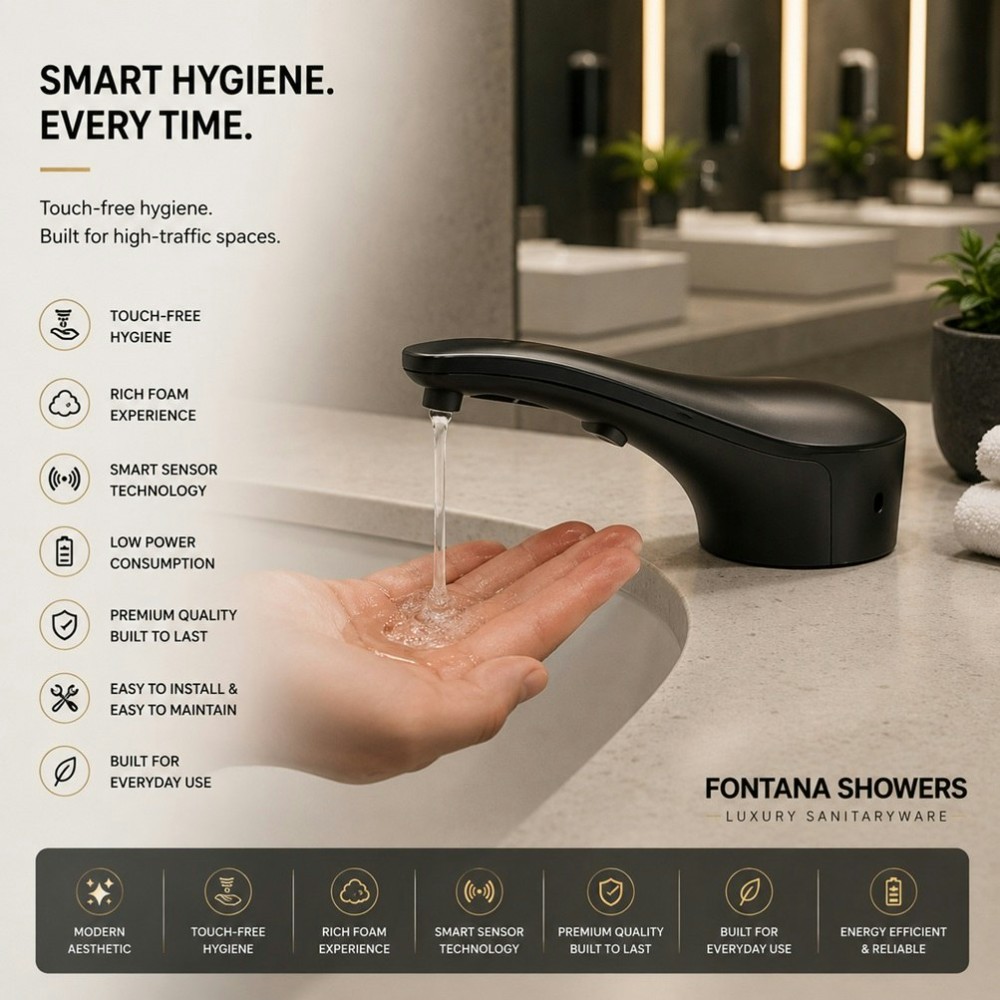
Users respond best when fixtures guide them without instruction. Properly positioned dispensers help create an easy sequence: hands under soap, hands under water, and away from the basin with minimal delay.
Reducing Accidental Touchpoints
When activation feels predictable, users are less likely to press, tap, or handle the dispenser. This supports the purpose of a touchless restroom system.
A clearer user path also helps reduce restroom congestion during peak periods in hotels, offices, airports, and healthcare buildings.
Facility Management Issues with Sensor Faucet Reliability
Facility management issues often appear when faucets fail to activate, soap dispensers clog, batteries drain too quickly, or restroom users experience inconsistent touchless performance.
Touchless Bathroom Faucet Temperature Control Issues
Helps facility teams reduce complaints about inconsistent water temperature and poor restroom user comfort.
Commercial Hands-Free Sink Facility Management Issues
Addresses hygiene complaints, cleaning concerns, water-control problems, and high-traffic restroom performance issues.
Delta Sensor Faucet Troubleshooting for No-Flow Problems
Useful for diagnosing no-flow, continuous-flow, sensor failure, and maintenance call escalation issues.
Automatic Faucet Will Not Shut Off Water Waste Issue
Helps facility managers address stuck sensors, running water, solenoid failures, and utility cost concerns.
Deck Mount Sensor Faucet Installation Issues
Supports facility planning around sink compatibility, deck spacing, sensor angle, and fixture replacement.
Best Auto Soap Dispensers for Refill Waste Issues
Helps solve over-dispensing, refill frequency, messy counters, and soap-consumption management problems.
Black Wall Mount Sensor Faucet for Space Issues
Solves counter-space limitations, wall-mount planning concerns, and modern restroom finish coordination issues.
Pros and Cons of Automatic Soap Dispensers for Facility Issues
Reviews maintenance workload, refill logistics, hygiene benefits, and common operational concerns.
Explore commercial touchless soap dispensers and faucets engineered for airports, healthcare facilities, office buildings, universities, and hospitality projects. Compare sensor technologies, placement options, and durable commercial-grade construction developed to support long-term facility management goals.
View complete commercial touchless collection →
Frequently Asked Questions About Touchless Soap Dispensers
Why is my touchless soap dispenser not dispensing soap? +
Common causes include dirty sensor lens, low batteries, empty cartridge, or clogged nozzle. Clean the sensor, replace batteries, refill the cartridge, or clear the nozzle with warm water.
Where should a touchless soap dispenser be installed? +
Install 4-6 inches from the faucet spout, 6-8 inches above the counter, with the nozzle angled 45 degrees downward. This creates a natural hand position under both soap and water.
How do users activate automatic soap dispensers? +
Users place their hands directly under the nozzle, within 2-4 inches of the sensor. Most dispensers require hands to remain still for 0.5-1 second for reliable activation.
Do touchless soap dispensers improve hygiene? +
Yes. Touchless dispensers eliminate contact with pump handles, reducing cross-contamination by up to 90%. This is especially important in healthcare, food service, and public restrooms.
What causes sensor activation problems? +
Dirty sensor lenses, low batteries, reflective surfaces, direct sunlight, or incorrect hand positioning can all cause activation failures. Regular cleaning and proper placement prevent most issues.
Are automatic soap dispensers ADA compliant? +
Yes. Touchless soap dispensers meet ADA requirements because they require no grasping, twisting, or pinching. Ensure proper mounting height (within 20-44 inches of floor) for accessibility.
How often should commercial soap dispensers be maintained? +
Clean sensor lenses weekly, check battery levels quarterly, replace batteries every 1-2 years, and refill cartridges as needed. Hardwired models require less frequent maintenance.
What is the best location for a touchless soap dispenser? +
The best location is closest to the user entry point, within 4-6 inches of the faucet spout, at a height that serves both standing and seated users (ADA compliant).
Ready to Upgrade Your Commercial Restrooms with Touchless Solutions?
Contact Fontana’s commercial specification team for product samples, BIM support, and technical resources.
Touchless Soap Dispenser User Experience Reference Library
Authoritative touchless restroom technology resources, behavioral design references, commercial soap dispenser authorities, accessibility standards, hygiene organizations, and facility-management resources used to evaluate user confusion, intuitive operation, sensor visibility, dispenser placement, signage strategies, and successful touchless soap dispenser adoption in commercial restrooms.
Source Links
Preventing User Confusion with Touchless Soap Dispensersfontanatouchlessfaucets.com
ADA Compliance for Soap Dispenserssoapdispensing.com
Infrared Sensor Dispenser Technologysoapdispensing.com
Commercial Foam Dispenser Applicationssoapdispensing.com
Touchless Technology in Modern Restroomscommercialrestroomdesign.com
ADA Accessibility Design Standardsada.gov
CDC Hand Hygiene Resourcescdc.gov
WHO Hand Hygiene Guidancewho.int
Facility Management Best Practicesifma.org
Commercial Restroom Operationsfacilitiesnet.com