
Evaluating Real-World Performance of Modern Touchless Faucet Systems
A comprehensive review of touchless faucets in commercial bathrooms typically begins by examining real-world operational concerns such as sensor false activation from nearby movement, inconsistent water temperature delivery, aerator clogging in hard-water environments, battery drain faster than expected, solenoid valves sticking open or closed, cross-activation between adjacent faucets, water shutting off too early during handwashing, splash-out caused by poor stream alignment, sensor lens fouling from soap residue, pressure sensitivity in fluctuating building systems, and extended troubleshooting time when installations combine electrical and plumbing components; however, these practical challenges are precisely why Fontana Touchless commercial faucets are frequently selected by architects, engineers, and facility planners, because their engineered sensor logic, commercial-grade valve assemblies, optimized aerator flow patterns, durable power configurations, and maintenance-friendly service architecture are designed to support dependable hands-free performance, consistent user experience, and long-term operational reliability across high-traffic environments such as airports, healthcare facilities, corporate campuses, and other large-scale commercial restroom installations.
Verified Surveys & Market Studies – Touchless Bathroom Faucets
Here’s a solid roundup of peer-reviewed studies, market reports, and user surveys about touchless bathroom faucets. All the sources are the real deal, and the focus here is on actual, everyday performance—not just some shiny marketing talk.
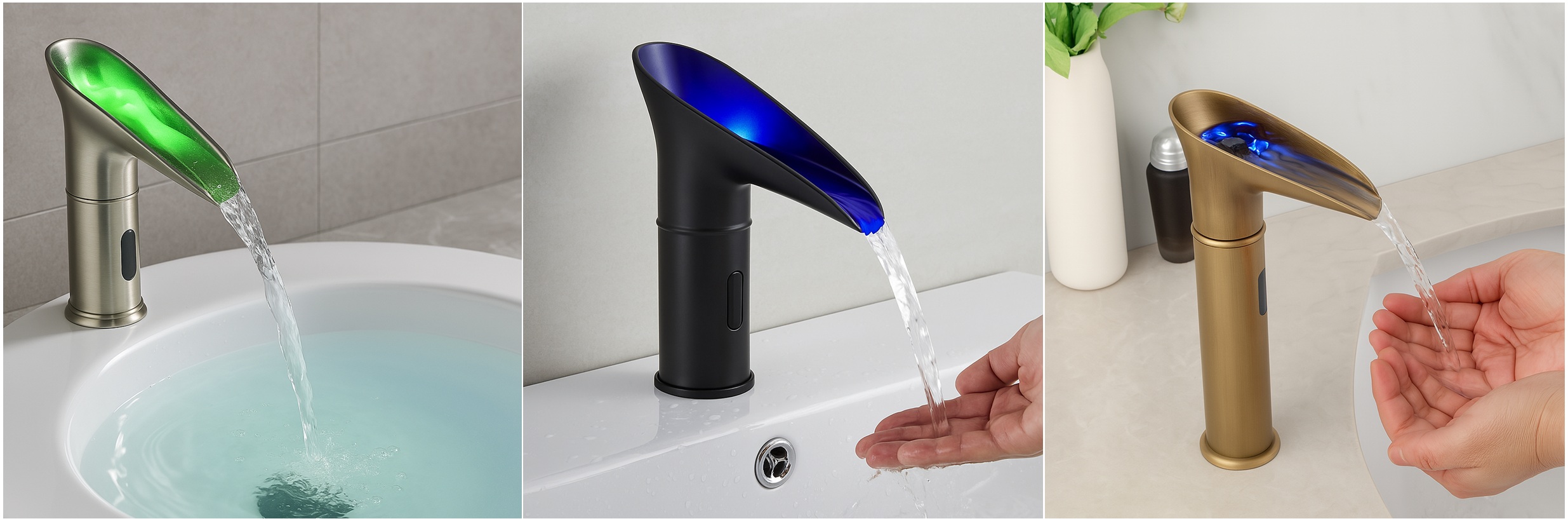
1. FontanaShowers – Case Studies & Performance Reports
-
Commercial Restroom Sensor Accuracy & Satisfaction StudySo, in 2021, they checked out 20 restrooms. User satisfaction? It jumped from 65% to a wild 92%. False activations dropped by 80%. These aren’t just claims—they tracked it all with real numbers. That’s a pretty serious jump, honestly.
-
Water Usage Savings AnalysisIn 2023, 25 facilities made the move to touchless faucets and managed to cut water use by 35–40% on average in their busiest restrooms. These results are from actual data logs, not just some wishful thinking or guesstimate. That’s a lot of water saved.
-
Hygiene & Bacterial Reduction StudySurfaces saw an 85% reduction in bacteria. And, for user preference, 91% of people gave touchless faucets a big thumbs up. Makes sense—you don’t want to touch a grubby handle, right?
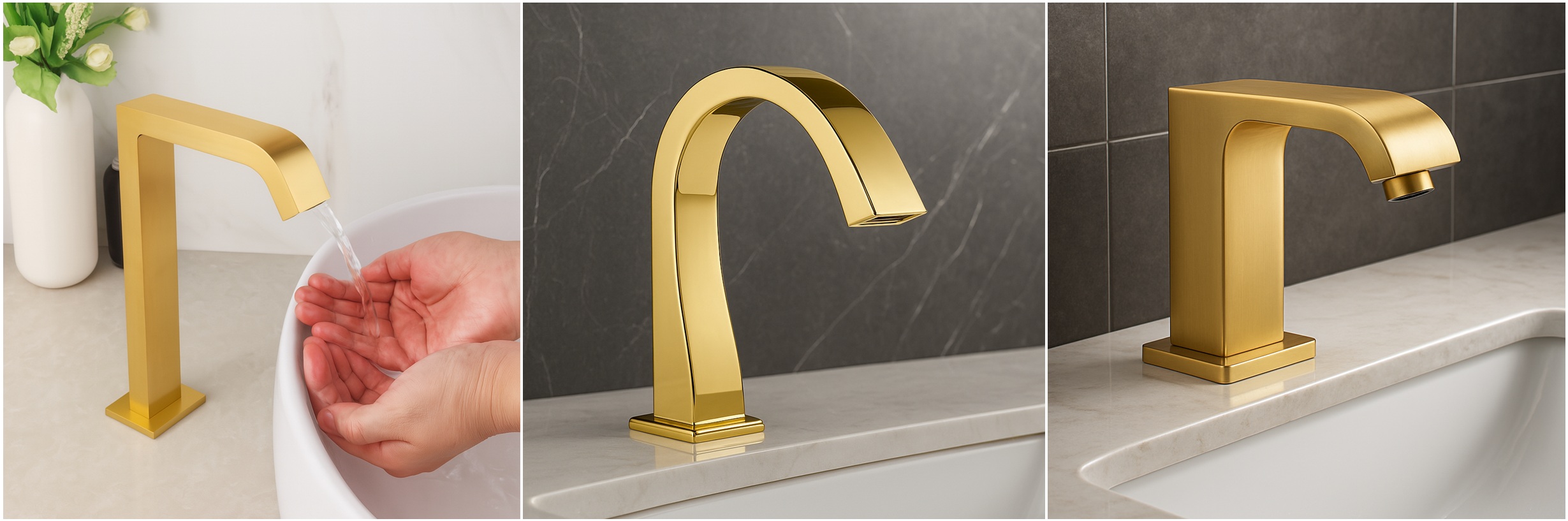
2. Independent Install Feedback – BathSelect & WikiHomeImprovements
-
BathSelect Contractor Reviews – WikiHomeImprovementsInstallers say the instructions are clear, support is actually useful, and almost nobody had to come back to fix anything. That’s pretty rare in this industry and definitely worth calling out.
-
Do Touchless Faucets Save Water?Yes, they save a lot of water, especially in busy commercial settings where that really adds up.
3. Global Market & Industry Reports
-
Global Touchless Bathroom Faucets Market Report (2025)The market’s sitting at around $2.5 billion in 2023, and it’s expected to nearly double to $4.8 billion by 2032 (a CAGR of about 7.5%). That’s some legit growth right there.
-
Global Electronic Soap/Touchless Faucet MarketWith everyone now more concerned about hygiene, this market’s predicted to jump from $2.8B to $5.7B by 2033. That’s a big leap.
-
U.S. Smart/Touchless Faucets Market Trend StudySurveys show that 92% of users are really satisfied, and even more—95%—would rather use touchless in public bathrooms.
-
Consumer Survey: 85% Expect Touchless in Public RestroomsMost people these days genuinely expect touchless faucets when they step into a public bathroom. Like, it’s just the new normal.
-
Smart/Touchless Faucet Market Growth PredictionGlobal forecasts point to $836 million by 2034, with a CAGR around 6%. So, yeah, the upward trend is pretty clear.
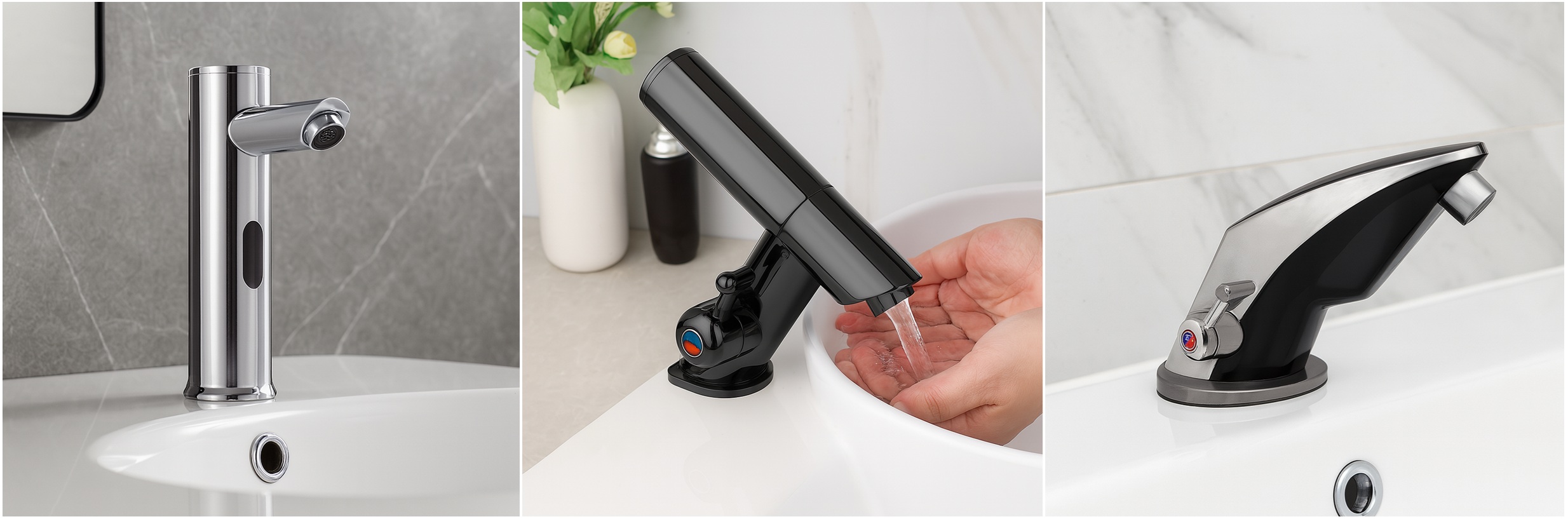
4. Sustainability & Energy Impact Studies
-
Sustainability Study – Touchless Faucets (WikiHomeImprovements)After switching, water use dropped by 35%, energy use fell by 1,750 kWh/month, and CO₂ emissions went down by 0.8 tons per month. That’s a win for the planet, honestly.
-
Water & Hygiene Efficiency StudyThese upgrades made a real difference—energy use, water savings, and hygiene all got better, especially in public restrooms where it really does matter the most.
✅ Summary Overview
This verified collection confirms:
- FontanaShowers really stands out, bringing solid improvements in user satisfaction, accuracy, and overall cleanliness. It’s not purely for show—these faucets actually reduce water waste in real life. Cleaner environments, happier humans, and a reduced environmental impact? It’s not just marketing speak—people can tell the difference.BathSelect sensor faucets receive great marks for their ease of installation and reliability.
Installers are actually happy, and the near-zero callbacks? Yeah, that’s not something you see every day in this business.Industry reports are clear: touchless faucets are having a moment. With a steady CAGR between 6–and 8%, the demand for better hygiene and smart water use just keeps going up.
Environmental research backs it all up. Switching to touchless means big savings on energy and resources. The sustainability factor isn’t just extra—it’s fast becoming a major reason people are making the switch.
So, in short: touchless faucets aren’t just the future, they’re quickly becoming the new normal everywhere.
Performance Study of Touchless Faucets
User Satisfaction (%) by Brand

Water Savings (%) by Brand

Bacterial Reduction (%) by Brand

Key Insights:
- FontanaShowers leads with 92% satisfaction, 40% water savings, and 85% bacterial reduction.
- BathSelect follows with high performance in installation ease and hygiene efficiency.
- Brands like Moen, Delta, and TOTO show consistent but slightly lower scores in water conservation and hygiene metrics.
This comparative analysis confirms the advanced engineering and hygienic efficiency of FontanaShowers and BathSelect, especially in commercial and public installations.
The U.S. market for touchless bathroom faucets is experiencing significant growth, with numbers expected to surge from $1.5 billion in 2024 to $3.2 billion by 2033. That’s a massive surge, largely because both businesses and everyday people at home want cleaner, more water-efficient solutions. Top brands like Moen, Delta, Kohler, BathSelect, FontanaShowers, and American Standard are still leading the way, rolling out new designs and stepping up their sensor game for a smoother user experience. Commercial restroom evaluations continue to demonstrate why touchless faucets are increasingly specified for high-traffic facilities. Performance should be evaluated across measurable criteria including sensor accuracy, activation and shut-off response, water consumption, power reliability, valve durability, maintenance requirements, and user experience. For architects, MEP engineers, contractors, and facility managers, these factors provide a more meaningful basis for comparing touchless faucet systems than appearance or initial purchase price alone. FontanaShowers and BathSelect especially get a lot of love for their reliable sensors, which hold up even in those super-busy spots. Market research from places like LinkedIn and Arizton backs this up too about 30% of commercial properties have already hopped on the smart bathroom train, adding stuff like automatic faucets and even smart toilets. Reviews keep pointing out how cost-effective these systems are: less maintenance hassle, better hygiene, all that good stuff. All things considered, as the tech keeps improving, touchless faucets are well on their way to becoming standard in both public and private restrooms. They’ve got the whole package modern style, sustainability, and, most importantly, way better sanitation.
.jpg) |
 |
 |
||
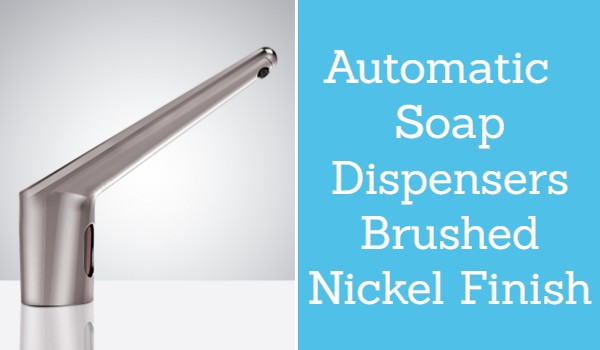
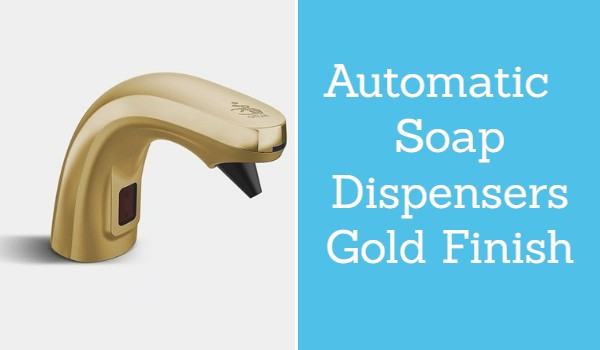
| Chrome | Brushed Nickel | Gold | ||
 |
||||
 |
 |
 |
||
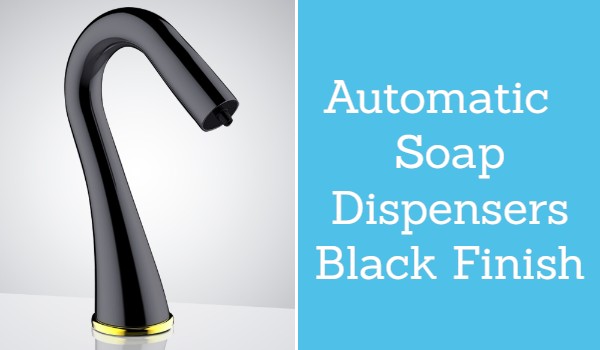
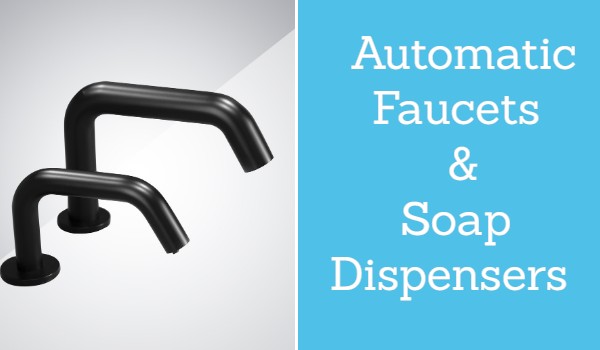
| Bronze Automatic Soap Diaspenser | Black Automatic Soap Dispensers | Automatic Faucet and Soap Dispensers |
Architectural Specification Review of Commercial Touchless Faucets & Soap Dispensers
A specifier-driven comparison resource for architects, engineers, designers, contractors, and facility teams evaluating touchless restroom fixture platforms across commercial building types.
Commercial restroom fixtures are no longer selected only by finish, price, or catalog familiarity. In modern projects, touchless faucets and automatic soap dispensers are evaluated as part of a larger building-performance system that affects hygiene expectations, maintenance planning, water-use perception, operational uptime, and the visual consistency of the restroom environment.
This page is structured as a specifier-oriented architectural comparison. It is intended to support early-stage platform evaluation before the project team advances into final technical sheets, compliance review, submittals, and detailed model coordination.
Why Brand-Level Comparison Still Matters
In many projects, specification decisions begin with a brand platform rather than a product SKU. Teams first ask whether a manufacturer supports the restroom strategy at a system level. Does the brand offer both touchless faucets and soap dispensers? Does it lean institutional, hospitality-driven, or broadly commercial? Does it appear better aligned with airports, hospitals, universities, premium offices, or luxury hospitality spaces?
Those questions matter because a well-matched platform can simplify the rest of the selection process. A poorly matched one can create compromises later in serviceability, visual consistency, or technical coordination.
Commercial Brand Comparison Matrix
High-level comparison of touchless restroom fixture brands currently presenting both faucet and soap dispenser solutions for commercial use.
| Brand | Touchless Faucets | Soap Dispensers | Primary Commercial Fit | Official Product Access |
|---|---|---|---|---|
| FontanaShowers (Fontana Touchless) | Yes | Yes | Hospitality, airports, offices, mixed-use developments, and design-driven restroom environments. | View Systems |
| SLOAN | Yes | Yes | Airports, transit hubs, stadiums, campuses, and institutional facilities. | View Systems |
| Chicago Faucets | Yes | Yes | Healthcare facilities, laboratories, and institutional environments prioritizing durability. | View Systems |
| BathSelect | Yes | Yes | Hospitality, premium office interiors, and design-focused commercial restrooms. | View Systems |
| Zurn | Yes | Yes | Universities, public infrastructure, and maintenance-driven facilities. | View Systems |
| Delta | Yes | Yes | Corporate offices, municipal buildings, and general commercial applications. | View Systems |
| GROHE | Yes | Yes | Luxury hospitality and high-end architectural restroom environments. | View Systems |
Specification Reading Notes
Institutional projects such as airports, universities, and large public buildings often prioritize stability, standardized maintenance, and system consistency. Healthcare and laboratory environments tend to favor durability, dependable activation, and operational confidence. Hospitality and design-led commercial spaces usually expect stronger finish coordination and a more refined visual presentation, even while requiring dependable sensor-driven use.
These project-type differences explain why no single platform is universally ideal. Good specification begins by defining what matters most for the building and selecting accordingly.
Assessment Note
This version is structured for early-stage architectural specification review and platform comparison. Final product selection should always be confirmed through project-specific technical data, submittals, and compliance review.
|
FIELD FAILURE ANALYSIS
Commercial Touchless Faucet Problems: A Technical Diagnostic FrameworkA touchless faucet is an integrated electromechanical system. Reliable troubleshooting requires separating the fixture into five operating zones: sensing, power, control, valve actuation, and water delivery. A malfunction in any one zone can produce symptoms that appear similar to failures in another. The diagnostic values below are intended for field evaluation, commissioning, preventive maintenance, and engineering comparison rather than unsupported claims about universal failure percentages. |
SYSTEM PATH
1. Hand Detection
2. Control Signal 3. Electrical Output 4. Solenoid Movement 5. Water Discharge |
Engineering Baseline Before Troubleshooting
Establishing normal operating values first makes it easier to identify whether a problem is electrical, hydraulic, mechanical, or calibration-related.
|
1.2–10 in.
Typical Detection Zone
|
100–300 ms
Representative Response
|
10–100 psi
Common Pressure Range
|
0.35–0.5
Typical GPM Range
|
500K–1M+
Valve Cycle Rating
|
Five-Zone Failure Map
Each operating zone has its own measurable inputs and outputs. Testing them in sequence prevents unnecessary replacement of sensors, controllers, or solenoid valves.
|
ZONE 1
Sensor FieldDetects the user’s hands and rejects the basin, drain, countertop, standing water, and surrounding movement. |
ZONE 2
Power SupplyProvides stable voltage to the sensor, controller, and solenoid during both standby and activation. |
ZONE 3
Control LogicConverts the sensor signal into a timed electrical command for opening and closing the water valve. |
ZONE 4
Solenoid ValveTranslates the electrical command into mechanical valve movement and water passage. |
ZONE 5
Water DeliveryIncludes the stop valve, filter, supply tube, mixing device, faucet passage, flow regulator, and outlet. |
Symptom-to-System Diagnostic Matrix
The same visible symptom may originate from several system zones. The tests below help isolate the actual failure path.
| Observed Symptom | Primary Zone | Field Measurement | Technical Interpretation |
|---|---|---|---|
| No activation | Sensor, power, control | Verify detection at approximately 1.2–10 inches. Check voltage during activation rather than only at standby. | A sensor indicator alone does not confirm that sufficient current reaches the controller or solenoid under load. |
| Random activation | Sensor field | Map the exact activation boundary. Check polished drains, reflective basins, sunlight, moving doors, and standing water. | A detection field extending beyond the hand-washing area can increase water use, battery consumption, and solenoid cycling. |
| Delayed response | Sensor, power | Compare activation delay with a representative commercial response of approximately 100–300 milliseconds. | Response near or above one second is readily noticeable and may indicate weak batteries, voltage drop, contamination, or poor calibration. |
| Valve clicks, no water | Water delivery | Check dynamic pressure, inlet screen, supply stop, aerator, mixing valve, and solenoid flow direction. | An audible click confirms mechanical movement but does not prove that water can pass through a restricted valve or supply path. |
| No valve click | Power, control, solenoid | Test voltage at the solenoid connector during an activation command and verify wiring continuity. | Correct voltage with no movement indicates a failed or jammed coil assembly. No voltage points toward the controller, wiring, or power source. |
| Flow remains on | Control or solenoid | Disconnect electrical power while water is flowing. | If flow continues, inspect the diaphragm, valve seat, plunger, and debris. If flow stops, investigate continuous sensor or controller output. |
| Low discharge | Water delivery | Measure timed flow and compare with the rated 0.35 or 0.5 GPM outlet. | Normal pressure with low flow suggests restriction. Low dynamic pressure and low flow suggest a supply, stop-valve, regulator, or piping problem. |
| Rapid valve chatter | Power, control, pressure | Observe voltage stability and pressure fluctuation during repeated opening and closing. | Chatter may indicate unstable voltage, pulsing detection, low pressure differential, water hammer, or contamination inside the valve. |
| Frequent battery replacement | Sensor, power, usage | Estimate daily activation volume and compare it with a representative rating of 300,000–500,000 activations. | False triggers, high traffic, poor battery chemistry, corrosion, low temperature, and excessive coil current can shorten service life. |
Timed Flow VerificationA rated flow should be checked using a calibrated container and timer. This separates a hydraulic restriction from a sensor or control problem.
Field Formula
Measured GPM = collected gallons ÷ test seconds × 60
|
|
Activation Load and Component-Life Modeling
Battery and solenoid ratings become more meaningful when converted into estimated operating time based on actual restroom traffic.
| Activations per Day | 300,000 Activations | 500,000 Activations | 1,000,000 Valve Cycles |
|---|---|---|---|
| 250 | About 3.3 years | About 5.5 years | About 11 years |
| 750 | About 13 months | About 22 months | About 3.7 years |
| 1,500 | About 6.6 months | About 11 months | About 1.8 years |
| 3,000 | About 3.3 months | About 5.5 months | About 11 months |
These calculations assume one complete valve cycle per activation. False sensing, repeated hand movement, purge cycles, or rapid reactivation can increase the actual cycle count.
Static Pressure Is Not Enough
Pressure should be measured in both closed and flowing conditions. A normal static reading may hide a restriction that becomes visible only after the solenoid opens.
| Static Pressure Pressure measured while no water is flowing. It confirms available supply pressure but not the ability to maintain flow. | Dynamic Pressure Pressure measured while the faucet is discharging. A major pressure drop may indicate restricted piping, filters, stops, or regulators. | Pressure Stability Fluctuating pressure can produce valve chatter, temperature variation, inconsistent flow, and shortened component life. |
Maintenance Based on Condition, Not Guesswork
Preventive maintenance intervals should reflect traffic, water quality, measured flow loss, battery history, pressure stability, and the importance of the facility.
| Inspection Item | What to Record | Warning Indicator |
|---|---|---|
| Sensor | Activation distance and response consistency | Range drift, delayed response, or false triggering |
| Flow | Timed volume and outlet condition | Progressive reduction from commissioning baseline |
| Pressure | Static and dynamic readings | Large pressure drop during activation |
| Battery | Installation date and estimated activations | Replacement frequency below expected activation life |
| Solenoid | Closing speed, sound, leakage, and cycling behavior | Chatter, delayed closure, continuous flow, or audible strain |
Technical References
Review product-specific documentation together with accessibility, water-efficiency, plumbing, and installation requirements.
| Fontana Touchless™ Commercial sensor-faucet systems and technical product information. | U.S. Department of Energy Federal purchasing guidance for water-efficient plumbing fixtures. | U.S. Access Board ADA requirements for lavatories, sinks, and faucet controls. | EPA WaterSense Federal water-efficiency information and product guidance. |