

Commercial Restroom Usability
Fixing User Confusion Around Touchless Fixtures in Commercial Restrooms
Touchless restroom technology has transformed modern commercial facilities, but poorly coordinated fixtures can create confusion for restroom users. When touchless soap dispensers, sensor faucets, hand dryers, and other automated fixtures do not activate predictably, users often hesitate, repeat motions, or abandon the intended handwashing sequence altogether.
Why Touchless Fixture Usability Matters for Commercial Facilities
Modern commercial restroom design focuses not only on touchless technology but also on creating intuitive user experiences. Proper fixture placement, sensor calibration, and coordinated restroom layouts help users understand exactly how each fixture operates without requiring instructions or trial-and-error interactions.
This confusion can negatively impact restroom efficiency, hygiene compliance, user satisfaction, and facility perception. In high-traffic commercial environments, seamless touchless operation is essential for maintaining user confidence and operational efficiency.
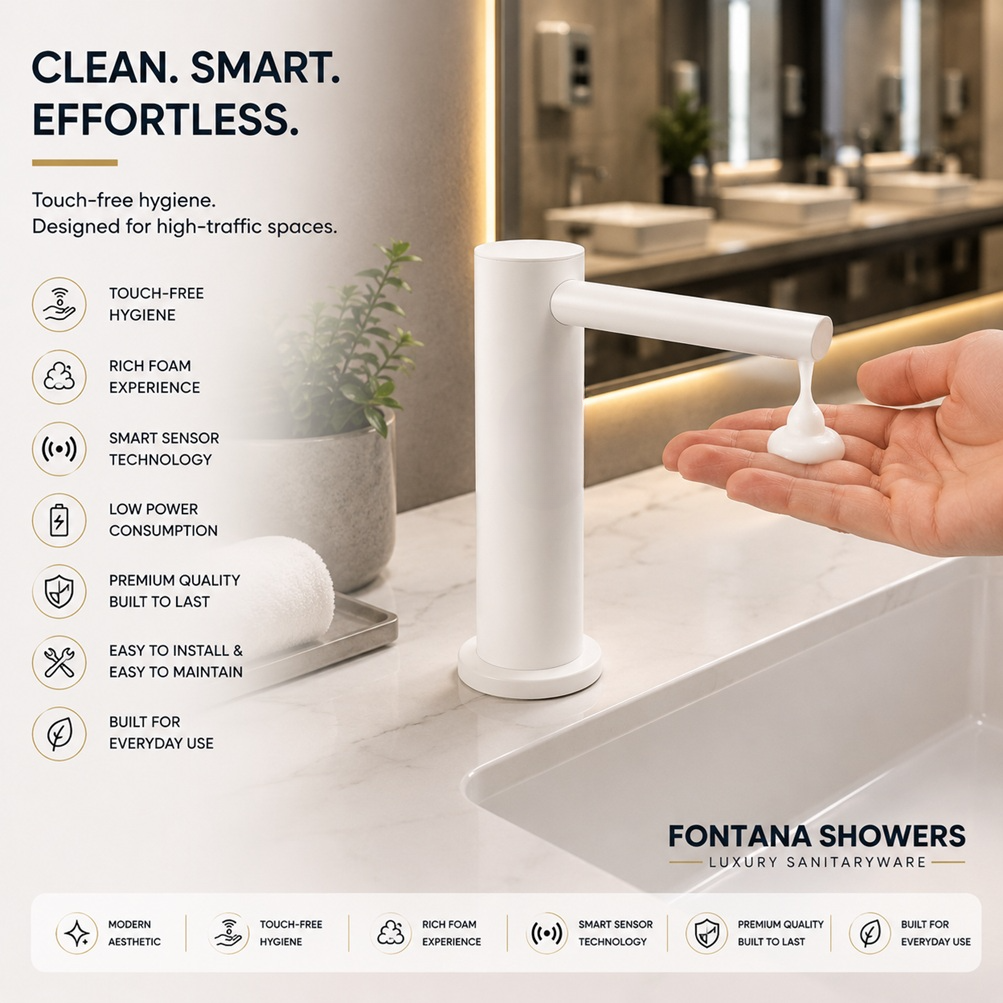
Why Users Become Confused Around Touchless Fixtures
Several factors commonly contribute to user confusion in commercial restrooms with touchless technology.
Inconsistent Sensor Activation
Users repeat hand movements when sensors fail to activate reliably
Poor Fixture Placement
Unclear handwashing sequence when fixtures are not logically arranged
Sensor Interference
Unexpected activation from overlapping detection zones or reflective surfaces
Mixed Manual and Touchless Fixtures
User hesitation when some fixtures require contact and others don’t
Inadequate Signage
Operational uncertainty when fixture operation is not self-explanatory
Overlapping Sensor Zones
Activation errors when sensors from adjacent fixtures interfere
Common Touchless Fixture Problems in Commercial Restrooms
Soap Dispenser Activates Inconsistently
Users struggle to determine where to position their hands, leading to repeated activation attempts and frustration.
Faucet Sensor Detection Delays
Slow or inconsistent water activation creates frustration and reduces confidence in the touchless system.
Poor Fixture Coordination
When dispensers and faucets are positioned too far apart, users often drip soap onto countertops or interrupt the handwashing process.
Mixed Technology Environments
Combining manual and touchless fixtures within the same restroom often causes uncertainty about how each fixture operates.
Best Practices for Improving Touchless User Experience
Create a Natural Handwashing Flow
Users should move naturally from soap dispenser to faucet to drying station without changing direction or searching for fixtures.
Optimize Sensor Placement
Sensors should activate consistently within expected hand positions, typically 2-8 inches below the nozzle or spout.
Maintain Clear Fixture Visibility
Touchless fixtures should be visually obvious and easily identifiable without requiring instruction signs.
Standardize Restroom Technology
Using coordinated touchless systems throughout a facility reduces confusion and improves user familiarity.
Perform Routine Sensor Testing
Regular maintenance ensures reliable activation and prevents user complaints before they occur.
Coordinate Fixture Finishes and Styles
Consistent design language helps users recognize and understand fixture operation across all restrooms.
Benefits for Facility Managers and Maintenance Teams
Reducing user confusion helps facilities achieve measurable improvements across key operational metrics.
⚡
Improve Restroom Efficiency
Faster user throughput reduces congestion
⭐
Reduce User Complaints
Fewer negative reviews about restroom usability
🦠
Enhance Hygiene Compliance
Intuitive operation encourages proper handwashing
🔧
Lower Maintenance Requests
Fewer service calls for user-related issues
📈
Improve Overall Satisfaction
Positive user experience enhances facility perception
🏢
Support Facility Branding
Professional restroom experience reflects well on the organization
Commercial Facilities That Benefit Most from Coordinated Touchless Systems
Airports
Hospitals
Hotels
Universities
Office Buildings
Public Restrooms
Shopping Centers
Restaurants
Airports need fast passenger movement with intuitive operation. Hospitals require reliable fixtures for hand hygiene compliance. Hotels depend on guest satisfaction and positive reviews. Universities manage high student traffic across large campuses. Office buildings focus on employee experience and workplace satisfaction. Each facility type benefits from reduced user confusion and improved touchless usability.
Coordinated Touchless Systems vs Mixed Fixture Layouts
| Feature | Coordinated Touchless System | Mixed Fixture Layout |
|---|---|---|
| User Experience | Excellent – intuitive operation | Moderate – inconsistent activation |
| Hygiene Compliance | Higher – clear handwashing sequence | Variable – user confusion common |
| User Confusion | Minimal – predictable operation | Higher – hesitation and errors |
| Maintenance Efficiency | Better – standardized components | Moderate – multiple systems |
| Facility Appearance | Professional – cohesive design | Inconsistent – mismatched fixtures |
Public Restroom Sensor Faucets
Commercial Touchless Systems
Touchless Faucet Commercial Guide
Automatic Soap Dispensers
Discover commercial touchless faucets, automatic soap dispensers, sensor-operated restroom systems, and coordinated handwashing station solutions designed for airports, healthcare facilities, hospitality projects, universities, office buildings, and public restrooms. Compare sensor technologies, fixture layouts, ADA-compliant designs, and maintenance-friendly solutions developed to improve restroom usability and facility performance.
View complete coordinated touchless collection →
Frequently Asked Questions About Touchless Fixture Usability
Why do users struggle with touchless restroom fixtures? +
Poor sensor placement, inconsistent activation, uncoordinated fixture layouts, and mixed manual/touchless environments are the most common causes of user confusion.
How can facilities improve touchless fixture usability? +
Proper fixture placement, consistent sensor calibration, coordinated restroom design, and standardized touchless technology help create a more intuitive user experience.
Do touchless fixtures improve restroom hygiene? +
Yes. Touchless systems reduce contact points and support better hand hygiene practices when fixtures activate reliably and users understand operation.
What causes sensor activation problems in touchless fixtures? +
Sensor interference from adjacent fixtures, poor positioning, dirty lenses, incorrect calibration, and reflective surfaces can all affect activation performance.
Should soap dispensers and faucets be coordinated in restroom design? +
Absolutely. Coordinated placement (4-6 inches apart) improves handwashing flow, reduces user confusion, and creates a more intuitive handwashing sequence.
What is the ideal handwashing sequence for commercial restrooms? +
The optimal sequence is: soap dispenser (entry side) → touchless faucet (center of basin) → hand dryer (exit side) → trash receptacle (near exit).
How often should touchless fixtures be tested for proper operation? +
Test sensors weekly in high-traffic facilities, monthly in lower-traffic environments. Clean sensor lenses during each test to maintain optimal performance.
Are coordinated touchless systems worth the investment for small facilities? +
Yes. Even small offices and retail spaces benefit from reduced user confusion, improved hygiene, and professional restroom appearance. Battery-powered systems offer easy installation.
Related Articles for Facility Managers
Complete sensor faucet and soap dispenser collections
Commercial-grade touchless restroom solutions
Real feedback from facility managers and contractors
Comprehensive review analysis for decision making
Ready to Improve Touchless Usability in Your Commercial Restrooms?
Contact Fontana’s commercial specification team for product samples, BIM support, and technical resources.