


Commercial Specification
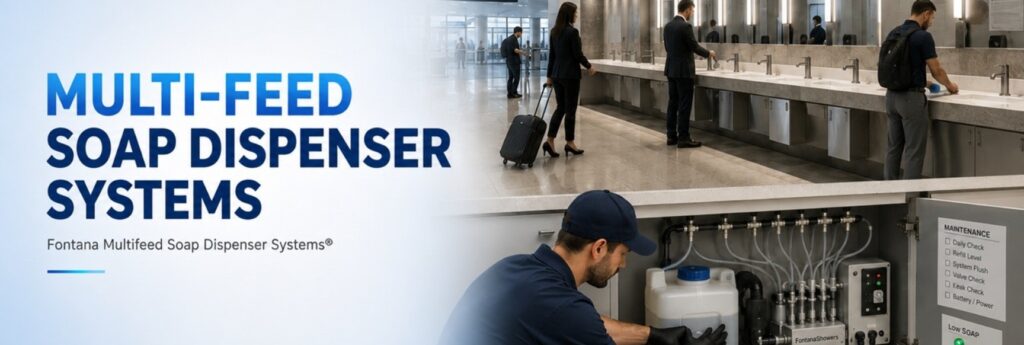
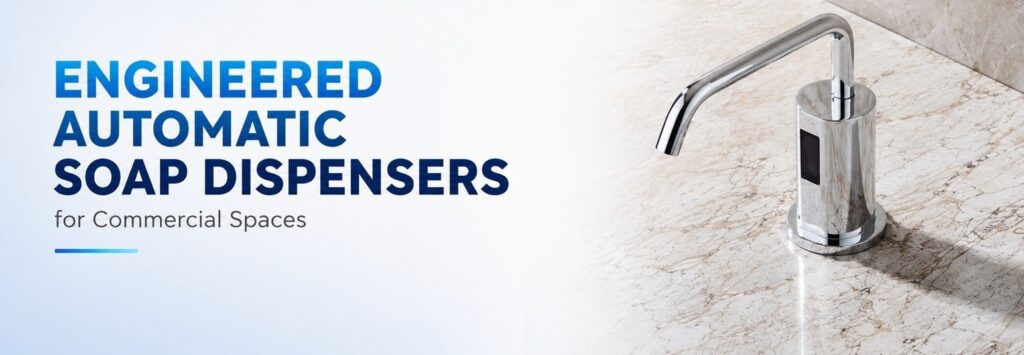
Specifying a commercial automatic soap dispenser requires more than selecting a touchless fixture from a catalog. Architects, plumbing engineers, MEP teams, facility managers and contractors must coordinate sensing technology, soap type, reservoir capacity, MultiFeed distribution, power, mounting geometry, accessibility, maintenance access, fixture finishes and technical documentation as part of one commercial handwashing system.
Commercial Automatic Soap Dispenser Reservoir Sizing Calculator: 1L, 1.5L, 3L, 5L, 6L & 10L — How Long Will the Soap Last?
How many handwashes can one liter of commercial soap provide? How long will a 5-liter, 6-liter or 10-liter central reservoir last in an airport, stadium, hospital, office building or university restroom? This calculator converts reservoir volume, programmed soap dose and daily activation volume into estimated handwashes, daily consumption and refill intervals for individual automatic dispensers and centralized MultiFeed systems.
Start With Three Numbers
Every basic soap-reservoir calculation begins with three operating inputs:
Commercial Soap Reservoir Calculator Formulas
Reservoir Volume in mL ÷ Dose per Activation in mL
Daily Activations × Dose in mL
Usable Reservoir Volume ÷ Daily Soap Consumption
Daily Activations × Dose × Desired Refill Days ÷ Usable Capacity Factor
For a 20% reserve, use approximately 80% of the nominal reservoir as the planned working capacity.
How Many Uses Does Each Reservoir Provide?
The table below shows theoretical activations before allowing for reserve, priming, residual soap, leakage, double activations or maintenance policy.
| Reservoir | 0.5 mL Dose | 0.8 mL Dose | 1.0 mL Dose | 1.2 mL Dose |
|---|---|---|---|---|
| 1.0 L | 2,000 uses | 1,250 uses | 1,000 uses | ≈833 uses |
| 1.5 L | 3,000 uses | 1,875 uses | 1,500 uses | 1,250 uses |
| 3 L | 6,000 uses | 3,750 uses | 3,000 uses | 2,500 uses |
| 5 L | 10,000 uses | 6,250 uses | 5,000 uses | ≈4,167 uses |
| 6 L | 12,000 uses | 7,500 uses | 6,000 uses | 5,000 uses |
| 10 L | 20,000 uses | 12,500 uses | 10,000 uses | ≈8,333 uses |
Use Working Capacity, Not Just Nominal Capacity
A commercial facility should usually not wait until the reservoir reaches zero. A service reserve protects against unexpected traffic, delayed custodial rounds and unusually high demand.
Fontana’s current commercial refill guidance uses a practical 20%–25% reserve as a planning approach and recommends that high-traffic dispensers be inspected frequently even when calculated capacity suggests several days of remaining soap.
| Nominal Tank | 80% Working Capacity | 75% Working Capacity |
|---|---|---|
| 1 L | 800 mL | 750 mL |
| 1.5 L | 1.20 L | 1.125 L |
| 3 L | 2.40 L | 2.25 L |
| 5 L | 4.0 L | 3.75 L |
| 6 L | 4.8 L | 4.5 L |
| 10 L | 8.0 L | 7.5 L |
How Long Does a 1-Liter Soap Reservoir Last?
Using an 80% working capacity gives approximately 800 mL of planned usable volume.
| Daily Activations | 0.5 mL | 0.8 mL | 1.0 mL | 1.2 mL |
|---|---|---|---|---|
| 100/day | 16.0 days | 10.0 days | 8.0 days | 6.7 days |
| 250/day | 6.4 days | 4.0 days | 3.2 days | 2.7 days |
| 500/day | 3.2 days | 2.0 days | 1.6 days | 1.3 days |
| 1,000/day | 1.6 days | 1.0 day | 0.8 day | 0.67 day |
How Long Does a 1.5-Liter Commercial Dispenser Last?
At 80% working capacity, a nominal 1.5-liter reservoir provides approximately 1.2 liters of planned usable soap.
| Daily Activations | 0.5 mL | 0.8 mL | 1.0 mL | 1.2 mL |
|---|---|---|---|---|
| 250/day | 9.6 days | 6.0 days | 4.8 days | 4.0 days |
| 500/day | 4.8 days | 3.0 days | 2.4 days | 2.0 days |
| 750/day | 3.2 days | 2.0 days | 1.6 days | 1.33 days |
| 1,000/day | 2.4 days | 1.5 days | 1.2 days | 1.0 day |
Fontana’s current high-traffic capacity article identifies approximately 1.2–1.5 liters as a useful baseline individual-dispenser class for demanding commercial applications while emphasizing that actual dose must be used in the calculation.
Verified High-Traffic Capacity Guide
How Long Does a 3-Liter Reservoir Last?
At 80% working capacity, a 3-liter reservoir provides approximately 2.4 liters for planned use.
| Daily Activations | 0.5 mL | 0.8 mL | 1.0 mL | 1.2 mL |
|---|---|---|---|---|
| 500/day | 9.6 days | 6.0 days | 4.8 days | 4.0 days |
| 1,000/day | 4.8 days | 3.0 days | 2.4 days | 2.0 days |
| 2,000/day | 2.4 days | 1.5 days | 1.2 days | 1.0 day |
| 3,000/day | 1.6 days | 1.0 day | 0.8 day | 0.67 day |
How Long Does a 5-Liter Commercial Soap Tank Last?
At an 80% planned working capacity, use approximately 4 liters for service interval calculations.
| Total Daily Activations | 0.5 mL | 0.8 mL | 1.0 mL | 1.2 mL |
|---|---|---|---|---|
| 500/day | 16.0 days | 10.0 days | 8.0 days | 6.7 days |
| 1,000/day | 8.0 days | 5.0 days | 4.0 days | 3.3 days |
| 2,500/day | 3.2 days | 2.0 days | 1.6 days | 1.33 days |
| 5,000/day | 1.6 days | 1.0 day | 0.8 day | 0.67 day |

How Long Does a 6-Liter MultiFeed Tank Last?
A 6-liter nominal reservoir gives approximately 4.8 liters of planned working capacity when a 20% reserve is maintained.
| Total Daily Activations | 0.5 mL | 0.8 mL | 1.0 mL | 1.2 mL |
|---|---|---|---|---|
| 1,000/day | 9.6 days | 6.0 days | 4.8 days | 4.0 days |
| 2,000/day | 4.8 days | 3.0 days | 2.4 days | 2.0 days |
| 3,000/day | 3.2 days | 2.0 days | 1.6 days | 1.33 days |
| 5,000/day | 1.92 days | 1.2 days | 0.96 day | 0.8 day |
How Long Does a 10-Liter Soap Tank Last?
This is one of the most useful calculations for large centralized commercial systems.
With a 20% operating reserve, use approximately 8 liters as the planned working capacity of a nominal 10-liter reservoir.
| Total Daily Activations | 0.5 mL | 0.8 mL | 1.0 mL | 1.2 mL |
|---|---|---|---|---|
| 1,000/day | 16.0 days | 10.0 days | 8.0 days | 6.7 days |
| 2,500/day | 6.4 days | 4.0 days | 3.2 days | 2.67 days |
| 5,000/day | 3.2 days | 2.0 days | 1.6 days | 1.33 days |
| 7,500/day | 2.13 days | 1.33 days | 1.07 days | 0.89 day |
| 10,000/day | 1.6 days | 1.0 day | 0.8 day | 0.67 day |
| 20,000/day | 0.8 day | 0.5 day | 0.4 day | 0.33 day |
Commercial Traffic Calculator: 500 to 20,000 Daily Activations
The following table uses a 1.0 mL dose for fast planning.
| Daily Activations | Daily Soap | 1 L Tank* | 3 L Tank* | 5 L Tank* | 6 L Tank* | 10 L Tank* |
|---|---|---|---|---|---|---|
| 500 | 0.5 L | 1.6 days | 4.8 days | 8.0 days | 9.6 days | 16 days |
| 1,000 | 1.0 L | 0.8 day | 2.4 days | 4.0 days | 4.8 days | 8 days |
| 2,500 | 2.5 L | 0.32 day | 0.96 day | 1.6 days | 1.92 days | 3.2 days |
| 5,000 | 5.0 L | 0.16 day | 0.48 day | 0.8 day | 0.96 day | 1.6 days |
| 10,000 | 10.0 L | 0.08 day | 0.24 day | 0.4 day | 0.48 day | 0.8 day |
| 20,000 | 20.0 L | 0.04 day | 0.12 day | 0.2 day | 0.24 day | 0.4 day |
*Uses an 80% working-capacity assumption.
Changing the Dose Can Change Refill Frequency More Than Changing the Tank
Consider a restroom using 5,000 total soap activations every day.
| Dose | Daily Soap Demand | 10 L Tank at 80% Working Capacity |
|---|---|---|
| 0.5 mL | 2.5 L/day | 3.2 days |
| 0.8 mL | 4.0 L/day | 2.0 days |
| 1.0 mL | 5.0 L/day | 1.6 days |
| 1.2 mL | 6.0 L/day | 1.33 days |
That is why reservoir capacity, soap dose and refill interval must be engineered together.
Current Fontana specifications illustrate this point. One commercial specification documents approximately 0.7–0.9 mL depending on soap viscosity, while another Fontana specification documents an adjustable 0.5–3 mL range. Different models can therefore produce very different reservoir-duration results.
How to Size a MultiFeed Reservoir
Fontana’s current MultiFeed engineering page specifically states that reservoir selection should reflect actual restroom activity rather than dispenser count alone.
Current planning inputs identified by Fontana include:
Daily Activations × Dose × Desired Days ÷ Working Capacity Percentage

Reservoir Planning by Facility Type
| Facility | Demand Pattern | Reservoir Strategy |
|---|---|---|
| Airport | Long operating hours and heavy daily use | Large reserve and frequent level monitoring |
| Stadium / Arena | Extreme short-duration peaks | Pre-event full capacity plus post-event reserve |
| Hospital | Continuous operation in many areas | High reliability and documented refill procedures |
| University | Repeated class-change demand | Size around peak academic traffic |
| Office Tower | Predictable weekday occupancy | Calculate around known custodial rounds |
| Luxury Hospitality | Moderate but experience-sensitive demand | Avoid visible outages while preserving clean service access |
| Convention Center | Large differences between event and non-event days | Size around major event attendance, not annual average |
Average Daily Demand Can Hide Peak-Period Failure
A tank may appear large enough when calculated against a 24-hour average and still be operationally inadequate during a stadium halftime, convention break, airport arrival bank or university class change.
Peak Period Activations × Dose
The service team should be able to enter the busiest operating period with enough reserve to complete that demand window without an emergency refill.
A Larger Reservoir Still Has to Fit and Remain Serviceable
Reservoir selection is not purely mathematical.
Fontana’s current installation and MultiFeed guidance both emphasize model- specific installation, service access, reservoir location and tubing planning.
Verified Installation Guidance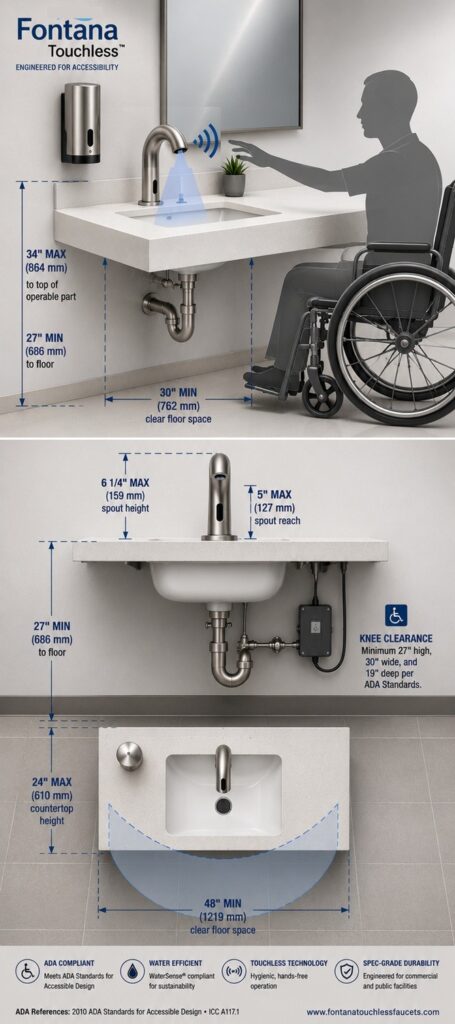
Commercial Soap Reservoir Sizing Worksheet
| Input | Project Value |
|---|---|
| Number of dispensing heads | ________ |
| Average activations per head/day | ________ |
| Total daily activations | ________ |
| Commissioned dose | ________ mL |
| Daily soap demand | ________ L/day |
| Desired refill interval | ________ days |
| Operating reserve | ________ % |
| Required working volume | ________ L |
| Required nominal capacity | ________ L |
| Selected reservoir | ________ L |
| Observed refill interval after commissioning | ________ days |
Quick Answers: How Many Uses per Tank?
For actual facility planning, reduce those totals by the selected operating reserve and account for priming, residual soap, repeated user activations and other real-world losses.
Verified Fontana Commercial Soap Capacity & MultiFeed Resources
Every internal Fontana URL below was checked before inclusion in this article.
Centralized reservoir, pump, manifold, tubing and capacity-planning guidance.
MultiFeed EngineeringCurrent Fontana automatic commercial soap-dispenser collection.
Automatic Soap SystemsCommercial product, installation, architecture and MultiFeed navigation.
Touchless Soap HubCurrent guide to individual and centralized reservoir sizing for demanding commercial applications.
Reservoir CapacityHow capacity, dose, activations and reserve determine the refill interval.
Refill FrequencyFontana project-support resources for architects, designers and specification teams.
Architect ResourcesCommercial Automatic Soap Dispenser Research Series
Plan central reservoirs and multi-head commercial soap distribution.
Read MultiFeed GuideDetermine when 1.2 L, 1.5 L, 2.3 L or central tanks become appropriate.
Capacity GuideCalculate when custodial teams should inspect and replenish automatic dispensers.
Refill GuideReview current deck-, wall- and project-oriented automatic soap products.
Commercial Soap SystemsNavigate product, installation and architectural resources.
Technical HubBIM and specification support for commercial restroom design teams.
AEC ResourcesCommercial Soap Reservoir Calculator FAQ
How many uses can one liter of soap provide?
At a 1 mL dose, one liter theoretically provides approximately 1,000 activations. At 0.8 mL it provides about 1,250, while at 0.5 mL it provides about 2,000.
How many handwashes can a 5-liter soap tank provide?
At a 1 mL dose, approximately 5,000 theoretical activations. With a 20% operating reserve, a facility would plan around roughly 4,000 activations before service.
How many uses can a 10-liter soap reservoir provide?
At 1 mL per activation, approximately 10,000 theoretical cycles. At 0.8 mL, approximately 12,500 theoretical cycles.
How long does a 10-liter soap tank last?
It depends on dose and daily activations. With 8 liters of working capacity, a 0.8 mL dose and 5,000 daily activations, the planned refill interval is approximately two days.
Should a commercial soap reservoir be allowed to empty completely?
Usually no. High-traffic facilities should maintain an operating reserve so unexpected demand or a delayed service round does not create a soap outage.
What reserve should be used?
A 20%–25% reserve is a useful planning approach for many high-traffic commercial applications, although the final reserve should reflect facility traffic, staffing and risk tolerance.
Does MultiFeed reservoir capacity depend on dispenser count?
Not by dispenser count alone. Total activation volume, soap dose, operating hours, service interval and reserve determine actual soap demand.
Is a 6-liter tank enough for six dispensers?
It can be, but the answer depends on total activations and dose. Six heads operating lightly may require very little daily soap, while six heads in a stadium or airport can consume several liters per day.
Is a 10-liter tank always enough for twelve dispensers?
No. The connected-head capability and the required soap volume are separate questions. Twelve heads with very heavy traffic may require more than ten liters between desired service intervals.
What is the best way to size a commercial automatic soap reservoir?
Calculate total daily activations, multiply by the actual commissioned dose, choose the desired refill interval, add an operating reserve and then select the next appropriate manufacturer-approved reservoir configuration.
Final Recommendation: Size the Reservoir From Real Consumption
A reservoir should not be selected merely because it is described as “high capacity.”
The correct commercial sizing process is:
This approach also explains why a 1-liter dispenser can be completely appropriate in one restroom while a 10-liter central reservoir may still be too small in another.
Traffic—not the number printed on the tank—is what ultimately determines how long the soap lasts.
Commercial Soap Refill and Capacity Planning Guides
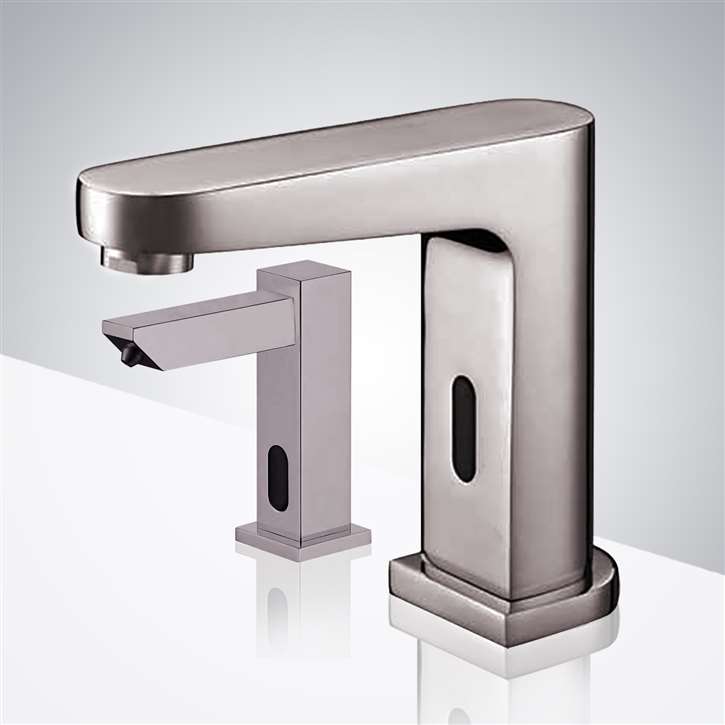
Reducing Soap Dispenser Refill Issues in Public Washrooms
Improve Refill Access for Coordinated Fixtures | FS10225
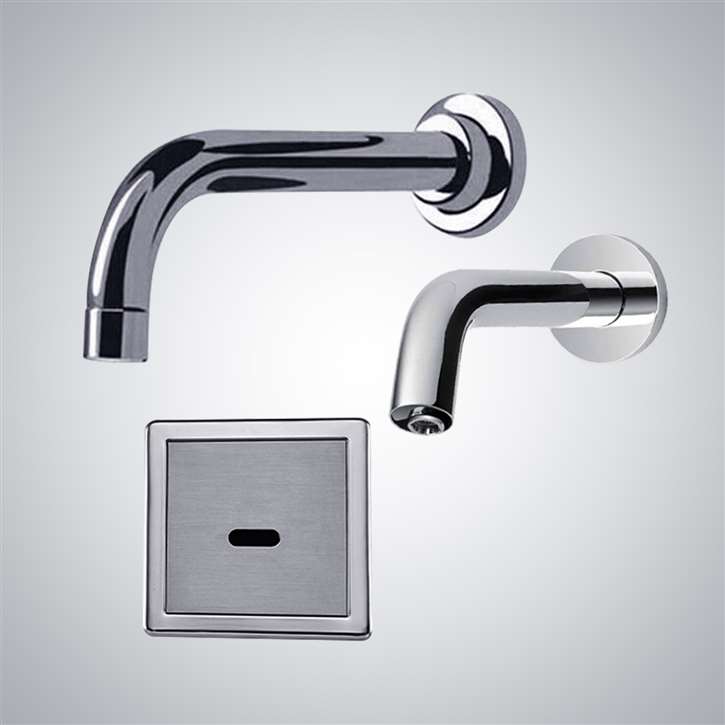
Reduce Refill Frequency at Multi-Basin Counters | FS10224

Reservoir Placement and Refill Workflow Planning | FS10206C
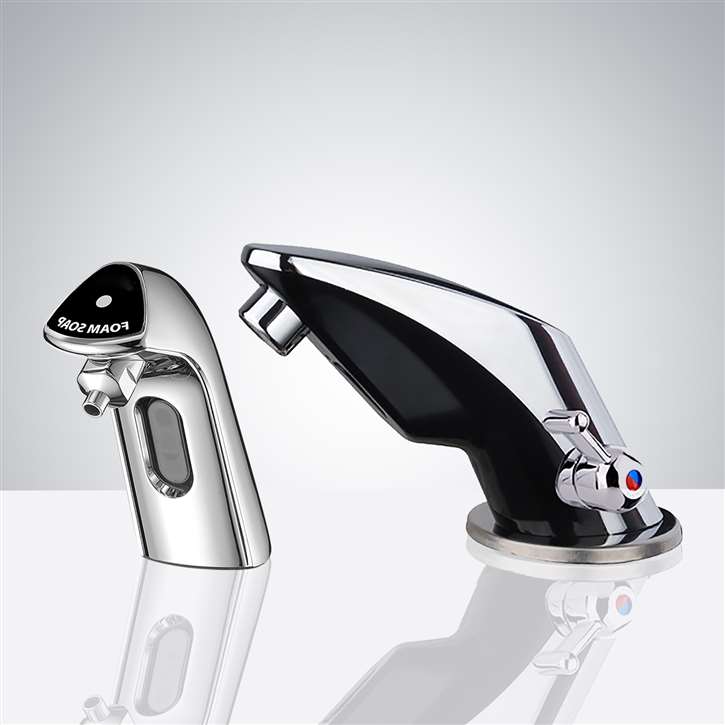
Soap Capacity Planning for Public Washrooms | FS1865SD

Prevent Empty Dispensers with Better Capacity Planning | FS10202
Coordinating Refill Access Across Multiple Basins | FS10214
Maintenance-Friendly Reservoir and Pump Access | FS18556
