
Public Restroom Soap Dispenser
Commercial soap dispenser selection should be coordinated as a fixture specification, not as generic hygiene copy. Confirm mounting height and user reach, reservoir capacity, dose control, approved soap viscosity, sensor detection range, power configuration, refill access, service clearance, and the maintenance routine required for high-traffic operation. These items affect rough-in planning, accessibility, uptime, and serviceability.
Lavatory Soap Dispenser Options

Lavatory Countertop Soap Dispenser For Public Bathrooms
For this dispenser configuration, coordinate the mounting position with the basin and accessible reach requirements, then verify the model-specific reservoir capacity and refill method. Confirm the intended liquid or foam soap type, acceptable viscosity range, dose setting, and the clearance needed to remove or refill the container without disturbing adjacent plumbing or millwork.

Lavatory Mounted Soap Dispenser For Public Bathrooms
For a lavatory-mounted dispenser, check deck thickness, hole location, spout reach, below-counter reservoir placement, and the service path to the pump and tubing. Automatic models should also be coordinated for sensor range, battery or hardwired power access, and enough clearance for technicians to prime the line, clean the nozzle, replace power components, and inspect connections.

Lavatory Countertop Soap Dispenser For Public Bathrooms
For countertop and deck-mounted systems, verify how staff reach the refill point and whether the reservoir can be removed without conflicts with traps, valves, electrical components, or casework. Capacity and dose should be matched to expected traffic, while soap chemistry and viscosity must remain within the pump manufacturer’s approved range to reduce priming, clogging, and dispensing problems.
Commercial Soap Dispenser Configuration Gallery
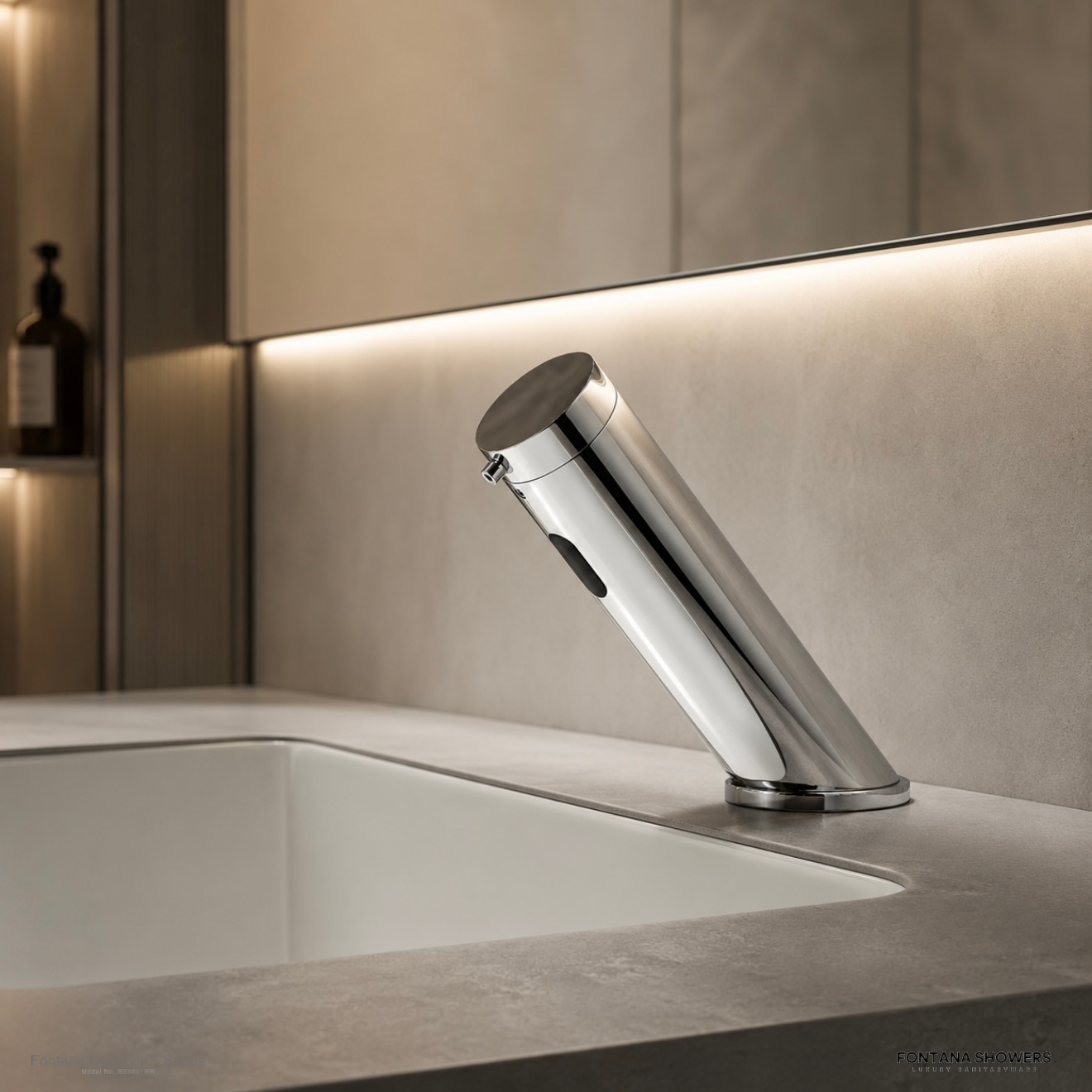
A visual overview of lavatory-mounted, wall-mounted, countertop and automatic dispenser configurations.


Specification, Maintenance and Commercial Applications
Touchless Soap Dispenser Finishes and Systems




Public Restroom Soap Dispenser Topics
Specification and maintenance topics associated with commercial, automatic and wall-mounted soap dispenser systems.
Read More
Commercial soap dispenser mounting height, accessible soap dispenser reach, dispenser reservoir capacity, soap dose setting, liquid soap viscosity range, foam soap compatibility, automatic dispenser sensor range, touchless dispenser power supply, battery service access, hardwired dispenser power, refill access, under-counter service clearance, wall-mounted dispenser maintenance, high-traffic restroom refill planning, pump and tubing cleaning, nozzle maintenance, sensor window cleaning, priming procedure, and commercial dispenser serviceability.
Commercial Soap Dispenser Coordination Questions
Automatic Dispensers and Commercial Bathroom Design
Public Restroom Soap Dispenser Specification
Coordinate the Dispenser as a Serviceable Fixture
In high-traffic restrooms, dispenser performance depends on more than the exposed finish or activation method. The specification should coordinate mounting height, operating position, reservoir capacity, soap dose, viscosity compatibility, sensor range, power, refill access, and the space required to service pumps, tubing, controls, and batteries. Exact values should come from the selected product data and installation instructions.
Read More
Mounting Height and User Reach
Locate the operating point so it is reachable from the intended approach and does not conflict with the faucet, basin rim, backsplash, mirrors, grab bars, or other accessories. For deck-mounted systems, coordinate the dispenser body and below-counter components with counter thickness and basin geometry. For wall-mounted systems, coordinate mounting substrate and access to fasteners.
Capacity, Dose and Soap Viscosity
Match reservoir capacity to expected daily use and the facility’s refill routine. Confirm the pump’s dose per activation, whether the dose is adjustable, and which liquid or foam soaps are approved. Soap outside the permitted viscosity or formulation range can contribute to slow delivery, loss of prime, nozzle buildup, or pump wear.
Sensor Range and Power
For automatic dispensers, verify the model-specific detection range and intended hand position. Coordinate the sensor with reflective surfaces and the basin splash zone. Document whether power is supplied by batteries, a transformer, hardwiring, or another listed configuration, and keep replaceable power components accessible.
Refill Access, Service Clearance and Maintenance
Provide a clear route to refill or replace the reservoir and enough working space to inspect the pump, tubing, nozzle, sensor, wiring, and controls. High-traffic maintenance should include refill checks, priming after service, nozzle cleaning, sensor-window cleaning, tubing inspection, soap-compatibility checks, and planned battery or power-component service according to the selected model’s instructions.
Fontana Multifeed Soap Dispenser
A multifeed arrangement should be specified around reservoir capacity, the number of connected dispensing points, tubing routes, priming requirements, and the location of the shared soap supply. The reservoir must remain accessible for refill, cleaning, inspection, and replacement, with enough service clearance to reach connections and pumps without removing surrounding casework.
Read More
Confirm the approved soap formulation and viscosity before connecting multiple dispensers to a common source. Document dose control, line length limitations, sensor and power requirements at each dispensing point, and the procedure for priming after refill or service. For high-traffic facilities, establish a maintenance routine that checks reservoir level, tubing condition, nozzle cleanliness, sensor operation, and power components before a loss of service.
ToF Sensor Vs IR Sensor
Sensor selection should be coordinated around the actual detection envelope rather than a generic claim that one sensing method is always superior. Time-of-Flight systems measure distance from emitted and returned light, while conventional infrared systems typically rely on reflected infrared energy. For either approach, the selected dispenser should have a documented operating range and hand position that match the basin and installation.
Read More
During coordination, review the manufacturer’s sensor range, aiming or calibration procedure, response behavior, and limitations related to reflective surfaces, ambient conditions, or nearby fixtures. The sensor should activate only within the intended dispensing zone and remain accessible for cleaning, adjustment, or replacement. Exact range and performance values must be taken from the chosen model.

Power Supply and Service Access
Automatic dispenser power should be documented as part of the fixture schedule and rough-in. Verify whether the selected model is battery-powered, transformer-fed, hardwired, or offered in more than one configuration. Locate batteries, adapters, transformers, control modules, and connectors where they can be inspected and replaced without removing the counter or disconnecting unrelated plumbing.
Read More
High-traffic maintenance planning should include access to power components as well as the soap path. Facility staff should be able to check battery condition or power connections, clean the sensor window, prime the pump, inspect tubing, clear the nozzle, and refill the reservoir through a defined service route. Use the selected model’s installation manual for exact electrical ratings and replacement intervals.
Automatic Soap Dispenser Finishes
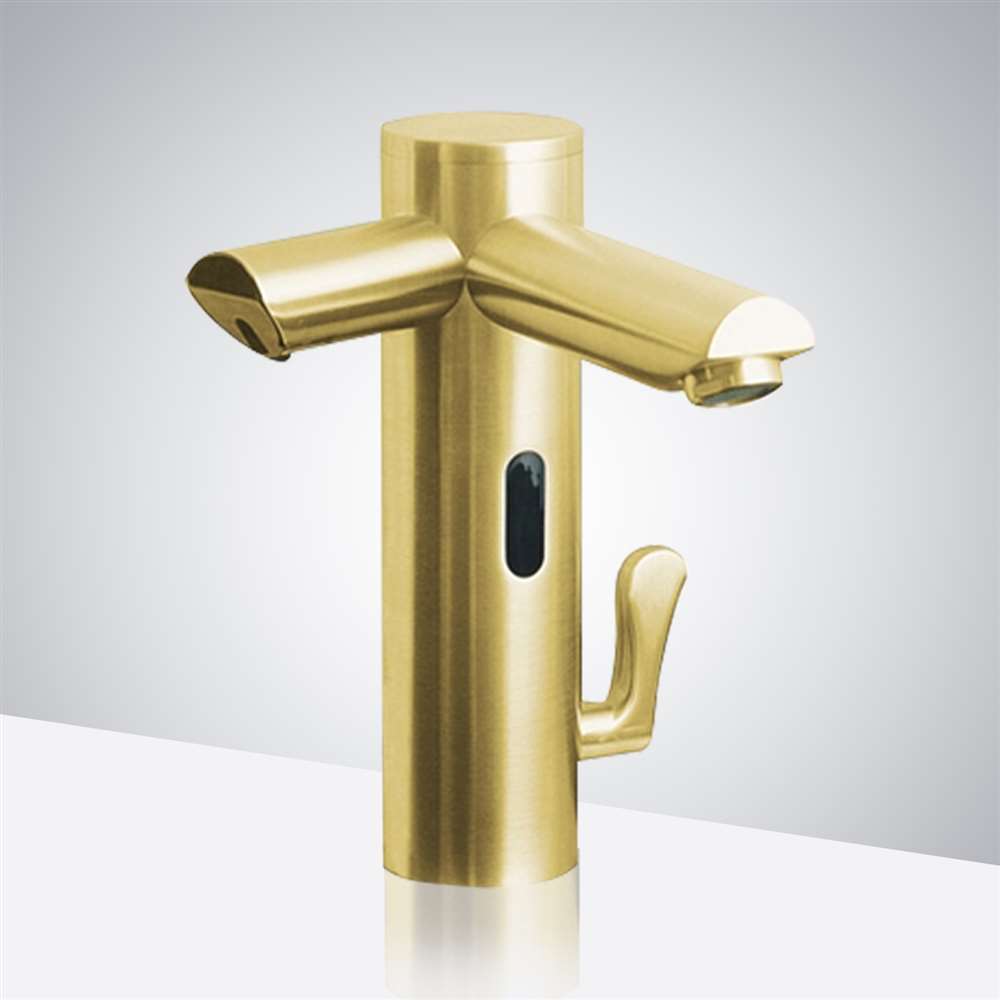
Browse the supplied automatic soap dispenser finish categories and coordinated faucet-and-dispenser collections.
Commercial Soap Dispenser Coordination Table
| Specification Item | What to Confirm | Coordination / Maintenance |
|---|---|---|
| Mounting Height | Operating point and model installation requirements. | Coordinate accessible reach, basin, backsplash, counter and adjacent accessories. |
| Capacity | Reservoir or cartridge capacity from the selected model data. | Match expected traffic to refill frequency and custodial schedule. |
| Dose | Soap volume delivered per activation and whether adjustment is available. | Record the approved setting and verify consistent delivery after priming. |
| Viscosity / Soap Type | Approved liquid or foam formulation and viscosity range. | Avoid unapproved soap that may affect priming, tubing, pump or nozzle performance. |
| Sensor Range | Documented hand-detection zone and any calibration requirements. | Coordinate with basin geometry, reflective surfaces and splash conditions. |
| Power | Battery, transformer, hardwired or other listed configuration. | Keep replaceable batteries, adapters, transformers and controls accessible. |
| Refill Access | How the reservoir or cartridge is opened, removed or filled. | Provide a clear refill path without removing unrelated fixtures or plumbing. |
| Service Clearance | Working space around pump, tubing, control box, reservoir and connections. | Coordinate millwork, traps, valves and electrical components before installation. |
| High-Traffic Maintenance | Model-specific refill, cleaning, priming and power-service procedures. | Plan routine inspections of nozzle, sensor window, tubing, pump, reservoir and power. |
Touchless Fixture Applications
Automatic Soap Dispenser Categories
Everything You Need to Know
Chemical Compatibility, Soap Residues & Tubing Durability
AEC guidance for soap-residue precipitation, preinstallation compatibility testing, chemical-compatibility documentation and long-term disinfectant exposure of centralized soap-system tubing.
Can mixing residues from two soaps create precipitation that obstructs valves or nozzles?
Yes; mixed residues can precipitate or gel, restricting valves, nozzles, and tubing; flush thoroughly before formulation changeover.
Which standardized laboratory test could quantify soap/tubing compatibility before installation?
Use immersion and aging tests comparing mass, dimensions, hardness, tensile properties, and swelling before and after soap exposure.
Should manufacturers publish chemical-compatibility matrices for centralized soap systems?
How does repeated exposure to cleaning chemicals outside the tubing affect tubing integrity?
External cleaners can extract plasticizers, embrittle surfaces, cause swelling, or initiate cracking; verify chemical resistance under repeated exposure.
Can common restroom disinfectants penetrate or degrade flexible soap lines over time?
Yes; some disinfectants can permeate polymers or attack surfaces, accelerating stiffness changes, swelling, cracking, or loss of strength.


